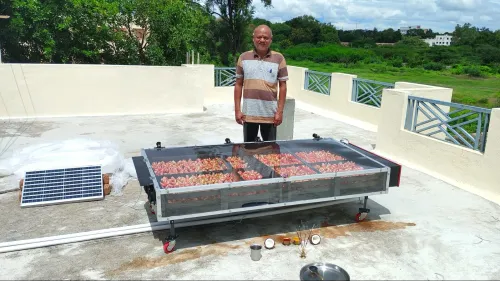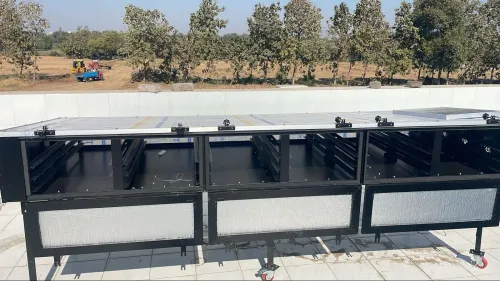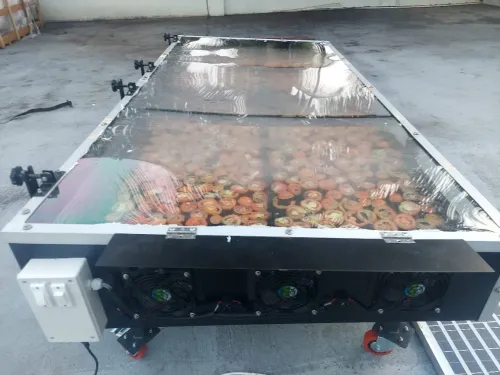
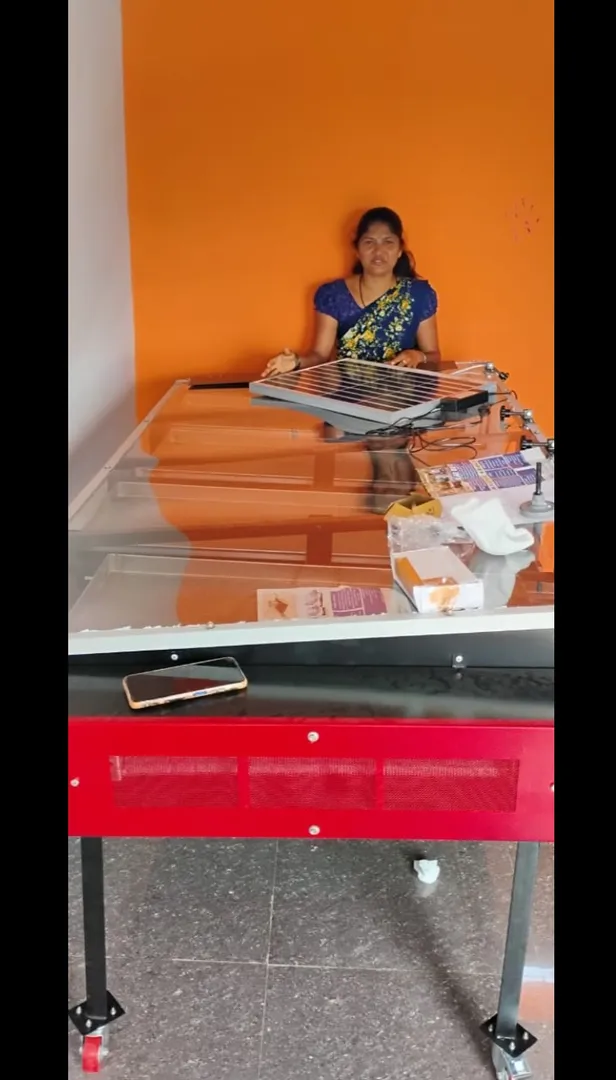
Mau’s agricultural base includes potato, peas, gram, lentil, pigeon pea, mustard, rice, wheat and seasonal vegetables, creating multiple opportunities for better post-harvest handling and local food processing. Farmers and processing groups across Mau, Ghosi, Kopaganj, Adari, Doharighat, Mohammadabad Gohna, Pardaha, Ratanpura, Ranipur and nearby areas must also manage seasonal rainfall and higher humidity that can make exposed drying difficult. A properly selected Solar Dryer in Mau can help dry suitable prepared produce inside an enclosed chamber with designed airflow. However, product quality depends on sound raw material, correct preparation, controlled tray loading, moisture monitoring, weather conditions and safe packaging.
Q1. Why is a Solar Dryer in Mau relevant for local post-harvest processing?
Mau has a strong agricultural base, but its commodities have different post-harvest requirements. Potato and vegetables contain substantial moisture, while peas, pulses, mustard and grains generally require controlled moisture management before storage or further processing.
During the rainy and humid period, exposed produce may dry slowly or reabsorb moisture. Sudden rain, cloud cover and higher relative humidity can interrupt outdoor drying. Food kept directly in the open may also be exposed to dust, insects, birds, animals and repeated handling.
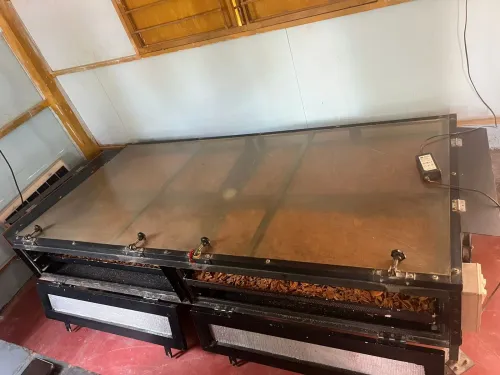
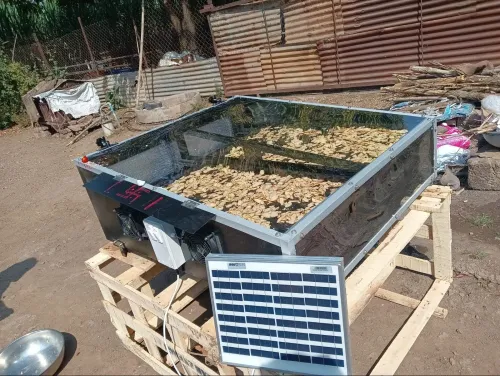
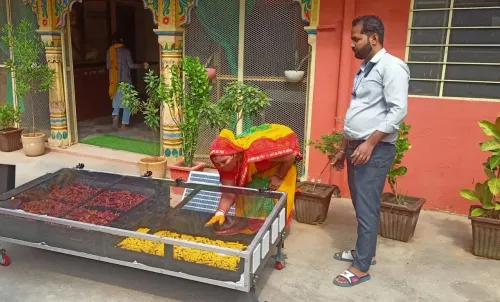
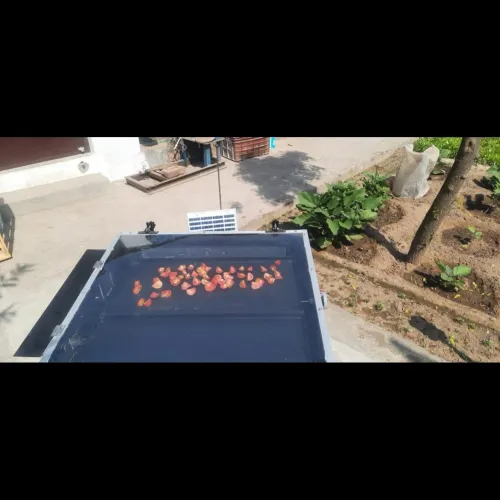
A Solar Dryer in Mau provides a more protected drying environment. Prepared food remains on trays inside an enclosed chamber while heated air and airflow support moisture removal. This can help create a cleaner and more organised process than leaving prepared food on an exposed outdoor surface.
The dryer alone cannot guarantee a safe product. Spoiled, mouldy, fermented, pest-damaged or chemically contaminated raw material must be rejected. Washing, preparation, tray hygiene, moisture checks and packaging remain essential parts of the process.
Solar drying should also not replace fresh-market selling when the fresh produce already meets buyer requirements. It is a processing option for material deliberately selected for a defined dried product.
Q2. Which Mau crops and products can be processed using a solar dryer?
Suitable applications should be selected according to local raw-material availability, product characteristics and buyer demand.
A solar dryer may be evaluated for:
- Prepared potato slices or cubes
- Blanched and dried green peas
- Seasonal vegetable slices
- Tomato and onion products where locally available
- Dried leafy vegetables
- Culinary herbs
- Cleaned gram
- Lentil and pigeon pea requiring moisture management
- Mustard seed requiring controlled moisture reduction
- Rice, wheat or other grains requiring moisture finishing
- Vegetable mixtures for ready-to-cook applications
Potato, vegetables and green peas are food-dehydration applications that normally require washing, cutting and commodity-specific pretreatment. Pulses, mustard and grains involve a different process focused on safe moisture management rather than creating vegetable-style dehydrated products.
Although sugarcane is also cultivated in Mau, raw sugarcane should not automatically be presented as a normal solar-drying application. Sugarcane juice processing, jaggery making and related products require separate preparation and equipment.
Every proposed dried product should first be tested in a small batch. The processor should evaluate colour, aroma, texture, final moisture, storage stability, packaging and realistic market demand before increasing production.
Q3. How should potato and seasonal vegetables be prepared for solar drying?
Potatoes should be sorted to remove rotten, green, deeply damaged, sprouted or contaminated tubers. Selected potatoes should be cleaned, peeled where required and cut into reasonably uniform pieces.
Depending on the final product, potatoes may require blanching and a suitable food-safe anti-browning process. After pretreatment, excess surface water should be removed before the pieces are loaded onto the trays.
Potato pieces should be arranged in a thin and even layer. Overlapping or deep loading can restrict airflow and leave moisture inside the batch. Solar-dried potato slices or cubes should not be confused with industrial potato flakes, which require a different manufacturing process.
Seasonal vegetables should follow their own preparation procedures. A general workflow may include:
- Sorting and rejection of unsuitable produce
- Hygienic washing
- Peeling where required
- Uniform slicing or cutting
- Product-specific blanching or pretreatment
- Removal of excess surface moisture
- Single-layer tray loading
- Monitored drying
- Hygienic cooling
- Moisture-resistant packaging
Very thick pieces may retain moisture internally, while excessively thin pieces may become brittle or stick to trays. The required thickness should be selected according to the intended finished product.
Vegetables with strong odours should normally be processed separately from mild-flavoured products, and the trays should be cleaned properly between batches.
Q4. How can peas, pulses, mustard and grains be handled in a solar dryer?
Green peas generally require suitable suitable blanching before drying. The prepared peas should be drained and distributed evenly across the tray. Loading peas while they still carry excess surface water increases the moisture that must be removed.
Dry pulses such as gram, lentil and pigeon pea have different requirements. They may need controlled moisture reduction after harvesting, cleaning or exposure to humid conditions. The processor should first determine the commodity’s initial moisture and required final moisture.
Mustard seed, rice and wheat may also require moisture finishing before safe storage or further processing. This is different from drying sliced vegetables.
For grains, pulses and seeds:
- Remove soil, stones and plant residue
- Reject visibly mouldy or pest-damaged material
- Measure or assess initial moisture appropriately
- Maintain a suitable loading depth
- Allow air to pass through the material
- Check samples from different tray positions
- Confirm the required final moisture before storage
- Cool the product before bagging
A grain or pulse that feels dry externally may still retain unsuitable internal moisture. Storage decisions should not be based only on touch or appearance.
Mustard drying should not be confused with oil extraction, and pulse drying should not be confused with dal milling. These are separate processing stages requiring different equipment.
Q5. How do rainfall and humidity affect solar drying in Mau?
Mau experiences seasonal rainfall and periods of higher humidity. When the surrounding air already contains more moisture, evaporation from the product can slow down. Cloud cover may also reduce available solar energy.
These conditions can create several problems in exposed drying:
- Slower moisture removal
- Interruption due to sudden rainfall
- Uneven drying between batches
- Moisture reabsorption
- Greater exposure to dust and insects
- Risk of leaving the product outside for longer periods
- Difficulty maintaining a repeatable process
An enclosed Solar Dryer in Mau helps protect the prepared product from direct rainfall and environmental contamination while providing a designed airflow path.
However, an enclosed chamber cannot create solar energy when sunlight is inadequate. Drying time may increase during cloudy or humid weather. Optional hybrid support may be evaluated only when it is technically required and available in the selected dryer configuration.
Partially dried food should not be packed. If the batch cannot reach its required final condition, it must be handled according to a safe product-specific procedure rather than being sealed with excess moisture.
No fixed number of hours should be promised for all seasons or commodities.
Q6. How does a solar dryer work, and what should the operator monitor?
A solar dryer uses solar energy to heat the air required for moisture removal. Depending on the system, solar-powered DC fans can support the movement of air through the chamber.
The process generally works as follows:
- Solar energy raises the temperature of the drying air.
- Air moves through or across the loaded trays.
- Moisture evaporates from the prepared material.
- Moist air is discharged through the designed outlet.
- Continued airflow progressively reduces product moisture.
The operator should monitor more than elapsed time. Important observations include:
- Solar and weather conditions
- Airflow through the chamber
- Product temperature where applicable
- Slice thickness or loading depth
- Tray position
- Changes in colour and texture
- Moisture differences within the batch
- Condition of the final product
Batch records should include the commodity, input weight, preparation method, tray loading, start and finish observations, weather conditions and packed output.
Air inlets, outlets and fan areas must remain clear. Overloading the trays or blocking the airflow path can cause uneven drying.
The product should be cooled under hygienic conditions before packaging. Warm dried material may create condensation inside the package and reduce storage stability.
Q7. How should farmers and processing groups select a Solar Dryer in Mau?
Solar dryer capacity should be selected according to the quantity and physical form of fresh input that must be processed per batch. The expected dried-output weight should not be used as the only capacity measure because moisture removal reduces product weight.
Before selecting a system, the buyer should evaluate:
- Peak raw material available per day
- Main commodity
- Fresh, sliced, blanched or cleaned input
- Tray area required
- Loading depth
- Preparation labour
- Seasonal operating days
- Local solar and humidity conditions
- Packaging and storage capacity
- Food-compliance requirements
- Buyer demand
- Future expansion plans
A unit drying lightweight herbs will use tray space differently from one handling potato pieces, peas, pulses or grains. Kilogram capacity must therefore be considered together with tray area, product density and preparation method.
Potential users include farmers, FPOs, cooperatives, SHGs, women-led enterprises, rural entrepreneurs, MSMEs, vegetable processors, pulse handlers and grain-processing groups.
Before investment, the enterprise should verify raw-material supply, labour, packaging expenses and market requirements. A solar dryer can support processing, but it cannot guarantee profit, orders, selling price or universal product quality.
Q8. Why can a Rudra Solar Dryer be considered for Mau?
Rudra Solar Energy provides solar drying solutions for fruits, vegetables, spices, herbs and other suitable agricultural products. Depending on the selected model and configuration, a Rudra Solar Dryer may include:
- An enclosed drying chamber
- Solar-powered DC airflow
- Food-contact drying trays
- UV-protected construction material
- Multiple capacity options
- Customised configurations
- Optional hybrid support where technically required
For Mau, the system can be evaluated for prepared potato, green peas, suitable vegetables, culinary leaves and controlled moisture reduction of selected pulses, seeds and grains. Every commodity should undergo a trial to establish preparation, loading, airflow, drying endpoint and packaging requirements.
Rudra Solar Energy can assist farmers, FPOs, SHGs and processing businesses in selecting a Solar Dryer in Mau according to their fresh input, main commodities, local conditions and intended final products.
To identify a suitable Rudra Solar Dryer, share your main commodity, batch quantity, preparation method, installation location and required finished product with Rudra Solar Energy.
Keywords