Solar Dryer in Siddipet, Telangana – Advanced Solar Drying Solutions for Farmers & Businesses
Siddipet has a strong agricultural base, with horticulture offering farmers additional choices beyond traditional field crops. The district horticulture department identifies fruits, vegetables, flowers, spices and plantation crops among its horticultural activities. Mango and guava are noted as fruit crops with potential, while vegetable cultivation is an important part of the district’s horticulture sector.
For farmers and food businesses, the opportunity is not simply to grow more produce. It is also to find practical ways to handle suitable crops after harvest, reduce moisture where appropriate and prepare products for storage or further processing. Whether this makes commercial sense depends on the crop, available quantity, processing costs and demand for the finished product.
Rudra Solar Energy manufactures solar drying equipment for agricultural and commercial applications. If you are looking for a solar dryer in Siddipet, the right system should be selected according to the product, fresh input quantity per batch, preparation method, required final moisture and intended use.
Solar Dryer for Farmers and Food Businesses in Siddipet
Siddipet’s horticulture profile includes fruit and vegetable cultivation, with local farmers also engaged in other agricultural activities. This creates different requirements for anyone considering produce drying. A fruit processor may need to dry prepared mango slices, while a vegetable business may work with chopped or sliced produce. These applications should not be treated as interchangeable.
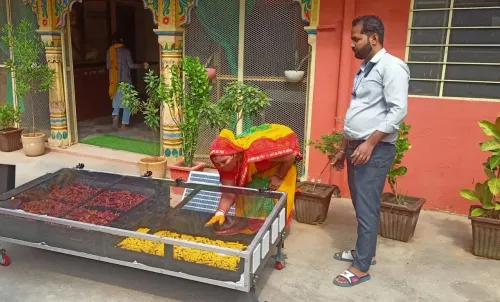
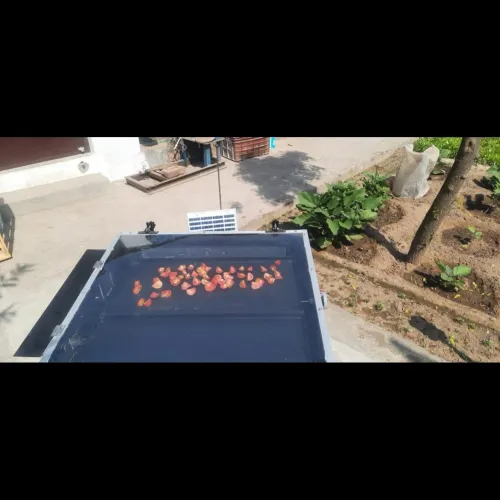
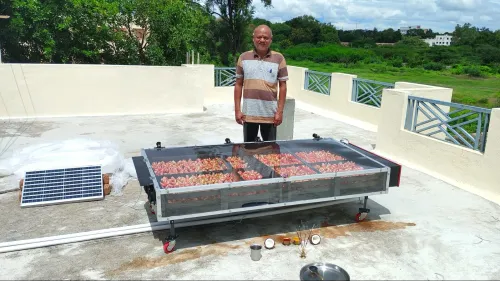
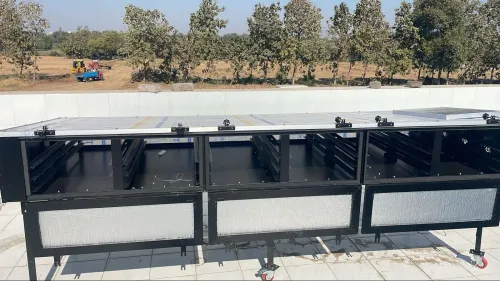
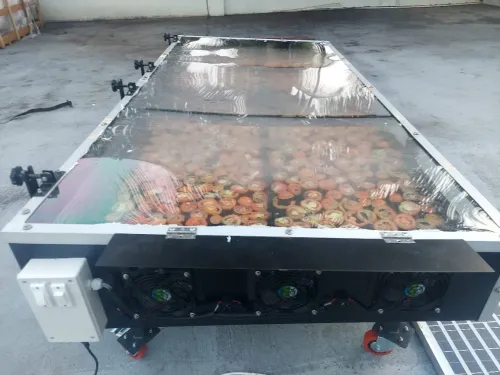
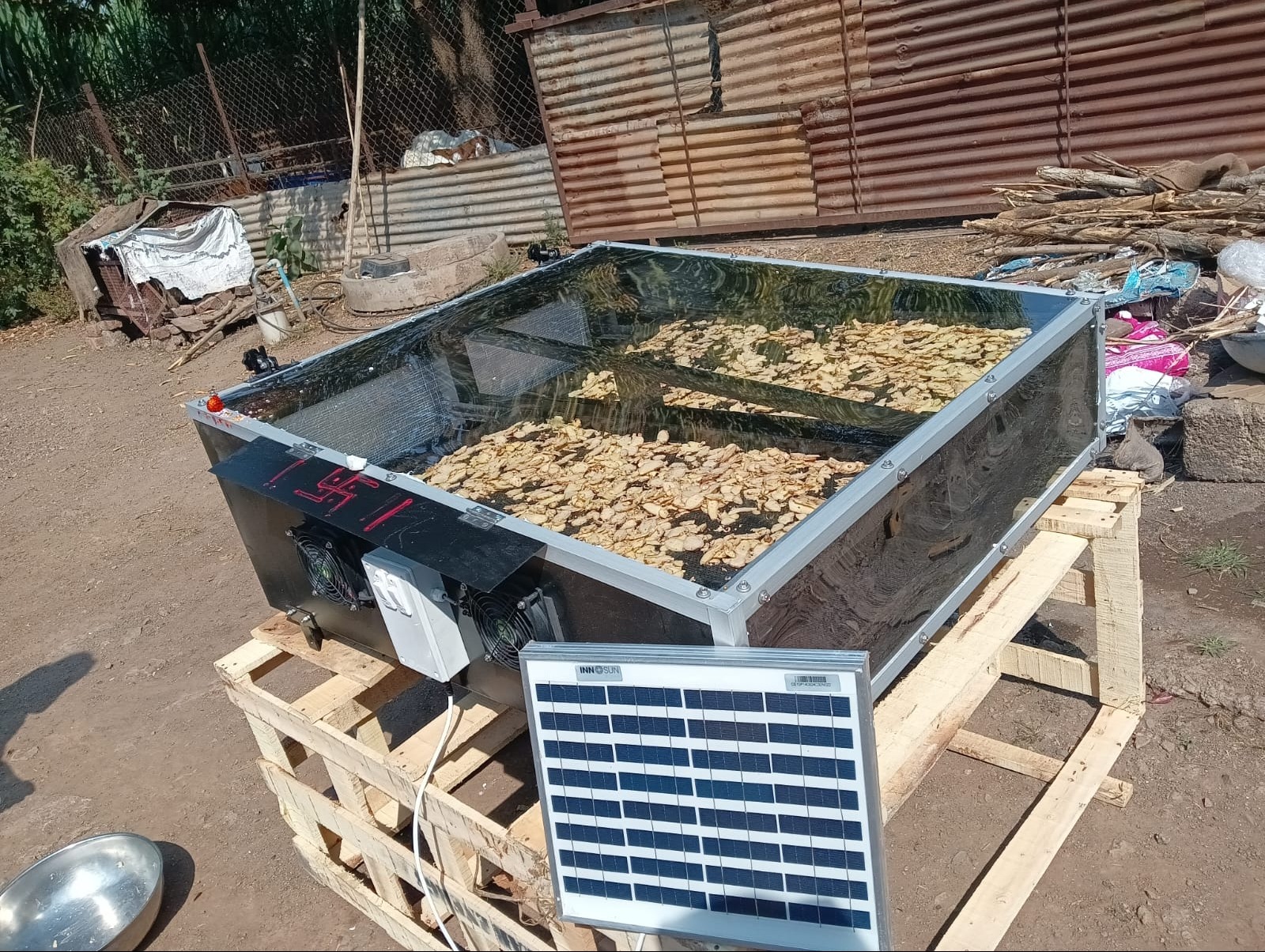
A suitable solar dryer provides an enclosed space where compatible produce can be arranged on trays and dried under appropriate operating conditions. Tray loading, product thickness, airflow and the moisture level of the incoming material all influence the process.
For a business considering a new drying operation, it is worth deciding the finished product first. Dried ingredients for further processing, dried fruit for sale and dried plant material for specialised uses may have different preparation and quality requirements.
A dryer performs moisture removal. Washing, peeling, slicing, grinding, milling and packaging may require separate equipment or arrangements.
Why Consider a Solar Drying Machine in Siddipet?
For suitable agricultural products, drying can form part of a post-harvest handling or food-processing workflow. A well-selected solar drying machine helps organise the drying space and manage batches more systematically than simply spreading produce outdoors.
- Enclosed drying: A suitable enclosure helps limit direct exposure to outdoor dust and insects compared with open-air drying.
- Organised batch handling: Trays provide a defined area for loading, unloading and managing individual batches.
- Fruit and vegetable processing: Compatible produce can be evaluated for drying before storage, sale or further processing.
- Flexible capacity selection: Buyers can assess machine options according to fresh input quantity, available space and expected usage.
- Solar-assisted heat: Solar energy provides heat under suitable conditions, but performance depends on sunlight, airflow, humidity and the equipment design.
An efficient solar dryer must match the product being processed. No machine should be selected on the assumption that every crop will dry in the same time or achieve the same result. Final product quality also depends on preparation, hygiene, cooling, moisture control and appropriate storage or packaging.
Solar Drying Applications for Siddipet Agriculture
Mango Drying
Mango is one of the fruit crops identified in Siddipet’s horticulture profile. For farmers and food entrepreneurs handling mangoes, suitable drying applications may include prepared slices or other compatible forms intended for food processing.
The first step is to decide how the dried mango will be used. Fruit intended for direct consumption may need different preparation and quality controls from fruit intended as an ingredient for another product. Fruit maturity, slice thickness, pretreatment, tray loading and operating conditions all affect drying.
A high-quality solar dryer can provide a designated environment for the drying stage, but peeling, slicing and packaging still need to be planned separately.
Guava and Other Fruit Drying
Guava is another fruit crop highlighted by the district horticulture department. Suitable fruit may be considered for drying where the product, preparation method and intended market support the application.
For a small food-processing business, consistency begins with the raw material. Uniform preparation and suitable loading help the operator manage batches, while the final moisture target should be established for the intended product. The fresh weight loaded into a machine should not be confused with the weight of the dried output.
Vegetable Drying
Vegetables form an important part of Siddipet’s horticulture sector. Suitable vegetables may be evaluated for drying by farmers, producer groups and commercial food processors.
Different vegetables have different structures and moisture contents. Washing, draining, cutting, slice thickness and the depth of material placed on trays all influence the drying process. A machine suitable for one vegetable should not automatically be assumed suitable for every other product under the same conditions.
Businesses should also plan how dried vegetables will be cooled, stored and protected from moisture after unloading.
Spice Drying
Spices are included in the district’s horticultural profile, creating potential applications for suitable spice-drying operations. The correct equipment depends on the specific spice, its incoming condition, the intended finished product and the operating requirements.
Whole spices, cut materials and prepared products can behave differently during drying. Buyers should share the exact product and expected batch quantity with the manufacturer before selecting a solar dryer.
Flower and Specialty Produce Drying
Flower crops are also part of Siddipet’s horticulture sector. Selected flowers or specialty plant materials may be suitable for solar-assisted drying, depending on the intended use and the characteristics required in the finished material.
Flowers for decorative or specialised applications may need different handling from products intended for food processing. Buyers should explain the final application before choosing equipment and operating conditions.
Other Agricultural Crops
Siddipet also has a substantial field-crop base, including paddy, maize, cotton and pulses, as documented by the district agriculture department. These crops do not all share the same drying requirements. Grain and bulk-material drying can require a different equipment design from cabinet drying of prepared fruits or vegetables.
Before using a solar dryer for a particular agricultural material, confirm that the selected model is designed for that product and loading method. Crop presence in a district does not, by itself, mean that every crop is suitable for every solar dryer.
Solar Dryer for FPOs, SHGs and Rural Entrepreneurs
Farmer Producer Organisations (FPOs), Farmer Producer Companies (FPCs), self-help groups (SHGs) and small food-processing businesses may evaluate solar drying when they have a suitable supply of produce and a realistic plan for using or selling the finished material.
For a shared processing unit, the machine is only one part of the decision. Members also need to plan crop collection, preparation work, batch scheduling, cleaning and responsibility for the finished product.
Before investing, consider:
- Which crop will be processed and when it is available.
- How much fresh produce can be supplied per batch.
- Who will manage washing, cutting, loading, unloading and cleaning.
- Whether the finished product has an identified buyer or realistic sales channel.
- Whether additional equipment is needed for grinding, milling or packaging.
- How the dried product will be stored and protected from moisture.
These details help an organisation choose an appropriate machine rather than buying equipment based only on its advertised capacity. A commercial-grade solution should be selected to fit the actual workflow and intended use.
Commercial Solar Dryer Solutions in Siddipet
Commercial processors may have different requirements from individual farmers. A small business might prioritise installation space and manageable batches, while a larger operation may need to consider throughput, labour, product separation and cleaning between batches.
Rudra Solar Energy provides solar drying equipment for suitable agricultural and commercial applications. Buyers can discuss their crop, fresh input quantity per batch and intended finished product to assess the appropriate configuration.
Businesses planning to process several products should confirm whether the selected model is suitable for each one. Supplementary electric or biomass heating should only be expected when it is supported by the particular configuration.
A reliable supplier should explain the specifications that apply to the proposed model and distinguish fresh-input capacity from expected dried output. Drying time and performance should be discussed in the context of the actual crop and operating conditions.
How to Choose the Best Solar Dryer in Siddipet
The best solar dryer is not necessarily the largest or most expensive machine. It is the one that suits the intended product, batch quantity and operating requirements.
- Identify the crop: Specify mango, guava, vegetables, spices, flowers or another intended material.
- Estimate fresh input: Work out how much produce will be loaded in each batch.
- Explain preparation: Describe whether the produce will be sliced, chopped, cleaned, drained or otherwise prepared.
- Define the finished product: Clarify whether it is intended for storage, direct sale or further processing.
- Check drying requirements: Different materials may require different operating conditions and final moisture targets.
- Review the available space: Allow room for loading, unloading, cleaning and access around the equipment.
- Plan for seasonal supply: Crop availability and expected usage influence the capacity you need.
- Confirm model specifications: Check capacity, construction materials, operating range and any optional features before ordering.
A professional manufacturer should be able to discuss these requirements and explain which model is suitable for the application. High-performance and energy-efficient positioning should be backed by the actual machine specifications and operating conditions.
Solar Dryer Capacity for Different Users
Rudra Solar Energy’s applicable cabinet dryer configurations generally range from around 5 kg to 500 kg of fresh input per batch, depending on the model and application. Confirm the capacity of the specific model before purchase.
Fresh input capacity is not the same as dried output. Moisture is removed during the process, so final weight depends on the incoming material and its target final moisture. Actual throughput also depends on the crop, preparation, loading and operating conditions.
User typeCapacity considerationsIndividual farmerSeasonal crop quantity and fresh input per batchSmall food entrepreneurBatch size, preparation work and available spaceSHG or FPOShared produce supply, batch scheduling and product separationFood-processing businessExpected throughput and finished-product requirementsCommercial processorTray area, loading depth, batch turnaround and workflow
Selecting a larger machine does not automatically improve business results. Capacity should match the amount of suitable produce available and the processing schedule the operator can realistically maintain.
Why Consider Rudra Solar Energy for a Solar Dryer in Siddipet?
Rudra Solar Energy is an Ahmedabad-based solar technology manufacturer established in 2006, with solar dryers as a key product category. Its equipment is intended for different drying requirements, with model selection depending on the application and capacity needed.
When comparing a solar dryer manufacturer or supplier, look for clear specifications, realistic capacity guidance, suitable machine construction and practical information about operating requirements. A premium or advanced product description is useful only when the offered configuration matches the buyer’s actual needs.
Rudra Solar Energy encourages farmers, producer groups and commercial processors to explain their requirements before selecting equipment. Sharing the crop, fresh input quantity per batch and intended finished product provides a practical starting point for discussing suitable options.
Solar Dryer Manufacturer and Supplier for Siddipet, Telangana
If you are searching for a solar dryer manufacturer or supplier for Siddipet, Rudra Solar Energy can help you explore equipment for compatible agricultural and food-processing applications.
Whether you are a farmer, FPO, SHG or commercial processor, begin with the product you want to dry and the quantity you expect to load per batch. This helps establish a sound basis for discussing capacity, specifications and pricing.
Frequently Asked Questions
1. Where can I find a solar dryer for agricultural products in Siddipet?
You can contact Rudra Solar Energy to discuss solar drying equipment for suitable agricultural and food-processing applications. Share your crop, fresh input quantity per batch and intended use so an appropriate configuration can be assessed.
2. Which crops in Siddipet may be suitable for solar drying?
Depending on the product and preparation method, mango, guava, suitable vegetables, spices and selected flowers may be considered. Each application should be evaluated separately because crops have different drying requirements.
3. What capacity solar dryer should a farmer or business choose?
Applicable cabinet dryer configurations generally range from around 5 kg to 500 kg of fresh input per batch, depending on the model. The appropriate capacity depends on the quantity processed per batch, crop characteristics and expected operating schedule.
4. Can the same solar dryer be used for fruit, vegetables and spices?
Some configurations may accommodate multiple compatible products, but this should be confirmed for the selected model. Preparation, loading, cleaning and drying conditions can differ between crops.
5. Is a solar dryer suitable for an FPO or SHG processing unit?
It may be suitable when the group has access to compatible produce and a workable processing plan. Crop supply, labour, batch scheduling, hygiene, storage and potential buyers should be considered alongside equipment selection.
6. How long does solar drying take?
Drying time varies with the crop, initial moisture, preparation, slice thickness, loading, airflow, sunlight, humidity and dryer design. A reliable estimate should be based on the specific product and operating conditions, not a universal time guarantee.
7. Does a solar dryer include slicing, grinding or packaging equipment?
Not by default. A solar dryer removes moisture from suitable materials. Slicing, grinding, milling, sealing and packaging are separate processes that may require additional equipment or arrangements.
8. How can I get the price of a solar dryer for Siddipet?
Contact Rudra Solar Energy with your crop name, approximate fresh input quantity per batch, intended finished product and expected usage. These details help the team identify a suitable model and discuss applicable specifications and pricing.
Get a Solar Dryer for Your Siddipet Business
Looking for a reliable solar drying solution for mango, guava, vegetables, spices or another suitable agricultural product? Contact Rudra Solar Energy to discuss your application and the available configurations.
When enquiring, share:
- Product or crop name
- Fresh input quantity per batch
- Expected usage and intended finished product
Call: 9429446671 / 7041262332
Email: rudrasolar@gmail.com
Rudra Solar Energy can help farmers, producer groups and food businesses evaluate solar drying equipment for suitable agricultural and commercial applications.
Keywords