Solar Dryer in Ranga Reddy, Telangana – Advanced Solar Drying Solutions for Farmers & Businesses
Ranga Reddy district combines agricultural production with close access to Hyderabad’s large consumer and commercial markets. Its farming profile includes paddy, jowar, bajra, ragi, maize, cotton, groundnut and chillies. Horticulture is also significant, with mango, guava, pomegranate, papaya, tomato, leafy vegetables and other produce grown in different parts of the district. The district horticulture department identifies fruit, vegetables and flowers as important crop groups, while also noting opportunities to strengthen post-harvest handling and processing.
For farmers and food businesses, access to a major market can create opportunities beyond selling produce in its fresh form. Suitable fruits, vegetables, spices and herbs may be processed into dried products for storage or further food processing. The right approach depends on the crop, quality requirements, available quantity and whether there is a clear market for the finished product.
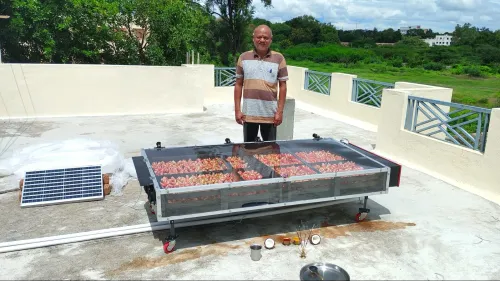
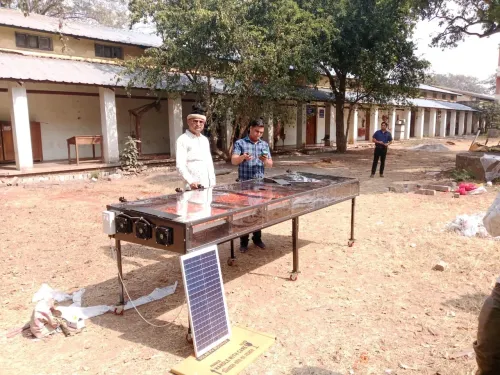
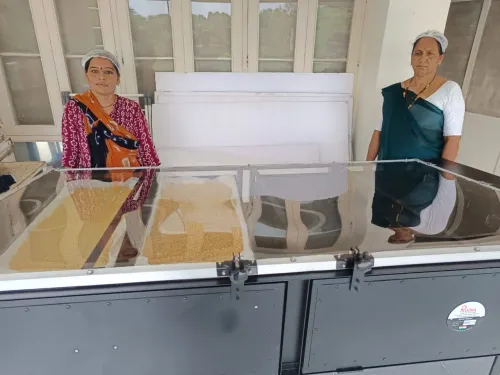
Rudra Solar Energy manufactures solar drying equipment for agricultural and commercial applications. If you are looking for a solar dryer in Ranga Reddy, the system should be selected according to the product being dried, fresh input quantity per batch, preparation method, required final moisture and intended use.
Solar Dryer for Farmers and Food Businesses in Ranga Reddy
Ranga Reddy’s mix of horticulture, field crops and proximity to Hyderabad makes it relevant for farmers, food entrepreneurs, agricultural traders and small processing businesses evaluating post-harvest options.
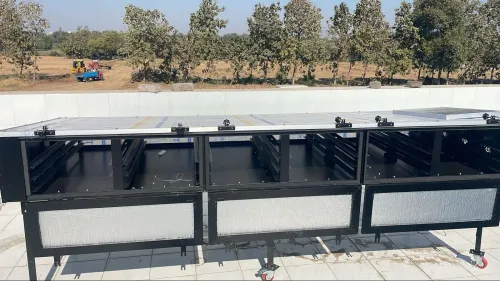
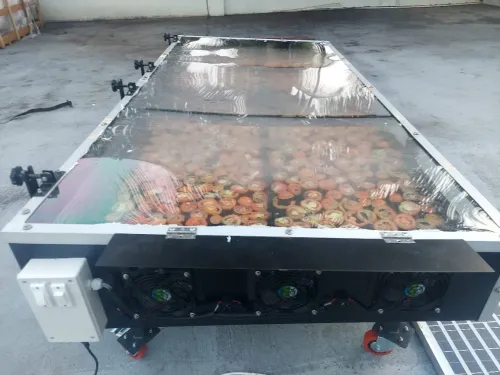
A solar dryer provides an enclosed space where suitable products can be arranged on trays and dried with managed airflow. It can support moisture reduction for compatible produce, but the preparation and operating method must suit the product.
For example, a business processing mango slices will have different requirements from one handling tomatoes, leafy vegetables or chillies. The product’s thickness, incoming moisture, tray loading and intended finished form influence the process.
A dryer is only one part of a processing line. Washing, peeling, slicing, grading, grinding, milling, sealing and packaging may require separate equipment or arrangements.
Why Use a Solar Drying Machine in Ranga Reddy?
A suitable solar drying machine can help farmers and processors organise product handling and moisture reduction more systematically.
- Enclosed drying: Suitable systems provide a designated drying space and help reduce direct exposure to outdoor dust and insects.
- Batch organisation: Trays support organised loading and unloading, with batches easier to identify and manage.
- Horticultural value addition: Compatible fruits, vegetables and herbs can be assessed for drying and further processing.
- Commercial flexibility: Buyers can select a configuration based on the product, fresh input quantity and expected workload.
- Solar-assisted operation: Solar energy provides heat under suitable conditions. Supplementary heating should be confirmed for the selected model rather than assumed.
Drying results depend on solar radiation, ambient conditions, airflow, product thickness, initial moisture and the required final moisture. A dryer should not be selected on the assumption of a guaranteed drying time or fixed commercial return.
Solar Drying Applications for Ranga Reddy Agriculture
Mango and Guava Drying
Mango and guava are among the district’s documented horticultural crops. Suitable fruit slices or other compatible preparations may be considered for drying by farmers, food entrepreneurs and processors.
Fruit maturity, preparation, slice thickness and pretreatment can influence the drying process. The final product should be defined before selecting an operating method, as fruit intended for direct consumption may have different requirements from fruit intended for further processing.
A solar dryer helps remove moisture; it does not automatically perform peeling, slicing, formulation or packaging.
Tomato and Other Vegetable Drying
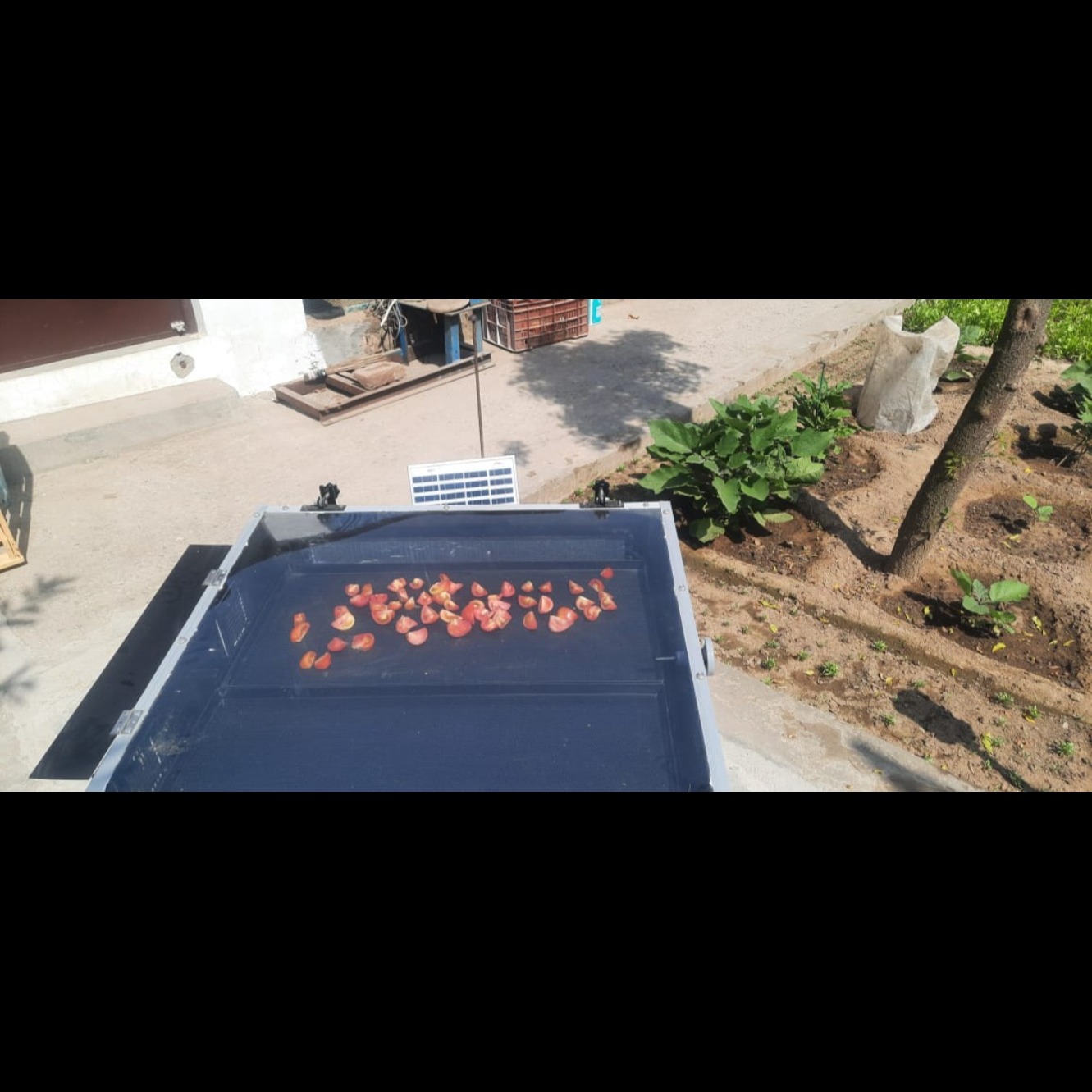
Tomato is an important horticultural crop in Ranga Reddy, alongside leafy vegetables, brinjal, okra, carrot and other vegetables. <Cite refs={['turn257344search0']}/> These crops create possible applications for suitable vegetable-drying systems.
Vegetables can vary substantially in moisture content and texture. Cleaning, cutting, draining, slice thickness and tray loading should be considered before drying. Different vegetables may need different operating conditions, even when processed using the same equipment.
Food businesses should also plan how dried vegetables will be handled and stored after unloading.
Chilli and Spice Drying
Chilli is grown in the district, and suitable spice-drying applications may be relevant to farmers and small processors. The right method depends on the type of chilli or spice, its incoming moisture, product form and intended use.
Whole spices, cut products and prepared materials may behave differently during drying. Buyers should share the actual product and expected batch size when discussing a solar dryer.
Leafy Vegetables and Herbs
Leafy vegetables and selected herbs may be considered for drying where the product and intended use are compatible with the chosen system. These materials often require careful handling because thin leaves and delicate plant parts can respond differently to heat and airflow.
Cleaning, draining and arranging material at a suitable depth are important parts of the process. The correct operating conditions should be established for the specific product rather than using one setting for every herb or leafy vegetable.
Pomegranate, Papaya and Other Fruits
Pomegranate, papaya and other suitable fruits may also be evaluated for drying, depending on the product form and target market. Preparation requirements can differ, so the selected configuration should be matched to the intended output.
For a commercial buyer, it is useful to identify whether the goal is dried slices, pieces or another prepared form before discussing equipment.
Flowers and Other Horticultural Products
Ranga Reddy’s horticultural profile includes flowers such as rose, marigold and chrysanthemum. <Cite refs={['turn257344search0']}/> Some flower-drying applications may be suitable for solar-assisted drying, depending on the intended use and the sensitivity of the material.
Flowers intended for decorative or other specialised applications may need different handling from food products. The required appearance and final use should be explained before choosing a drying method.
Solar Dryer for FPOs, SHGs and Rural Entrepreneurs
Farmer Producer Organisations (FPOs), Farmer Producer Companies (FPCs), self-help groups (SHGs) and rural entrepreneurs may evaluate solar drying when they have access to suitable crops and a practical plan for processing or selling the dried product.
Ranga Reddy’s access to Hyderabad markets may be relevant for businesses considering horticultural value addition, but access to a large market does not automatically guarantee demand. Buyers should identify potential customers and understand the quality and packaging requirements before investing.
A group or enterprise should consider:
- Which crop will be dried and when it is available.
- How much fresh produce can be supplied per batch.
- Who will manage preparation, loading, unloading and cleaning.
- Whether the finished product has an identified buyer or sales channel.
- Whether additional equipment is needed for cutting, grinding or packaging.
This planning helps ensure that the dryer matches the actual business requirement.
Commercial Solar Dryer Solutions in Ranga Reddy
Food-processing businesses, agricultural suppliers and commercial operators may need different dryer configurations depending on product mix, batch size, available space and operating frequency.
Rudra Solar Energy provides solar drying equipment for suitable agricultural and commercial applications. Buyers can discuss the product they intend to process and the fresh input quantity per batch to help evaluate a suitable configuration.
For businesses handling multiple products, the process should account for different drying requirements, cleaning between batches and separation of products. Supplementary electric or biomass heating should only be expected when supported by the selected configuration.
How to Choose the Best Solar Dryer in Ranga Reddy
The best solar dryer is one that suits the intended product and the way the business will use it.
- Identify the product: Specify mango, guava, tomato, chilli, leafy vegetables, herbs, flowers or another intended material.
- Estimate fresh input per batch: Calculate how much material will be loaded at one time.
- Describe preparation: Explain whether the product will be sliced, chopped, cleaned, drained or otherwise prepared.
- Define the finished product: Clarify whether the dried material is intended for storage, direct sale or further processing.
- Assess drying sensitivity: Different products may require different temperature, airflow and moisture-management conditions.
- Check available space: Consider installation, loading, unloading and cleaning access.
- Plan the operating schedule: Seasonal availability and expected batches can influence capacity selection.
- Confirm model details: Verify the applicable capacity, construction materials and any optional backup-heating arrangement.
Solar Dryer Capacity for Different Users
Rudra Solar Energy offers applicable cabinet solar dryer configurations generally ranging from 5 kg to 500 kg of fresh input per batch, depending on the model and application.
Capacity should be assessed alongside product characteristics, usable tray area, loading depth, airflow and expected operating frequency. The fresh weight loaded into the dryer is not the same as the final dried-product weight, because moisture is removed during processing.
User typeCapacity considerationsIndividual farmerSeasonal crop volume and fresh input per batchSmall food entrepreneurProduct mix, preparation work and available spaceSHG or FPOShared supply, batch scheduling and product separationFood-processing businessExpected throughput and finished-product requirementsCommercial processorTray area, loading depth, batch turnaround and workflow
A practical capacity assessment should start with the actual product and its expected quantity, rather than choosing the largest available machine by default.
Why Choose Rudra Solar Energy for a Solar Dryer in Ranga Reddy?
Rudra Solar Energy manufactures solar drying equipment for agricultural and commercial use. Buyers can discuss their processing needs and evaluate a configuration based on the product, quantity and intended use.
When enquiring, be prepared to share:
- The product or crop you want to dry.
- Approximate fresh input quantity per batch.
- Product preparation and intended finished form.
- Expected frequency of operation.
- Available installation space.
- Any specific construction or supplementary-heating requirements.
These details help assess whether a proposed dryer is suitable for the application. Actual drying performance varies with product characteristics and operating conditions, so specific output expectations should be discussed for the intended material.
Solar Dryer Manufacturer & Supplier for Ranga Reddy, Telangana
If you are searching for a solar dryer manufacturer or supplier for Ranga Reddy, Rudra Solar Energy can help you explore suitable equipment for compatible agricultural products and commercial food-processing applications.
Whether you are a farmer, FPO, SHG, food entrepreneur or commercial processor, start by explaining the product and the quantity you need to dry per batch. This helps establish a practical basis for discussing capacity and configuration.
Frequently Asked Questions
1. Where can I find a solar dryer for agricultural products in Ranga Reddy?
You can contact Rudra Solar Energy to discuss solar drying equipment for suitable agricultural and food-processing applications. Share the product name, fresh input quantity per batch and intended use so an appropriate configuration can be evaluated.
2. Which crops in Ranga Reddy may be suitable for solar drying?
Depending on the product and preparation method, suitable mango, guava, tomato, chilli, leafy vegetables, herbs and selected flowers may be considered. Each application should be assessed individually.
3. What capacity solar dryer can I choose?
Applicable cabinet dryer configurations generally range from around 5 kg to 500 kg of fresh input per batch, depending on the model and application. Dried output will be lower than fresh input weight because moisture is removed.
4. Can one solar dryer be used for fruit and vegetables?
Some configurations may accommodate multiple compatible products. However, preparation, loading and drying conditions differ between products. Discuss the planned product mix before selecting the dryer.
5. Can a solar dryer help a small food-processing business?
It may support moisture reduction for suitable products before storage or further processing. The business should also consider crop supply, preparation labour, market demand, hygiene and storage arrangements.
6. Does a solar dryer work when sunlight is limited?
Solar drying performance depends on available solar radiation and surrounding conditions. Limited sunlight can affect drying progress. Supplementary heating is available only where supported by the selected configuration.
7. Does the dryer include slicing, grinding and packaging equipment?
Not by default. A solar dryer performs moisture reduction. Slicing, grinding, milling, sealing and packaging are separate operations that may require additional equipment.
8. How can I request a solar dryer for my business in Ranga Reddy?
Contact Rudra Solar Energy by phone or email. Include your product name, approximate fresh input quantity per batch and intended application to help the team understand your requirement.
Get a Solar Dryer for Your Ranga Reddy Business
Looking for a reliable solar drying solution for mango, guava, tomato, chilli, leafy vegetables, herbs or another suitable product? Contact Rudra Solar Energy to discuss your application and the available configurations.
When enquiring, share:
- Product or crop name
- Fresh input quantity per batch
- Expected usage and intended finished product
Call: 9429446671 | 7041262332
Email: rudrasolar@gmail.com
Rudra Solar Energy supports farmers, producer groups and food businesses in evaluating solar drying solutions for suitable agricultural and commercial applications.
Keywords