Solar Dryer in Peddapalli, Telangana – Reliable Solar Drying Solutions for Farmers & Businesses
Peddapalli has a strong agricultural base, with paddy and cotton playing important roles in local farming. Maize, pulses, chillies, mangoes and other horticultural crops also create opportunities for agricultural handling and food processing. The district’s official information identifies mango, oil palm, vegetables, red chilli and turmeric among its horticultural crops. These local conditions make it relevant to explore suitable drying and value-addition options alongside conventional farming and trading.
For farmers and food businesses, the challenge is not simply growing a crop. It is also handling harvested produce properly, managing moisture, and preparing suitable products for storage or further processing. A solar dryer can support these activities for compatible fruits, vegetables, herbs, spices and other agricultural materials.
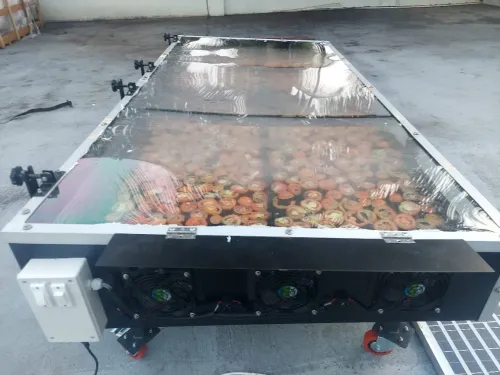
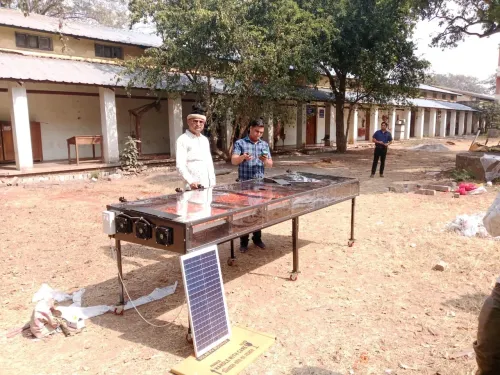
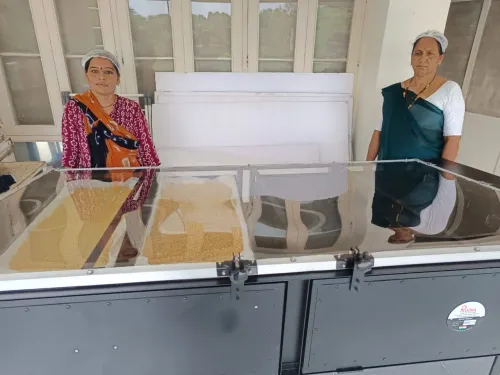
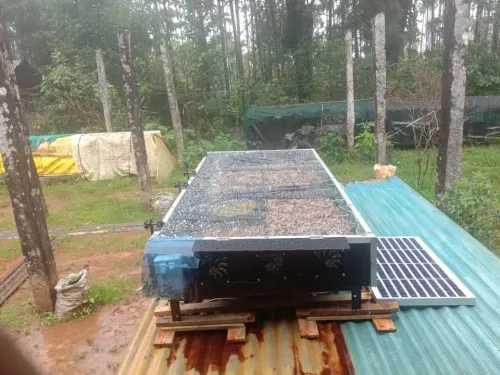
Rudra Solar Energy provides solar drying solutions for agricultural and commercial applications. If you are looking for a solar dryer in Peddapalli, the right system depends on the material being dried, the quantity handled per batch, the required final moisture level and the intended use of the dried product.
Solar Dryer for Farmers and Food Businesses in Peddapalli
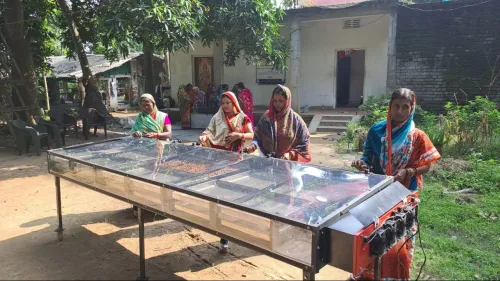
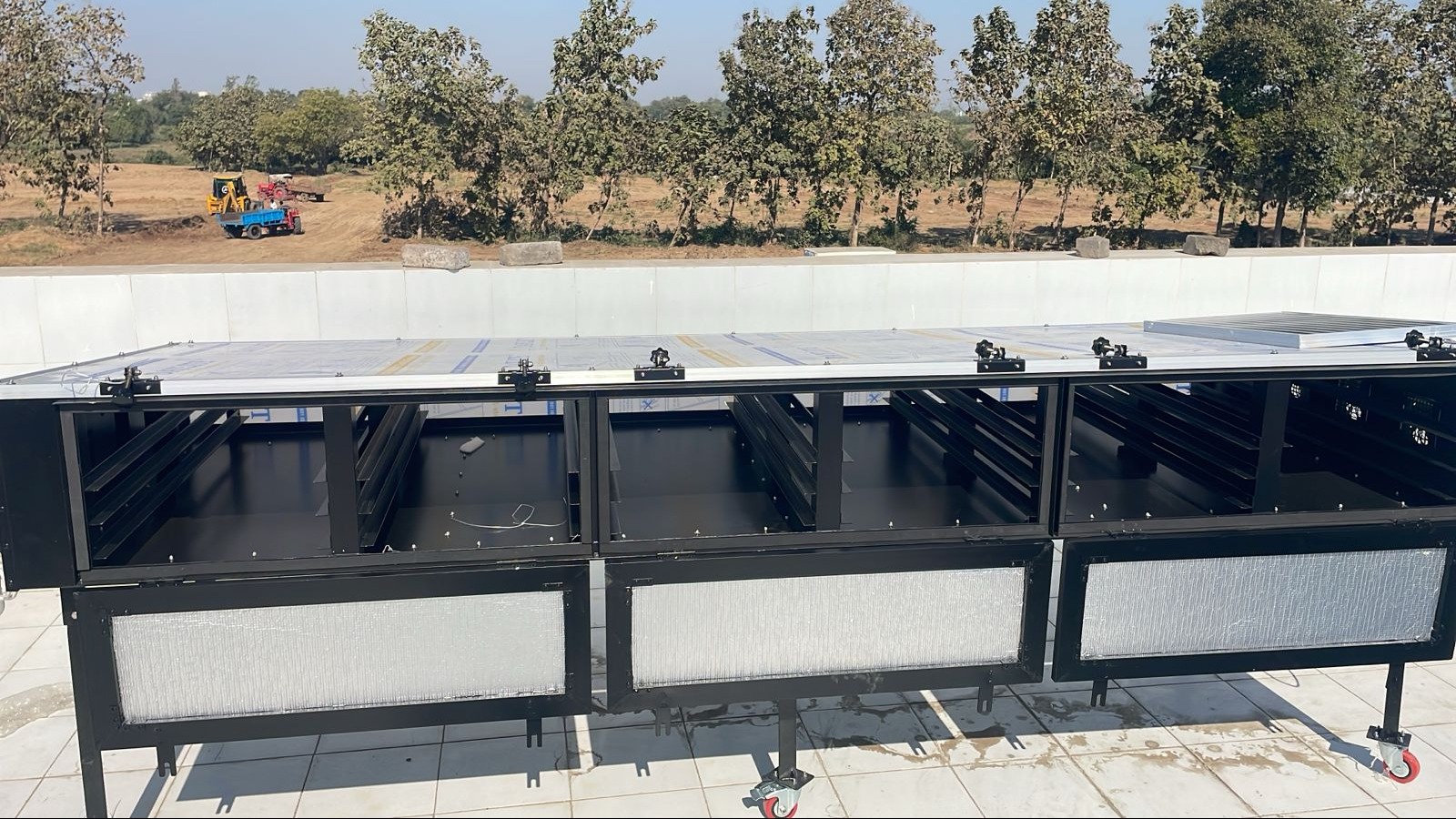
Solar drying may be useful when a farmer, producer group or food-processing business wants to process suitable produce instead of selling or handling everything only in fresh form. A properly selected dryer provides an enclosed space for loading produce onto trays and managing airflow during moisture removal.
In Peddapalli, possible applications include mango slices, selected vegetables, chilli, turmeric and suitable herbs. The correct method varies by commodity. Fresh produce must be prepared appropriately, spread at a suitable depth and dried according to its specific requirements.
A solar dryer is not a replacement for every agricultural machine. It reduces moisture; it does not automatically perform washing, grading, grinding, oil extraction, milling or packaging. Those activities require separate equipment where needed.
Why Use a Solar Drying Machine in Peddapalli?
A solar drying machine can help farmers and processors organise their drying work in a more controlled way than leaving produce exposed outdoors.
- Enclosed drying: Suitable systems help reduce direct exposure to dust, insects and changing outdoor conditions during drying.
- Better batch organisation: Trays make it easier to separate different products and identify individual batches.
- Value addition: Compatible produce can be prepared for further processing or sale in dried form.
- Commercial flexibility: Capacity options can be evaluated according to the quantity of material available and the business’s processing needs.
- Solar-assisted operation: Solar energy can provide the primary heat source in suitable operating conditions. Backup heating is available only where supported by the selected configuration.
Actual drying performance depends on weather, incoming moisture, product thickness, loading depth, airflow and the required final moisture. A solar dryer should therefore be selected for the intended crop and operating conditions rather than on capacity alone.
Solar Drying Applications for Peddapalli Agriculture
Mango Drying
Mango is one of the horticultural crops identified in Peddapalli district information. Mango slices and other suitable preparations may be considered for drying by small food businesses, farmer groups and processors interested in producing dried fruit.
Fruit maturity, slicing thickness, pretreatment, tray loading and the desired finished product all affect the drying process. A solar dryer can support moisture removal, but it does not itself carry out every stage of fruit processing.
Chilli Drying
Red chilli is another crop grown in the district. Suitable chilli drying applications may be relevant to growers, traders and spice processors who need to manage moisture before storage or further processing.
The required drying approach depends on the variety, initial moisture, pod condition, loading depth and target product quality. Chilli intended for different markets may require different handling practices.
Turmeric and Herbs
Turmeric and selected herbs can be considered for solar drying where the product form and process are compatible with the chosen system. Cleaning, slicing or other preparation may be required before loading.
If the final product is intended for grinding, powdering or formulation, those steps must be completed using separate suitable equipment after drying.
Tomato, Onion and Other Vegetables
Peddapalli’s horticultural activity includes vegetables. Suitable tomato, onion and other vegetable preparations may offer drying opportunities for local entrepreneurs and food processors.
Different vegetables behave differently during drying. Slice size, surface moisture, tray arrangement and airflow should be considered before selecting the operating method. A product intended for direct food use also needs appropriate hygienic handling after drying.
Maize and Other Agricultural Materials
Maize is among the crops grown in Peddapalli. Whether a solar dryer is appropriate depends on the specific material, its intended use and the moisture-management requirements.
A cabinet solar dryer should not automatically be treated as a replacement for large-scale grain-drying infrastructure. Buyers should explain their crop, batch size and required throughput so that a suitable system can be evaluated.
Solar Dryer for FPOs, SHGs and Rural Entrepreneurs
Farmer Producer Organisations (FPOs), Farmer Producer Companies (FPCs), self-help groups (SHGs) and rural entrepreneurs may evaluate solar drying when they have access to suitable produce and a clear plan for processing or selling it.
A shared dryer may serve more than one producer, but the operating plan needs to account for crop availability, seasonal volumes, preparation labour, batch scheduling and cleaning between products.
Before investing, groups should consider:
- Which crops will be dried and during which months?
- How much fresh material will be available per batch?
- Who will prepare, load and unload the produce?
- What market will the dried product serve?
- Is additional equipment needed for cutting, grinding, sealing or packaging?
These questions help match the solar dryer to a practical processing plan rather than buying equipment based on capacity alone.
Commercial Solar Dryer Solutions in Peddapalli
Food-processing businesses, agricultural traders and small manufacturers may need a dryer that fits their workflow and available space. The correct configuration depends on the product, required batch capacity, usable tray area and expected operating schedule.
Rudra Solar Energy’s solar drying solutions can be evaluated for suitable agricultural and food-processing applications. Buyers should share their intended product, approximate fresh input per batch and expected frequency of use before discussing a configuration.
Where an application needs supplementary heating, it should be confirmed whether the selected model supports an electric or biomass backup arrangement. Such features should not be assumed to be standard on every dryer.
How to Choose the Right Solar Dryer in Peddapalli
Choosing the best solar dryer for a particular operation begins with the material being dried and the finished product required.
- Identify the crop: Specify whether you need to dry mango, chilli, turmeric, vegetables, herbs or another compatible material.
- Estimate fresh input: Calculate the quantity you expect to load in one batch, not just the total harvest.
- Explain the preparation method: Slicing, peeling, cleaning and other preparation steps can affect drying behaviour.
- Define the finished product: Explain whether the material is intended for storage, direct sale or further processing.
- Discuss drying sensitivity: Different products need different temperature, airflow and moisture-management conditions.
- Consider available space: Review the installation area, tray arrangement and practical loading and unloading access.
- Plan the operating schedule: Seasonal supply and the number of batches you expect to run can influence capacity selection.
- Confirm the configuration: Check the applicable construction material, heating arrangement, capacity and other model-specific details before ordering.
Solar Dryer Capacity for Different Users
Solar dryer capacity should be matched to the quantity of fresh material loaded per batch and the product’s drying characteristics. Rudra Solar Energy offers applicable cabinet dryer configurations across a broad range, generally around 5 kg to 500 kg of fresh input per batch, depending on the model and application.
User typeWhat to assess before selecting capacityIndividual farmerCrop availability, seasonal harvest and batch sizeSmall entrepreneurDaily processing needs, labour and available spaceSHG or FPOShared crop volumes, scheduling and product varietyFood-processing businessExpected throughput, finished-product requirements and operating frequencyLarger commercial buyerTray area, loading depth, airflow, batch turnaround and integration with other equipment
Fresh-input capacity is not the same as dried output. The weight after drying depends on the amount of moisture removed from the crop. Ask for a configuration suited to the actual material rather than assuming that every 100 kg batch will produce the same quantity of dried product.
Why Choose Rudra Solar Energy for a Solar Dryer in Peddapalli?
Rudra Solar Energy manufactures solar drying equipment for agricultural and commercial applications. Buyers can discuss their intended use and evaluate an appropriate configuration instead of relying on a generic capacity recommendation.
When considering a solar dryer from Rudra Solar Energy, discuss:
- The product or crop you intend to dry.
- The fresh input quantity required per batch.
- The preparation and loading method.
- The intended final moisture level and use of the dried material.
- Available installation space and expected operating schedule.
- Any model-specific construction or backup-heating requirements.
A practical assessment helps establish whether the proposed dryer is suitable for your operation. Drying performance and output vary with the product, weather and operating conditions; specific results should be confirmed for the intended application.
Solar Dryer Manufacturer & Supplier for Peddapalli, Telangana
If you are searching for a solar dryer manufacturer or supplier for Peddapalli, Rudra Solar Energy can help you explore suitable solar drying equipment for compatible agricultural products and commercial processing requirements.
Whether you are a farmer, FPO, SHG, trader or food-processing entrepreneur, start by identifying the crop and the quantity you want to process. This makes it easier to discuss capacity, configuration and practical operating needs.
Frequently Asked Questions
1. Where can I find a solar dryer for agricultural products in Peddapalli?
You can contact Rudra Solar Energy to discuss solar drying equipment for suitable fruits, vegetables, herbs, spices and other agricultural materials. Share the crop, fresh input quantity per batch and intended use so the appropriate configuration can be assessed.
2. Which Peddapalli crops may be suitable for solar drying?
Mango, chilli, turmeric and selected vegetables or herbs may be considered, depending on the preparation and intended finished product. Suitability should be checked for each crop and drying method.
3. What is the capacity of a Rudra Solar Dryer?
Applicable cabinet dryer configurations generally range from approximately 5 kg to 500 kg of fresh input per batch, depending on the model and application. Fresh-input capacity should not be confused with the weight of the finished dried product.
4. Can I use one solar dryer for mango, chilli and vegetables?
Some configurations may accommodate multiple compatible products, but each material has its own preparation and drying requirements. Operating conditions should be assessed for the specific crop, and trays should be cleaned appropriately between different products.
5. Does a solar dryer work during cloudy weather?
Solar drying performance depends on available solar radiation and ambient conditions. Drying may take longer when sunlight is limited. Backup heating should only be expected where the selected configuration includes a suitable backup system.
6. Does solar drying include grinding or packaging?
No. A solar dryer reduces moisture from suitable materials. Grinding, powdering, milling, sealing and packaging are separate processes that require their own equipment or arrangements.
7. How do I choose the right solar dryer for my business?
Start with the crop, fresh input quantity per batch, desired finished product, available space and expected operating schedule. These details help determine the appropriate capacity and configuration.
8. How can I enquire about a solar dryer for Peddapalli?
Contact Rudra Solar Energy by phone or email. Include the product name, approximate fresh input quantity per batch and intended application to help the team understand your requirement.
Get a Solar Dryer for Your Peddapalli Business
Looking for a reliable solar drying solution for mango, chilli, turmeric, vegetables, herbs or another suitable agricultural product? Contact Rudra Solar Energy to discuss a configuration for your needs.
When enquiring, share:
- Product or crop name
- Fresh input quantity per batch
- Expected usage and intended finished product
Call: 9429446671 | 7041262332
Email: rudrasolar@gmail.com
Rudra Solar Energy supports farmers, producer groups and food businesses in evaluating solar drying solutions for suitable agricultural and commercial applications.
Keywords