
Sitapur has a broad agricultural base with wheat, rice and urd among its major crops, while mustard and groundnut also contribute to the district’s commercial farming activity. The district’s seasonal rainfall and humidity conditions make post-harvest moisture management especially important for farmers, FPOs, SHGs, seed handlers and small agro-processing enterprises.
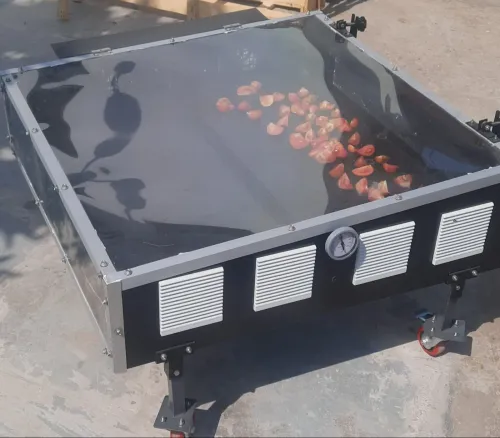
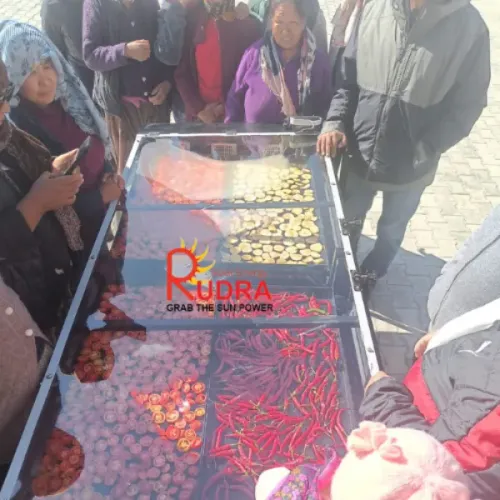
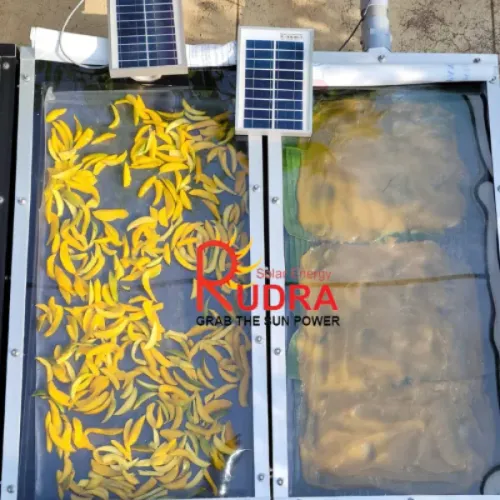
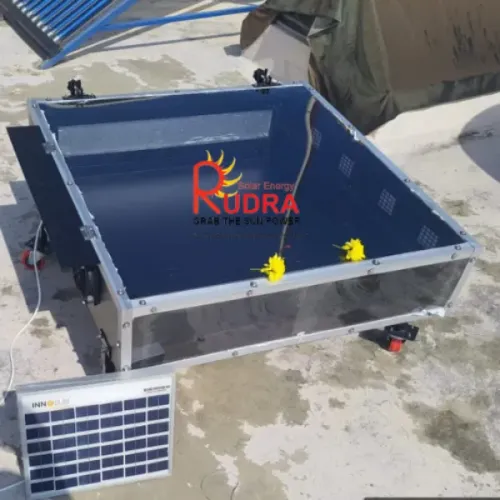
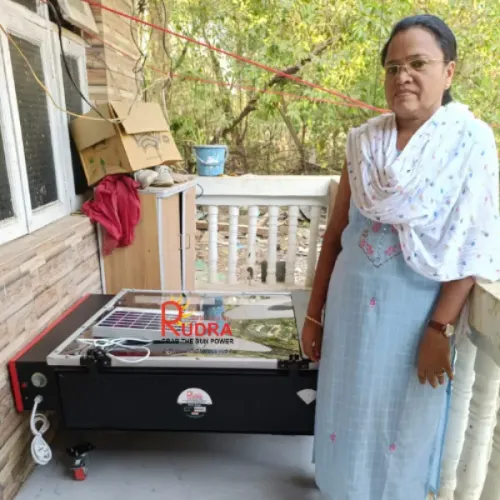
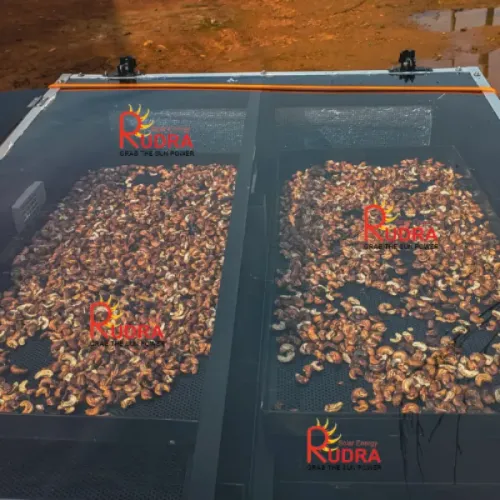
For suitable agricultural commodities, an enclosed solar dryer can help shift drying from an exposed open-sun activity to a more organized process using controlled loading, managed airflow and a protected drying chamber. The correct drying approach must always depend on the crop, initial moisture, final moisture requirement, loading depth, airflow, ambient humidity and intended end use.
1. Why can solar drying be useful for farmers and agro-processors in Sitapur?
Many crops in Sitapur require careful post-harvest moisture reduction before storage, processing, seed use or value addition. When produce is spread directly in the open, the material remains exposed to dust, insects, changing weather and repeated handling.
An enclosed solar drying system can provide a more protected environment while allowing the operator to manage batch size, tray loading and airflow more systematically.
2. Can paddy and rice-related material be dried using a solar dryer in Sitapur?
Yes, solar drying can be considered for suitable paddy and grain applications when the dryer is designed and loaded appropriately.
For paddy, the objective should be gradual and uniform moisture reduction rather than maximum heat. Excessive temperature or overly deep loading can create uneven drying and may affect subsequent milling or storage quality.
The actual process should be selected according to:
- harvest moisture
- grain layer depth
- airflow
- ambient humidity
- target storage moisture
- intended milling or seed use
3. Is solar drying suitable for urd, gram, moong and other pulses?
Yes. Pulses such as urd, gram, moong, pea or arhar can require moisture management after harvest or before storage and processing, depending on their condition.
A solar dryer can support suitable pulse batches by providing a protected drying environment with managed airflow. However, the pulse should not be overheated or loaded in excessively thick layers.
Uniform loading and periodic moisture checking are more reliable than assuming one fixed drying time for every batch.
4. Can mustard and groundnut be processed through solar drying?
Solar drying can be useful for suitable mustard seed and groundnut applications where additional moisture reduction is required before storage, processing or further handling.
For oilseeds, drying conditions should be selected carefully because excessive heat is not desirable. Moisture targets, seed condition, airflow and loading depth should be matched to the intended use.
For groundnut, pod condition and initial moisture are especially important when deciding drying duration and loading.
5. Why is humidity important when drying agricultural produce in Sitapur?
Drying performance depends not only on solar radiation but also on the amount of moisture already present in the surrounding air.
During humid or rainy conditions, moisture removal can slow down. A batch that dries quickly on a dry sunny day may require more time under humid conditions.
For this reason, operators should monitor actual product condition instead of depending only on a fixed number of drying hours.
6. Which other agricultural products in Sitapur can be considered for solar drying?
Depending on the local processor and season, suitable applications may include:
- wheat and selected cereal grains
- maize
- urd and other pulses
- mustard seed
- groundnut
- garlic
- onion
- selected vegetables
- herbs and leafy materials
- seed lots
- selected fruit or horticultural products
Sitapur’s broader cropping pattern also includes crops such as maize, potato, garlic, onion and several pulses, giving local processors multiple possible drying and value-addition applications.
7. Can FPOs, SHGs and small agro-enterprises in Sitapur use solar drying for value addition?
Yes. Small processing groups can use solar drying for suitable commodities where they want to move beyond selling only fresh or high-moisture raw produce.
Depending on the crop, possible applications can include dried ingredients, cleaned and moisture-managed seed lots, dried vegetable ingredients, herbs, spices or other processed agricultural materials.
The business model should be planned around realistic local raw-material availability and market requirements rather than choosing a dryer only on maximum capacity.
8. How should a solar dryer be selected for Sitapur?
The correct system should be selected according to the actual commodity and daily processing requirement.
Before selecting capacity, consider:
- crop or raw material
- fresh quantity per batch
- initial moisture
- required final moisture
- grain or product layer depth
- tray-loading pattern
- available sunlight
- local humidity
- number of batches required
- intended storage or commercial application
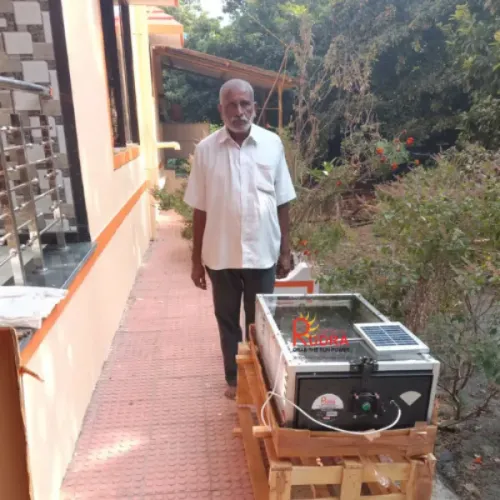
Rudra Solar Energy offers solar drying systems in different capacities and configurations for agricultural and food-processing applications. For a Sitapur requirement, sharing the commodity, fresh quantity per batch/day, current moisture condition and intended final product helps identify a more appropriate system configuration.
Keywords