Efficient Solar Dryer in Pudukkottai for Groundnut, Cashew and Mango
Groundnut is an important crop in Pudukkottai, and it has a place in the district's food-processing economy too. Cashew processing, rice mills and other agricultural businesses also contribute to local activity. Alongside these, farmers grow mango, banana, acid lime, guava, tapioca, chillies and turmeric. That mix creates different post-harvest needs: a groundnut grower, a cashew processor and someone preparing dried mango slices are not all looking for the same drying solution.
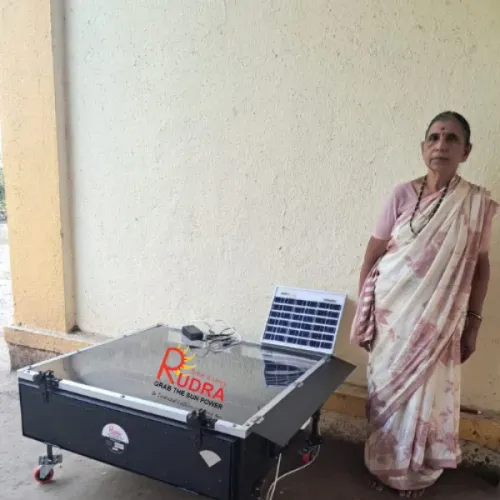
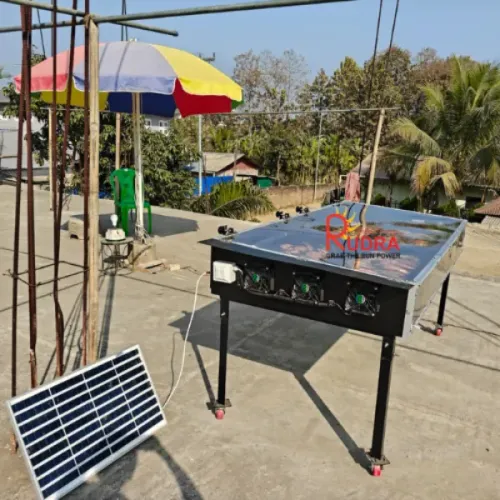
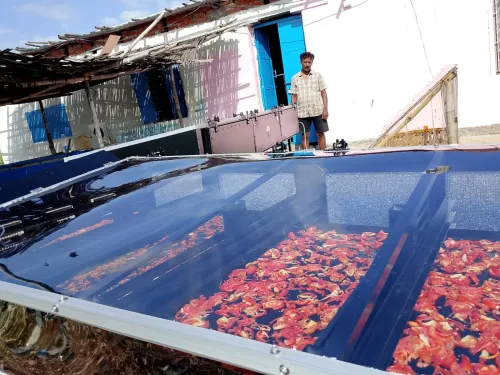
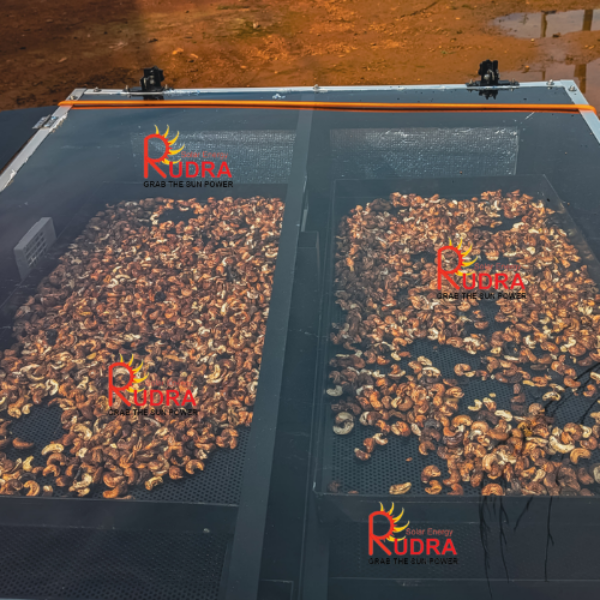
For some of these products, drying is an important step before storage or further processing. But leaving produce out in the open can mean dealing with dust, insects, birds and sudden changes in weather. A closed solar dryer provides a protected space where solar heat helps remove moisture from suitable produce.
Rudra Solar Energy has manufactured solar drying equipment in Ahmedabad since 2006. For farmers, FPOs, self-help groups and food-processing businesses in Pudukkottai, the first step is to match the dryer to the product and the amount that needs to be processed—not simply choose a machine based on its advertised capacity.
Where Solar Drying Fits into Pudukkottai's Agriculture
Groundnut deserves particular attention when discussing agricultural processing in Pudukkottai. The district's official industrial directory lists groundnut processing alongside cashew processing and rice mills. Its horticulture department also identifies cashew, mango, banana, acid lime, guava, tapioca, chillies and turmeric among the district's horticultural crops.
The opportunity for a solar dryer depends on what a farmer or processor actually wants to do with the produce. Someone handling groundnuts after harvest may have a different moisture-management requirement from a small unit preparing fruit slices for a packaged-food business.
A solar dryer is worth considering when the product is suitable for enclosed drying and the required batch size fits the equipment. It is not automatically the right choice for every crop or every stage of processing.
Which Products Can Be Dried?
Several products grown or processed in Pudukkottai may be suitable for particular solar-drying applications.
- Groundnut: Where moisture reduction is needed after harvest, the required drying endpoint should match the intended use and storage conditions.
- Cashew: The drying process must be selected for the actual processing stage. Raw nuts and processed kernels should not be treated as identical products.
- Mango: Cleaned, prepared slices or pieces can be considered for dehydration. Ripeness and slice thickness affect the process.
- Banana: Prepared banana slices may be suitable for dried-food production, depending on the intended product.
- Acid lime and guava: Suitable prepared pieces or slices can be assessed for dehydration applications.
- Chillies: Drying conditions depend on incoming moisture, preparation and the condition required for the finished product.
- Turmeric: The appropriate process depends on how the turmeric is prepared, including whether cleaning, boiling or slicing forms part of the workflow.
- Tapioca and selected vegetables: Prepared chips, slices or pieces may be suitable for moisture removal.
Paddy and maize also feature in the district's agricultural activity. However, a cabinet dryer designed for smaller batches should not be presented as a substitute for large-scale grain-drying equipment without checking the required throughput and system design.
What Happens Inside a Solar Dryer?
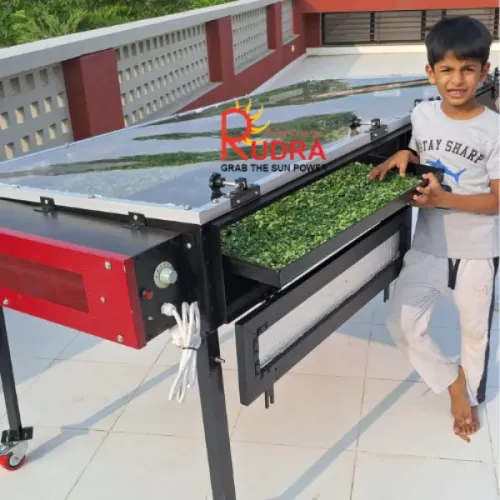
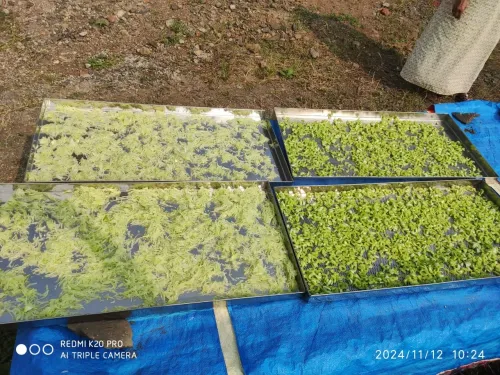
The preparation work starts before the produce reaches the machine. Depending on the crop, it may need cleaning, peeling, slicing or another suitable preparation step. The material is then arranged on trays, leaving enough space for air to circulate.
Sunlight provides heat to the drying chamber, while moving air carries moisture away from the produce. The way the trays are loaded matters: uneven layers or overcrowding can affect how consistently the material dries.
The goal is moisture reduction under suitable conditions. A solar dryer does not automatically grind groundnuts, roast cashews, cook food or turn dried onions into powder. Those are separate operations that may be needed later in a processing line.
That distinction matters when choosing equipment. Before requesting a quotation, explain the stage of processing you want the dryer to handle and what you plan to do with the product afterwards.
Is a Solar Dryer Suitable for Your Business?
The right setup depends on the work you do.
A farmer who wants to process a portion of the harvest may need a different capacity from an FPO collecting produce from several members. A cashew-processing business may need to discuss a specific stage of its operation, while a small food entrepreneur may be more interested in preparing fruit or vegetable slices.
Solar dryers may be relevant to:
- Groundnut and other crop growers exploring suitable post-harvest drying applications.
- FPOs and FPCs assessing shared processing facilities for member farmers.
- Self-help groups and women entrepreneurs planning small-scale dried-food products.
- Cashew processors looking at the drying needs of a defined processing stage.
- Food-processing MSMEs working with prepared fruits, vegetables, spices or other suitable produce.
- Cooperatives and agricultural enterprises evaluating equipment for a shared post-harvest workflow.
Before investing, consider whether there is a regular supply of suitable produce, who will operate the equipment and whether there is a market for the intended finished product. The dryer is one part of that business decision.
How Much Capacity Do You Need?
Rudra Solar Energy's cabinet dryer configurations range approximately from 5 kg to 500 kg of fresh input per batch, depending on the model. This is the weight of fresh material loaded into one batch—not the weight of the finished dried product and not a guarantee of daily output.
A small unit may be appropriate for limited batches, while an FPO or commercial processor handling regular volumes may need a larger configuration. Very large grain-processing operations may require a different type of equipment altogether.
Before choosing a model, work out:
- How much fresh produce you expect to process at one time.
- Whether the product will be whole, peeled, sliced or cut into pieces.
- How frequently you expect to run batches.
- Whether you will process one crop or different products through the year.
- What final condition the product needs to reach.
- Whether the proposed drying system suits your available space and operating routine.
Giving these details to the manufacturer makes it easier to discuss an appropriate configuration and avoid paying for capacity you may not need.
Drying Time Depends on the Product and Conditions
Two batches of the same crop can behave differently if their moisture content, slice thickness or loading arrangement differs. Sunshine, humidity, airflow and the final moisture requirement also affect the result.
For example, thin fruit slices and whole nuts do not necessarily dry at the same rate. Putting too much material on a tray can also restrict airflow and make drying less uniform.
There is no single drying time that can be guaranteed for every crop and every season. If your business needs to operate during cloudy or rainy periods, ask which additional operating options are available on the particular model you are considering. Not every configuration includes the same features.
For commercial processing, the intended product and its required final condition should be discussed before the operating method is decided.
Government Support for Solar Drying in Tamil Nadu
The Pudukkottai district administration's Agricultural Engineering Department page describes solar driers with subsidy assistance for agricultural value addition. The state also publishes scheme information through its agricultural services. However, published scheme details do not guarantee that applications are currently open or that every machine qualifies.
If you are considering a solar dryer with government support, contact the Agricultural Engineering Department in Pudukkottai before making a purchase. Ask about current availability, eligibility, approved technical specifications, the applicable subsidy amount and the required application process.
The district website lists the Executive Engineer's office at Pudukkottai, with contact number 04322-221816. Confirm the current contact details and scheme status directly with the department.
Rudra Solar Energy can provide product information for your enquiry, but final subsidy eligibility must be confirmed by the relevant government department.
Choosing a Manufacturer for Your Solar Dryer
A solar dryer is a practical investment, so the discussion should begin with your product rather than a generic machine description. Ask about the capacity of the model, the way your material should be prepared and loaded, and whether the configuration suits your intended use.
Rudra Solar Energy is an Ahmedabad-based solar dryer manufacturer established in 2006. The company reports more than 47,000 solar dryers sold. Farmers, FPOs, SHGs and processors can share their product and batch requirements to discuss which available configuration may fit their work.
For buyers in Pudukkottai, a useful starting point is simple: identify the product, estimate the fresh input per batch and explain what you need to achieve after drying. Those details help make the equipment discussion more specific.
Frequently Asked Questions
1. Which products from Pudukkottai may be suitable for solar drying?
Groundnut, cashew at suitable processing stages, mango, banana, acid lime, guava, chillies, turmeric and selected vegetables can be assessed for different drying applications. The preparation and final use determine the appropriate process.
2. Can I use a solar dryer for groundnut?
A suitable system may be considered when groundnut needs moisture reduction after harvest. The required endpoint depends on its intended use and storage conditions, so share those details before selecting a model.
3. Can cashew kernels be dried in a solar dryer?
The answer depends on the processing stage and the condition required for the finished product. Explain whether you are handling raw nuts, processed kernels or another stage so the application can be assessed correctly.
4. Can mango and banana be made into dried products?
Prepared mango and banana slices may be suitable for dehydration. Preparation, thickness, tray loading and the required final condition all influence the process.
5. What capacity solar dryer is available?
Rudra Solar Energy's cabinet dryer configurations range approximately from 5 kg to 500 kg of fresh input per batch, depending on the model. Choose based on your actual batch size and processing routine.
6. Will a solar dryer work during cloudy weather?
Drying can slow down when sunshine is limited or humidity is high. If you need additional operating options during such periods, ask which features are available on the specific model.
7. Can farmers in Pudukkottai get a subsidy for a solar dryer?
The district's Agricultural Engineering Department publishes information about solar-drier assistance. Current availability, eligibility and approved equipment specifications must be confirmed directly with the department before purchasing.
8. How can I get a quotation from Rudra Solar Energy?
Share the product you want to dry, the quantity of fresh material per batch, the preparation method and your location. The team can use these details to discuss a suitable configuration and provide a quotation.
Talk to Rudra Solar Energy
Looking for a high-quality solar dryer in Pudukkottai for groundnut, cashew, mango or another suitable agricultural product?
Tell us what you process and how much fresh material you handle per batch. We will help you assess a suitable solar dryer configuration for your requirements.
Call: 9429446671 / 7041262332
Email: rudrasolar@gmail.com
Keywords