High-Quality Solar Dryer in Ramanathapuram for Chillies, Coriander and Mango
Chillies have a strong place in Ramanathapuram's farming landscape. Coriander, mango, onion, brinjal, bhendi and jasmine are also listed among the district's horticultural crops. For farmers and food processors working with these products, drying can be part of the journey from fresh harvest to a product that is easier to handle, store or prepare for further processing.
The challenge is that each crop brings a different requirement. A chilli grower may be concerned about getting a consistent dried product, while a small business preparing mango slices needs to think about cutting, tray loading and the final texture. A coriander processor may be handling a different part of the plant and a different end use altogether.
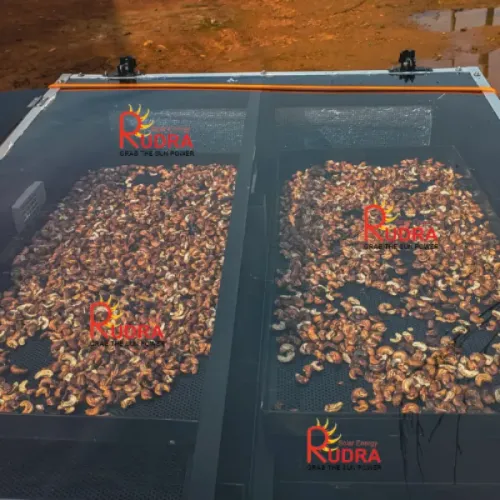
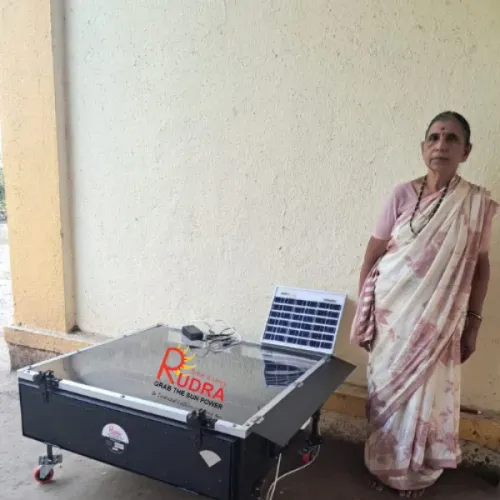
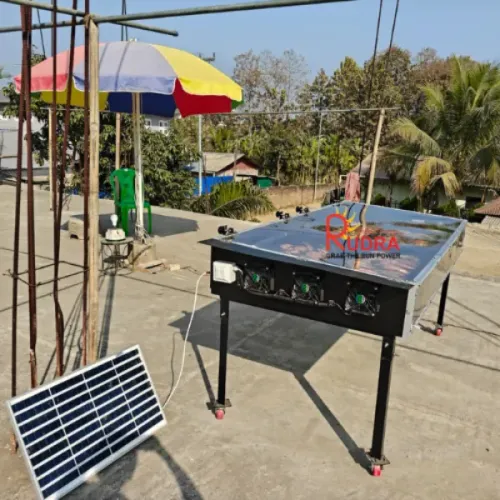
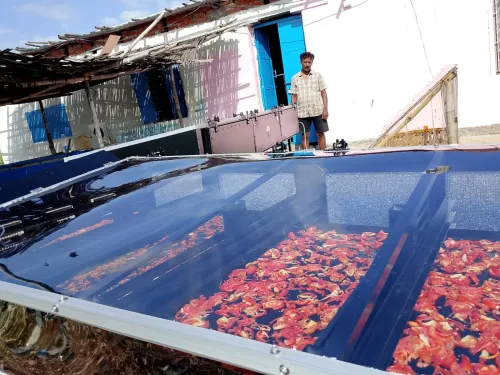
A solar dryer offers a protected space for drying suitable produce with heat from sunlight. It can help reduce reliance on open-air drying, where dust, insects and unexpected weather may interfere with the process. The useful question is not simply whether a solar dryer is available, but whether the machine fits the crop, batch size and finished product you have in mind.
Rudra Solar Energy, an Ahmedabad-based solar dryer manufacturer established in 2006, supplies drying equipment for different processing requirements. For buyers in Ramanathapuram, the starting point should be the product they handle and the quantity they need to process.
Why Solar Drying Is Worth Exploring in Ramanathapuram
Agriculture in Ramanathapuram includes both rainfed and irrigated cultivation. The district's Agriculture Department identifies paddy, millets, pulses, groundnut, gingelly, cotton, chillies and coriander among its agricultural crops. Its Horticulture Department also lists mango, onion, brinjal, bhendi and jasmine. These crops serve different markets, so post-harvest needs vary from one farm and processing unit to another. (Official district Agriculture Department | Official Horticulture Department)
For a small processor, the appeal of a solar dryer may be the ability to dry prepared produce in an enclosed chamber rather than spread it across an exposed surface. For an FPO or a group of growers, it may be worth evaluating whether shared drying equipment could support a regular processing activity.
The business case still comes down to practical details: what product will be dried, how much is available at one time, how often batches will be run and what buyers expect from the finished material.
Products That May Suit Solar Drying
Several crops associated with Ramanathapuram can be assessed for solar-drying applications. The right method depends on the crop and the stage at which it enters the dryer.
- Chillies: A potential application for moisture reduction after suitable preparation. The target condition should match the intended use and storage requirements.
- Coriander: Depending on whether the material is seed or leaf, the preparation and drying requirements will differ. These should be specified before choosing equipment.
- Mango: Prepared slices or pieces may be suitable for dried-fruit production. Ripeness, slice thickness and tray loading affect the result.
- Onion: Cleaned and sliced onion can be assessed for dehydration, including applications where the dried material will later be processed further.
- Brinjal and bhendi: Prepared slices or pieces may suit certain dried-vegetable products.
- Jasmine: Drying requirements depend on the intended end use. A method suitable for one product may not preserve the characteristics required for another.
- Groundnut and gingelly: These crops need to be assessed according to the exact post-harvest or processing stage. A cabinet solar dryer should not automatically be assumed to replace conventional bulk seed-drying equipment.
- Selected millets and pulses: Where a moisture-reduction application is being considered, first confirm that the equipment design and batch capacity suit the crop and the volume involved.
A solar dryer does not perform every operation needed to make a finished food product. Cleaning, peeling, cutting, grinding, roasting and packaging may all require separate equipment or processing steps.
How a Solar Dryer Works
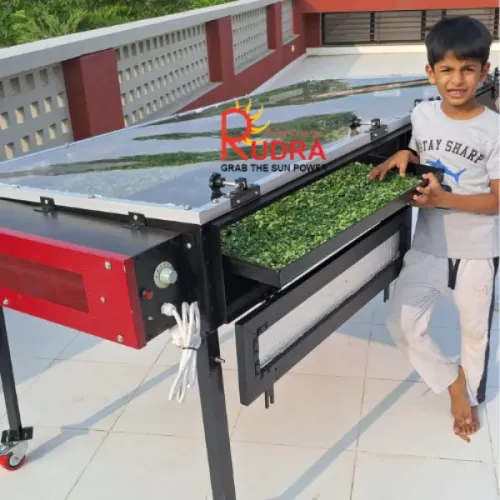
The process begins with preparation. Depending on the crop, produce may need to be cleaned, sorted, peeled or sliced before it is arranged on trays. The material should be spread in a way that allows air to move around it; loading trays too heavily can make drying uneven.
Inside the dryer, sunlight supplies heat to the drying chamber. Air movement helps carry moisture away from the product. The operator needs to pay attention to the crop, the amount loaded and the condition of the material during drying.
This is moisture removal, not sterilisation or cooking. A solar dryer also does not automatically turn dried chillies into powder or coriander into a packaged spice product. Those steps happen separately.
For a commercial buyer, it is useful to discuss the complete workflow with the manufacturer: what enters the dryer, how it will be prepared and what condition it must reach before the next stage.
Who Could Consider a Solar Dryer?
The equipment may be relevant to different types of agricultural businesses, although their capacity and operating requirements will not be the same.
Individual farmers may want to assess a small batch system for a suitable crop or a specific post-harvest requirement.
Farmer Producer Organisations and Farmer Producer Companies may be evaluating shared equipment that can serve several members. Before investing, they should estimate the combined volume available during the season and how regularly the dryer would be used.
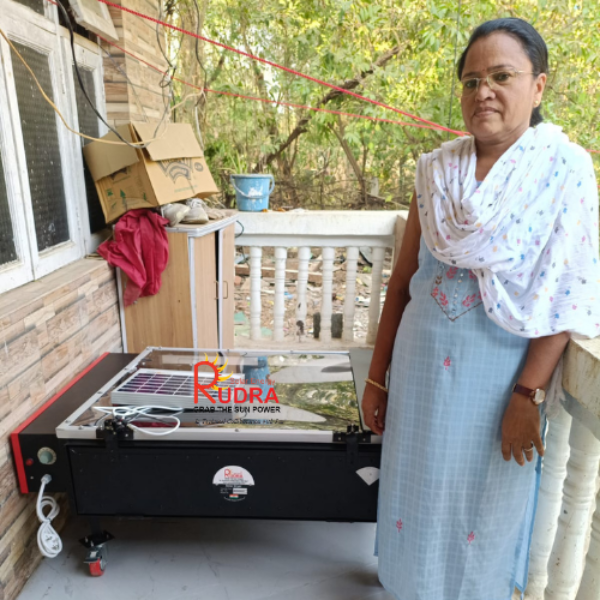
Self-help groups and women entrepreneurs may be interested in dried mango, onion, chilli or other suitable products for local or packaged-food markets. Product quality, food handling and a realistic sales plan need to be considered alongside the equipment.
Food-processing MSMEs may need a more consistent drying setup for prepared ingredients. Their requirements could include larger batch capacity, a defined workflow and the ability to repeat the process across production runs.
Spice processors and agricultural traders should identify the exact material and processing stage before choosing a machine. Drying whole produce, leaves, seeds and sliced vegetables can involve different requirements.
Choosing the Right Capacity
Rudra Solar Energy's cabinet dryer range is approximately 5–500 kg of fresh input per batch, depending on the model. This figure refers to fresh material loaded into a batch. It is not the weight of the dried product and should not be interpreted as guaranteed daily production.
A farmer processing a modest quantity may not need the same configuration as an FPO collecting produce from multiple villages. A processor handling seasonal chillies may also have a different workload from a business producing dried mango throughout the year.
Before requesting a quotation, work out:
- The crop or crops you intend to dry.
- The quantity of fresh material available per batch.
- Whether the material will be whole, sliced, peeled or otherwise prepared.
- How many batches you expect to process and how frequently.
- The condition required before the product is packed, sold or processed further.
- The space and operating arrangements available at your site.
These details help the manufacturer assess which available model is worth discussing. They also make it easier to compare equipment based on your actual work rather than capacity alone.
What Affects Drying Results?
There is no single drying time that applies to every crop. Chillies, coriander leaves, coriander seeds and mango slices do not behave alike during moisture removal. Even the same product may dry differently depending on incoming moisture, slice thickness, tray loading and weather conditions.
Sunshine, humidity and airflow also affect the process. Overloading trays or arranging produce in thick layers can restrict air movement and leave some material wetter than the rest.
For food businesses, the final moisture target should be set according to the intended product and storage requirements. If you need to process during periods of limited sunshine, ask the manufacturer whether the specific model has any additional operating options. Features can differ between configurations, so they should be confirmed rather than assumed.
Government Assistance and Agricultural Schemes
Tamil Nadu operates agricultural and horticultural support programmes, but the availability of assistance for a particular dryer depends on the current scheme, its technical conditions and the applicant's eligibility.
The Ramanathapuram Horticulture Department lists programmes covering areas such as horticultural crop development and farm mechanisation. That does not, by itself, confirm that a particular solar dryer qualifies for a subsidy at the time you apply. Check the latest scheme details with the relevant department before making a purchase or assuming a subsidy amount.
District Horticulture Department contact listed on the official website:
Deputy Director of Horticulture, Collectorate Complex, Ramanathapuram
Phone: 04567-230832
Check the current contact details, application window, eligible equipment specifications and required documents directly with the department. Rudra Solar Energy can discuss its equipment, but the government department must confirm scheme eligibility.
Why Discuss Your Requirements with Rudra Solar Energy?
Choosing a dryer is easier when the conversation begins with the product you actually process. The quantity of fresh produce, its preparation, the final condition you require and the way you plan to use the dried material all affect which configuration makes sense.
Rudra Solar Energy has been manufacturing solar drying equipment since 2006. The company reports more than 47,000 solar dryers sold. Farmers, FPOs, self-help groups and processors in Ramanathapuram can share their crop and batch requirements to discuss an appropriate available model.
If you are comparing options, bring your expected batch size and the name of the product you want to dry. That gives the team a more useful starting point than a general request for a machine.
Frequently Asked Questions
1. Which products from Ramanathapuram can be considered for solar drying?
Chillies, coriander, mango, onion and selected vegetables may be suitable for particular drying applications. The process depends on the product's preparation and the condition required after drying.
2. Can a solar dryer be used for chillies?
A suitable dryer can be considered for moisture reduction in prepared chillies. The target condition should match the intended use and storage requirements, and the appropriate model should be selected for the batch size.
3. Can coriander leaves and coriander seeds use the same drying method?
Not necessarily. Leaves and seeds have different physical characteristics and may require different preparation and operating conditions. Explain which material you handle before selecting the equipment.
4. Can mango slices be dried for a food-processing business?
Prepared mango slices may be suitable for dehydration. Ripeness, slice thickness, loading and the required finished product affect the process.
5. What capacity solar dryer can I buy from Rudra Solar Energy?
Cabinet dryer configurations range approximately from 5 kg to 500 kg of fresh input per batch, depending on the model. The appropriate capacity depends on your product, batch size and processing schedule.
6. Does solar drying mean the product is ready to sell?
Not automatically. Drying removes moisture; cleaning, grinding, further processing, quality checks and packaging may still be required, depending on the product and the market.
7. Is a government subsidy available for a solar dryer in Ramanathapuram?
Current eligibility must be confirmed with the relevant Tamil Nadu department. Ask whether a scheme is open, which equipment qualifies and what documents are required before purchasing.
8. How do I request a solar dryer quotation?
Share the product you want to dry, the fresh input quantity per batch, the preparation method and your location. Rudra Solar Energy can use these details to discuss a suitable configuration and quotation.
Request a Solar Dryer Quote for Ramanathapuram
Looking for an efficient, reliable solar dryer for chillies, coriander, mango, onion or another suitable product?
Tell Rudra Solar Energy what you process and how much fresh material you handle in each batch. The team can help you assess an available solar dryer configuration for your requirements.
Call: 9429446671 / 7041262332
Email: rudrasolar@gmail.com
Keywords