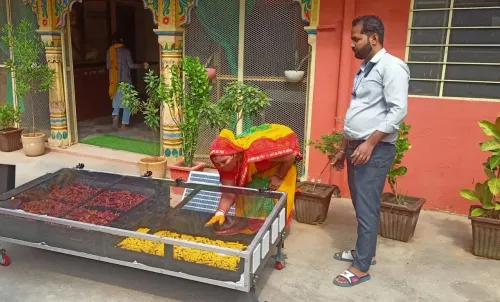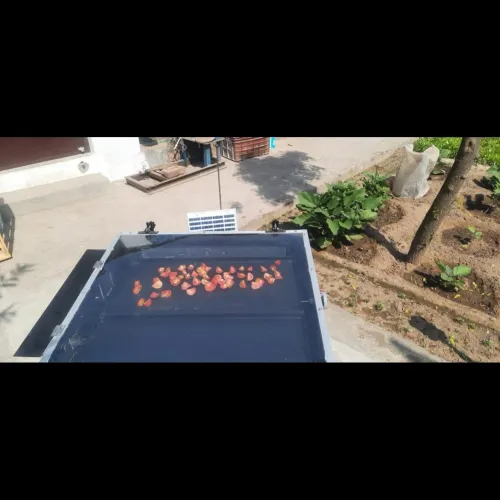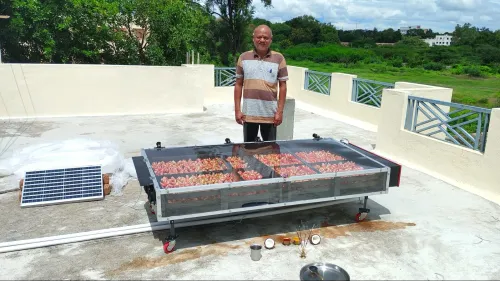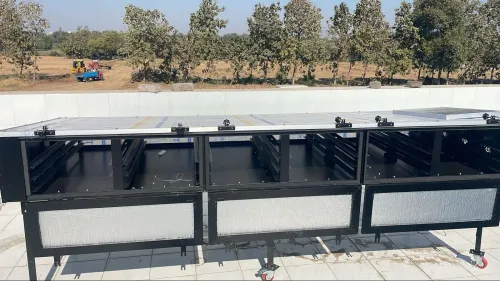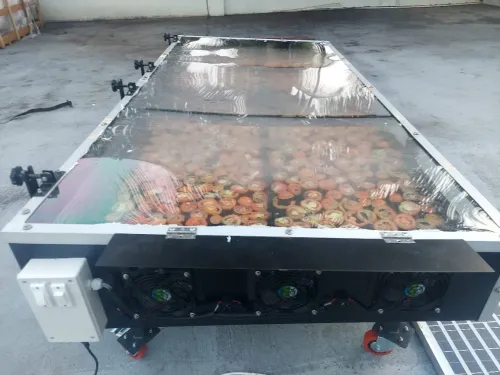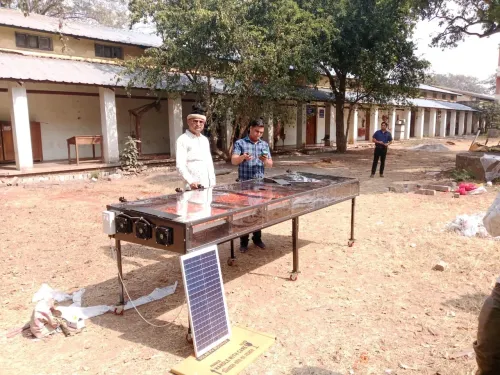
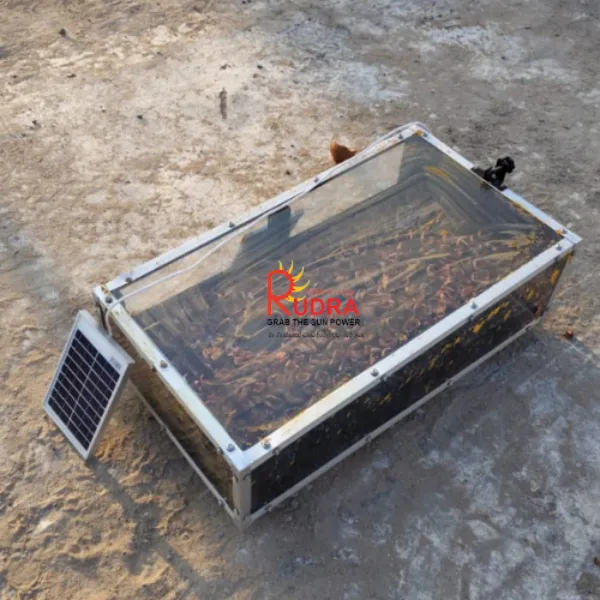
Pilibhit’s Terai agricultural landscape supports a diverse mix of rice, wheat, sugarcane, mustard, sesame, blackgram and horticultural produce. The district also has an established rice and flour milling ecosystem, making post-harvest moisture management relevant for farmers, FPOs, SHGs, grain and seed handlers, food processors and rural enterprises. For suitable commodities, a Rudra Solar Dryer can provide an enclosed drying environment where solar thermal energy and managed airflow work together to reduce moisture while limiting direct exposure to dust, insects, birds and uncontrolled outdoor conditions. Because Pilibhit also experiences seasonal humidity, fog and variable weather, drying performance should always be assessed according to the commodity, initial and target moisture, layer depth, airflow, temperature, relative humidity, solar radiation and actual weather conditions.
1. What are the strongest solar drying applications for Pilibhit?
Pilibhit’s crop mix creates several potential solar drying applications beyond conventional field drying.
Suitable applications can include:
- Rice and paddy where post-harvest moisture reduction is required
- Wheat and other grains
- Mustard
- Sesame
- Blackgram and other suitable pulses
- Agricultural and horticultural seeds
- Tomato and peas
- Selected vegetables
- Mango and other suitable fruits
- Herbs, spices and medicinal plant materials handled by local processors
The district’s agricultural profile includes rice, wheat, sugarcane, sesame, blackgram, toria and mustard, while horticultural documentation also includes tomato, pea, mango and muskmelon.
Each material requires its own drying strategy.
Rice, mustard seed, blackgram, tomato and mango differ in moisture content, physical structure, bulk density and required final condition. A single drying temperature, tray loading pattern or fixed number of hours should therefore not be applied to every commodity.
2. How can solar drying support rice and grain handling in Pilibhit?
Rice is especially relevant to Pilibhit because the district has both rice cultivation and rice-milling activity.
After harvest, grains may require moisture reduction before safe storage, milling, seed use or further processing depending on their initial condition.
For grains, effective drying requires attention to:
- Initial grain moisture
- Required final moisture
- Grain depth
- Bulk density
- Airflow through the grain layer
- Drying-air temperature
- Relative humidity
- Solar availability
- Intended storage or processing use
Loading too much grain in a deep layer can restrict airflow and make moisture removal less uniform.
An enclosed solar dryer can provide a defined drying environment with managed airflow, but the correct loading configuration must match the grain and system design.
For commercial users, the objective should be to achieve an appropriate moisture condition for the intended next step rather than simply exposing grain to maximum heat.
3. Can mustard, sesame and pulses be dried using a solar dryer in Pilibhit?
Yes, suitable oilseeds and pulses can be considered for controlled solar drying where moisture reduction is required before storage, processing or seed use.
Pilibhit’s documented cropping systems include mustard, sesame and blackgram.
Oilseeds require particular attention because their physical and compositional characteristics differ from cereal grains.
For mustard and sesame, drying decisions can depend on:
- Initial seed moisture
- Oil content
- Seed size
- Layer depth
- Airflow
- Required storage condition
- Processing objective
For pulses such as blackgram, moisture management may support storage and further processing.
If any seed is intended for planting, drying conditions should also consider seed viability and germination. Excessive heat should not be used simply to accelerate drying where seed quality must be retained.
This makes commodity-specific control more important than a one-size-fits-all drying schedule.
4. Why are humidity and fog important when planning solar drying in Pilibhit?
Pilibhit’s weather makes humidity management especially important.
ICAR-CRIDA identifies fog as a regular climatic issue for the district and also documents seasonal risks including flood, hailstorm, heat wave and cold wave.
Solar drying depends not only on temperature but also on the ability of air to absorb and carry moisture away from the product.
When relative humidity is high:
- Air can hold less additional moisture
- Drying may slow
- Moisture removal from the product surface can become more difficult
- Longer exposure may be required
- Airflow becomes particularly important
During foggy or low-solar-radiation periods, a solar-only dryer may receive less useful thermal input.
Therefore, a commercial processor planning regular production should assess seasonal operating requirements before deciding between a solar-only system and an appropriately designed hybrid configuration.
Solar drying should never be described as producing identical results during every season.
5. What is the difference between open-sun drying and enclosed solar drying in Pilibhit?
Open-sun drying generally exposes produce directly to the surrounding environment.
Depending on the drying location, agricultural material can come into contact with:
- Dust
- Soil
- Insects
- Birds
- Wind-blown particles
- Sudden rainfall
- Moist night air
- Irregular surfaces
An enclosed solar dryer separates the product from much of this uncontrolled outdoor exposure.
Inside the dryer, solar energy provides thermal input while airflow carries evaporated moisture away from the material.
Depending on system design, solar-powered DC fans may assist air circulation.
An enclosed system can support:
- Organized loading
- More protected product handling
- Better airflow management
- Batch separation
- Easier monitoring
- Reduced dependence on open yards, roofs or roadsides
The important advantage is better process control and protection.
It should not be interpreted as complete independence from sunlight, humidity or weather.
6. How long will rice, mustard, vegetables or fruits take to dry in a solar dryer in Pilibhit?
There is no universal drying time for Pilibhit.
The actual duration depends on the combined effect of the commodity, system loading and weather.
Important variables include:
- Initial moisture
- Required final moisture
- Commodity structure
- Whole or sliced condition
- Slice thickness
- Seed or grain size
- Layer depth
- Tray loading
- Airflow
- Temperature
- Relative humidity
- Solar radiation
- Cloud or fog conditions
- Dryer configuration
For example:
A thin vegetable slice behaves differently from whole grain.
Mustard seed differs from paddy in size and oil content.
A mango slice contains far more moisture than a dry pulse approaching its storage condition.
Because these moisture pathways are different, advertising one fixed drying duration for every product would be technically misleading.
The correct endpoint should be determined according to the commodity and its intended storage or processing requirement.
7. How should farmers, FPOs and processors select solar dryer capacity in Pilibhit?
Solar dryer capacity should be selected using more than fresh weight alone.
A technically useful enquiry should identify:
- Commodity
- Fresh batch quantity
- Initial moisture
- Required final moisture or product condition
- Whole, sliced, leafy or granular form
- Acceptable loading depth
- Required tray or drying area
- Number of batches
- Seasonal operating period
- Available installation area
- Solar exposure
- Need for backup or hybrid heating
This is important because equal weights do not necessarily create equal drying loads.
For example, 30 kg of grain can occupy a very different drying area from 30 kg of sliced vegetables or leafy material.
A suitable system should therefore be selected using:
Commodity + Batch Weight + Drying Area + Loading Depth + Airflow + Moisture Requirement + Production Schedule
rather than nominal kilogram capacity alone.
8. Why consider a Rudra Solar Dryer for agricultural processing in Pilibhit?
A Rudra Solar Dryer can be considered by Pilibhit-based farmers, FPOs, SHGs, grain and seed handlers, food processors and agro-enterprises that require controlled moisture reduction for suitable agricultural products.
Applications can include grains, pulses, oilseeds, seeds, fruits, vegetables, herbs, spices and other compatible produce.
Depending on application and system configuration, important considerations may include:
- Enclosed drying chamber
- Managed airflow
- Solar-powered DC fans where applicable
- Organized tray or chamber loading
- Multiple capacity options
- Commodity-specific system selection
- Solar thermal drying
- Hybrid configuration where required
For someone searching for a solar dryer in Pilibhit, solar drying machine in Pilibhit, commercial solar dryer in Pilibhit, solar dryer for rice, solar dryer for wheat, solar dryer for mustard, solar dryer for sesame, solar dryer for vegetables or an agricultural drying system in the Pilibhit region, system selection should begin with the actual commodity and moisture-management requirement.
Final Answer for Solar Drying in Pilibhit
Pilibhit presents a distinctive solar drying opportunity because its agricultural base includes grains, oilseeds, pulses and horticultural produce while its Terai conditions can also bring humidity and fog into the post-harvest drying equation.
For appropriate commodities, enclosed solar drying can provide a more protected and manageable alternative to uncontrolled outdoor drying.
The strongest drying result depends on matching the system with:
Commodity characteristics → Initial moisture → Required final moisture → Preparation → Loading depth → Drying area → Airflow → Temperature → Humidity → Solar radiation → Weather → Final processing objective
A properly selected Rudra Solar Dryer can therefore support Pilibhit farmers, FPOs, SHGs and processing enterprises as one stage within a wider workflow involving cleaning, preparation, moisture reduction, storage, milling, packaging or value-added processing.
The most appropriate system is not necessarily the one promising the shortest drying time or highest nominal kilogram capacity. It is the configuration that matches the real crop, batch size, moisture requirement and operating conditions of the user.
Keywords