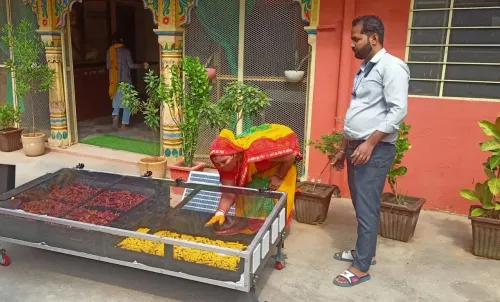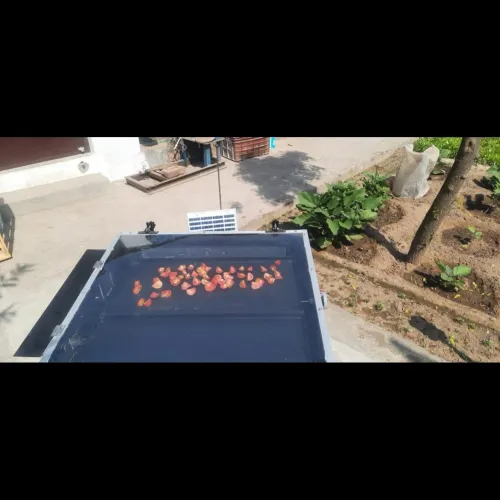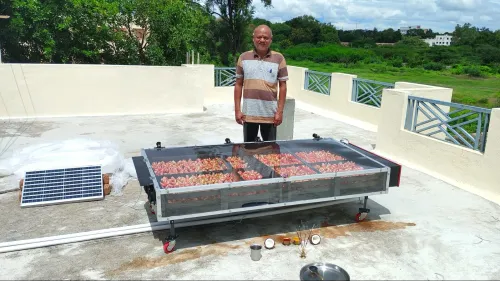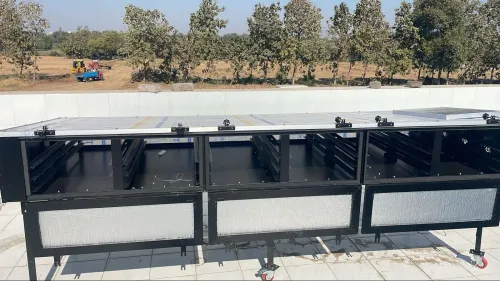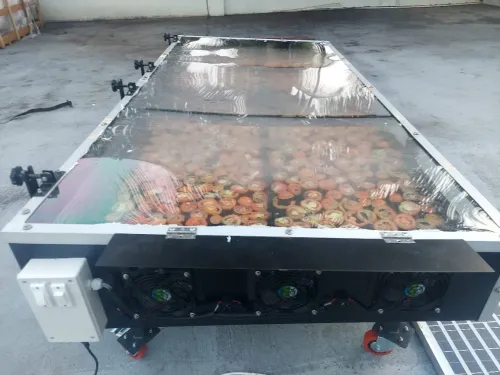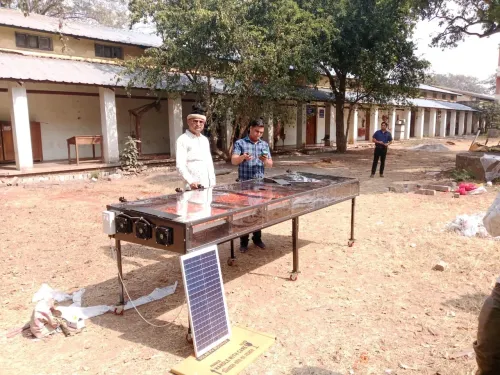
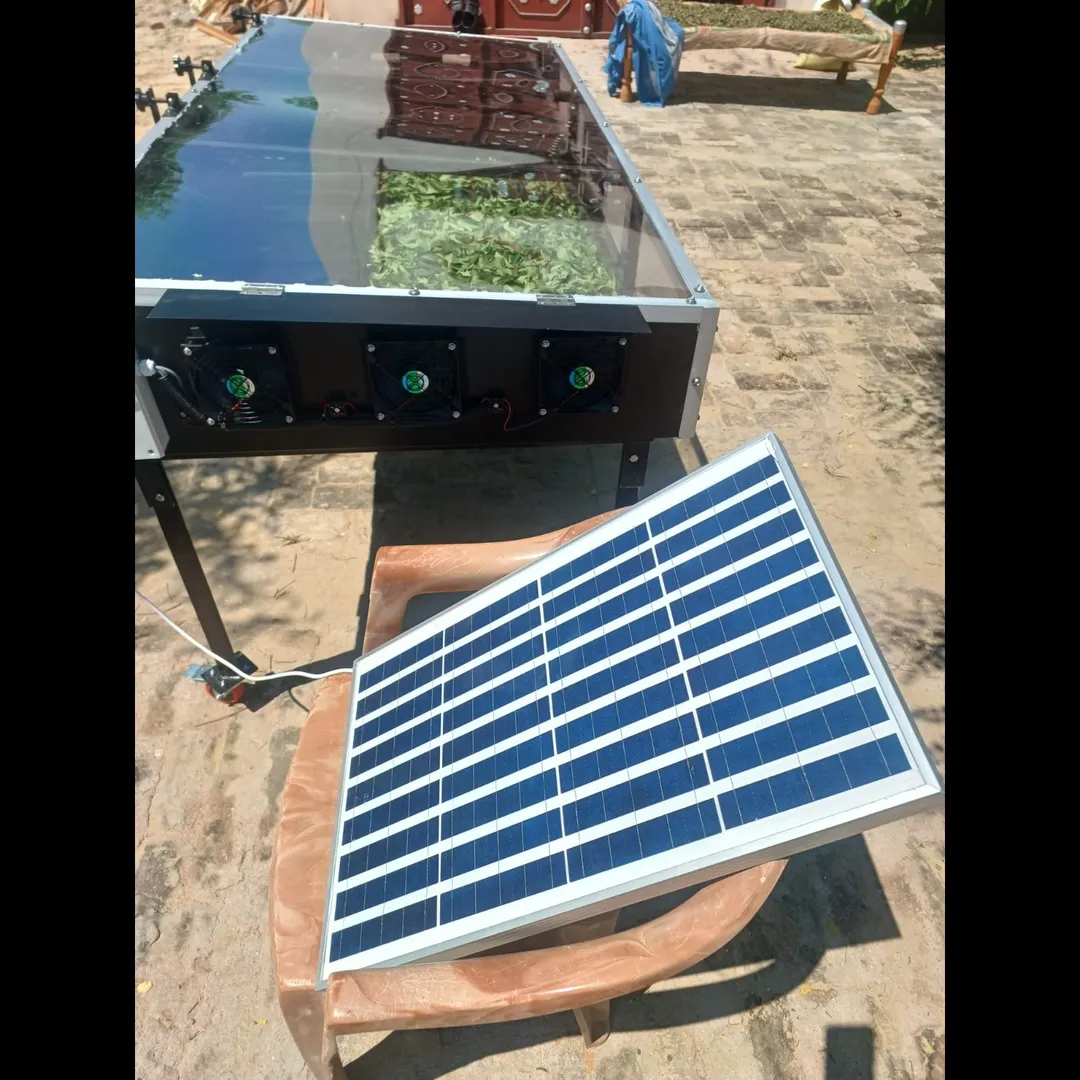
Meerut is an important agricultural and commercial centre of western Uttar Pradesh, with strong connections to wheat, rice and the wider food-processing economy of the region. Farmers, FPOs, SHGs, seed handlers, traders and agro-processing enterprises around Meerut may handle grains, vegetables, spices, herbs, seeds and other farm produce that require controlled moisture reduction before storage or further processing. A Rudra Solar Dryer provides an enclosed solar drying environment using solar thermal energy and managed airflow, helping processors move beyond uncontrolled open-sun drying. The actual drying result, however, depends on the commodity, initial and required final moisture, preparation, layer thickness, tray loading, airflow, relative humidity, solar radiation and local weather conditions.
1. Why is a solar dryer useful for farmers and food processors in Meerut?
Meerut lies within one of western Uttar Pradesh’s important agricultural and food-distribution regions. Large quantities of grains and other agricultural materials are harvested, traded, stored or processed across the surrounding area.
After harvest, excess moisture can create difficulties in storage and further processing if it is not managed appropriately. Traditional open-sun drying can also expose produce directly to dust, insects, birds, wind-blown contaminants and changing weather.
An enclosed solar dryer offers a more controlled drying environment. Solar energy provides useful thermal input, while airflow removes moisture released by the product. Depending on dryer design, solar-powered DC fans can support forced air circulation.
Solar drying can therefore be considered for:
- Farmers handling value-added produce
- FPOs and farmer groups
- SHGs
- Grain and seed handlers
- Food-processing MSMEs
- Spice and herb processors
- Agricultural traders
- Rural entrepreneurs
- Commercial agro-processing units
The objective is not simply to heat the commodity, but to manage moisture under suitable drying conditions for the intended end use.
2. Which agricultural products can be dried in a solar dryer in Meerut?
A solar dryer in Meerut can be used for different suitable agricultural commodities according to their individual drying requirements.
Relevant applications can include:
Wheat and grains: Grain may require moisture reduction before safe storage, milling, seed handling or other processing.
Rice and paddy-related applications: Where drying is required, loading depth, grain moisture and airflow need careful consideration.
Vegetables: Onion, garlic, tomato, okra, leafy vegetables and other suitable produce can be dried for flakes, powders, ingredients or other value-added applications.
Spices: Chilli, turmeric, ginger, coriander and other suitable spice materials can require drying before storage, grinding or further processing.
Herbs and medicinal materials: Mint, tulsi, moringa and other suitable leafy or herbal materials may be dried for herbal and value-added applications.
Seeds: Agricultural and horticultural seeds may require controlled moisture reduction, particularly when storage quality or seed viability is important.
Different commodities must not be treated as if they dry in the same way. Wheat grain, chilli, mint leaves and sliced vegetables differ greatly in size, density, surface area, moisture content and temperature sensitivity.
3. Is an enclosed solar dryer better than traditional open-sun drying in Meerut?
Open-sun drying places agricultural produce directly in the surrounding environment. Although it is a traditional and low-cost practice, controlling contamination, airflow, temperature and unexpected weather changes can be difficult.
An enclosed solar dryer separates the loaded produce from direct outdoor exposure while using solar energy for drying.
Depending on system configuration, potential operational advantages include:
- Reduced direct exposure to dust
- Protection from insects and birds
- Organized tray-based or chamber loading
- Better management of airflow
- More controlled product handling
- Reduced dependence on exposed roads, roofs or open ground for drying
- Easier monitoring of individual batches
However, solar drying should not be described as completely independent of weather. Solar radiation, ambient temperature and relative humidity continue to influence a solar-only system.
The practical advantage is therefore a more protected and manageable drying process rather than a claim of identical drying under every weather condition.
4. How long does solar drying take for wheat, rice, vegetables or spices in Meerut?
There is no scientifically reliable single drying time that can be applied to every commodity in Meerut.
Actual drying duration depends on several interacting factors:
- Commodity type
- Initial moisture content
- Required final moisture
- Whole or sliced condition
- Slice thickness where applicable
- Layer depth
- Tray loading
- Airflow
- Drying temperature
- Relative humidity
- Solar radiation
- Weather conditions
- Dryer design and capacity
For example, thin leafy herbs have very different airflow and temperature requirements from dense grain. Similarly, whole chilli behaves differently from sliced vegetables.
For grains and seeds, the required final moisture should be selected according to storage, processing or seed requirements. For fruits, vegetables, herbs and spices, the required drying endpoint also depends on the intended final product.
Therefore, a processor should monitor the product condition and moisture requirement instead of relying only on a fixed number of drying hours.
5. How do Meerut weather conditions affect solar drying performance?
Solar dryers use available solar radiation as a source of thermal energy, so local weather naturally influences performance.
Important environmental factors include:
Solar radiation: Higher useful solar input generally supports greater thermal energy availability.
Relative humidity: When surrounding air contains more moisture, its ability to absorb additional moisture from the product can decrease.
Ambient temperature: Seasonal temperature changes can influence the operating conditions inside the drying system.
Cloud cover: Reduced solar radiation can lower useful thermal input in a solar-only system.
Air movement: Adequate movement of moisture-laden air away from the product is essential for effective drying.
Meerut experiences seasonal variation across summer, monsoon and winter periods. Therefore, commercial users requiring a predictable production schedule should evaluate whether solar-only operation is sufficient or whether a suitable hybrid configuration is needed.
A solar dryer should never be selected on the assumption that every month of the year will provide identical drying conditions.
6. How should farmers or processors choose the right solar dryer capacity in Meerut?
Solar dryer capacity should be selected according to the actual commodity and processing requirement rather than only by choosing the largest kilogram rating available.
Before selecting a solar dryer in Meerut, users should identify:
- Commodity to be dried
- Fresh quantity per batch
- Initial moisture condition
- Required final product or moisture endpoint
- Whether the material is whole, sliced or otherwise prepared
- Layer thickness and tray-area requirement
- Number of batches expected
- Available installation space
- Solar-only or hybrid operating requirement
- Expected utilisation throughout the season or year
Tray area is especially important.
For example, 20 kg of leafy herbs may occupy considerably more surface area than 20 kg of dense grain. Therefore, equal fresh weights do not necessarily require the same drying configuration.
The correct capacity should match both weight and physical loading characteristics of the commodity.
7. Who can use a commercial solar dryer in Meerut?
Commercial solar drying can be relevant to different participants in Meerut’s agricultural and processing ecosystem.
Potential users include:
- Individual farmers undertaking value addition
- Farmer Producer Organisations
- Farmer cooperatives
- Self-Help Groups
- Food-processing MSMEs
- Grain processors
- Seed processors and handlers
- Spice-processing businesses
- Herbal-product businesses
- Agricultural traders
- Rural entrepreneurs
- Institutional or commercial processing units
For a farmer or FPO, solar drying may support post-harvest handling and development of value-added products.
For a food processor, it may form one stage in a larger workflow involving cleaning, cutting, drying, grinding, packaging or storage.
For a seed handler, moisture management may be important before storage, while drying conditions must also be selected carefully where germination and seed viability need to be maintained.
The appropriate application therefore depends on both the commodity and the commercial objective.
8. Why consider a Rudra Solar Dryer in Meerut?
A Rudra Solar Dryer can be considered by Meerut-based farmers, FPOs, SHGs and commercial processors seeking an enclosed solar drying system for agricultural and food-processing applications.
Rudra Solar Energy develops solar drying systems in different capacities and configurations for suitable grains, fruits, vegetables, spices, herbs, seeds, medicinal plants and other agricultural materials.
Depending on the system design and requirement, important considerations can include:
- Enclosed drying chamber
- Managed airflow
- Solar-powered DC air circulation where applicable
- Tray-based product loading
- Different capacity options
- Commodity-specific system selection
- Solar-only or suitable hybrid configurations according to requirement
The correct system should be selected only after understanding the commodity, batch quantity, tray-area requirement, initial and target moisture, expected production schedule and available installation conditions.
For businesses searching for a solar dryer in Meerut, solar drying machine in Meerut, commercial solar dryer in Meerut, solar dryer for wheat and grains, solar dryer for vegetables, solar dryer for spices or an agricultural drying solution in western Uttar Pradesh, the strongest approach is to select the system according to the actual processing requirement rather than relying on one universal capacity, temperature or drying-time claim.
A properly selected solar drying system can become part of a broader post-harvest and value-addition process involving suitable drying practices, hygienic handling, storage, packaging and market-oriented processing.
Keywords