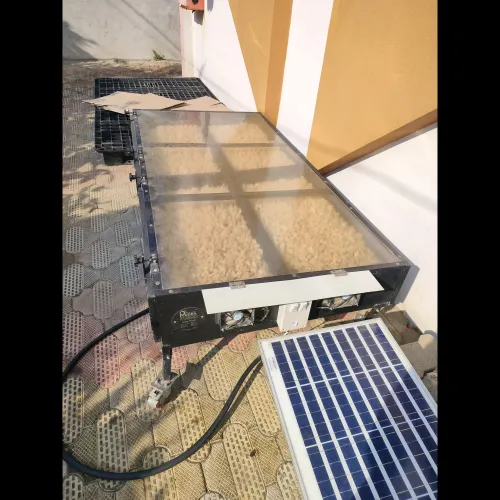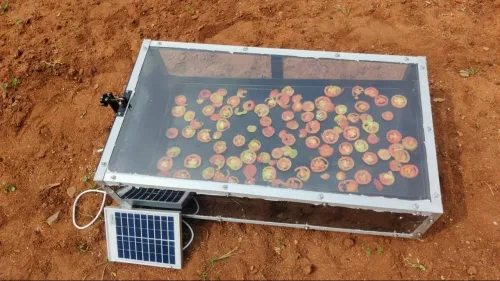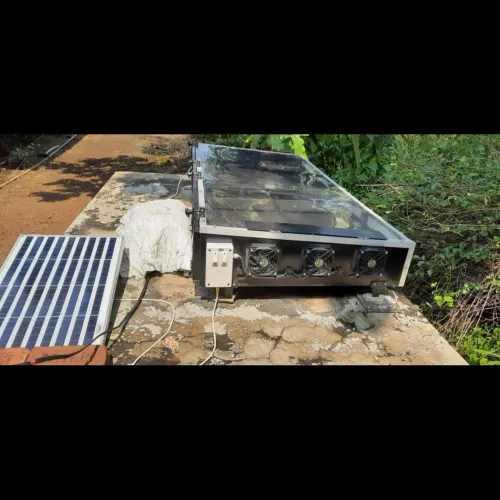
Farmers, FPOs, SHGs and agro-processing businesses looking for a solar dryer in Sultanpur, Uttar Pradesh need a system that matches the actual commodity, batch quantity and final use of the dried product. Sultanpur has a strong rural base, while wheat, rice, gram, maize, pulses and common vegetables are part of the district’s established agricultural and food context. The Gomti River also passes through the district, which includes large rural areas across its five tehsils and fourteen development blocks.
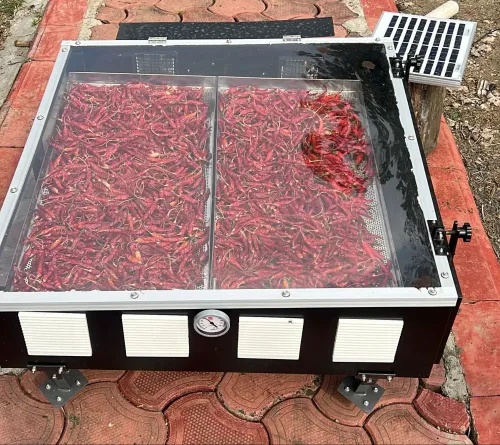
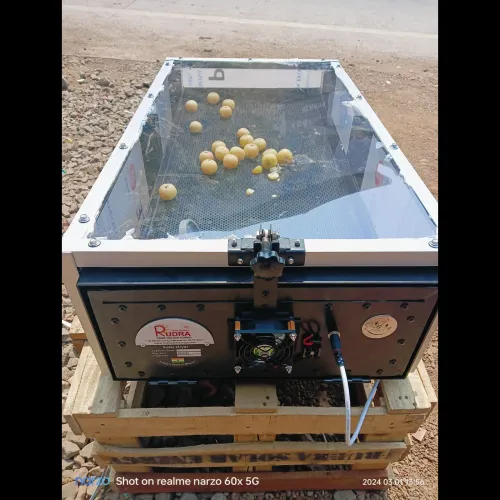
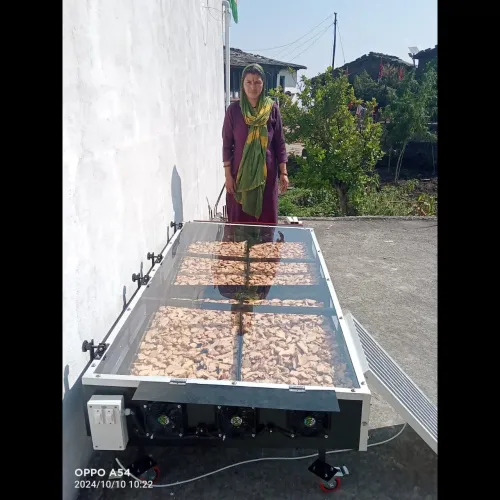
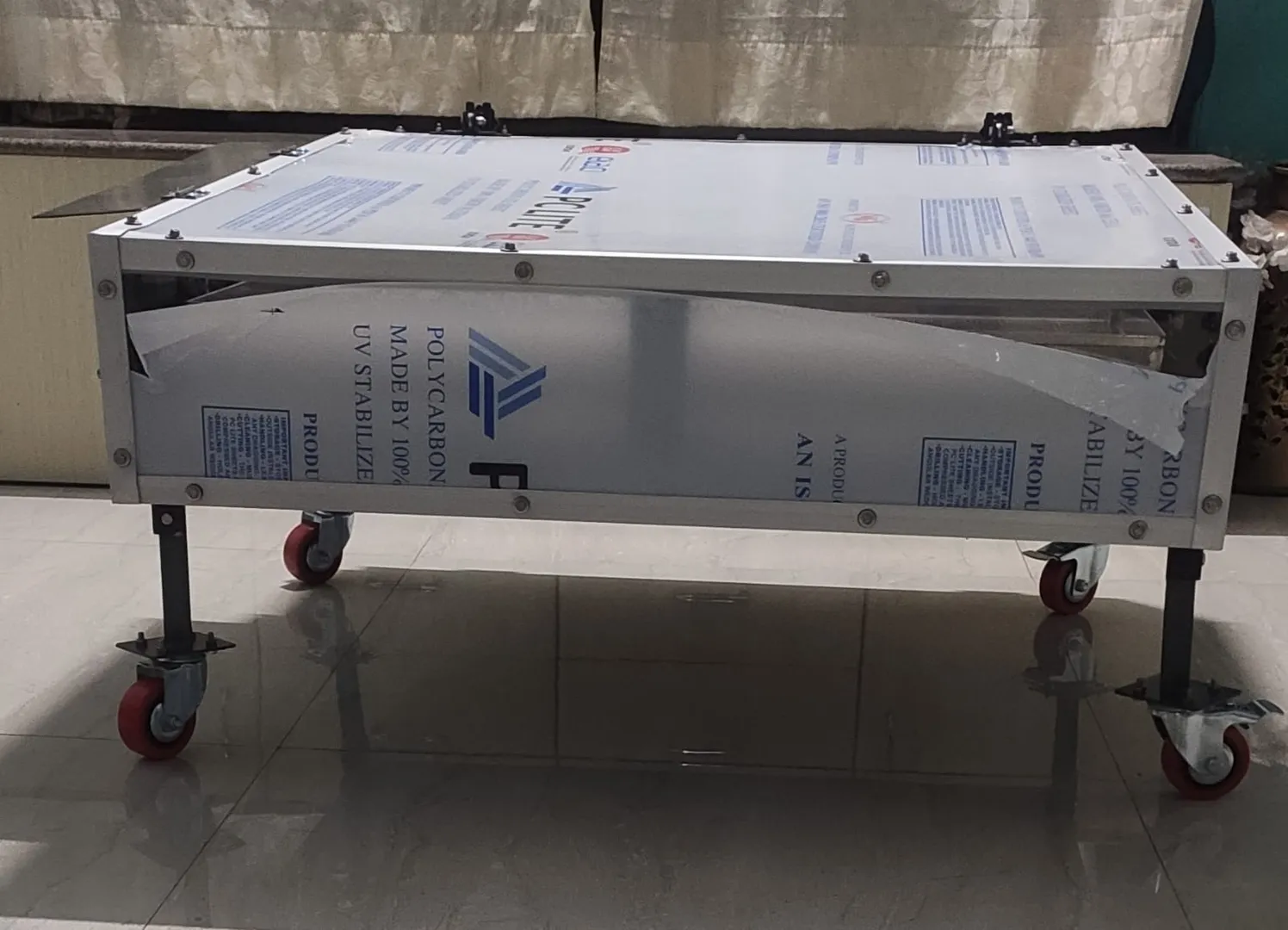
For suitable farm produce, a Rudra Solar Dryer can provide an enclosed drying environment with organized batch handling and managed airflow instead of leaving the material directly exposed during open-sun drying. However, grain, pulses, seeds, vegetables and herbs should not be dried using one common temperature or fixed number of hours. The process must be selected according to the commodity and its actual moisture condition.
1. Which agricultural products can be dried in a solar dryer in Sultanpur?
A solar dryer can be considered for several suitable agricultural applications in Sultanpur, including:
- paddy and selected cereal grains
- wheat
- maize
- gram and other pulses
- suitable seed lots
- chilli and selected spices
- onion, garlic and selected vegetables
- herbs and leafy materials
- seasonal farm produce intended for value-added drying
Wheat, rice, gram, maize and pulses are already part of Sultanpur’s documented local food and rural context, making grain and pulse moisture management particularly relevant applications to evaluate.
The drying method should still be designed separately for each product. A thick grain layer, sliced vegetable and leafy herb cannot be loaded or dried in the same way.
2. Why can an enclosed solar dryer be useful for grain and pulse handling in Sultanpur?
Traditional open drying exposes the material directly to the surrounding environment and usually requires repeated spreading, turning and collection.
An enclosed solar drying system allows suitable produce to be handled in a more structured batch process. Depending on the model and application, this can provide:
- reduced direct exposure to dust and insects
- protected tray or batch handling
- managed movement of heated air
- more organized loading and unloading
- easier monitoring of individual batches
The objective is not simply to make the product “hot.” Good drying depends on removing moisture progressively while avoiding unsuitable heat exposure or uneven loading.
3. Can paddy, wheat and maize be processed in a Rudra Solar Dryer?
Yes, provided the system configuration is suitable for grain drying.
For paddy, wheat or maize, the important parameters include:
- moisture level at loading
- required final moisture
- grain-layer depth
- quantity per batch
- airflow through the grain
- ambient relative humidity
- solar radiation and weather
- intended storage, milling or further processing
One batch may arrive significantly wetter than another, so a statement such as “all grain dries in X hours” would not be technically reliable.
The operator should assess the actual moisture condition instead of deciding completion only from surface appearance.
4. How should gram and other pulses be solar dried?
Gram and other suitable pulses may require controlled moisture reduction before storage, processing or packaging.
For pulse applications, material should be loaded at an appropriate depth so airflow can interact with the batch. Overloading the drying surface may cause the upper and lower portions of the material to dry at different rates.
The intended use also matters. A pulse being prepared for food processing may have different handling priorities from material intended for seed or long-term storage.
This is why dryer selection should start with the commodity + moisture condition + batch quantity + final use, rather than capacity alone.
5. Can a solar dryer be used for seed drying in Sultanpur?
It can be considered for suitable seed applications, but seed drying requires more caution than ordinary food-product drying.
When seed is intended for future planting, excessive temperature exposure can be undesirable because germination and seed quality need to be protected.
Seed processors should therefore consider:
- seed type
- initial moisture
- target storage moisture
- temperature sensitivity
- loading depth
- airflow
- duration of exposure
- intended storage period
A solar dryer intended for seed-related work should therefore be selected and operated according to the specific seed rather than using a universal drying setting.
6. Can Sultanpur farmers create value-added products instead of drying only grains?
Yes. Solar drying can also support suitable value-added farm processing.
Depending on seasonal raw-material availability and the intended market, farmers, SHGs, FPOs and micro-enterprises may evaluate products such as:
- dried chilli
- dried vegetable pieces
- onion or garlic ingredients
- dried herbs
- selected fruit products
- dried agricultural ingredients
- ingredients intended for further grinding or processing
For example, drying and grinding are two different operations. A solar dryer removes moisture; if a business wants powder, the properly dried material would normally undergo a separate grinding process afterward.
This distinction is important when planning a real commercial processing line.
7. What solar dryer capacity is suitable for a farmer, FPO or agro-processor in Sultanpur?
Solar dryer capacity should primarily be selected from the fresh or wet material loaded per batch, not from the expected weight after drying.
Before selecting a machine, identify:
- commodity
- kilograms of fresh material per day
- kilograms per batch
- seasonal availability
- initial moisture
- desired final moisture
- preparation method
- tray loading or grain-layer depth
- expected number of batches
- final product or storage purpose
For example, a high-moisture vegetable may lose a large part of its weight during drying, whereas grain requires a much smaller percentage of moisture removal. Therefore, the same “100 kg” figure does not represent the same drying requirement for every commodity.
This is why application-based capacity selection is more useful than simply choosing the largest available dryer.
8. Where can I get a Rudra Solar Dryer for Sultanpur, Uttar Pradesh?
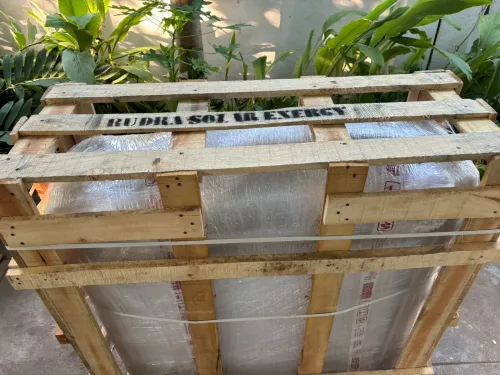
Rudra Solar Energy provides solar drying systems in multiple capacities and configurations for farmers, FPOs, SHGs, agricultural processors and food-processing enterprises.
Depending on the selected model and application, Rudra Solar Dryer systems can use an enclosed drying chamber, solar thermal energy and managed airflow to support more protected and organized drying of suitable agricultural materials.
For a solar dryer requirement in Sultanpur, share:
- what product you want to dry
- fresh quantity per batch/day
- present moisture condition
- required final moisture or final product
- whether the material is for food, seed, storage or value addition
- available installation space
These details help identify an appropriate dryer capacity and configuration instead of applying the same drying system and process to every crop.
Why application-specific solar drying matters in Sultanpur
A solar dryer should not be treated simply as a chamber into which any crop can be loaded in the same way. Paddy, wheat, gram, maize, seeds, chilli and vegetables differ in moisture content, physical structure, loading behaviour and final quality requirements.
For Sultanpur’s farmers and agro-enterprises, the better approach is therefore to combine local raw-material availability with the right dryer capacity, loading method, airflow and moisture target. That makes the solar drying system useful not just for drying a crop, but as part of a more organized post-harvest and value-addition workflow.
Keywords