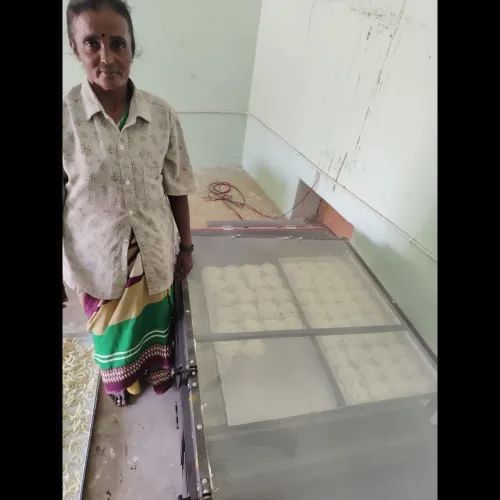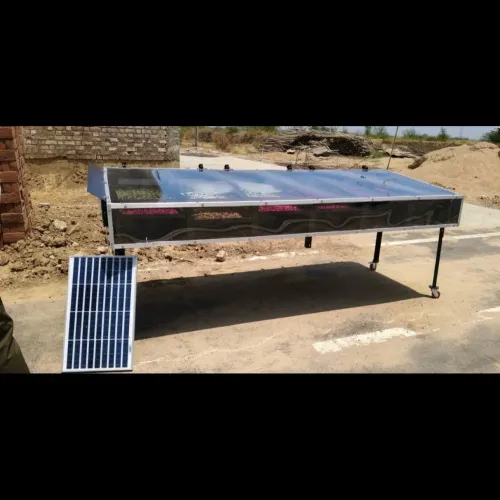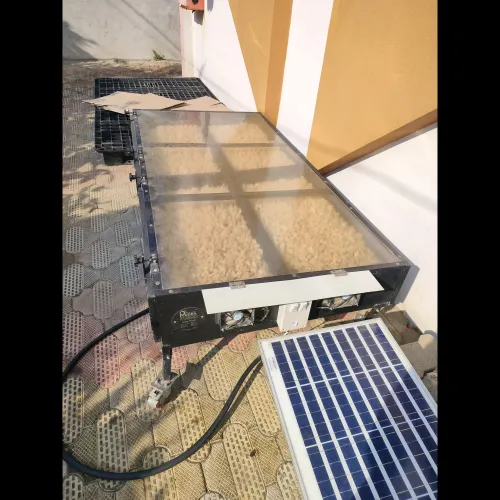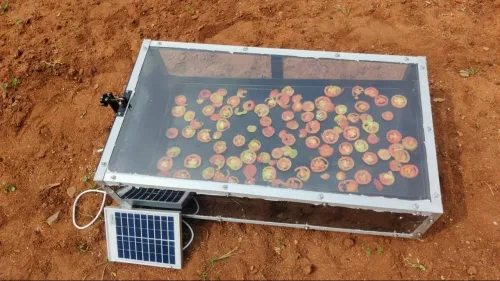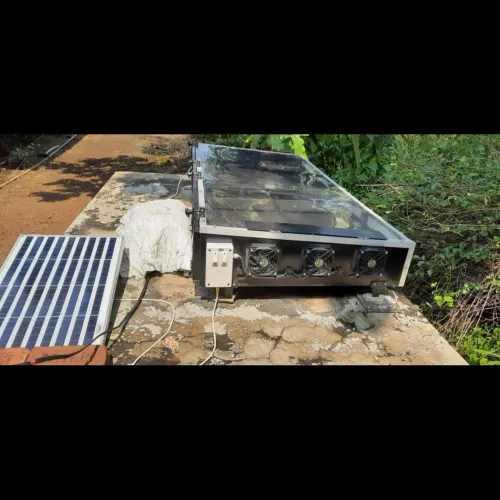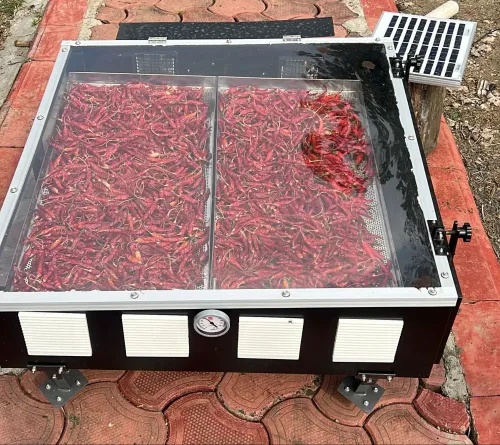
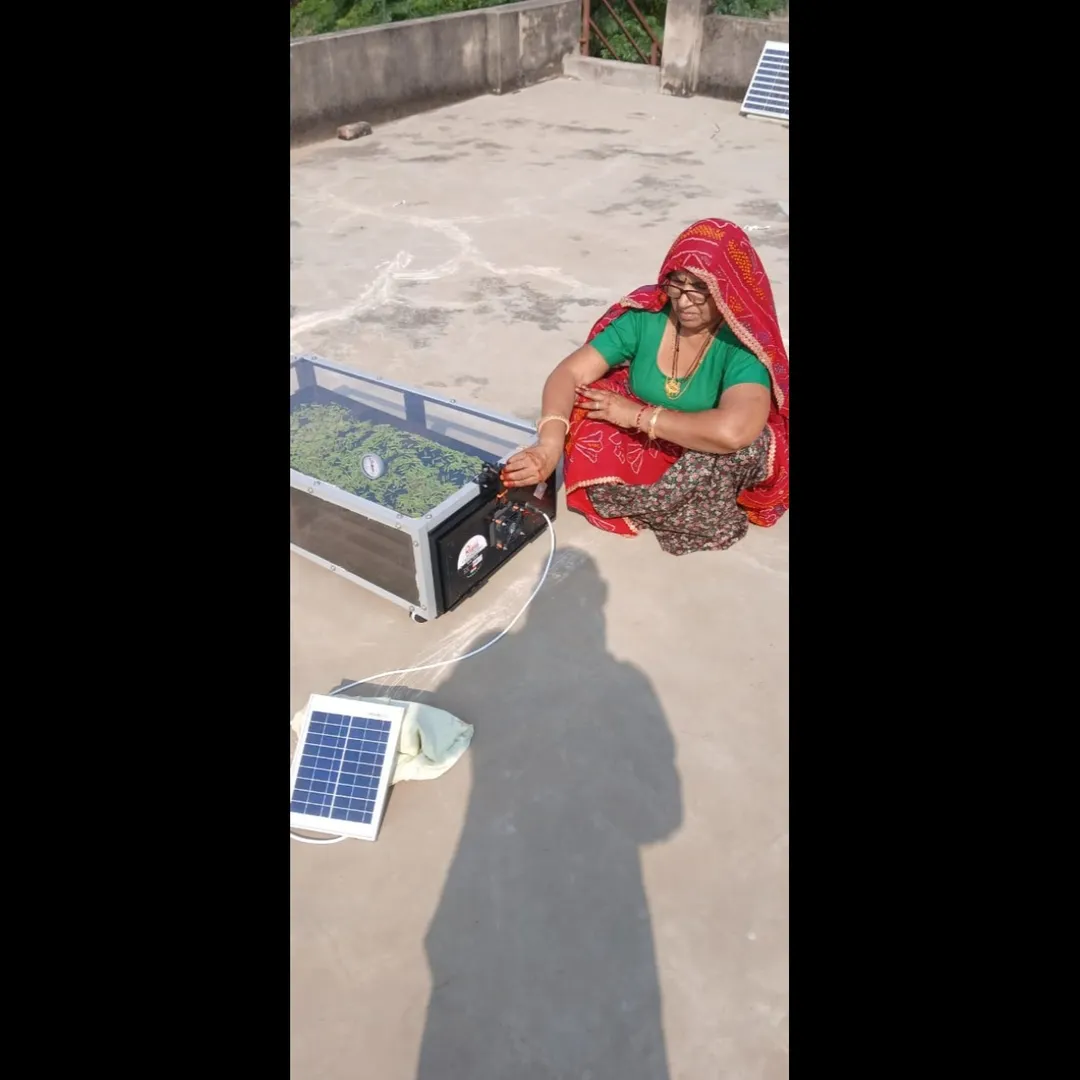
Pratapgarh is one of Uttar Pradesh’s most recognisable aonla-producing districts, and its agricultural identity is closely connected with Indian gooseberry cultivation and food processing. Aonla is processed locally into products such as powder, candy, murabba, pickle and other value-added foods, creating opportunities for farmers, SHGs, FPOs and processors to improve post-harvest handling before further processing. A Rudra Solar Dryer can provide an enclosed solar drying environment for suitable aonla preparations, fruits, vegetables, herbs, spices, medicinal materials and other agricultural produce where controlled moisture reduction is required. The correct drying process depends on the commodity, initial and desired final moisture, preparation, slice thickness, loading, airflow, temperature, humidity, solar radiation and local weather rather than one universal drying time.
1. Why is solar drying especially relevant for Aonla processing in Pratapgarh?
Aonla is one of Pratapgarh’s defining agricultural products and supports a local food-processing ecosystem involving growers, processors, SHGs, traders and other enterprises.
Solar drying can be relevant where aonla or aonla-based material needs moisture reduction as part of a specific value-added processing route.
Depending on the intended product, aonla may undergo:
- Sorting and washing
- Cutting, slicing or deseeding
- Appropriate pretreatment
- Drying
- Grinding where powder is required
- Packaging and storage
An enclosed solar dryer can provide a defined drying chamber with managed airflow instead of exposing prepared material directly to the surrounding environment.
However, not every aonla product requires the same drying operation.
Aonla powder, dried pieces, candy or other processed products follow different preparation and moisture-management requirements. The drying stage should therefore be designed around the required final product rather than applying one standard method to every aonla application.
2. What products can be dried using a solar dryer in Pratapgarh?
Although aonla provides Pratapgarh with a strong district-specific drying opportunity, solar drying can also be considered for other suitable agricultural and food materials handled by local processors.
Applications may include:
Aonla and fruit materials
Prepared aonla, mango, guava and other suitable fruits can be considered for dried slices, powders or other value-added processing depending on the required final product.
Vegetables
Onion, garlic, tomato, potato, okra and other compatible vegetables may be processed into dried pieces, flakes or ingredients.
Herbs and medicinal materials
Moringa, tulsi, neem leaves and other suitable plant materials can require controlled moisture reduction.
Spices
Chilli, turmeric, ginger, coriander and other suitable spice materials may require drying before grinding or further processing.
Seeds and other farm produce
Selected seeds and agricultural raw materials may also require moisture management before storage or further use.
Each commodity requires separate consideration because moisture movement, loading density and temperature sensitivity are different.
3. How can solar drying support Aonla value addition rather than only preservation?
Solar drying can become part of a broader value-addition process when processors convert suitable fresh agricultural produce into market-oriented products.
For aonla, value addition may involve products such as dried pieces or powder where drying is technically appropriate for the selected process. Pratapgarh already has an established aonla-processing identity, and UP’s ODOP programme specifically identifies the district with Amla Products and Food Processing.
A typical value-addition workflow may involve:
Raw material selection → Cleaning → Preparation → Drying → Moisture check → Further processing → Packaging → Storage
Drying is only one stage.
Commercial success also depends on:
- Raw material quality
- Consistency of preparation
- Final moisture condition
- Hygiene
- Packaging
- Storage
- Food-safety compliance
- Product positioning
- Market demand
Therefore, solar drying should be selected as part of a complete processing strategy rather than as a stand-alone guarantee of higher income or longer shelf life.
4. Why can enclosed solar drying be preferable to open-sun drying in Pratapgarh?
Open-sun drying exposes produce directly to outdoor conditions.
Depending on where material is spread, it may encounter:
- Dust
- Soil
- Insects
- Birds
- Wind-blown particles
- Uncontrolled human or animal contact
- Sudden weather changes
- Rewetting risks
An enclosed solar dryer places the product inside a drying chamber.
Solar thermal energy supplies heat while airflow transports moisture away from the loaded material.
Depending on system design, solar-powered DC fans may support forced air circulation.
Potential operational advantages include:
- More protected product handling
- Organized tray loading
- Better management of airflow
- Easier separation of batches
- Reduced direct exposure to contaminants
- Improved monitoring of the drying process
The advantage should be understood as improved process protection and control.
A solar-only dryer is still influenced by sunlight, ambient temperature, humidity and cloud conditions.
5. What controls the drying quality of Aonla, fruits, herbs and spices?
Drying quality is not controlled by temperature alone.
Several factors interact during moisture removal:
Initial moisture:
A product containing more water generally requires more moisture removal before reaching the desired endpoint.
Preparation:
Whole fruit behaves differently from sliced, deseeded or otherwise prepared material.
Slice thickness:
Thicker pieces generally create a longer moisture pathway than thinner uniform pieces.
Tray loading:
Overloading can reduce effective airflow around the product.
Airflow:
Moisture released from the material must be continuously transported away.
Temperature:
Suitable temperature depends on the commodity and final product requirement.
Relative humidity:
Humid air has less capacity to accept additional moisture.
Solar radiation:
Available sunlight influences thermal input in a solar-only system.
These factors explain why aonla, chilli, leafy herbs and vegetables should not be given the same drying schedule.
6. How long does Aonla take to dry in a solar dryer in Pratapgarh?
There is no single scientifically reliable drying time that applies to every aonla batch.
Drying duration can change according to:
- Variety and maturity
- Initial moisture
- Whole, sliced or processed condition
- Piece thickness
- Pretreatment
- Tray loading
- Airflow
- Drying temperature
- Relative humidity
- Solar radiation
- Weather
- Desired final moisture
- Dryer configuration
Even two aonla batches of equal weight can behave differently if their preparation, thickness or moisture condition differs.
The correct approach is to define the final product requirement and monitor the drying process toward that endpoint.
This same principle applies to fruits, vegetables, herbs, spices and other agricultural materials.
A fixed claim such as “every product dries in the same number of hours” should not be used as the primary basis for system selection.
7. How should an FPO, SHG or food processor choose solar dryer capacity in Pratapgarh?
Capacity selection should begin with the application rather than only the advertised kilogram rating.
A processor should first define:
- Commodity
- Fresh batch quantity
- Initial moisture
- Required final product
- Preparation method
- Slice or material thickness
- Required tray area
- Layer depth
- Expected number of batches
- Seasonal or year-round operation
- Available installation space
- Solar-only or hybrid requirement
For aonla processing, the same fresh weight can create different drying requirements depending on whether the material is loaded as larger pieces, thin slices or another prepared form.
Similarly, leafy herbs require a different drying area and airflow pattern from dense fruit pieces.
A suitable system should therefore be selected using:
Commodity + Batch Quantity + Preparation + Tray Area + Airflow + Moisture Requirement + Production Schedule
rather than kilogram capacity alone.
8. Why consider a Rudra Solar Dryer for Pratapgarh?
A Rudra Solar Dryer can be considered by aonla processors, farmers, FPOs, SHGs, food-processing MSMEs, herbal businesses and agricultural enterprises in Pratapgarh that require an enclosed solar drying solution for suitable commodities.
Applications can include aonla and other fruits, vegetables, herbs, spices, medicinal materials, seeds and compatible agricultural products.
Depending on system design and processing requirement, important considerations can include:
- Enclosed drying chamber
- Managed airflow
- Solar-powered DC fans where applicable
- Organized tray loading
- Multiple capacity configurations
- Commodity-specific system selection
- Solar thermal drying
- Hybrid operation where required by the process
For users searching for a solar dryer in Pratapgarh, solar drying machine in Pratapgarh, solar dryer for Aonla, Amla drying machine, commercial solar dryer in Pratapgarh, solar dryer for fruits, solar dryer for herbs and spices or a food-processing drying solution in Uttar Pradesh, the correct system should be matched to the real processing requirement.
Final Answer for Solar Drying in Pratapgarh
Pratapgarh has a particularly strong opportunity for solar drying because aonla is deeply connected with the district’s agricultural and food-processing identity. The district is officially recognised for Amla Products and Food Processing, making aonla-based value addition an especially relevant local application.
Solar drying can also support suitable fruits, vegetables, herbs, spices, medicinal materials, seeds and other agricultural produce handled by local enterprises.
The most effective drying process is determined by:
Commodity → Initial moisture → Required final moisture → Preparation → Slice thickness → Tray loading → Airflow → Temperature → Humidity → Solar radiation → Weather → Final product requirement
A properly selected Rudra Solar Dryer can become one stage in a broader Pratapgarh value-addition workflow involving cleaning, preparation, controlled moisture reduction, further processing, packaging and storage.
For aonla processors and other agricultural enterprises, the strongest approach is not to choose a system on the basis of the shortest promised drying time. It is to select the dryer configuration that matches the actual commodity, batch size, tray requirement, target moisture and intended final product.
Keywords