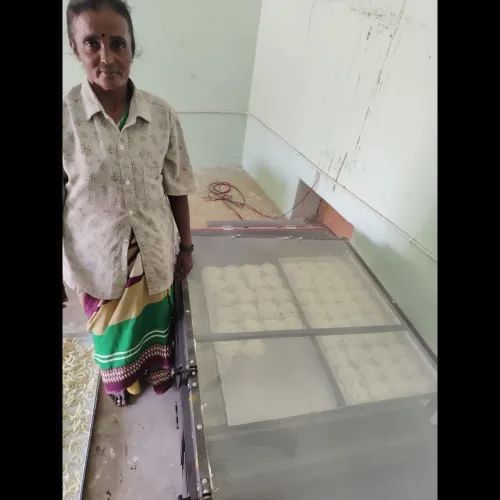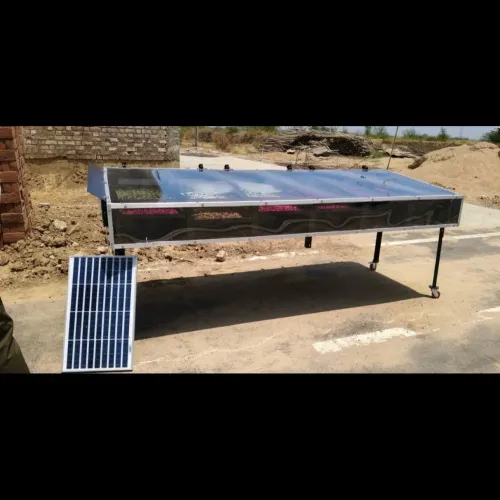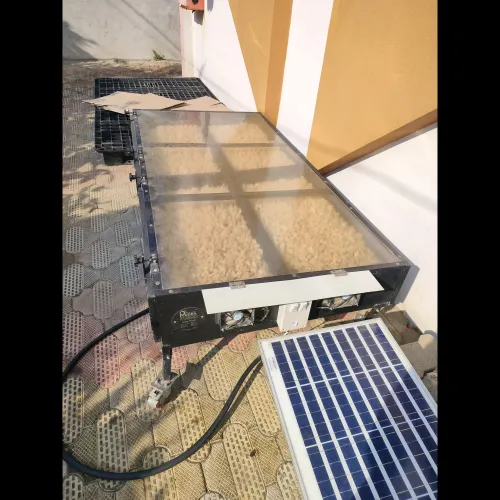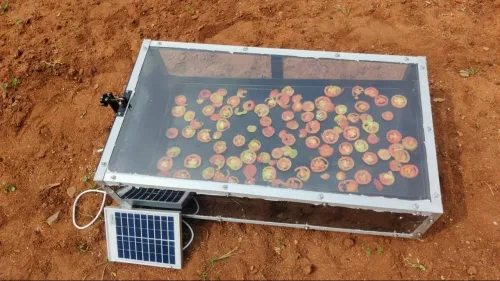
Mathura’s agricultural base includes vegetables, peas, mustard, bajra, wheat, barley, pulses and other seasonal produce that may require timely post-harvest handling. Farmers and processing groups across Mathura, Farah, Mahawan, Baldeo, Manth, Raya, Naujheel, Chhata, Nandgaon, Goverdhan and nearby areas can use solar drying for selected food and agricultural applications. A properly selected Solar Dryer in Mathura can help process suitable produce inside an enclosed chamber instead of leaving prepared food directly exposed to dust, insects and outdoor contamination. The process must still be supported by hygienic preparation, correct tray loading, adequate airflow, batch monitoring and packaging designed for the final product.
Q1. What food-processing opportunities can a Solar Dryer create in Mathura?
Mathura has a mix of vegetables, peas, pulses, oilseeds and grains. Each commodity has different drying requirements, but a solar dryer can support multiple applications when products are processed separately and suitable operating procedures are followed.
Seasonal vegetables can be developed into dried slices, flakes, ingredients or powders after correct preparation. Peas and selected pulses may be processed after commodity-specific cleaning and pretreatment. Cleaned grains and seeds may also require controlled moisture reduction before safe storage or further processing.
A solar dryer can be useful for:
- Farmers looking to process suitable surplus produce
- FPOs collecting raw material from multiple growers
- SHGs developing packaged food products
- Rural entrepreneurs starting small processing units
- MSMEs producing dried ingredients
- Food-service suppliers
- Spice, grain and vegetable-processing businesses
- Training and demonstration centres
Fresh-market sale should remain the first option for produce that meets buyer requirements. Drying should be considered for sound raw material selected specifically for a defined finished product.
Mouldy, fermented, rotten, pest-infested or chemically contaminated produce must not be used for drying. Moisture removal cannot make unsafe raw material suitable for consumption.
Q2. Which products can be processed using a solar dryer in Mathura?
A Solar Dryer in Mathura can be evaluated for vegetables, peas, culinary leaves and selected agricultural products according to local availability and buyer demand.
Possible finished products include:
- Dried vegetable slices
- Onion slices or flakes
- Tomato slices
- Dried leafy vegetables
- Culinary herbs
- Blanched and dried green peas
- Dried vegetable mixtures
- Ingredients for soups and ready-to-cook products
- Dried vegetable material for further milling
- Selected cleaned pulses and seeds
- Grains requiring controlled moisture finishing
The processor should decide the final product before selecting the preparation method. Vegetables intended for slices require a different process from material intended for powder. Similarly, green peas require different preparation from grain, mustard seed or leafy produce.
Products with strong odours should normally be dried separately from mild-flavoured commodities. Onion, herbs and other aromatic materials can transfer odour when incompatible products are processed together or when trays are not cleaned adequately.
A trial batch should be conducted for every new product. The processor should evaluate colour, aroma, texture, final moisture, rehydration behaviour, storage stability and packaging performance before increasing batch size.
Q3. How should vegetables and green peas be prepared for solar drying?
Vegetables should first be sorted to remove rotten, mouldy, bruised or pest-damaged material. Only sound produce should proceed to washing and preparation.
The exact process depends on the commodity, but it may include:
- Sorting and grading
- Hygienic washing
- Peeling where required
- Uniform slicing or cutting
- Blanching or another suitable pretreatment
- Removal of excess surface water
- Single-layer tray loading
- Monitored drying
- Hygienic cooling
- Moisture-resistant packaging
Pieces of widely different thicknesses may not dry evenly. Thick pieces can retain moisture in their centre, while excessively thin pieces may become brittle, stick to the trays or lose the desired texture.
Green peas generally require a suitable blanching process before drying. Blanching conditions should be selected according to the product and followed by proper draining. Loading wet peas directly onto trays increases the amount of surface moisture that must be removed.
Vegetables should not be piled deeply to increase batch weight. Overloading blocks airflow and can create wet pockets. Product should be arranged according to the available tray area rather than forcing excess material into the chamber.
No universal drying time or temperature should be assigned to every vegetable. Tomato, onion, peas, leafy produce and herbs release moisture at different rates.
Q4. Can mustard, pulses, wheat, barley and bajra also be handled in a solar dryer?
Solar drying can support moisture management for selected grains, pulses and seeds, but this application is different from dehydrating sliced vegetables.
Mustard, wheat, barley, bajra, gram, moong, urd and other cleaned agricultural produce may require moisture reduction before storage, milling or further processing. The operator must know the initial moisture, required final moisture and safe storage specification for the selected commodity.
The product should be cleaned before loading. Stones, soil, plant residue, damaged seeds and foreign material should be removed. Grains or seeds should be spread at an appropriate depth so that air can contact the batch.
Excessively deep loading can cause uneven moisture reduction. The material near the air path may dry faster while deeper layers remain wetter. Mixing or movement should only be carried out according to the tray design and operating procedure.
A solar dryer is not a substitute for moisture measurement. Grain or seed that feels dry externally may still contain unsuitable internal moisture. The finished batch should be checked using an appropriate method before storage.
Mustard drying should also not be confused with oil extraction. Drying or moisture conditioning is a post-harvest step; oil expelling, filtration and packaging require separate equipment.
Q5. Why can exposed open-air drying be difficult in Mathura’s local conditions?
Mathura falls within a semi-arid agricultural zone, but local conditions still vary across seasons. Hot weather, wind, dust, changing humidity and seasonal rainfall can influence drying.
Food placed directly in the open may be exposed to:
- Windblown soil and dust
- Insects, birds and animals
- Uneven surface heating
- Uncontrolled airflow
- Repeated outdoor handling
- Sudden weather changes
- Moisture reabsorption when left outside for too long
Strong sunlight does not automatically produce uniform drying. The upper surface of a product may dry while the underside or centre remains moist. Lightweight leaves and vegetable pieces may also shift in the wind.
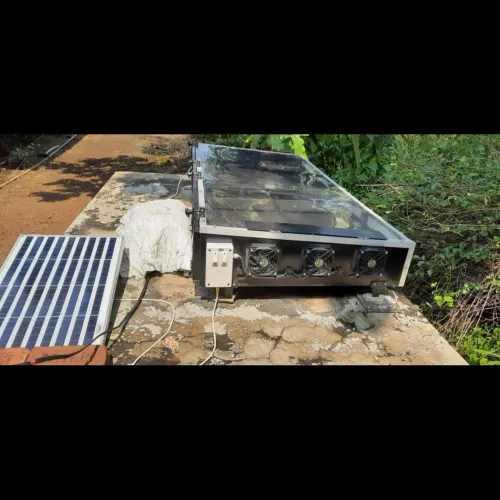
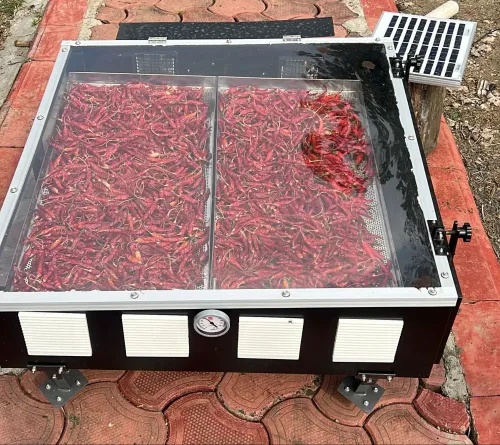
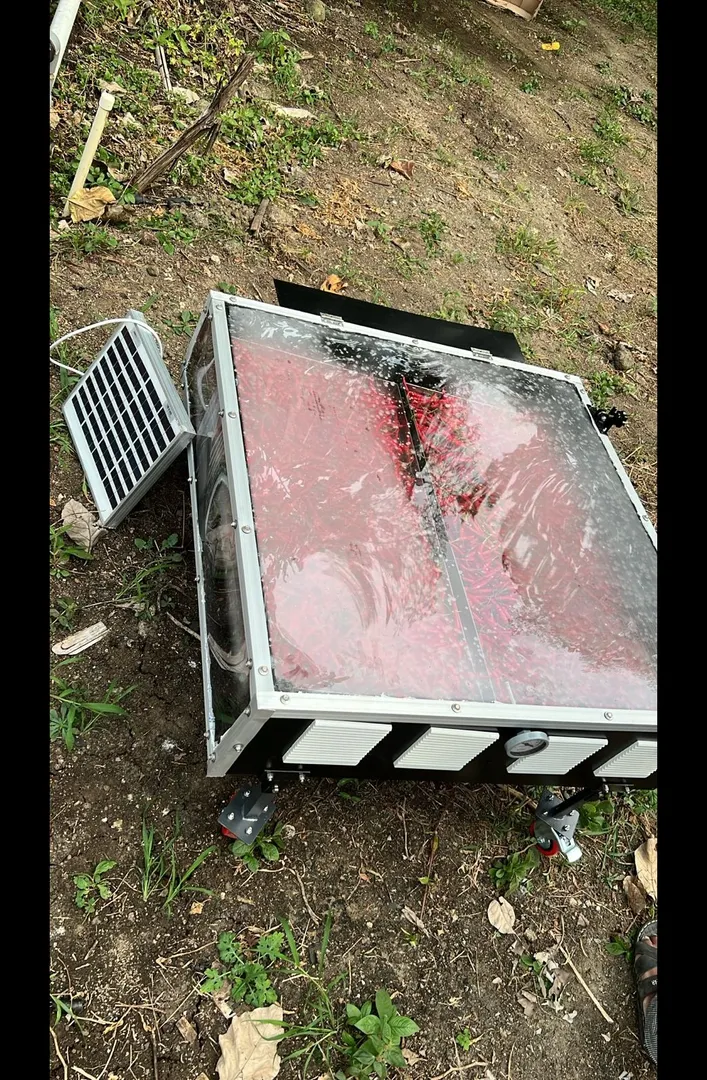
An enclosed Solar Dryer in Mathura keeps prepared food on trays inside a protected chamber. This reduces direct environmental exposure and provides a designed path for heated air and moisture removal.
The enclosed design does not remove the need for washing, safe handling, tray cleaning, process monitoring and moisture-resistant packaging. Food safety depends on the complete workflow, not the dryer alone.
Q6. How does a solar dryer work, and what operating controls are necessary?
A solar dryer uses solar energy to heat the air required for moisture removal. Depending on the system, solar-powered DC fans can support airflow through the drying chamber.
The process generally works as follows:
- Solar energy increases the temperature of the drying air.
- Air moves across or through the loaded trays.
- Moisture evaporates from the prepared material.
- Moist air exits through the designed outlet.
- Continued airflow gradually reduces product moisture.
For reliable operation, the dryer should be installed where it receives useful solar exposure without avoidable shading during important operating hours. Air inlets, outlets and fan areas must remain clear.
Operators should record:
- Commodity and variety
- Fresh input weight
- Preparation method
- Slice thickness or loading depth
- Tray position
- Start and finish observations
- Weather conditions
- Final product condition
- Packed output
The operator should monitor both the product and the drying conditions. Hot weather may increase the risk of excessive product temperature, while humid or cloudy conditions can slow moisture removal.
A solar dryer should not be operated only by the clock. The endpoint must be based on the validated final condition or target moisture of the product.
Q7. How should farmers, FPOs and businesses select the correct Solar Dryer in Mathura?
Capacity should be selected according to the quantity and physical form of fresh input that must be processed per batch. It should not be selected using only the expected weight of dried output because drying removes moisture and reduces product weight.
The buyer should evaluate:
- Peak fresh material available per day
- Main commodities
- Whole, sliced, blanched or cleaned input
- Tray area required
- Product loading depth
- Preparation labour
- Number of processing days
- Packaging and storage capacity
- Installation space
- Local operating conditions
- Buyer requirements
- Future expansion plans
A unit processing lightweight herbs may use tray space differently from a unit handling vegetables, peas or grains. Stated kilogram capacity must therefore be considered together with usable tray area and product characteristics.
Before investing, the enterprise should calculate raw-material availability, labour, washing and cutting arrangements, packaging, compliance requirements and realistic market access.
A solar dryer can support food processing and value addition, but it cannot guarantee a particular selling price, order volume or profit. Product development and buyer validation should progress alongside equipment selection.
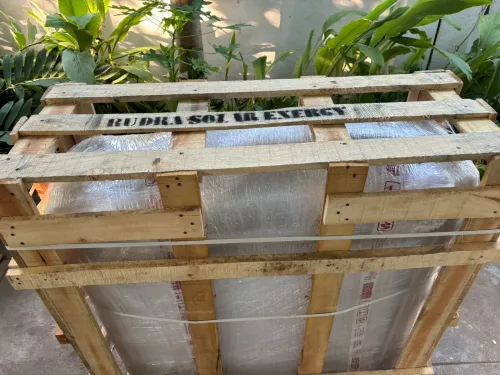
Q8. Why can a Rudra Solar Dryer be suitable for Mathura?
Rudra Solar Energy provides solar drying solutions for fruits, vegetables, spices, herbs and other suitable agricultural products. Depending on the selected model and configuration, a Rudra Solar Dryer may include:
- An enclosed drying chamber
- Solar-powered DC airflow
- Food-contact drying trays
- UV-protected construction material
- Multiple capacity options
- Customised configurations
- Optional hybrid support where technically required
For Mathura, the system can be evaluated for prepared vegetables, peas, leafy products, culinary herbs and suitable cleaned agricultural produce. Separate trials should establish the correct preparation, loading, airflow, drying endpoint and packaging for every product.
Rudra Solar Energy can assist farmers, FPOs, SHGs and processing businesses in selecting a Solar Dryer in Mathura according to fresh input per batch, commodity, preparation method, available labour and intended final product.
To identify a suitable Rudra Solar Dryer, share your main commodity, fresh batch quantity, installation location and required finished product with Rudra Solar Energy.
Keywords