Commercial Solar Dryer in Kushinagar for Local Food Processing
A solar dryer in Kushinagar can help farmers, banana growers, FPOs, self-help groups, ODOP-linked enterprises and food-processing MSMEs convert suitable agricultural produce into value-added dried products under protected conditions.
Kushinagar has a predominantly agriculture-based economy. Paddy, wheat and sugarcane are among its principal crops, while banana cultivation supports food processing as well as the district’s recognised banana-fibre sector. Uttar Pradesh’s One District One Product programme identifies banana products and banana-fibre products with Kushinagar, creating a strong local connection between agriculture, processing, rural enterprise and value addition.
Instead of depending only on the immediate sale of fresh produce, growers and processors can explore products such as dried banana slices, banana flour ingredients, dried turmeric, chilli, vegetable flakes, herbs and other shelf-stable products based on verified demand.
Why Does Kushinagar Need Protected Solar Drying?
Open-sun drying exposes agricultural material directly to dust, insects, birds, sudden rainfall, uncontrolled handling and changing weather. Products may dry unevenly when the layer is too thick, airflow is poor or partially dried material absorbs moisture again during humid conditions.
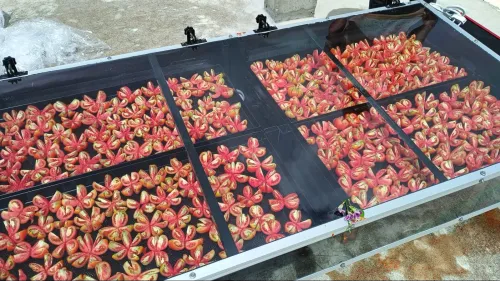
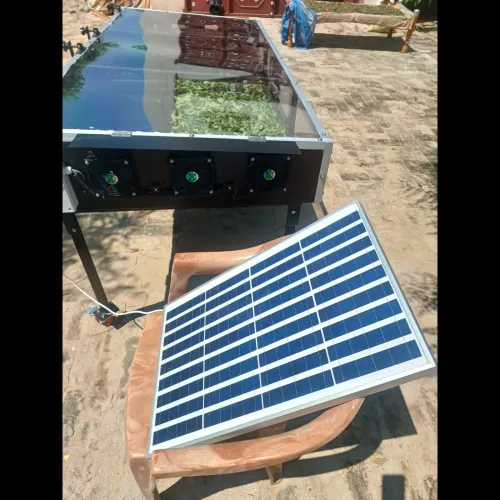
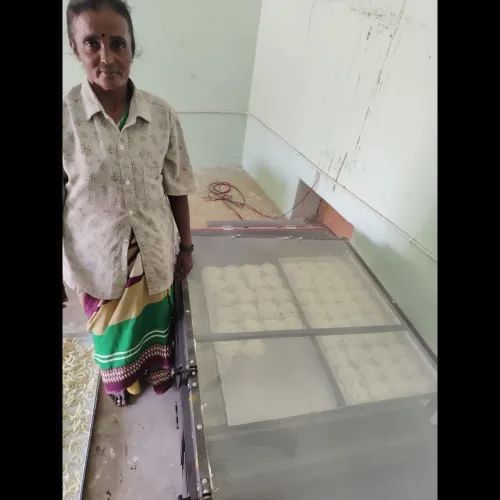
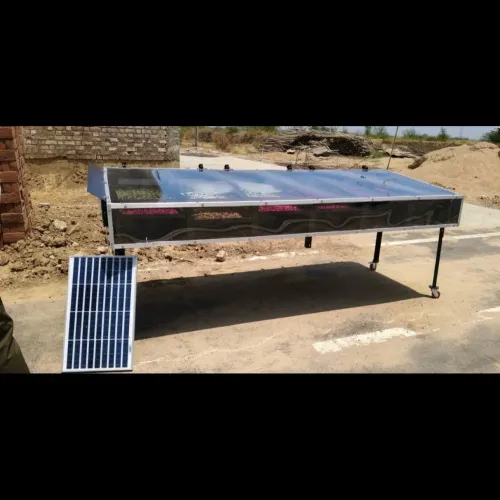
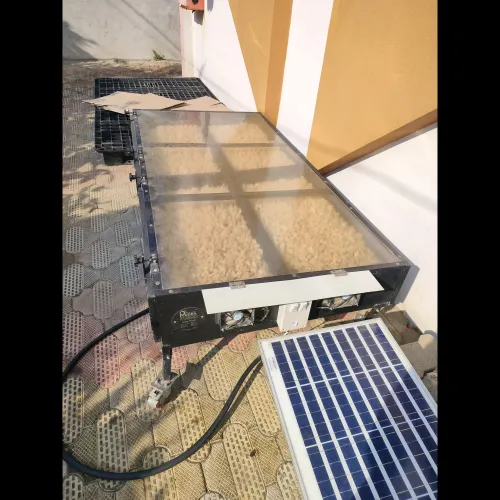
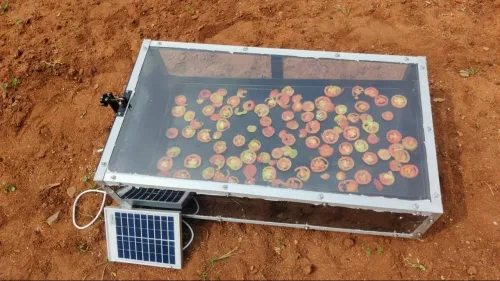
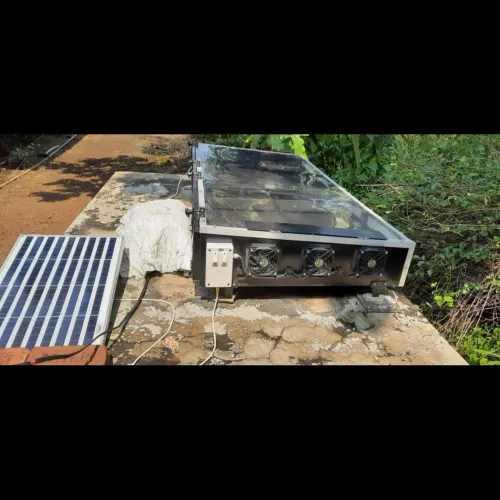
A commercial solar dryer uses an enclosed drying chamber, solar-generated heat and managed airflow to remove moisture more systematically. The enclosed environment offers better physical protection than drying produce on roadsides, rooftops, tarpaulins or open ground.
However, installing a solar dryer alone does not guarantee product quality. Raw-material selection, washing, cutting, tray loading, airflow, temperature, final moisture, cooling and packaging must all be managed according to the commodity.
Banana Drying and Value Addition in Kushinagar
Banana is the strongest district-specific solar drying opportunity for Kushinagar. Sound bananas that are suitable for processing can be graded, washed, peeled and cut into uniform slices before loading.
Potential banana-based products include:
- Dried banana slices
- Naturally sweet banana snack pieces
- Dried banana material for milling into flour
- Banana powder ingredients after suitable drying and grinding
- Ingredients for bakery, nutrition or traditional food products
- Dried banana pieces for mixed-fruit products
The selected banana variety, maturity stage and intended product will affect colour, flavour, texture and drying behaviour. Pieces of different thicknesses should not be mixed because thinner slices may become excessively dry while thicker pieces remain moist internally.
Overripe, fermented, mouldy or spoiled fruit should not be used merely because it will undergo drying. Solar drying removes moisture but cannot reverse microbial spoilage or poor raw-material quality.
Where puree-based products or fruit sheets are planned, the process may require suitable liners, controlled product depth and a separately validated drying procedure. A standard sliced-fruit process should not automatically be applied to puree.
Can a Solar Dryer Support Banana Flour Production?
Yes, controlled drying can be an important stage in banana flour production. Suitable bananas are prepared, sliced and dried to an appropriate final moisture condition before milling.
Grinding material that still contains excessive moisture can affect powder quality, flow, storage stability and packaging. The dried banana should therefore be cooled under protected conditions and checked before milling.
The finished flour or powder must be packed in packaging selected for moisture protection. This is especially important because dried powders can absorb moisture from the surrounding air during handling and storage.
Can Banana Fibre Be Dried Using Solar Energy?
Kushinagar’s banana-fibre industry uses pseudostems remaining after fruit harvest. After extraction and washing, the fibre requires controlled moisture removal before combing, storage, yarn preparation or handicraft use.
A technically suitable solar drying arrangement can support protected banana-fibre drying. However, extracted fibre is a non-food material and should not be processed together with edible banana products.
Food and fibre processing should use separate batches, suitable trays and documented cleaning procedures. For enterprises regularly handling both applications, dedicated drying arrangements are preferable to prevent loose fibre, residue or handling contamination from affecting food products.
This food-and-fibre distinction makes the solar drying plan more relevant to Kushinagar’s ODOP ecosystem while maintaining proper hygiene separation.
Which Other Kushinagar Products Can Be Solar Dried?
In addition to banana, a commercial solar dryer may support suitable batches of turmeric, chilli, seasonal vegetables, fruits, culinary herbs, medicinal plants and selected grains or seed material.
Turmeric requires appropriate curing and preparation before drying. Whole fingers and sliced turmeric do not necessarily follow the same drying schedule. The dried turmeric should reach a suitable moisture condition before polishing, grinding or packaging.
Chilli requires careful temperature and airflow management to protect colour and minimise contamination. Vegetables should be washed, graded and cut uniformly, while delicate herbs generally need lower and more carefully controlled product temperatures.
Grains or seed material require different airflow, tray depth and final-moisture criteria from sliced fruits and vegetables. A drying process designed for banana should not automatically be used for grain without checking whether the equipment configuration and operating procedure are suitable.
How Does Kushinagar’s Weather Affect Drying Performance?
Solar drying performance changes with solar radiation, air temperature and humidity. During monsoon humidity, cloudy weather or low-sunshine winter periods, moisture removal may be slower even when the chamber feels warm.
The drying system must not only heat the product; it must also carry released moisture away from the trays. Excessive loading, thick product layers or restricted exhaust can trap humid air and cause uneven results.
Processors may need to:
- Reduce the quantity loaded on each tray
- Maintain sufficient space between individual pieces
- Use uniform slice thickness
- Keep air inlets and outlets unobstructed
- Avoid repeatedly opening the chamber
- Monitor the condition of products on different trays
- Prevent partly dried produce from absorbing moisture overnight
- Consider hybrid assistance when continuous production is essential
Solar-only operation may be suitable for flexible and weather-dependent batches. A solar-hybrid dryer can be evaluated when processors require production during cloudy weather, monsoon periods or beyond available sunshine hours.
How Long Does Solar Drying Take in Kushinagar?
There is no universal drying time for banana, turmeric, vegetables or other products. Drying duration depends on:
- Type and variety of commodity
- Initial moisture content
- Required final moisture
- Maturity and preparation method
- Slice size and thickness
- Fresh quantity loaded per tray
- Airflow through the chamber
- Temperature and humidity
- Available solar radiation
- Solar-only or hybrid operation
Promises that every commodity will dry within the same number of hours are not technically reliable. Initial trials should be documented so that the processor can develop a repeatable procedure for each product.
What Temperature Should Be Used?
The correct product temperature depends on the commodity and required final quality. Maximum chamber heat is not always desirable.
Excessive temperature may darken fruit, damage texture, reduce the aroma of herbs or affect the colour of spices. A commercially useful process balances heat with airflow and moisture removal instead of focusing only on the highest temperature reached inside the chamber.
Temperature readings should be interpreted together with product condition, humidity and drying progress. The final decision should be based on a validated product-specific process.
How Is Solar Dryer Capacity Selected?
Solar dryer capacity should be selected using fresh input per batch, not the expected weight of the final dried product.
Fresh banana and vegetables contain substantial water, so the dried output will be much lighter than the original load. Before selecting a commercial solar dryer, the buyer should calculate:
- Fresh kilograms available per batch
- Number of operating days per week
- Peak-season and off-season supply
- Required product preparation
- Tray area and loading density
- Expected drying duration
- Separate food and non-food applications
- Solar-only or hybrid requirement
- Space for washing, cutting, cooling and packaging
- Expected demand for the final product
Starting with an excessively large system without stable raw-material supply or buyers can lead to low utilisation. Processors should first identify the commodity, develop the product, test its quality and assess market demand before finalising the required capacity.
What Determines Solar Dryer Price in Kushinagar?
The price of a commercial solar dryer depends on the required fresh-load capacity, number and size of trays, chamber construction, tray material, airflow configuration, solar-only or hybrid operation, monitoring features, transportation and project-specific installation requirements.
Buyers should compare systems using usable tray area, loading method, airflow, material specifications, operating support and suitability for the intended commodity—not only the stated kilogram capacity.
For an accurate quotation, the processor should share the commodity, fresh batch quantity, preparation method, operating location and required final product.
Cooling, Packaging and Storage After Drying
Drying is not the final step. Hot material should not be sealed immediately because trapped heat may cause condensation inside the package.
The dried product should be cooled under clean and protected conditions. Its moisture condition should be verified before grinding or packing. Packaging should be selected according to the product’s sensitivity to moisture, oxygen, light and physical damage.
Poor cooling or moisture-barrier packaging can reduce the benefit of a well-managed drying batch. Product labels, batch records, applicable food-safety requirements and storage conditions should also be addressed before commercial sale.
Who Can Use a Solar Dryer in Kushinagar?
Commercial solar drying may be relevant for:
- Banana growers and producer groups
- Individual farmers
- Farmer Producer Organisations
- Women’s Self-Help Groups
- ODOP-linked enterprises
- Food-processing MSMEs
- Spice and turmeric processors
- Rural entrepreneurs
- Training and livelihood institutions
- Organisations working on post-harvest management
The appropriate product and capacity will differ for each buyer. A farmer processing seasonal banana does not have the same operating requirement as an FPO handling multiple commodities or an MSME producing packaged dried products throughout the year.
Rudra Solar Dryer Solutions for Kushinagar
Rudra Solar Energy Pvt. Ltd. manufactures commercial solar dryers in multiple and custom capacities for fruits, vegetables, spices, herbs, grains, seeds and other suitable agricultural applications.
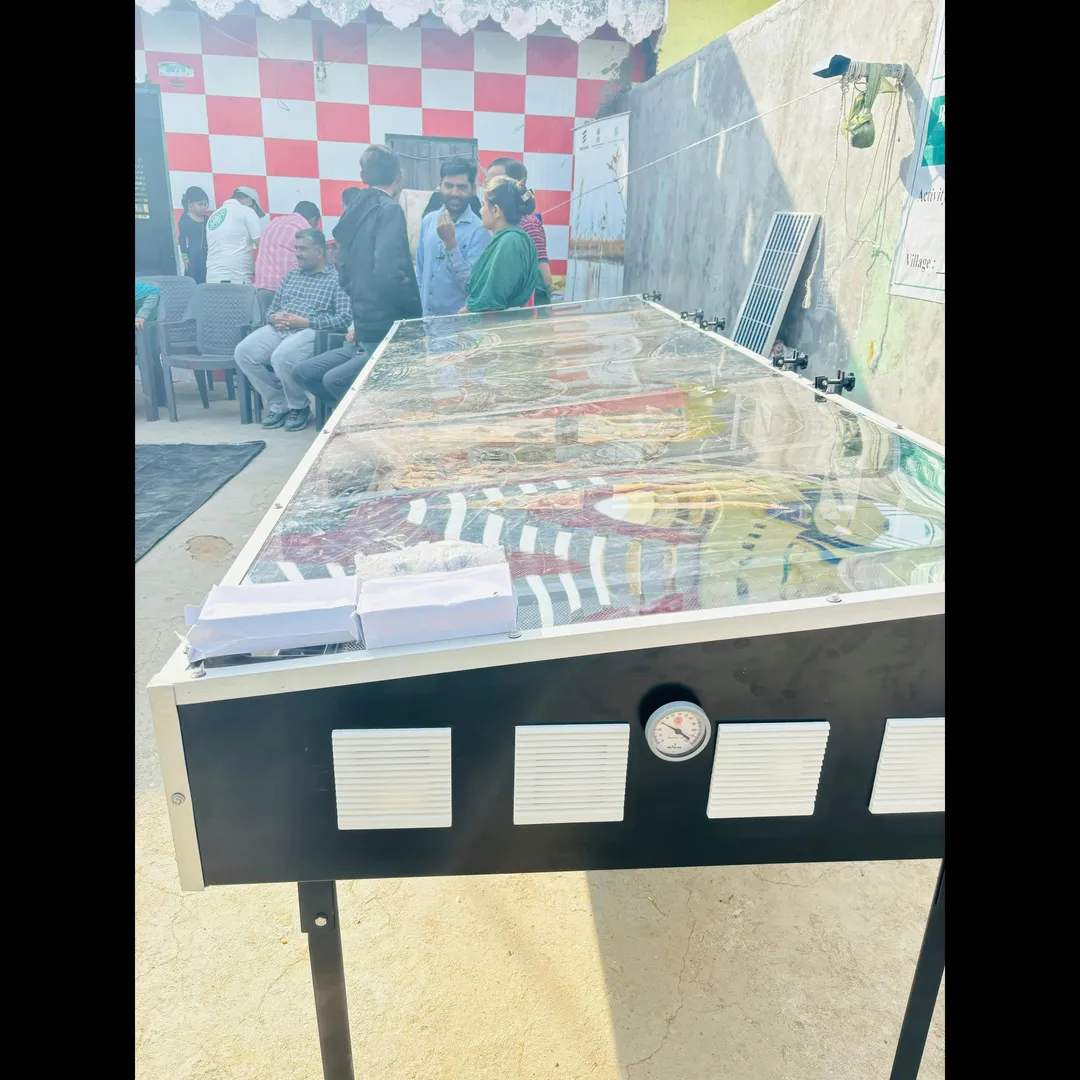
Depending on the selected configuration, a Rudra Solar Dryer can include an enclosed chamber, solar-powered forced airflow, UV-protected polycarbonate covering, suitable food-contact trays and solar-only or optional hybrid operation.
The system should be selected according to the commodity and processing requirement rather than through a generic capacity claim. Application assessment can include fresh batch quantity, product preparation, tray area, airflow requirement, expected drying conditions and the intended final product.
Farmers, FPOs, SHGs, ODOP-linked units and food-processing enterprises planning a solar dryer project in Kushinagar can share their commodity, fresh-load capacity, seasonal availability and required end product with Rudra Solar Energy for a suitable technical discussion.
Keywords