Bijnor’s Best Drying Opportunity Is Not Necessarily Its Biggest Crop
Bijnor is widely associated with sugarcane, but a strong post-harvest processing strategy should not simply take the district’s biggest crop and force it into a solar-drying application.
The district’s Krishi Vigyan Kendra identifies sugarcane, rice, wheat, mustard and urad among its major crops, while its district profile also records groundnut cultivation and horticultural challenges involving vegetables, mango and guava.
For a solar dryer in Bijnor, this creates a more useful processing opportunity around commodities where controlled moisture reduction has a clear role — particularly suitable oilseeds, pulses and prepared horticultural produce.
The important question for a processor is therefore not:
“What grows the most in Bijnor?”
It is:
“Which incoming products actually require moisture reduction, and what drying configuration does each one need?”
Mustard Creates an Oilseed Processing Opportunity
Mustard has a meaningful presence in Bijnor; the KVK district profile reports around 10,000 hectares under the crop in its listed major-crop data.
Where harvested mustard arrives above the moisture condition required for suitable storage or downstream processing, a solar dryer for mustard can become one controlled stage in the post-harvest workflow.
Mustard forms a relatively dense seed layer, so useful dryer planning needs to consider more than machine capacity.
The processing team should assess:
Incoming moisture
Batch quantity
Seed-bed depth
Usable drying area
Air movement
Ambient humidity
Required final condition
Storage duration
Next processing stage
The solar dryer performs moisture reduction.
Cleaning, grading, crushing, oil expelling, filtration and packaging remain separate operations.
This distinction is important because a mustard processor does not need a “machine that does everything”; it needs the drying stage to integrate correctly with the rest of the oilseed-processing line.
Why Mustard Loading Depth Matters
If the same drying area is loaded with progressively more mustard, the product layer becomes deeper.
That changes how drying air interacts with the batch.
This means practical oilseed dryer capacity can be understood as:
Batch Weight + Seed-Bed Depth + Airflow + Incoming Moisture
rather than:
Capacity = kilograms only
For an FPO or commercial agricultural processor, this approach can be more useful when evaluating a solar oilseed dryer because the expected daily throughput depends on how the commodity is actually loaded.
Urad Gives Bijnor a Separate Pulse-Drying Use Case
Urad is also specifically listed among Bijnor’s important crops, with the KVK reporting approximately 1,800 hectares in its major-crop table.
Although both mustard and urad are small agricultural commodities compared with bulky fruits or vegetables, they should not automatically share one drying programme.
Pulse batches differ in:
Kernel characteristics
Bulk density
Incoming moisture
Storage requirement
Loading depth
Downstream processing
Where urad requires additional moisture reduction, a solar dryer for pulses should therefore be operated according to the actual batch condition.
A useful processing sequence can be:
Incoming Urad → Cleaning → Moisture Check → Batch Loading → Controlled Moisture Reduction → Moisture Reassessment → Cooling → Storage or Further Processing
Dehusking, splitting, dal processing and packaging take place separately.
Mustard and Urad May Look Similar in the Dryer — But the Process Is Not Identical
For a multi-crop processing centre, it may be tempting to use one fixed setting whenever a granular agricultural product enters the dryer.
That can create poor process control.
A better commercial approach is to retain the same equipment flexibility while changing the operating decision according to the commodity.
Whenever the processor moves from mustard to urad, it should reassess:
Incoming moisture
Required endpoint
Product depth
Airflow
Temperature
Batch duration
Storage requirement
That makes a multi-purpose solar dryer genuinely flexible without turning it into a one-setting-for-everything machine.
Bijnor’s Orchard Produce Creates a Completely Different Drying Geometry
Bijnor’s KVK identifies problems relating to local mango and guava orchards, confirming horticultural production as part of the district’s farming system.
Prepared fruit creates a very different processing problem from mustard or urad.
Once suitable mango or guava is selected for dehydration, operations may include washing, sorting, peeling or cutting where required before the material reaches the dryer.
The dryer then deals with moisture reduction from the prepared product.
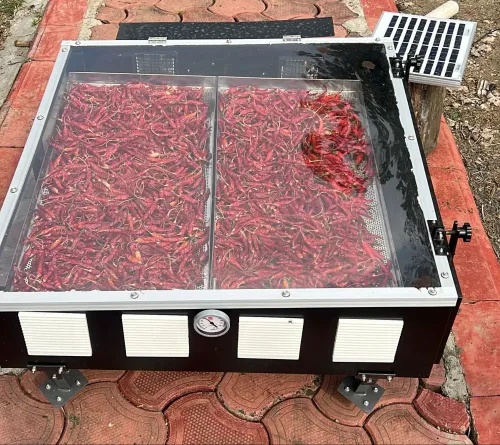
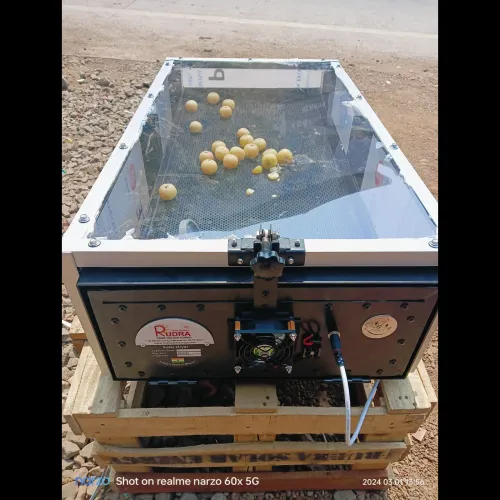
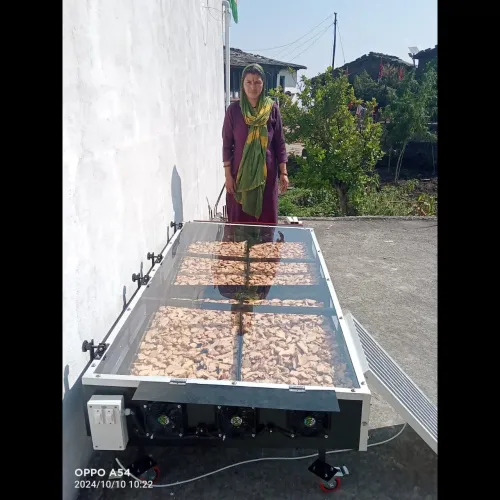
For fruit, practical capacity depends heavily on:
Fresh quantity
Prepared quantity
Slice or piece thickness
Tray surface
Product spacing
Airflow
Temperature
Humidity
Desired moisture endpoint
A solar fruit dryer may therefore carry fewer kilograms on a given drying surface than a dense seed batch — but require considerably more tray area.
That is not inefficient use of the system. It reflects the physical behaviour of the commodity.
Mango Processing: Consistency Starts Before the Dryer
For mango intended for dehydration, the drying result is influenced before the trays even enter the chamber.
If pieces within one batch vary substantially in thickness, they can lose moisture at different rates.
More consistent preparation can help the processing team organise:
Tray loading
Air exposure
Batch observation
Endpoint assessment
The solar dryer itself does not wash, peel or slice mango.
Those are separate preparation operations.
Similarly, drying does not automatically guarantee a fixed shelf life; final stability also depends on moisture endpoint, cooling, packaging and storage.
Guava and Other Suitable Horticultural Produce
Suitable guava and vegetable products can create additional tray-based applications for Bijnor processors.
The key is to assess the intended dried product before deciding how the material should enter the dryer.
A business handling prepared fruit or vegetables needs to pay particular attention to usable drying area, while an oilseed or pulse processor may be more concerned with bed depth and bulk airflow.
This gives Bijnor two substantially different processing patterns inside the same broad solar-dryer category:
Bulk agricultural materials → depth and airflow become central
Prepared horticultural products → tray surface and piece geometry become central
For an FPO processing several crops during the year, understanding this difference is more useful than simply choosing the largest stated capacity.
What About Bijnor’s Sugarcane?
Sugarcane dominates Bijnor’s crop profile; the district KVK records about 255,000 hectares under sugarcane in its major-crop table.
But prominence does not automatically equal solar-dryer suitability.
The normal commercial pathway for harvested sugarcane centres on juice extraction and subsequent sugar, jaggery or related processing rather than ordinary dehydration of harvested cane.
For that reason, sugarcane is not being positioned as the primary solar-drying application on this page.
This matters for technical credibility.
A district page should recommend solar drying where moisture removal actually belongs in the processing chain, rather than inserting every famous local crop simply for SEO.
Bijnor’s Monsoon Makes Moisture Removal a Process Variable
The KVK describes Bijnor as having a subtropical climate, with the major share of rainfall occurring during the southwest monsoon period from roughly June to September.
Ambient humidity matters because drying air has a limited ability to accept additional moisture.
As water leaves mustard, pulses or prepared fruit, it enters the surrounding air.
If moisture-laden air is not effectively removed, further moisture reduction can slow.
This is why a drying system should be considered as a combination of:
Heat + Airflow + Product Loading + Ambient Conditions + Moisture Endpoint
not simply as a heated chamber.
Depending on system configuration, controlled or forced airflow can support the movement of moisture-laden air away from the loaded material.
Why an Enclosed Solar Dryer Can Matter for Food Processing
Open outdoor drying exposes the product directly to surrounding environmental conditions.
An enclosed solar drying chamber can provide a more organised processing environment and help reduce direct exposure of the loaded product to dust, insects and other outdoor contaminants compared with completely open drying.
This can support a structured workflow for Bijnor enterprises:
Raw Material → Sorting/Cleaning → Preparation if Required → Moisture Check → Controlled Drying → Endpoint Assessment → Cooling → Packaging/Storage or Further Processing
A dryer remains only one part of this chain.
Food safety, product quality, storage suitability and marketability still depend on the complete processing system.
One Dryer, Different Seasonal Roles
Bijnor’s mix of field crops and horticulture can make multi-product equipment useful for processors that do not work with one commodity throughout the year.
A suitable system may serve separate batches of:
Mustard
Urad and compatible pulses
Other technically suitable oilseeds
Prepared mango
Prepared guava
Selected vegetables
Other suitable agricultural products
But seasonal flexibility should never mean mixing different products or applying one universal operating condition.
Each commodity requires a fresh processing decision.
Solar Dryer for FPOs and Agricultural Processing Enterprises in Bijnor
An individual farmer may process occasional harvest batches.
An SHG may focus on prepared food products.
An FPO can receive produce from multiple growers.
An oilseed enterprise may need regular bulk moisture management.
A fruit-processing MSME may require considerably more tray area.
These users should not automatically purchase identical equipment.
Before selecting a solar dryer in Bijnor, the buyer should identify:
Main commodity
Incoming quantity per day
Peak-season quantity
Material form
Initial moisture
Required drying area
Expected product depth
Number of batches per day
Operating season
Downstream process
Installation conditions
Optional backup requirement
These details allow dryer capacity to be matched with the processing workflow rather than chosen only from a catalogue number.
Solar Dryer Price in Bijnor Depends on the Processing Requirement
A buyer searching for solar dryer price in Bijnor should first determine what the system actually needs to process.
The configuration and overall cost can change according to:
Capacity
Drying surface
Number of trays
Chamber size
Airflow arrangement
Construction
Monitoring requirements
Solar-only or hybrid configuration
Optional backup
Installation
Custom requirements
A mustard-processing operation can therefore require a different system from an enterprise primarily dehydrating mango or guava.
The useful price comparison begins after the application is defined.
When Should a Hybrid Solar Dryer Be Considered?
Solar-primary operation may suit applications where the production schedule has enough flexibility around available solar conditions.
Businesses with tighter processing schedules can evaluate an appropriate hybrid solar dryer or backup-assisted configuration.
The decision should depend on:
Product type
Batch size
Processing season
Weather
Daily production target
Required operating window
It should not be assumed that every Bijnor installation either requires backup or can operate under identical conditions throughout the year.
Building the Right Solar Dryer Configuration for Bijnor
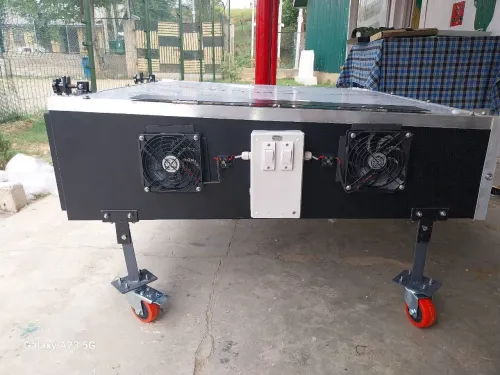
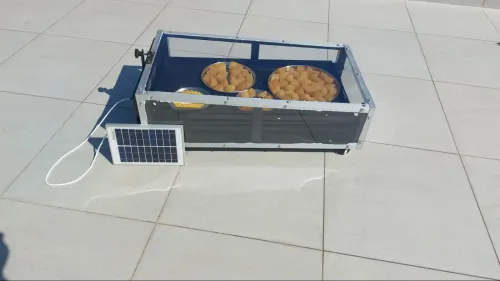
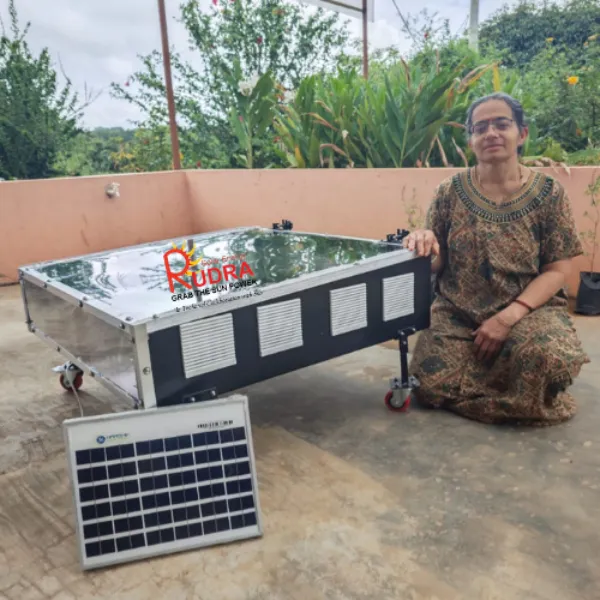
Rudra Solar Energy provides solar dryer systems for agricultural and food-processing applications in multiple and customised configurations.
For Bijnor, the most useful starting point is not simply asking for the largest available dryer.
It is defining:
Commodity → Incoming Moisture → Product Form → Quantity → Loading Pattern → Airflow → Required Endpoint → Daily Throughput
A mustard processor may require strong bulk-material planning.
A pulse processor may prioritise grain-bed management.
A mango or guava processor may require greater tray surface.
These differences should shape the dryer configuration.
Farmers, FPOs, SHGs, cooperatives and food-processing businesses searching for a solar dryer in Bijnor, solar dryer for agricultural products, solar oilseed dryer, pulse drying machine, solar fruit dryer, solar food dehydrator or hybrid solar dryer can begin by identifying the primary commodity and normal fresh or incoming quantity.
That gives a technically useful basis for evaluating the next step.
Keywords