Banda district has a strong agricultural base built around cereals, pulses and oilseeds. Krishi Vigyan Kendra, Banda identifies wheat, chickpea, lentil, pigeon pea, black gram, green gram, sesame, mustard, linseed and field pea among the important crops grown across the district. District agriculture data reported by the KVK also shows substantial cultivation of chickpea and lentil alongside wheat and other field crops.
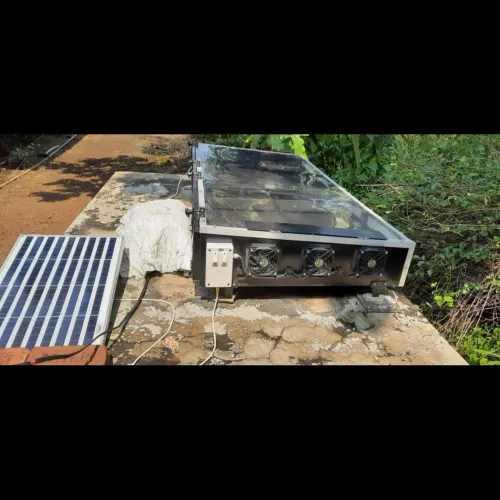
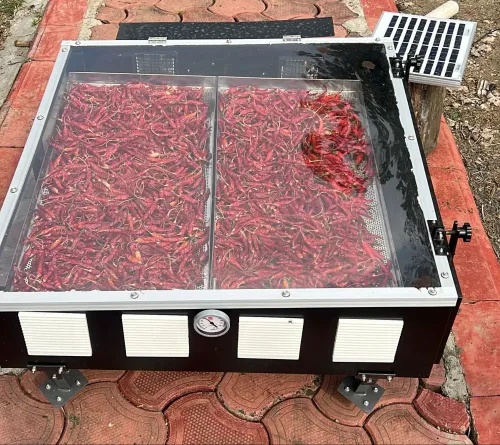
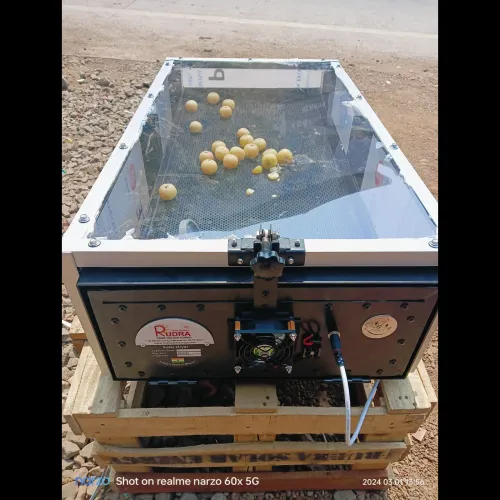
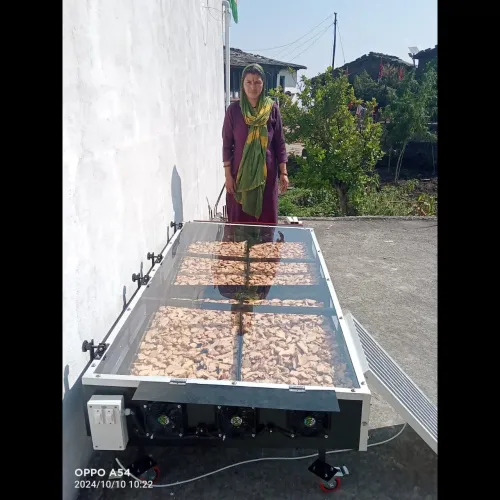
For farmers, FPOs, cooperatives and agro-processing businesses handling suitable produce, a solar dryer in Banda can provide an enclosed and organised system for moisture reduction before selected crops move to storage or further processing.
The useful approach for Banda is not to treat every agricultural commodity as identical. Gram, lentil, pigeon pea and oilseeds differ in seed size, bulk density, incoming moisture and downstream processing requirements. The solar dryer configuration and operating approach should therefore be matched with the actual product.
Solar Dryer for Gram and Chickpea Processing
Chickpea or gram is one of Banda’s major Rabi crops. KVK Banda reports chickpea cultivation across a significant area of the district, making pulse processing a relevant post-harvest application for local agricultural enterprises.
Where moisture reduction is required before suitable storage or subsequent processing, a solar dryer for gram should be operated according to the incoming grain condition rather than a fixed universal schedule.
Important factors include:
initial moisture condition
batch quantity
grain-bed depth
available drying area
airflow through or across the loaded material
ambient humidity
required final moisture condition
subsequent storage or processing requirement
A pulse batch should not simply be loaded as deeply as possible to maximise the number of kilograms inside the dryer.
As the grain layer becomes deeper, air has to move through a denser mass of material. Proper loading depth and airflow therefore become important parts of the drying process.
Lentil and Pulse Moisture Management
Lentil is another major crop documented in Banda’s Rabi production profile, while pigeon pea, green gram and black gram are grown during the Kharif season.
This creates potential for a solar pulse dryer to support processors that handle different pulses across the year.
However, gram, lentil, moong, urad and pigeon pea should not automatically use identical operating conditions.
The processor should consider:
pulse type
seed size
incoming moisture
normal batch quantity
loading depth
airflow
storage requirement
intended next processing stage
A multi-pulse system can provide flexibility, but each new commodity should be treated as a separate processing batch.
Why Airflow Matters for Pulses
Solar heat is only one part of moisture reduction.
As moisture leaves pulse grains, it enters the surrounding air. That air gradually becomes more humid and needs to move away from the loaded product so further moisture removal can continue.
This makes airflow particularly important when the material is loaded as a grain bed.
For commercial pulse processing, buyers should understand:
how air enters the system
how it reaches different parts of the loaded batch
whether product depth restricts air movement
how moisture-laden air exits
whether fan-assisted airflow is included in the selected configuration
A warmer chamber alone does not guarantee a suitable drying process.
The combination of product loading, solar-assisted heat, airflow, humidity and moisture assessment determines how the batch behaves.
Solar Dryer for Mustard, Sesame and Other Oilseed Applications
Banda’s agricultural profile also includes mustard, sesame and linseed. Sesame is listed among important Kharif crops, while mustard and linseed occur in the Rabi season.
Oilseeds require a different approach from high-moisture fruits and vegetables.
Where controlled moisture reduction is technically appropriate, the goal should be to reach the moisture condition required for the intended storage or processing stage—not simply expose the material to the highest possible temperature.
For suitable oilseed applications, processors should evaluate:
incoming seed condition
batch size
seed-bed thickness
air movement
operating temperature
ambient conditions
required final moisture
storage method
This makes a solar dryer for agricultural products more useful when it is operated according to the actual commodity rather than one generic drying setting.
Pulses and Oilseeds Should Not Be Treated Like Vegetables
The physical behaviour of pulse and oilseed batches is very different from tomato, onion or fruit slices.
Prepared vegetables are generally spread across trays as pieces or slices.
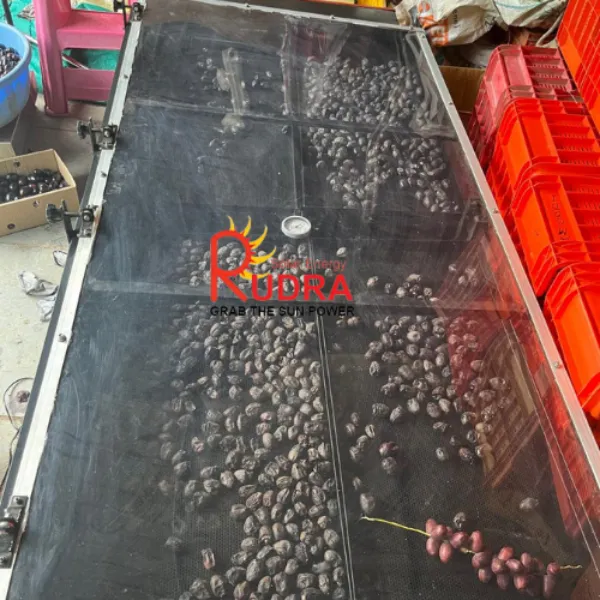
Pulses and seeds form a denser particulate bed.
That difference affects:
loading depth
airflow resistance
available surface exposure
moisture movement
batch planning
For a Banda-based processor, selecting equipment only because it is marketed as a general food dryer may therefore be less useful than understanding whether the system can handle the normal pulse or oilseed loading pattern.
Grain Processing Adds Another Banda Application
Banda KVK identifies wheat as the district’s largest major Rabi crop and also documents paddy, jowar and bajra among Kharif crops.
This gives larger agricultural processing centres potential requirements beyond pulses.
A solar grain dryer may be considered where suitable moisture management is needed before storage or further processing.
Grain drying should again be based on:
grain type
incoming moisture
batch quantity
loading depth
airflow
required storage condition
downstream use
Cleaning, grading, milling, dehusking and packaging remain separate processing stages.
The solar dryer specifically supports moisture reduction.
Seasonal Multi-Crop Processing for Banda FPOs
Banda’s crop pattern gives FPOs and agricultural cooperatives an opportunity to work with several crops across different seasons.
The district’s documented crop mix includes:
Chickpea / Gram
Lentil / Masoor
Pigeon Pea / Arhar
Black Gram / Urad
Green Gram / Moong
Mustard
Sesame / Til
Linseed
Wheat
Jowar
Bajra
Selected vegetables and fruits
A suitably configured solar dryer may therefore support separate batches of multiple compatible agricultural products.
However, multi-crop capability does not mean one universal operating setting.
Whenever the commodity changes, the operator may need to reconsider:
loading depth
tray or drying area
airflow requirement
temperature
moisture endpoint
cleaning and batch changeover
This is particularly relevant to FPOs and processing businesses that want to use one drying asset across different harvest seasons.
Solar Dryer Capacity Should Be Selected Beyond Kilograms
Commercial buyers often compare dryers only by nominal batch capacity.
For pulses and grains, that can be misleading if loading depth and drying surface are ignored.
For example, the same kilogram quantity of lentil and a bulkier agricultural product may interact with the drying system differently.
A more useful capacity assessment includes:
normal fresh or incoming batch quantity
usable drying area
allowable product-bed depth
airflow arrangement
number of batches required per day
peak-season procurement volume
storage or processing schedule
The objective should be to select enough capacity for the real production workflow without creating excessively deep loading that can restrict air movement.
Solar-Only or Hybrid Solar Dryer?
Solar drying performance varies with available solar radiation and environmental conditions.
A processor with flexible batch scheduling may be able to operate primarily during favourable solar conditions.
Businesses that require additional production flexibility can evaluate a hybrid solar dryer or appropriate backup-heating configuration.
The decision should depend on:
commodity
normal processing season
daily quantity
required production continuity
local weather conditions
acceptable drying window
Backup heating should be selected because the processing requirement justifies it rather than being assumed necessary for every installation.
Solar Dryer Price in Banda – What Determines the Cost?
There is no single useful solar dryer price in Banda that applies to every farmer or processing business.
System configuration can change according to:
batch capacity
usable drying area
tray or loading arrangement
chamber construction
airflow system
solar-only or hybrid configuration
backup heating
monitoring requirements
installation needs
customisation
A small farmer or SHG working with seasonal gram batches may need a very different configuration from an FPO aggregating pulses from several villages.
For this reason, buyers should first define the commodity and normal daily processing requirement before comparing prices.
What Should a Banda Buyer Tell the Manufacturer?
Before requesting a quotation, useful information includes:
Commodity: Gram, lentil, pigeon pea, sesame, mustard, wheat or another product?
Batch Quantity: How many kilograms are handled per batch or per day?
Incoming Condition: Is the commodity freshly harvested or already partially dried?
Processing Schedule: Seasonal or regular commercial operation?
Next Stage: Storage, milling, dal processing or another operation?
Backup Requirement: Is solar-primary operation sufficient?
These details allow a solar dryer manufacturer in Banda to evaluate the requirement more accurately than recommending the same dryer to every user.
Solar Dryer for Banda Farmers, FPOs and Agro-Processing Units
Potential users can include:
pulse growers
gram and lentil processors
FPOs and FPCs
agricultural cooperatives
SHGs
dal-processing businesses
grain-processing MSMEs
oilseed processors
rural entrepreneurs
post-harvest processing centres
institutional agricultural projects
Banda has a large agricultural land base and a significant farming population, with KVK data showing substantial cultivation of cereals, pulses and oilseeds across the district.
This makes commodity-specific post-harvest processing more relevant than treating Banda as only a generic Uttar Pradesh location.
Rudra Solar Energy for Banda Processing Requirements
Rudra Solar Energy provides solar dryer systems for agricultural and food-processing applications.
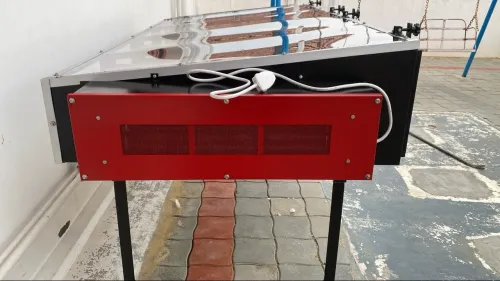
Depending on the relevant model and configuration, systems can include enclosed drying chambers, structured loading arrangements, controlled or forced airflow, solar-powered DC fans and optional backup arrangements.
For Banda, equipment selection should begin with the commodity.
A gram-processing enterprise may require a different loading approach from an oilseed processor.
A multi-pulse FPO may prioritise flexibility across gram, lentil, pigeon pea, moong and urad.
A larger grain-processing business may require higher batch capacity and a different airflow arrangement.
For buyers looking for a solar dryer in Banda, solar pulse dryer, solar grain dryer, commercial solar dryer or solar dryer for agricultural products, the most useful starting point is to share the commodity, incoming quantity and processing requirement.
Rudra Solar Energy can then evaluate a suitable solar dryer configuration based on the actual application.
Keywords