Badaun Has Three Very Different Post-Harvest Processing Opportunities
Badaun’s agriculture cannot be represented by a single crop or a single type of processing.
Krishi Vigyan Kendra, Badaun records a substantial mix of field crops and horticulture. Its district data includes wheat, paddy, bajra, maize, mustard/toria, lentil, potato and groundnut, while horticultural production includes guava, mango, papaya, capsicum, brinjal, chilli, tomato and cucurbits. Turmeric is also listed among cultivated crops.
For businesses evaluating a solar dryer in Badaun, this agricultural diversity creates three distinct processing routes:
Bulk grains such as bajra and maize
Oilseeds such as mustard and toria
Prepared vegetables, fruits and spices
Each route places a different demand on drying area, loading pattern, airflow and moisture management.
That distinction should influence dryer selection from the beginning.
Bajra Gives Badaun a Strong Grain-Drying Identity
Among the crops recorded by the local KVK, bajra occupies a particularly significant area — about 99,882 hectares in the district data, with reported production of 185,962 MT.
For bajra that requires moisture reduction before suitable storage or further processing, a solar grain dryer needs to handle the crop as a bulk material.
That changes the equipment-selection logic.
With grains, the processor needs to think about:
Incoming moisture
Quantity per batch
Depth of the loaded grain
Air movement through or around the batch
Drying-air conditions
Required moisture endpoint
Storage requirement
Number of batches required during harvest
FAO’s grain-drying guidance explains that grain drying requires both heat for evaporation and sufficient airflow to remove moisture from the product.
For Badaun processors, this means more kilograms inside the dryer do not automatically equal better usable capacity.
If the grain layer becomes too deep for the airflow arrangement, drying behaviour can change across the batch.
Think of Bajra Capacity as a Volume of Grain, Not Just a Weight
A processor purchasing equipment may see a nominal capacity such as 50 kg, 100 kg or another batch size.
But grain has depth.
When the same available drying area receives more bajra, the product bed becomes deeper. The resistance encountered by drying air can therefore become more important as loading changes.
FAO guidance on grain drying specifically highlights the need to provide sufficient drying air, while research indexed in FAO AGRIS also identifies airflow resistance as an important design consideration for bulk grains and oilseeds.
For practical planning:
Bajra Requirement = Incoming Quantity + Moisture + Grain Depth + Airflow + Required Throughput
This gives an FPO or grain processor a more realistic basis for selecting a dryer than nominal kilograms alone.
Mustard and Toria Create a Separate Oilseed Processing Line
Badaun’s KVK data records approximately 35,071 hectares under mustard/toria, making oilseeds another significant local processing category.
Oilseed drying should be considered separately from bajra drying even though both may appear as bulk agricultural materials.
Mustard and toria differ from millet in seed characteristics, bulk behaviour, storage requirements and downstream use.
Where an incoming oilseed batch requires moisture reduction, the processor should identify:
Seed condition
Incoming moisture
Batch weight
Loading depth
Airflow requirement
Required storage condition
Next processing operation
Historical FAO guidance on grain and oilseed drying in India also notes that oilseeds may be harvested at moisture levels substantially above conditions suitable for storage, reinforcing the importance of crop-specific moisture management.
The Solar Dryer Stops Before Oil Extraction Begins
For oilseed processors, the role of the dryer must remain technically clear.
A suitable workflow may look like:
Oilseed Reception → Cleaning → Moisture Assessment → Drying Where Required → Cooling/Conditioning → Storage or Further Processing
The solar dryer supports the moisture-reduction stage.
It does not:
Crush mustard
Extract oil
Operate an expeller
Filter oil
Refine oil
Package the finished product
Those remain separate downstream operations.
FAO guidance for small-scale oilseed processing similarly treats storage and appropriate raw-material drying as stages distinct from oil extraction.
Potato Changes the Requirement from Product Depth to Tray Area
Badaun’s agricultural profile also includes a sizeable potato sector. The KVK reports approximately 12,104 hectares of potato, with production above 214,000 MT in its district dataset.
But potato should not enter a drying system like bajra or mustard.
For a dried potato application, the commodity generally requires suitable preparation first.
Depending on the intended product, this can involve:
Sorting
Washing
Peeling where required
Cutting or slicing
Appropriate pretreatment where required
Only after preparation does the product move into the drying stage.
For prepared potato, the key variable changes from grain-bed depth to usable tray surface and piece geometry.
Why Slice Thickness Can Change a Potato Drying Batch
A thick potato piece contains a longer internal path through which moisture must move before reaching the surface than a thinner piece.
At the same time, irregularly prepared pieces may not progress through moisture reduction uniformly.
For this reason, a potato drying machine should be planned around:
Prepared quantity
Piece dimensions
Slice consistency
Tray area
Spacing
Airflow
Temperature
Ambient humidity
Required final condition
The correct question is not simply:
“How many kilograms of fresh potato are available?”
It is also:
“After preparation, how much tray area does that quantity require?”
This distinction separates a technically planned dehydration operation from simple machine-capacity marketing.
Chilli and Turmeric Add a Spice-Processing Layer
Badaun’s KVK profile identifies chilli among its horticultural crops and separately records turmeric cultivation in the district.
These products create another possible processing category for a solar spice dryer.
But chilli and turmeric should not be treated identically.
Chilli can be handled as whole or otherwise suitably prepared material depending on the intended product.
Turmeric normally enters a broader processing chain involving operations before and after drying; ICAR documentation on turmeric processing describes washing and processing of harvested rhizomes as distinct steps.
The solar dryer therefore remains one stage within that chain.
For either commodity, processing decisions can depend on:
Product form
Incoming moisture
Preparation
Product thickness
Tray loading
Airflow
Temperature
Humidity
Required drying endpoint
Grinding and powder production remain downstream operations.
Badaun’s Advantage Is Multi-Season Processing
The district’s crop mix gives a processing enterprise an opportunity to think beyond a one-crop machine.
Different seasons may create suitable batches of:
Bajra
Maize
Mustard or toria
Lentils and other pulses
Prepared potato
Chilli
Turmeric
Prepared fruits or vegetables
Other technically suitable agricultural products
The value of a multi-purpose solar dryer for agricultural products lies in its ability to support different appropriate commodities in separate batches.
But the operating method should change whenever the commodity changes.
A change from bajra to sliced potato is not merely a change of raw material.
It changes:
Loading geometry
Drying surface requirement
Product density
Air exposure
Moisture behaviour
Batch planning
Required endpoint
This is why multi-commodity capability should mean process flexibility, not one setting for everything.
Badaun’s Climate Also Belongs in the Capacity Discussion
The district KVK places Badaun in Uttar Pradesh’s Mid Western Plain Zone. It reports annual rainfall around 882 mm, with much of the rainfall occurring from roughly mid-June to mid-October.
Weather matters because drying performance depends on more than solar heat.
As moisture evaporates from the commodity, that water enters the surrounding air. Air movement is required to carry the evaporated moisture away; FAO describes this heat-and-airflow relationship as a basic principle of drying.
During more humid conditions, processors should therefore pay particular attention to:
Airflow
Ventilation
Product loading
Batch scheduling
Actual moisture progress
Available solar conditions
Production deadlines
This is also why no responsible Badaun page should promise the same drying time throughout the year.
A Better Way to Match Badaun Commodities with Dryer Design
Instead of treating every agricultural product as a generic “crop,” a processor can classify the requirement according to physical drying behaviour.
Bulk Grain Route
Bajra
Maize
Paddy or wheat where drying is actually required
Primary considerations:
Moisture + bed depth + airflow + storage requirement
Oilseed and Pulse Route
Mustard
Toria
Lentil
Groundnut and other appropriate commodities
Primary considerations:
Moisture + bulk density + loading depth + airflow + downstream requirement
Tray-Based Food Processing Route
Prepared potato
Chilli
Turmeric
Selected vegetables
Prepared fruits
Primary considerations:
Preparation + piece size + tray surface + spacing + airflow + moisture endpoint
This three-route approach creates a much clearer basis for choosing a commercial solar dryer in Badaun.
Enclosed Drying Is a Processing Environment, Not a Complete Food Factory
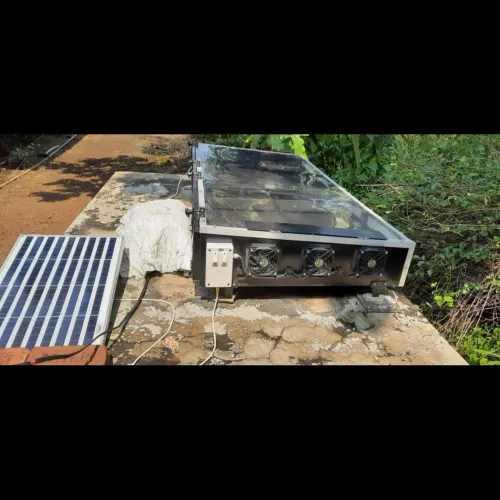
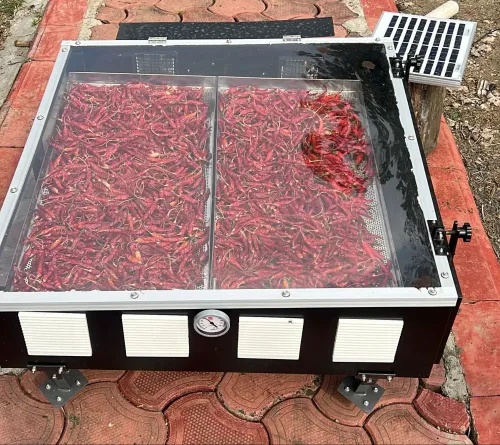
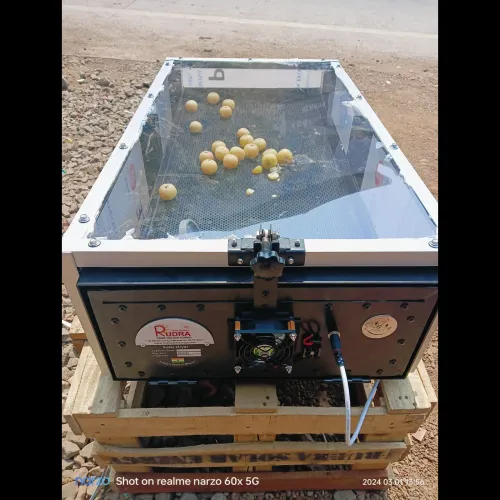
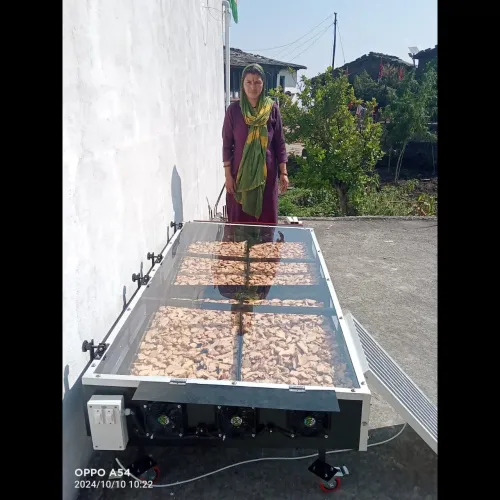
An enclosed solar dryer can provide a more organised environment than completely open outdoor drying and can help reduce direct exposure of the loaded material to dust and insects.
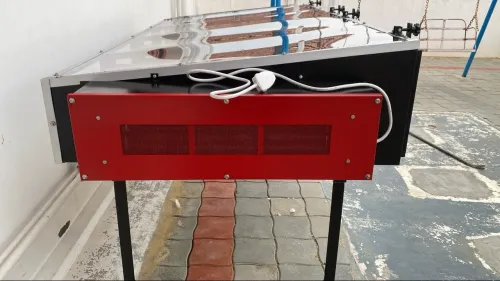
Depending on the selected system configuration, drying may involve solar-assisted heat, controlled or forced airflow and structured product loading.
But the dryer does not replace the rest of the processing line.
Depending on the commodity, separate operations may still include:
Cleaning
Washing
Peeling
Cutting
Blanching
Curing
Grading
Grinding
Milling
Oil extraction
Packaging
Storage
The exact workflow should be defined before the dryer configuration is finalised.
Who Should Consider a Solar Dryer in Badaun?
The potential requirement can differ widely between users such as:
Farmers
FPOs and FPCs
Self-Help Groups
Agricultural cooperatives
Millet processors
Oilseed processors
Pulse processors
Vegetable-processing enterprises
Spice processors
Food-processing MSMEs
Rural entrepreneurs
Post-harvest value-addition centres
A small seasonal processor and an FPO aggregating produce from several farmers do not need the same equipment simply because both are located in Badaun.
Start with Peak-Season Throughput, Not Maximum Machine Size
A useful capacity discussion should begin with the actual business workflow.
Before selecting a dryer, the processor should define:
Primary commodity: What will occupy most of the machine’s annual operating time?
Peak daily input: How much arrives during the busiest harvest period?
Incoming form: Grain, seed, whole produce or prepared slices?
Moisture condition: Is drying actually required?
Drying geometry: Bulk bed or tray-based spread?
Required throughput: How many batches need to be completed?
Operating season: Which months create the highest processing demand?
Next stage: Storage, milling, oil processing, food preparation or packaging?
Backup requirement: How flexible is the production schedule around changing weather?
These questions turn dryer selection into an engineering and processing decision rather than only a catalogue comparison.
Solar Dryer Price in Badaun Depends on What the Buyer Is Actually Drying
There is no technically meaningful single solar dryer price in Badaun for every application.
A system primarily handling prepared vegetables may require significant usable tray area.
A millet processor may prioritise bulk loading and airflow.
An oilseed processor may have another loading and throughput requirement.
Configuration and cost can therefore vary with:
Batch capacity
Usable drying area
Loading arrangement
Number of trays where applicable
Airflow configuration
Chamber dimensions
Construction specification
Monitoring
Solar-primary or hybrid arrangement
Optional backup
Installation
Customisation
The most useful price quotation is therefore based on a defined commodity and processing quantity.
Where Hybrid Drying Fits into Badaun Processing
Solar-primary operation can be appropriate where available solar conditions and the production schedule align.
A processor with tighter deadlines or seasonal production constraints may evaluate an appropriate hybrid solar dryer or backup-assisted configuration.
This decision should be based on:
Commodity
Daily throughput
Processing season
Local conditions
Allowable drying window
Required production continuity
Backup should solve a real processing requirement rather than simply being added as a marketing feature.
Building a Solar Dryer Configuration Around Badaun’s Actual Crops
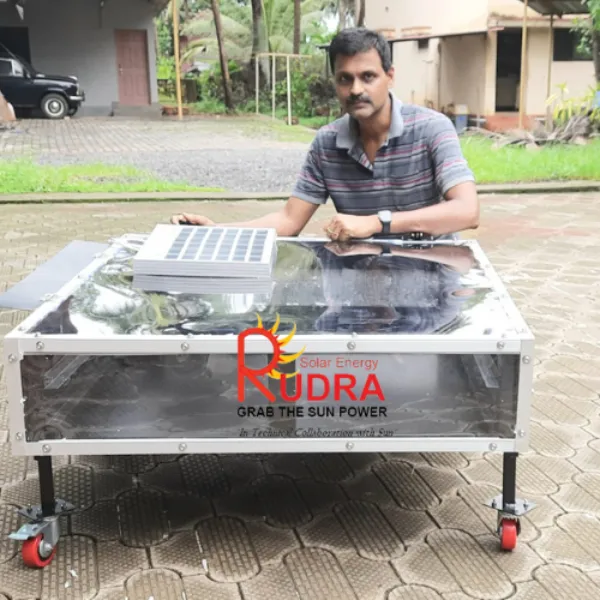
Rudra Solar Energy provides solar dryer systems for agricultural and food-processing requirements across multiple capacities and configurations.
For Badaun, system planning can begin by separating the requirement into the correct processing route:
Bajra or grain → moisture + bed depth + airflow
Mustard/toria → oilseed moisture + loading + downstream processing
Prepared potato/vegetables → tray area + product geometry + airflow
Chilli/turmeric → commodity preparation + tray loading + required endpoint
This approach helps farmers, FPOs, cooperatives and processors evaluate a solar dryer in Badaun according to what will actually happen inside the machine.
Businesses looking for a solar grain dryer, solar oilseed dryer, solar dryer for agricultural products, potato drying machine, solar spice dryer, solar food dehydrator, commercial solar dryer or hybrid solar dryer can begin by defining the commodity, incoming quantity and required daily throughput.
That is the practical starting point for selecting a suitable system configuration.
Keywords