Prayagraj has a substantial agriculture-based rural economy, with wheat and rice as its principal crops and Arhar, Urad and Chana among the pulses cultivated in the district. The district lies between the Ganga and Yamuna river systems, while its climate includes a warm and humid monsoon from around July to September. These local conditions make proper post-harvest moisture management an important consideration for agricultural handling and processing.
For farmers, FPOs, pulse processors and agri-processing businesses in Prayagraj, a solar dryer can be considered where controlled moisture reduction is required before storage, milling, packaging or another processing stage.
Solar Drying Applications for Prayagraj’s Agricultural Produce
A solar drying system may be evaluated for suitable applications involving:
- Arhar (pigeon pea)
- Urad (black gram)
- Chana (chickpea)
- wheat and other suitable grains
- selected seeds
- vegetables, spices and herbs handled by local processors
- other agricultural products requiring moisture reduction
Each commodity needs to be evaluated separately. Pulses, grains and fresh vegetables differ considerably in their initial moisture, product density, layer thickness and required airflow, so identical loading practices should not be assumed for all products.
Managing Drying During Seasonal Humidity
Prayagraj experiences hot summers followed by a warm and humid monsoon period. Higher relative humidity can reduce the rate at which moisture leaves a product, meaning drying performance is influenced not only by temperature but also by air movement, tray or bed loading, weather conditions and the target final moisture.
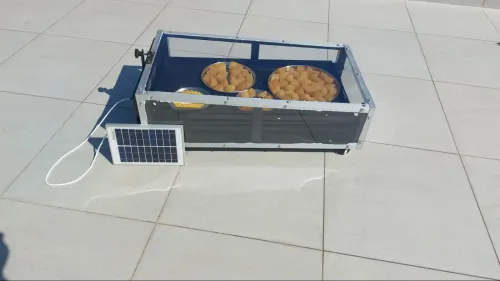
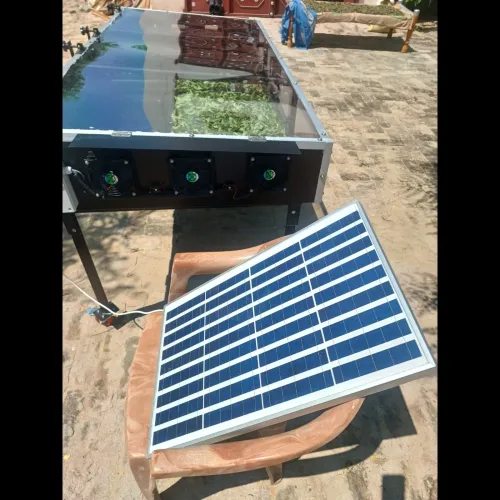
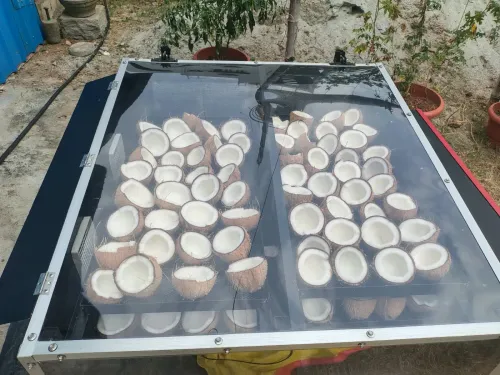
An enclosed forced-air solar drying system can support a more controlled drying environment than leaving suitable produce exposed in open areas. It can also help protect the material from direct contact with dust, insects and other external contaminants during the drying stage.
However, a solar dryer should not be presented as completely weather-independent. Actual drying time will still vary according to solar radiation, humidity and the material being processed.
Planning Capacity for Pulses and Grains
For pulse or grain-processing applications, dryer selection should start with the processor's actual workflow:
What commodity is being dried? → What is its condition before loading? → How many kilograms need drying per batch? → What final moisture or processing stage is required?
This is more useful than selecting equipment only because it carries a particular capacity label.
For example, the loading arrangement required for Urad or Chana may differ considerably from the tray requirement for sliced vegetables or leafy herbs even at the same total batch weight.
Solar Dryer Solutions for Prayagraj
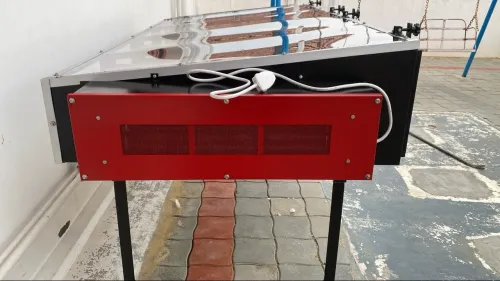
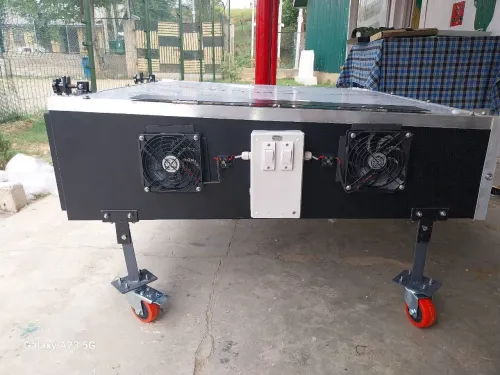
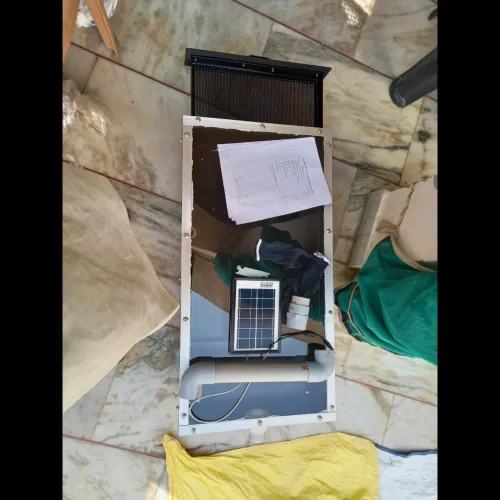
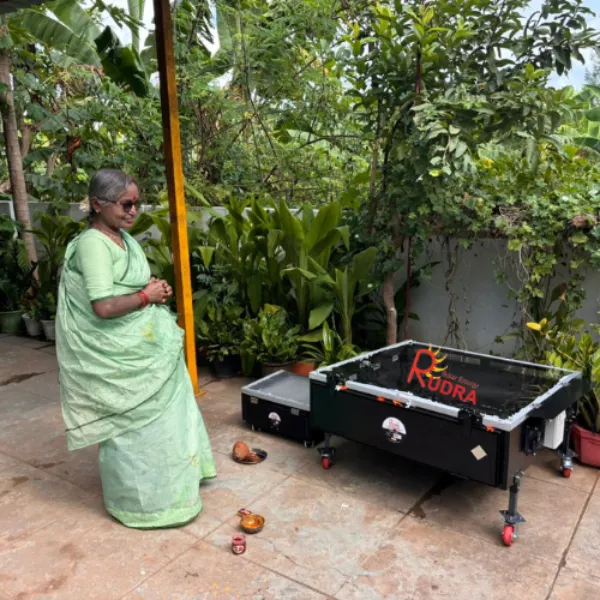
Rudra Solar Energy provides solar drying systems for agricultural and food-processing applications with configurations that can be selected according to the commodity, batch requirement, airflow, available tray area and operating schedule.
For a solar dryer requirement in Prayagraj, processors should ideally share the commodity name, quantity to be dried per batch or per day, existing drying method, project location and intended use of the dried material. This allows the drying system to be evaluated according to the actual application rather than using one standard configuration for every crop.
Keywords