Ambedkar Nagar has a diversified agricultural base where vegetable and horticultural crops create opportunities for local value addition beyond fresh-market sales. The district's Krishi Vigyan Kendra identifies crops such as chilli, tomato, potato, onion, brinjal, cauliflower, okra and gourds, along with fruits including mango, citrus, papaya and banana. It also lists agro-processing and post-harvest management among the district's development priorities.
For farmers, FPOs, SHGs and food-processing businesses handling seasonal produce, a solar dryer in Ambedkar Nagar can support moisture reduction in a more enclosed and organised environment than directly spreading produce in the open.
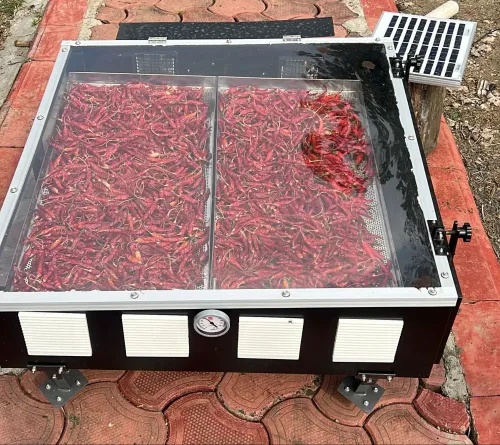
Chilli Drying for Spice Processing
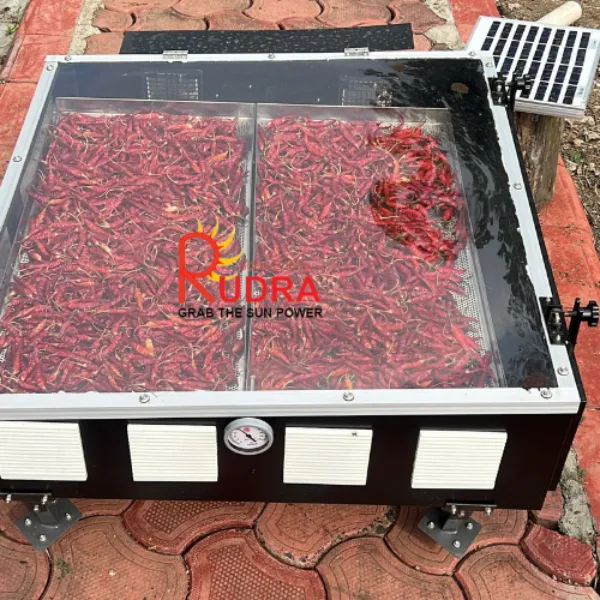
Chilli is one of the locally relevant vegetable and spice crops documented for Ambedkar Nagar. Before chillies move into later stages such as grading, grinding or packaging, moisture must first be reduced to the level appropriate for the intended product.
A solar drying system can support this stage through an enclosed chamber and managed airflow. Actual drying behaviour will depend on chilli variety, maturity, initial moisture, loading quantity, airflow, humidity, solar radiation and the required final moisture level.
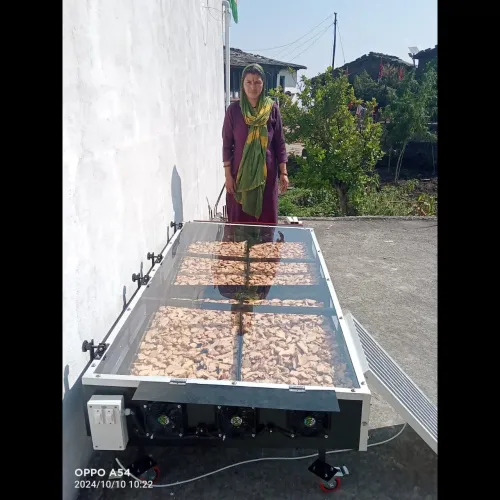
Tomato and Vegetable Drying
Tomato, onion, brinjal, okra, cauliflower and several gourds are also part of the district's documented vegetable production. These commodities have different structures and moisture contents, so they should not all be dried using identical preparation or operating conditions.
Depending on the product, preparation may separately involve washing, sorting, cutting or slicing before loading. The solar dryer itself performs the moisture-removal stage.
For sliced tomato or other vegetables, useful operating considerations include:
- maintaining reasonably uniform slice thickness
- avoiding excessive tray loading
- allowing air to move around the product
- selecting temperature conditions appropriate to the commodity
- checking the required final dryness before unloading
This makes a solar dryer for vegetables relevant not only as equipment, but as part of a planned post-harvest processing workflow.
Why Enclosed Drying Can Be Useful
Traditional open drying leaves produce directly exposed to surrounding dust, insects and changing outdoor conditions. An enclosed solar dryer can help provide a more protected drying environment while using solar energy for moisture removal.
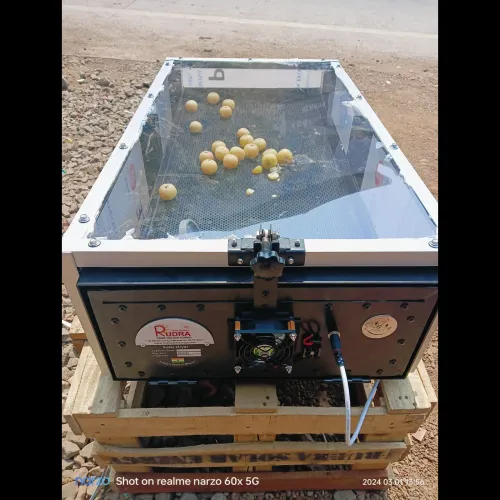
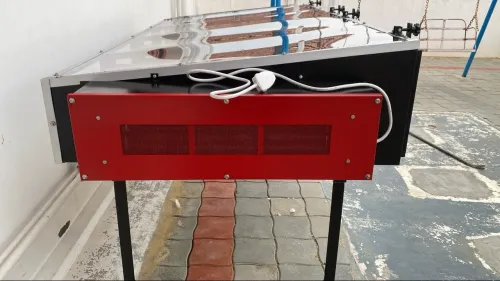
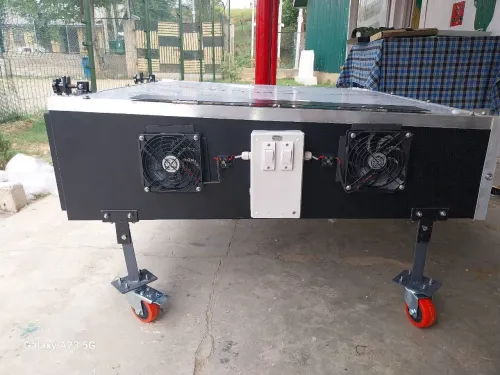
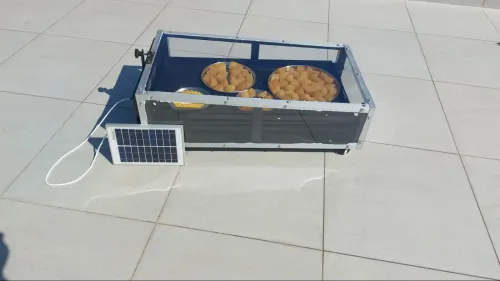
Depending on the selected Rudra configuration, systems may include features such as:
- enclosed drying chamber
- controlled or forced airflow
- solar-powered DC fans in relevant models
- food-contact trays
- UV-protected polycarbonate in relevant configurations
- solar-only or optional hybrid/backup arrangements
- different or customised processing capacities
Exact materials and specifications vary by model, so the system should be selected according to the actual application rather than assuming one configuration suits every crop.
Selecting Capacity for Ambedkar Nagar Applications
Capacity should not be selected only from the fresh weight of the crop.
A processor planning to dry chilli, tomato, onion or other vegetables should also consider:
Fresh quantity per batch: how much material actually needs to be handled at one time.
Product preparation: whole chillies, sliced tomato and leafy or cut vegetables occupy tray area differently.
Moisture-removal requirement: crops with different initial and target moisture levels place different drying loads on the system.
Available processing time: seasonal harvest peaks may require different capacity planning than small periodic batches.
Local weather: humidity, cloud cover and solar availability can affect drying performance.
This application-based approach can help farmers and processors avoid choosing a dryer only by a generic capacity number.
Opportunities for Local Value Addition
Ambedkar Nagar KVK specifically identifies promotion of agro-processing technologies for value addition and post-harvest management of agricultural products as priority areas.
Solar drying can therefore be explored for locally relevant products such as:
- chilli
- tomato
- onion
- selected vegetables
- mango
- banana
- papaya
- selected herbs or agricultural produce where drying is appropriate
The final commercial opportunity will still depend on product quality, processing practices, packaging, storage, buyer demand and market access. A solar dryer supports the drying stage; it does not itself guarantee profit or market acceptance.
Rudra Solar Energy for Ambedkar Nagar
Rudra Solar Energy Pvt. Ltd. develops solar drying systems for agricultural and food-processing applications with different capacities and operating configurations.
For an Ambedkar Nagar project, dryer selection can be based on the commodity, fresh quantity, moisture-removal requirement, tray area, airflow requirement, available installation space and need for solar-only or hybrid operation.
Planning chilli, tomato or vegetable drying in Ambedkar Nagar? Share your product, fresh quantity per batch/day and processing requirement with Rudra Solar Energy to evaluate a suitable solar dryer configuration.
Keywords