Aligarh’s agricultural profile creates a different drying requirement from fruit- or vegetable-dominated districts. Government sources place Aligarh in Uttar Pradesh’s South Western Semi-Arid agro-climatic zone, where crops such as bajra, jowar, mustard, urad, moong, groundnut, pea and arhar are important. District-level information also describes agriculture as a major base of Aligarh’s economy.
For farmers, FPOs, grain handlers and agro-processing businesses searching for a solar dryer in Aligarh, moisture management can be relevant for suitable millets, pulses, seeds and other agricultural materials before storage or further processing.
Drying Applications Relevant to Aligarh
For Aligarh, the stronger application opportunity is around millets, pulses and selected oilseed/agricultural products rather than repeating the same potato-processing angle used for Agra.
Potential solar drying applications may include:
- Bajra and other millets where moisture reduction is required before storage
- Urad, moong, arhar and peas for suitable post-harvest drying requirements
- Groundnut and selected seeds where controlled moisture management forms part of post-harvest handling
- Spices, herbs or vegetables handled by local processors where appropriate
- Other agricultural materials that require protected drying before storage or further processing
Different commodities should not be loaded or dried using one identical process. Grain, pulses, seeds and lightweight plant materials can differ in initial moisture, bulk density, loading depth and airflow requirement.
Why Moisture Control Matters for Grain and Pulse Handling
Drying should not simply mean exposing produce to the highest possible temperature.
The objective is to remove the required amount of moisture while maintaining suitable handling conditions for the specific commodity. During open-air drying, produce may also remain exposed to dust, insects and changing weather conditions.
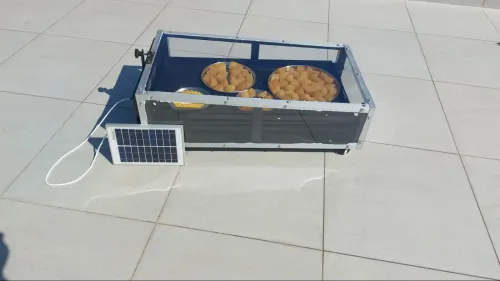
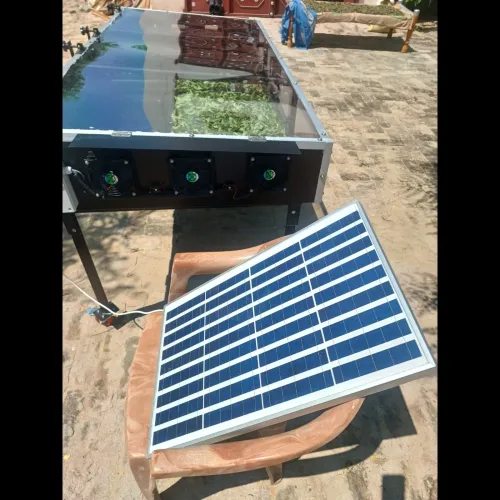
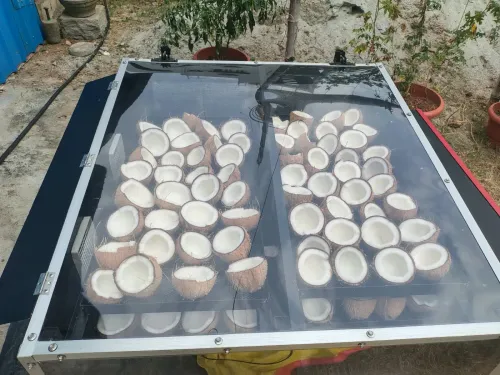
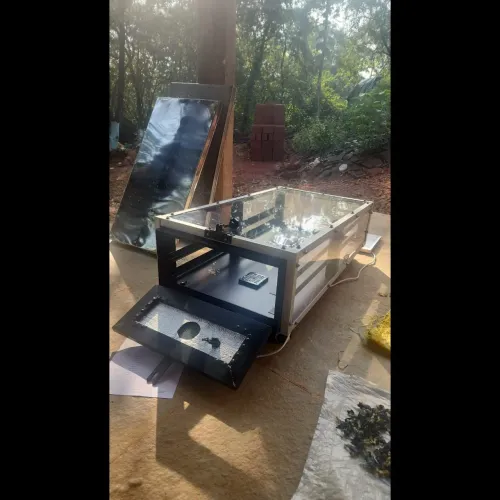
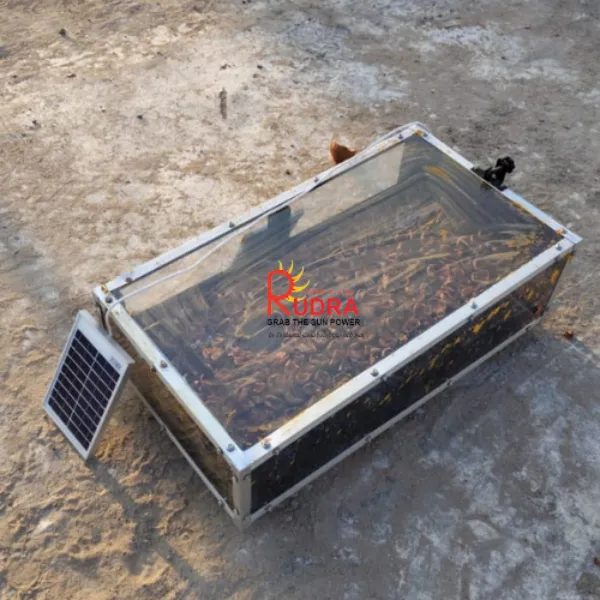
An enclosed solar drying system can provide a more protected and organised drying environment, while airflow supports removal of moisture from the loaded material.
For processors handling larger quantities, system performance depends on factors such as:
- fresh or post-harvest moisture level
- commodity type
- kilograms loaded per batch
- layer depth on trays or drying surfaces
- airflow through the material
- ambient humidity and temperature
- final moisture requirement
- expected daily throughput
Selecting a Solar Dryer for Aligarh
A buyer should avoid choosing equipment only from a generic capacity label such as 100 kg, 250 kg or 500 kg.
For example, 100 kg of bajra and 100 kg of a bulky agricultural product can require different loading arrangements even though their weights are identical.
A better requirement starts with:
commodity + quantity per batch + current moisture condition + desired final use + operating schedule.
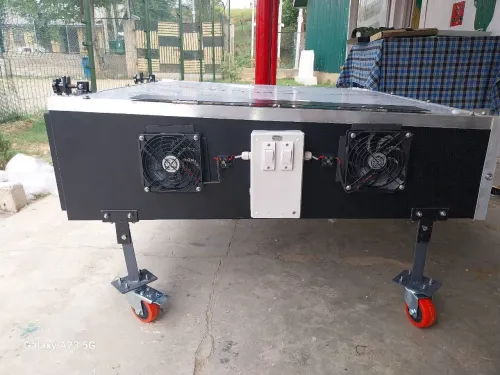
Rudra Solar Energy provides solar drying systems for different agricultural processing requirements. For an Aligarh project, the configuration can be evaluated according to whether the primary requirement is millet drying, pulse handling, seed/oilseed moisture reduction or multipurpose agricultural processing.
For a solar dryer requirement in Aligarh, share the product, batch quantity, processing frequency, installation location and final application so the system can be selected around the actual drying requirement rather than a one-size-fits-all capacity.
Keywords