Ballia has a strong vegetable-growing base that gives local farmers and food-processing enterprises several opportunities for post-harvest value addition. The district Krishi Vigyan Kendra identifies Ballia as being in a progressive stage of vegetable cultivation, particularly for onion, chilli, potato, parval, vegetable pea, brinjal, tomato and cauliflower, along with crops such as okra, muskmelon and watermelon.
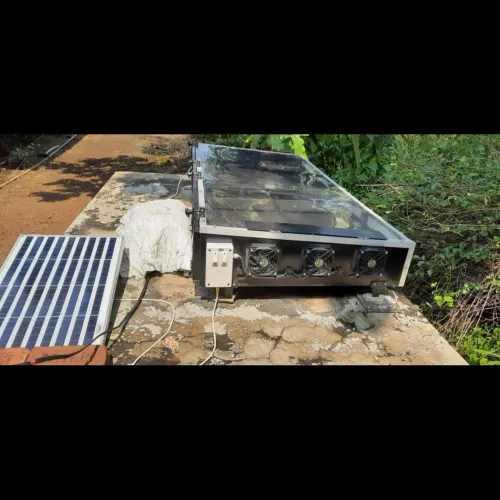
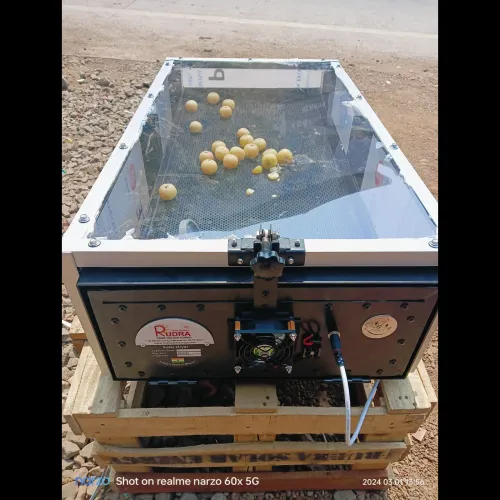
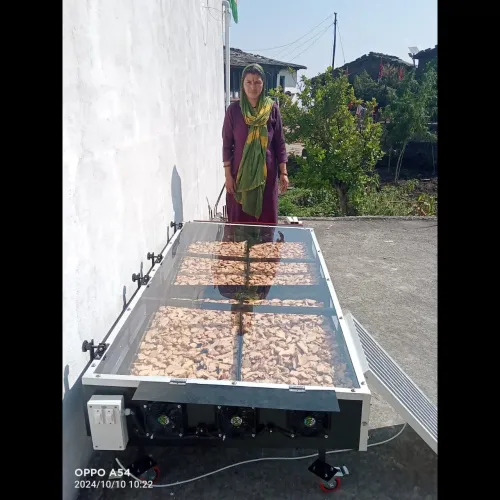
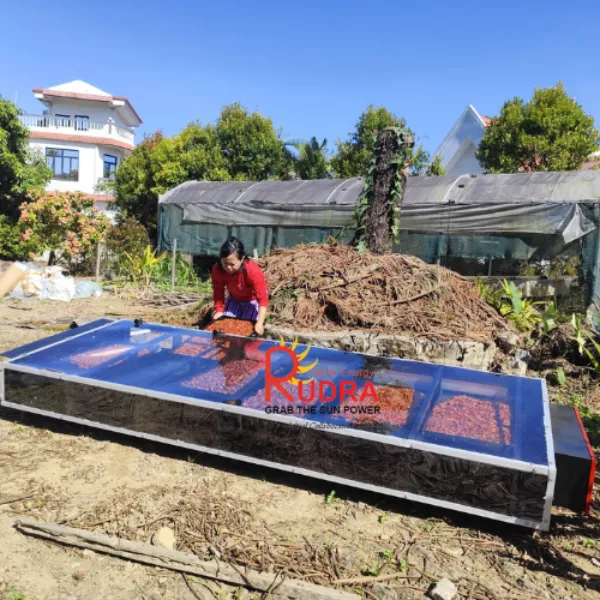
For processors working with suitable vegetables and spices, a solar dryer in Ballia can provide an enclosed, tray-based system for moisture reduction while allowing the product to be handled in a more organised environment than completely open drying.
Ballia’s opportunity is especially interesting because onion, parwal and chilli are physically very different products. This means a useful solar dryer should not be selected only on the basis of “kilograms per batch.” Product preparation, tray area, loading pattern and airflow should also match the commodity.
Onion Processing Needs More Than Just Heat
Onion is one of the important vegetables specifically identified in Ballia’s district horticultural profile.
Where onion is intended for dehydration, appropriate preparation may include sorting, peeling and slicing before the material reaches the dryer.
Slice thickness matters because thick and thin onion pieces within the same batch may release moisture at different rates.
A solar dryer for onion should therefore be evaluated around:
- fresh onion quantity
- form of the prepared onion
- slice consistency
- usable tray surface
- loading depth
- airflow across trays
- humidity inside and outside the chamber
- required final moisture condition
The purpose of the dryer is moisture reduction. Peeling, slicing, grinding and packaging remain separate processing operations.
Why Tray Distribution Is Important for Onion
Simply filling a tray as heavily as possible may not provide the best drying conditions.
As moisture leaves the product, the surrounding air becomes more humid. Heated air must move across the product and carry that moisture away. Solar-dryer research consistently identifies airflow and tray arrangement as important parts of dryer performance.
For onion processors in Ballia, this means usable tray area can be as important as nominal machine capacity.
A processor planning 50 kg of sliced onion, for example, should understand how that material will actually be distributed across the available trays instead of looking only at the total batch-weight figure.
Parwal Gives Ballia a Distinct Local Processing Angle
Parval, commonly known as parwal or pointed gourd, is another vegetable specifically listed in Ballia’s progressive vegetable cultivation profile.
This gives Ballia a useful district-specific application that should not be replaced by the same generic tomato-potato content used for every Uttar Pradesh location.
For suitable parwal dehydration, preparation should first be defined according to the intended dried product.
Product size, cutting method and thickness influence how much surface area is exposed to heated air.
Inside an enclosed solar vegetable dryer, the prepared material can then be arranged on trays with sufficient spacing for air movement.
Parwal should not automatically use the same drying conditions as onion or chilli.
Even though all three may be processed inside a suitable solar dryer, each commodity can require a different combination of:
preparation + loading + airflow + temperature + drying endpoint.
Chilli Processing for Farmers and Spice Businesses
Chilli is also among Ballia’s important vegetable crops.
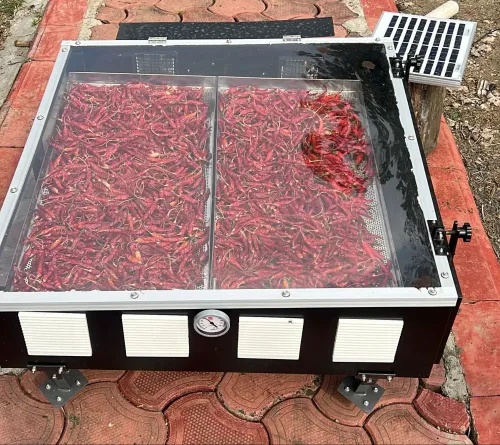
For growers or processors handling chilli, an enclosed solar chilli dryer can support organised moisture reduction while reducing direct exposure of loaded chilli to the open outdoor environment.
Chilli drying should consider:
- variety and maturity
- initial moisture
- whole or prepared product form
- tray loading depth
- airflow
- ambient humidity
- drying temperature
- required final moisture
A deep pile of chilli may create greater resistance to airflow than a properly distributed layer.
This is why a processor should evaluate tray layout and air movement instead of assuming that a higher chamber temperature alone will produce a better process.
One Ballia Solar Dryer Can Support Different Vegetables — But Not One Setting
A food-processing enterprise or FPO in Ballia may not work with only one crop throughout the year.
A suitable multi-product system may potentially handle separate batches of:
onion, parwal, chilli, tomato, brinjal, cauliflower, okra and other compatible produce.
But a multi-purpose solar dryer does not mean one universal recipe.
For each product, the operator should reconsider:
- product preparation
- loading density
- required tray area
- airflow
- temperature
- moisture endpoint
- cleaning before the next product batch
This distinction is important for processors trying to use one system efficiently across several crop seasons.
What About Potato, Tomato and Other Ballia Vegetables?
Ballia KVK also documents potato, tomato, brinjal, cauliflower and other vegetables as part of the district’s vegetable cultivation.
These products can provide additional opportunities for suitable dehydration applications.
However, the preparation requirement changes from product to product.
Prepared potato pieces, tomato slices and brinjal should not be loaded identically simply because they are all vegetables.
A solar dryer for vegetables works best when product preparation and loading are planned around the physical characteristics of the actual crop being processed.
Fruits Create Additional Seasonal Possibilities
Ballia’s KVK profile also notes mango, jackfruit, guava, papaya, banana and aonla orchards in scattered locations within the district.
For a multi-product processing enterprise, these fruits can create additional seasonal applications beyond vegetable drying.
Fruit processing typically introduces different challenges because many fresh fruits contain substantial moisture.
Prepared fruit pieces may therefore require:
consistent cutting, adequate tray spacing, organised airflow and careful endpoint assessment.
A fruit-processing batch should not simply inherit the operating settings used previously for chilli or onion.
Solar Food Dehydrator for Ballia FPOs and Processing Businesses
The value of a solar food dehydrator in Ballia becomes stronger when it is selected around the buyer’s actual production workflow.
Potential users may include:
farmers, FPOs, SHGs, agricultural cooperatives, vegetable processors, spice processors, rural entrepreneurs and food-processing MSMEs.
Different users can require very different systems.
A small SHG processing selected vegetables periodically may not need the same tray area or batch capacity as an FPO collecting produce from multiple growers.
Before selecting equipment, buyers should therefore define:
Which products will be processed?
How many kilograms of fresh material are available per batch or per day?
Will the product be whole, sliced or otherwise prepared?
How many batches are expected during peak season?
What tray area is required?
Is solar-only operation sufficient?
Solar-Only or Hybrid Solar Dryer?
Solar-dryer performance depends on solar radiation and surrounding atmospheric conditions.
When solar radiation is favourable, solar energy provides the thermal input needed to support drying. During cloudy or humid periods, moisture removal can become slower.
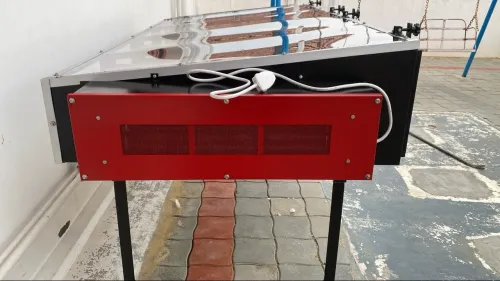
Forced-convection solar dryers use fan-driven air movement to help circulate drying air through the system.
For businesses that need tighter production scheduling, an optional hybrid solar dryer or backup-assisted configuration can therefore be evaluated according to the application.
The choice should depend on actual production requirements rather than automatically assuming that every Ballia installation needs the same configuration.
Solar Dryer Price in Ballia Depends on the Processing Requirement
There is no useful single solar dryer price in Ballia that applies to every buyer.
The appropriate system and its cost can vary according to factors such as:
- batch capacity
- usable tray area
- chamber dimensions
- construction configuration
- airflow arrangement
- number of trays
- monitoring requirement
- solar-only or hybrid setup
- installation requirement
- customisation
A vegetable processor working mainly with onion and parwal may require a different system from an organisation handling several crops at higher daily volumes.
A proper quotation should therefore begin with the product and production requirement.
What to Ask a Solar Dryer Manufacturer Before Buying
A serious commercial buyer should ask more than:
“What is the price?”
Useful questions include:
How much usable tray area does the system provide?
How is air distributed across loaded trays?
What batch capacity is recommended for my particular product?
Can the same unit handle different compatible products separately?
Is backup heating available if required?
What installation and operator guidance is provided?
These questions help buyers compare actual processing capability instead of relying only on marketing terminology.
Rudra Solar Energy for Ballia Processing Requirements
Rudra Solar Energy provides solar dryer systems for different agricultural, horticultural and food-processing applications.
Depending on the relevant configuration, systems may include an enclosed chamber, organised food-contact trays, controlled or forced airflow, solar-powered DC fans and optional hybrid or backup arrangements.
For Ballia, system selection can be planned around the district’s diverse vegetable-processing opportunities rather than treating every crop as one generic application.
An onion processor may prioritise slice loading and tray area.
A chilli processor may focus more heavily on airflow through the loaded product.
A parwal or mixed-vegetable enterprise may need greater flexibility for changing product batches.
For businesses searching for a solar dryer in Ballia or solar dryer manufacturer in Ballia, sharing the commodity, fresh quantity and processing schedule is the most useful starting point for selecting an appropriate configuration.
Planning onion, parwal, chilli or vegetable processing in Ballia? Share your commodity and batch requirement with Rudra Solar Energy to discuss a suitable solar dryer solution.
Keywords
solar dryer in Ballia, solar dryer Ballia, solar dryer manufacturer in Ballia, solar dryer Uttar Pradesh, solar dryer for onion, onion drying machine, solar onion dryer, solar dryer for parwal, parwal drying machine, solar chilli dryer, chilli drying machine, solar dryer for vegetables, solar food dehydrator, solar food dryer, solar dryer for agricultural products, commercial solar dryer, hybrid solar dryer, solar dryer price in Ballia, Rudra Solar Energy
Keywords