Agricultural processing in Amethi is not limited to a single crop season. The district's KVK profile records a varied crop base that includes paddy, wheat, urd, moong, lentil, chickpea, field pea, pigeon pea, mustard, sesame, sugarcane and potato. This diversity creates a practical need for processing equipment that can be used across different commodities rather than remaining dedicated to only one crop.
For farmers, producer groups and small food-processing enterprises, a solar dryer in Amethi can support controlled moisture reduction for suitable agricultural products while keeping the material inside an enclosed drying chamber.
Why a Multi-Crop Approach Makes Sense in Amethi
A processor may handle different crops as seasons change. Instead of planning a drying system around only one commodity, the more useful approach is to evaluate whether the dryer can accommodate different products through changes in:
- tray loading
- product preparation
- airflow
- operating temperature
- batch quantity
- target moisture level
The KVK crop profile shows that Amethi has cereals, pulses, oilseeds and potato within the same agricultural landscape.
However, multi-crop use does not mean identical drying settings for every product. Each commodity must be handled according to its own physical characteristics and moisture-removal requirement.
Drying Pulses and Other Agricultural Produce
Urd, moong, lentil, chickpea, field pea and pigeon pea are all documented among crops grown in Amethi.
Where additional moisture reduction is required as part of post-harvest handling or processing, factors such as the initial moisture condition, batch depth, airflow and intended storage or processing requirement must be considered.
A solar dryer for agricultural products can provide an enclosed processing space, but drying conditions should always be selected according to the commodity rather than applying a universal time or temperature.
Potato and Other Seasonal Produce
Potato is also part of Amethi's documented crop profile. For applications involving sliced potato or other prepared produce, operations such as washing, peeling and cutting take place separately before drying.
During the drying stage, processors should pay attention to:
Slice consistency: uneven pieces may lose moisture at different rates.
Tray loading: excessive loading can interfere with airflow.
Air movement: moisture released from the product needs to be carried away effectively.
Drying endpoint: final moisture should be selected according to the intended subsequent processing or storage requirement.
One Dryer, Different Seasonal Applications
A properly selected system may support different agricultural products at different times of the year.
For example, an Amethi processor could evaluate a solar drying system for suitable applications involving:
- pulses
- potato
- selected grains
- oilseeds where drying is appropriate
- vegetables
- herbs
- other locally available agricultural produce
Between commodities, trays and food-contact areas should be cleaned appropriately and operating conditions reset according to the next product.
This flexibility can be especially useful for businesses that do not process the same crop throughout the year.
What Matters More Than Just Dryer Capacity?
When comparing solar dryer models, buyers often begin with capacity. But fresh weight alone is not enough to select the right system.
For Amethi applications, the selection should also consider:
- primary commodities to be processed
- fresh quantity per batch
- moisture to be removed
- tray area required
- product size and preparation
- airflow requirement
- seasonal processing frequency
- available solar conditions
- requirement for backup operation
Two businesses processing the same fresh weight can still require different dryer configurations if their commodities and moisture loads are different.
Enclosed Solar Drying for Organised Processing
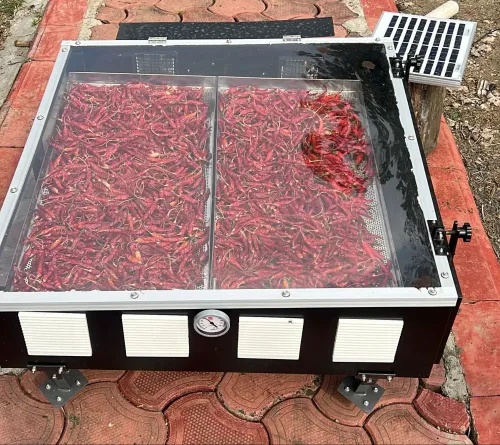
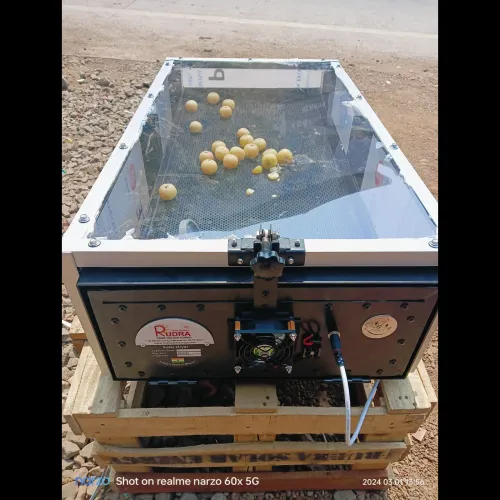
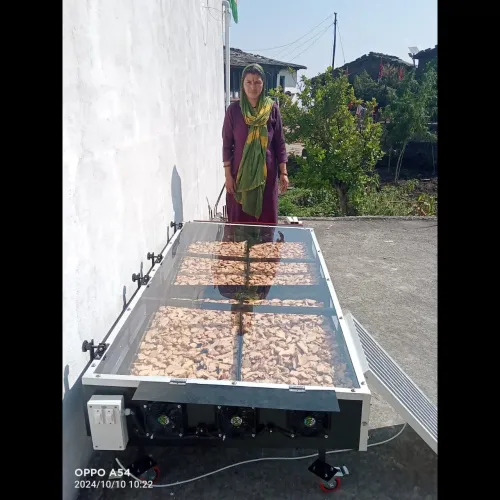
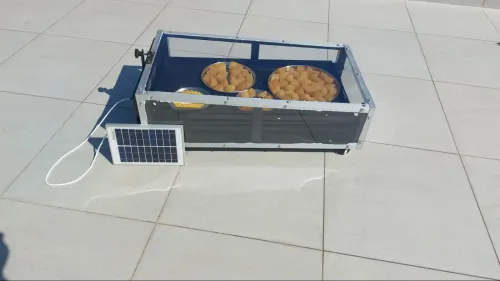
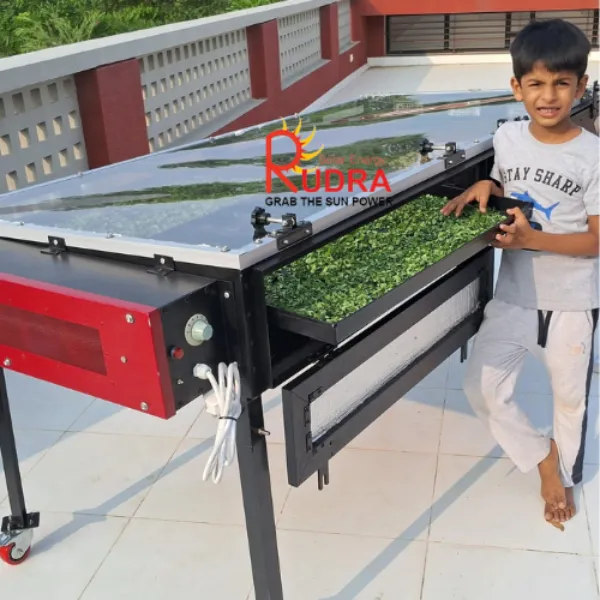
Compared with directly spreading produce in an open area, an enclosed solar dryer can help reduce direct exposure to dust and insects and provide a defined space for tray-based drying.
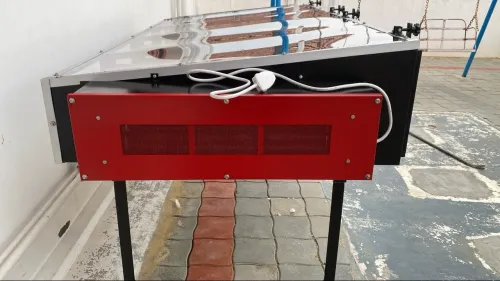
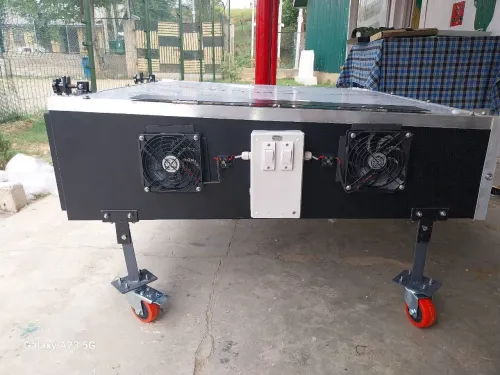
Depending on the selected Rudra model or project configuration, relevant features may include:
- enclosed drying chamber
- controlled or forced airflow
- solar-powered DC fans in relevant configurations
- food-contact trays
- UV-protected polycarbonate in relevant models
- multiple capacity options
- optional hybrid or backup arrangements where required
Exact construction materials and specifications vary by model, so buyers should confirm the configuration suitable for their particular processing requirement.
Solar Dryer Selection for Amethi
For a multi-crop district such as Amethi, the better question is not simply “Which solar dryer has the highest capacity?”
It is:
Which configuration can handle my actual crop mix, batch size and moisture-removal requirement efficiently across the processing season?
Rudra Solar Energy Pvt. Ltd. can evaluate the intended commodities, daily or batch quantity, available installation space, tray requirement and operating preference before suggesting an appropriate solar dryer configuration.
If you are planning multi-crop agricultural processing in Amethi, share your main commodities and fresh batch quantity with Rudra Solar Energy to evaluate a suitable solar drying system.
Keywords