Amroha has a clear horticultural identity around mango. The official District Amroha website itself highlights the district as “Renowned for Dholak and Mango,” while Uttar Pradesh food-processing material has also identified mango in connection with Amroha.
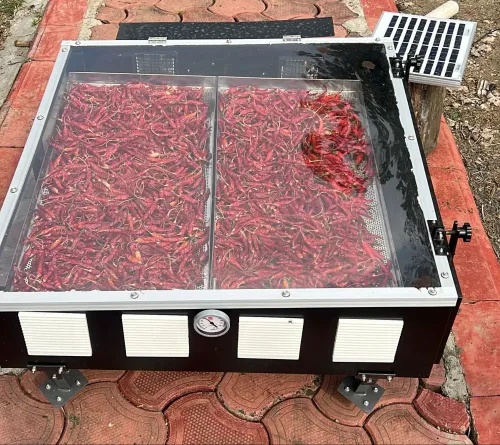
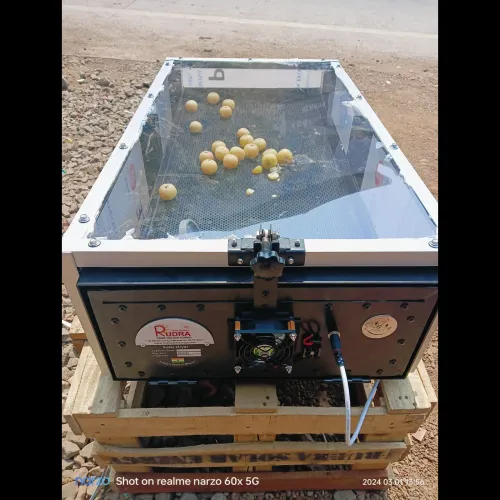
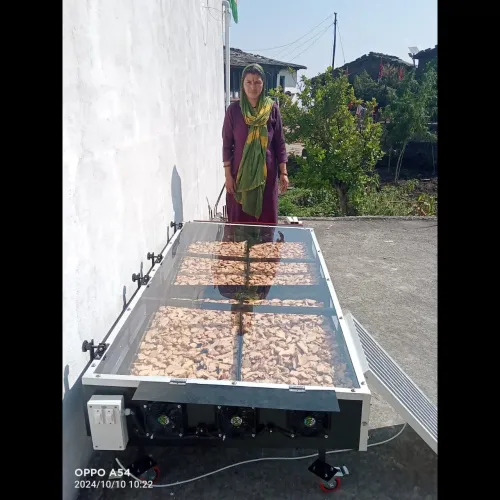
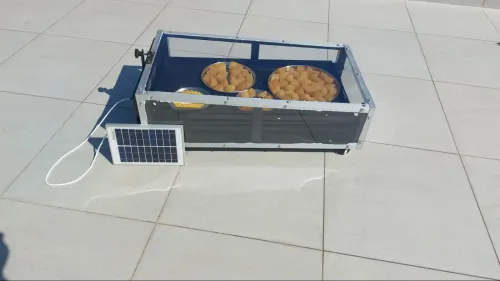
For mango growers, farmer groups and fruit-processing businesses, drying can create another processing route for suitable fruit beyond the fresh market. A solar dryer in Amroha can support the moisture-removal stage inside an enclosed chamber, helping processors reduce direct exposure of sliced fruit to dust, insects and the open environment.
From Fresh Mango to Dried Fruit: Where the Solar Dryer Fits
Mango drying is not simply a matter of placing whole fruit inside a machine.
Before drying, the processing workflow may separately involve:
- selection and grading
- washing
- peeling
- removal of the seed
- slicing
- appropriate pretreatment, where required
The solar dryer then handles the moisture-removal stage.
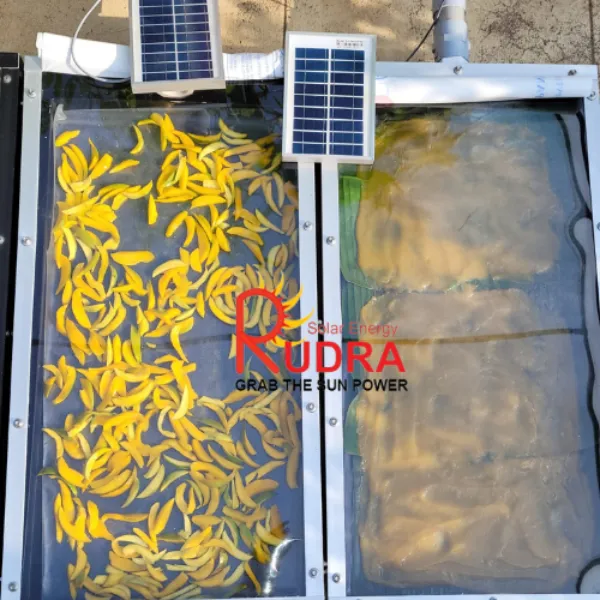
Uniform slice thickness is especially important because thick and thin pieces can dry at different rates. Tray loading should also allow sufficient airflow around the fruit rather than creating dense layers.
Why Airflow Matters for Mango Drying
Mango contains substantial moisture, so heating alone is not enough.
As moisture moves from the fruit into the surrounding air, that humid air needs to be removed from the drying zone. Controlled or forced airflow can help move moisture away from the product surface and support more organised drying.
Actual performance will still depend on:
- mango variety and maturity
- initial moisture
- slice thickness
- quantity loaded per tray
- airflow
- chamber temperature
- relative humidity
- solar radiation
- final moisture requirement
For this reason, one fixed drying time should not be applied to every mango batch.
Solar Fruit Dehydrator for Amroha Processors
Buyers may search using terms such as solar dryer for fruits, solar fruit dehydrator, or solar dryer for fruits and vegetables.
Regardless of terminology, the important question is whether the system matches the product and moisture load.
For Amroha fruit processing, buyers should evaluate:
Tray area: Fresh mango slices require adequate spreading area.
Batch quantity: Daily fresh-fruit intake helps determine appropriate system size.
Air circulation: Tray placement should allow air to move through the drying chamber.
Weather conditions: Humidity, cloud cover and available solar radiation influence drying performance.
Final application: The required drying endpoint depends on how the fruit will subsequently be handled, stored or processed.
Mango Is the Main Angle — But the Dryer Can Be More Flexible
A fruit-focused solar dryer does not necessarily need to remain unused outside mango season.
Depending on the selected configuration and appropriate operating adjustments, processors may evaluate suitable drying applications for other fruits, vegetables, herbs or agricultural produce available during other periods.
However, switching products may require changes in:
- preparation
- cutting or slicing
- loading density
- airflow
- temperature
- drying endpoint
So multi-product capability should not be interpreted as using identical settings for every commodity.
Enclosed Drying Compared with Open Exposure
Traditional open drying can leave fruit exposed directly to its surroundings.
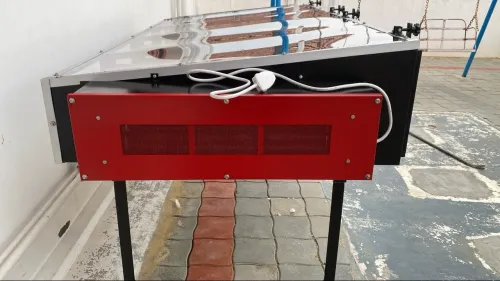
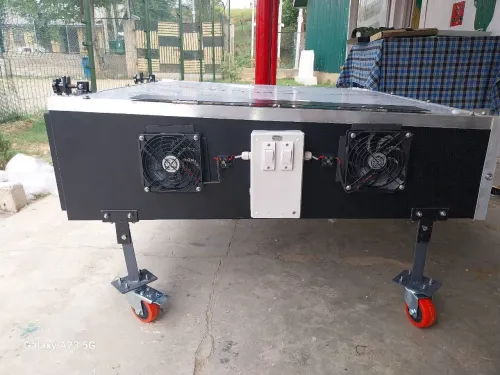
Depending on the selected Rudra Solar Energy configuration, solar drying systems may incorporate:
- enclosed drying chamber
- controlled or forced airflow
- solar-powered DC fans in relevant models
- food-contact trays
- UV-protected polycarbonate in relevant configurations
- different capacity options
- solar-only or optional hybrid/backup configurations
Exact construction and materials vary by model and application, so specifications should be confirmed for the selected system.
What Determines Solar Dryer Capacity for Mango?
A buyer should not select a dryer only by looking at the fresh-weight capacity printed on a product listing.
For mango processing, sizing should consider:
Fresh mango quantity: How much fruit needs to enter processing each day?
Usable sliced quantity: Peeling, seed removal and trimming affect the actual quantity loaded for drying.
Slice dimensions: Slice thickness affects both tray utilisation and moisture removal.
Moisture load: Different batches may require different amounts of water to be removed.
Processing schedule: Seasonal peak arrivals may require larger or more frequent batches.
Solar availability: Local operating conditions influence practical drying performance.
These factors provide a better basis for dryer selection than using only a generic kilogram capacity.
Amroha's Mango Identity Creates a Clear Processing Opportunity
Amroha's association with mango is not being added only for SEO. It is part of the district's official identity, and state-level food-processing material has also recognised mango for Amroha.
That makes fruit drying a more relevant district-specific application than creating another generic location page about “all agricultural products.”
A properly planned drying operation may support businesses exploring dried mango or other fruit-based value-added products, while subsequent steps such as grading, packaging, storage and marketing remain separate parts of the processing chain.
Rudra Solar Energy for Mango Drying in Amroha
Rudra Solar Energy Pvt. Ltd. develops solar drying systems for agricultural and food-processing applications in different capacities and configurations.
For an Amroha mango-processing requirement, system selection can be evaluated according to:
fresh fruit quantity + sliced product load + tray area + moisture-removal requirement + airflow + installation space + solar or hybrid operation.
Planning mango or fruit drying in Amroha? Share the commodity, fresh quantity per batch/day and processing requirement with Rudra Solar Energy to evaluate an appropriate solar dryer configuration.
Keywords