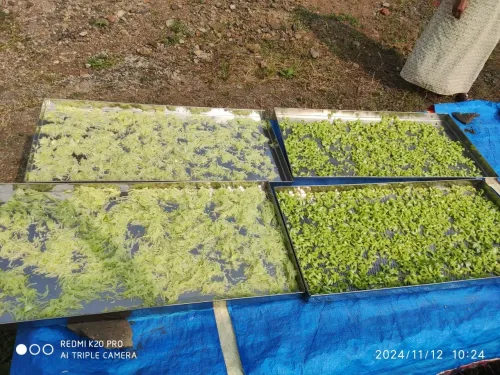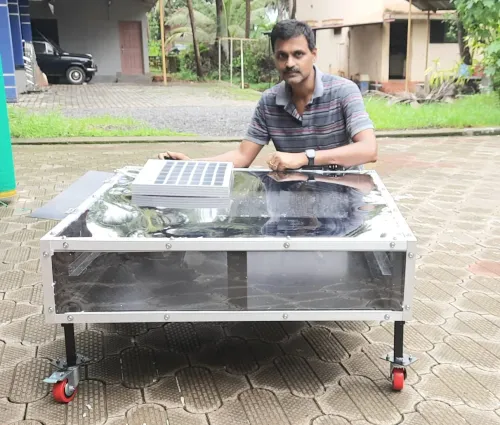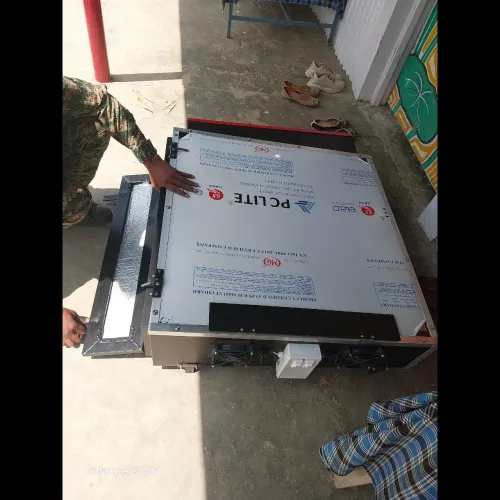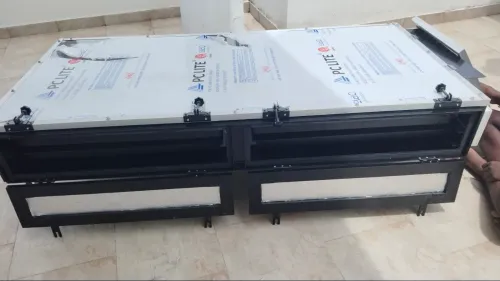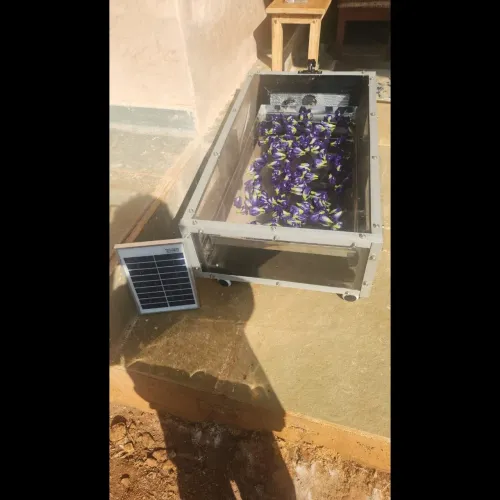
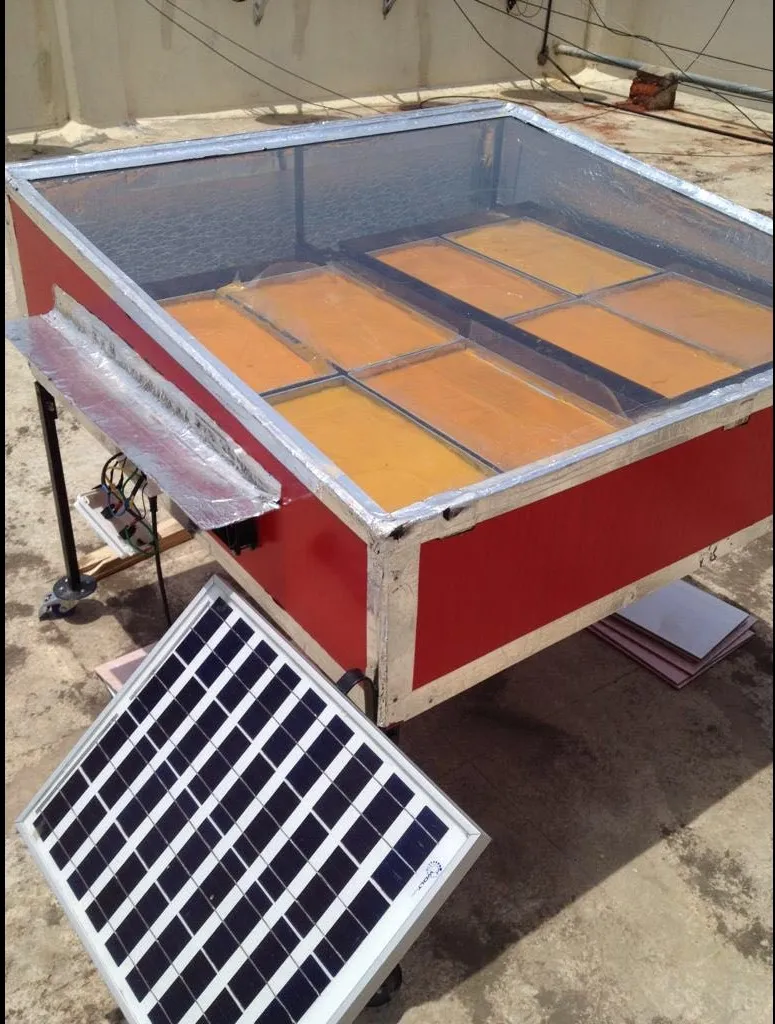
Saharsa is part of Bihar’s Mithila and Kosi region and has a strong agricultural base involving makhana, maize, pulses, potato, mustard, gram, linseed and mango. The district’s official One District One Product page identifies makhana as its ODOP product and also lists maize, pulses, potato, mango and mustard among other locally grown crops. This creates practical scope for cleaner moisture management and agricultural value addition through a Commercial Solar Dryer in Saharsa, Bihar.
Traditional open-sun drying can expose agricultural produce to dust, insects, birds, animals, sudden rainfall and uneven drying. Saharsa’s humid conditions and seasonal weather variations can also make open drying less predictable. An enclosed solar dryer provides a more organised environment for reducing moisture while protecting products from direct outdoor exposure.
Solar-Drying Applications for Saharsa Agriculture
A commercial solar dryer in Saharsa may be evaluated for technically suitable applications involving:
Makhana at selected drying or conditioning stages
Maize
Pulses and gram
Potato slices
Mustard and selected oilseeds
Mango slices
Vegetables
Chilli and suitable spices
Herbs and medicinal plants
Solar-Drying Applications for Makhana
Makhana is Saharsa’s officially identified ODOP product and an important crop in the wider Mithila region. Bihar’s Directorate of Horticulture also records substantial makhana cultivation in Saharsa.
A solar dryer may support selected moisture-management or conditioning stages for technically suitable makhana material. However, buyers should not treat it as a complete makhana-processing machine.
A solar dryer does not:
Roast makhana
Pop makhana seeds
Grade finished makhana
Add flavours
Package the final product
Roasting, popping, grading and packaging require separate specialised processes and equipment.
The exact suitability of a dryer should be evaluated according to the material being handled, its current processing stage, moisture level and required output.
Maize, Pulses and Oilseed Applications
Saharsa’s official district resources identify maize, pulses, gram, mustard and linseed among crops grown locally.
A solar dryer may support moisture reduction for:
Maize before storage or further processing
Pulses and gram before storage
Mustard before storage or oil extraction
Linseed and selected oilseeds
Seed material under technically suitable conditions
The dryer does not split pulses into dal or extract oil from mustard or linseed. These operations require separate machinery after moisture has been reduced to the appropriate level.
Potato, Mango and Vegetable Processing
Potato, mango and other suitable horticultural products may be processed into dried ingredients after proper preparation.
Potential applications include:
Potato slices or cubes
Mango slices
Vegetable pieces
Leafy vegetables
Chilli
Selected herbs
Depending on the product, preparation may include sorting, washing, peeling, slicing, blanching or another pre-treatment.
For powder applications, the product must first be dried to a suitable moisture level and then ground, sieved and packaged using separate equipment.
Who Can Use a Commercial Solar Dryer in Saharsa?
Potential users include:
Makhana-processing enterprises
Farmers
Farmer Producer Organizations
Self Help Groups
Cooperatives
Rural entrepreneurs
Food-processing MSMEs
Maize and pulse traders
Women-led food-processing groups
NGO-supported livelihood projects
Common processing facilities
An FPO or SHG may use a shared dryer for multiple products, but the group should establish clear procedures for batch scheduling, cleaning, moisture testing, cooling, packaging and record keeping.
Strong-smelling products, oilseeds and delicate fruit or vegetable products should not be mixed without appropriate cleaning and product-separation procedures.
How Should Solar-Dryer Capacity Be Selected?
Solar-dryer capacity should be selected using the exact product and processing requirement rather than only a general kilogram claim.
Makhana material, maize, pulses, potato slices and mango require different:
Loading depths
Tray areas
Bulk densities
Airflow levels
Preparation methods
Drying conditions
Final moisture targets
Important selection factors include:
Exact product
Current processing stage
Fresh or wet quantity per day
Quantity per batch
Initial moisture, if known
Required final moisture
Required dried output
Usable tray area
Airflow configuration
Processing season
Available electricity
Need for night-time or cloudy-weather support
Available installation area
Fresh input and dried output are not equal because moisture and preparation losses reduce the final weight.
Weather and Hybrid Drying Considerations
A standard solar dryer depends on available solar radiation, ambient temperature, humidity and airflow. During high humidity, cloudy periods or the rainy season, drying time may increase.
Fan-assisted airflow can help remove moisture-rich air but does not independently generate heat.
A technically suitable hybrid solar dryer may be considered where a processor requires:
Greater production continuity
Operation during weak sunlight
Night-time drying support
More predictable batch completion
Seasonal commercial processing
The auxiliary heat source, temperature control and operating cost should be evaluated according to the exact product.
Rudra Solar Energy Solutions for Saharsa
Rudra Solar Energy Pvt. Ltd. provides customised commercial, agricultural and industrial solar drying systems for farmers, FPOs, SHGs, cooperatives and food-processing businesses.
For a product-specific recommendation, share:
Exact product name
Current processing stage
Fresh or wet quantity per day
Required dried output
Initial and final moisture, if known
Current drying method
Processing season
Project location in Saharsa
Available installation area
Electricity availability
Need for hybrid operation
Site photographs or videos
Rudra Solar Energy can evaluate a suitable solar, fan-assisted or hybrid configuration according to the actual makhana, maize, pulse, potato, fruit or vegetable-processing requirement in Saharsa, Bihar.
Keywords