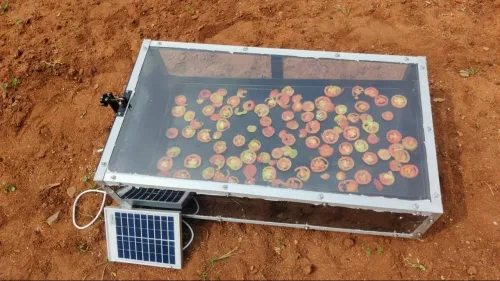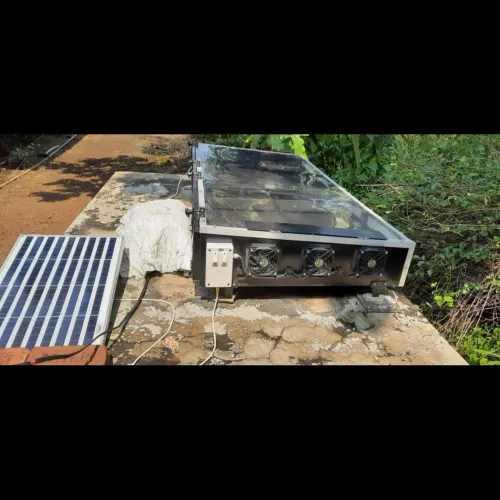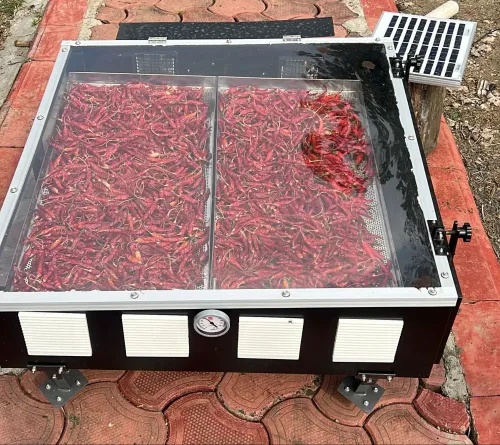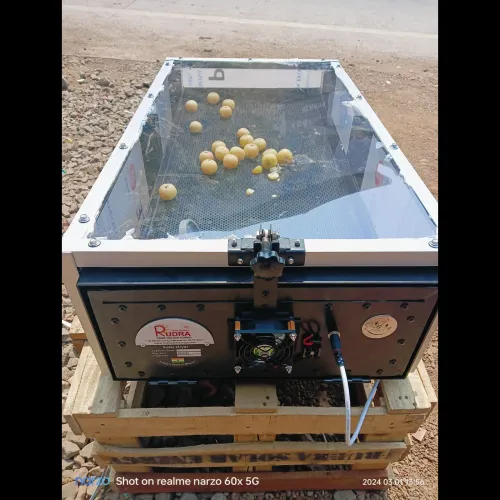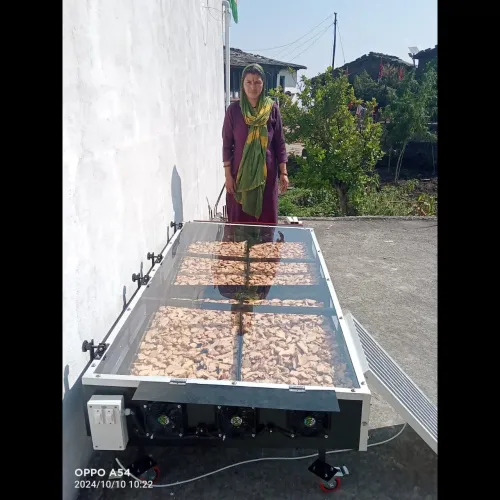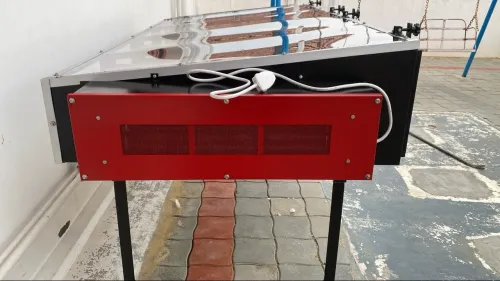
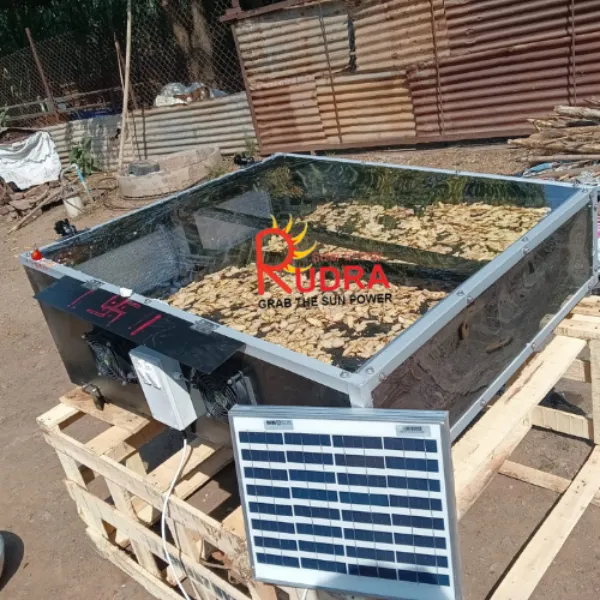
Barabanki has a diversified agricultural economy where foodgrains, vegetables, horticultural crops and commercial crops are produced across multiple seasons. The District Administration identifies wheat, rice and maize as major food crops, while potato, tomato, mushroom, mango, banana, flowers, spices and menthol-related crops form part of the district’s wider agricultural and processing base. Barabanki is also identified as one of Uttar Pradesh’s important potato-producing areas.
For farmers, FPOs, SHGs, agricultural cooperatives and food-processing businesses, a solar dryer in Barabanki can provide an enclosed, tray-based system for moisture reduction from suitable vegetables, mushrooms, herbs and other agricultural products.
The important point is that Barabanki’s commodities should not all be handled with one standard drying process. Potato slices, tomato pieces, mushrooms and leafy mint material differ greatly in moisture content, thickness, physical structure and tray-space requirements.
A commercially useful solar dryer should therefore be selected around the actual product and processing volume.
Potato Processing – A Strong Barabanki Application
Potato has particular relevance to Barabanki. The district administration states that Barabanki is one of Uttar Pradesh’s major potato-producing areas and that the crop occupies a higher share of sown area in the district than the state average reported on the district profile.
Where prepared potato is intended for dehydration, a solar dryer for potato can support the moisture-reduction stage within a larger processing workflow.
Before loading, processors should define:
Potato variety
Fresh batch quantity
Product form
Slice or piece thickness
Preparation method
Tray area required
Loading density
Airflow
Required final moisture condition
Prepared potato slices of inconsistent thickness may not lose moisture uniformly.
For this reason, cutting and preparation consistency can directly affect batch behaviour.
The solar dryer itself performs moisture reduction. Washing, peeling, slicing, blanching where required, grinding, packaging and storage remain separate processing operations.
Why Potato Dryer Capacity Should Not Be Judged Only in Kilograms
A processor may ask for a 50 kg or 100 kg dryer, but kilogram capacity alone does not show how the prepared potato will occupy the drying area.
Thin slices spread over trays can require significant surface area.
If the same quantity is loaded in deep or overlapping layers, air may not interact effectively with all product surfaces.
A commercial potato drying machine should therefore be evaluated using:
Batch weight
Usable tray area
Number of trays
Slice dimensions
Loading depth
Airflow distribution
Expected daily throughput
This allows equipment selection to reflect the actual processing workflow rather than only the largest number written in a capacity specification.
Tomato Processing Requires High-Moisture Handling
Tomato is also specifically identified among Barabanki’s important vegetable crops.
Fresh tomato contains substantial moisture, making preparation and tray loading particularly important when dehydration is intended.
A solar tomato dryer can be used for appropriately prepared tomato products, but the operator should consider:
Initial moisture
Slice thickness
Consistency of pieces
Tray loading
Air movement
Temperature suitable for the product
Ambient humidity
Required drying endpoint
Thick and thin tomato pieces within the same batch may behave differently.
Instead of increasing temperature indiscriminately, the process should focus on providing adequate drying conditions for the prepared product.
Solar Vegetable Dryer for Barabanki Food Processors
Barabanki’s agricultural economy includes vegetables alongside its major cereal crops, and the district administration specifically mentions potato and tomato as important vegetable products.
This creates applications for a solar vegetable dryer that can support different compatible vegetables in separate batches.
Depending on local production and the intended dried product, suitable applications may include prepared:
Potato
Tomato
Onion
Leafy vegetables
Selected gourds
Carrot
Chilli
Other compatible vegetables
However, one dryer being capable of processing several commodities does not mean all vegetables should use identical settings.
Whenever the vegetable changes, the operator may need to reconsider:
Preparation
Piece thickness
Tray loading
Airflow
Temperature
Moisture endpoint
Cleaning between batches
That distinction becomes especially important for commercial units handling seasonal produce.
Mushroom Processing Creates a Distinct Barabanki Opportunity
The District Administration includes mushroom among Barabanki’s important agricultural and cash-crop activities.
Mushrooms require a substantially different processing approach from potato or tomato.
Fresh mushrooms have a delicate structure and high moisture content. Their product form, slice thickness and loading density can influence how air moves around the material.
For suitable dehydration applications, a solar mushroom dryer should be operated with attention to:
Raw-material condition
Preparation
Whole or sliced form
Tray distribution
Product thickness
Air movement
Temperature
Ambient humidity
Required final moisture
Mushrooms should not be loaded deeply simply to increase kilograms per batch.
Adequate tray distribution can provide better exposure to the drying air and support a more organised processing workflow.
Why Air Movement Matters in Vegetable and Mushroom Drying
Solar heat provides the thermal energy needed to support moisture removal, but heat alone is not the complete process.
When moisture leaves potato, tomato or mushrooms, it enters the surrounding air.
That air becomes increasingly moisture-laden.
For further moisture reduction to continue effectively, humid air needs to move away from the loaded product and be replaced by air capable of accepting more moisture.
For this reason, buyers evaluating a solar food dehydrator in Barabanki should look at both heating and airflow.
Useful questions include:
How does air enter the chamber?
How is it distributed across the trays?
Can air reach heavily loaded areas?
How does humid air leave the chamber?
Does the selected configuration use forced airflow?
How should trays be loaded for the intended product?
This type of technical assessment is more useful than comparing only the maximum chamber temperature.
Barabanki’s Mentha Strength Needs the Correct Processing Approach
Barabanki has an especially distinctive connection with mentha. The District Administration describes the district as a major centre of menthol farming and reports extensive menthol cultivation.
However, an important distinction should be made.
Mentha grown for menthol oil distillation should not automatically be treated as a solar-drying application because distillation has its own raw-material and process requirements.
Solar drying becomes relevant where mint or mentha leaves are specifically intended for an appropriate dried herb, culinary or botanical product.
For such applications, lightweight leaves have very different loading characteristics from potato or tomato.
A solar herb dryer for mint-based material should consider:
Leaf condition
Layer thickness
Tray area
Airflow velocity
Temperature
Ambient humidity
Required final product condition
Lightweight leaves generally require substantial tray surface relative to their weight and should not simply be compressed into thick layers.
This product-specific distinction helps avoid treating every Barabanki crop as the same drying application.
Mango, Banana and Other Horticultural Produce
Barabanki’s official economic profile also identifies mango and banana among the district’s fruit crops and notes that the district supplies mangoes and vegetables beyond the local market.
For processors handling suitable fruit, a solar dryer can provide additional seasonal applications.
Prepared mango and banana behave differently from vegetables because fresh fruits can contain substantial moisture and may require considerable tray surface.
For fruit batches, processors should evaluate:
Fruit type
Fresh quantity
Preparation
Slice thickness
Tray distribution
Airflow
Humidity
Required final moisture condition
This gives multi-product FPOs or food-processing enterprises opportunities to use suitable drying infrastructure across different seasons without assuming one universal operating procedure.
Barabanki’s Multi-Crop Agriculture Supports Flexible Processing
Barabanki has a strong cropping intensity, and the district administration notes that farmers can rotate several crops during the year. Paddy and wheat occupy significant portions of the cropped area, while pulses and multiple cash crops contribute additional diversity.
This makes multi-product processing particularly relevant.
A suitable solar dryer for agricultural products may support separate batches of compatible:
Vegetables
Mushrooms
Fruits
Herbs
Spices
Selected agricultural produce
A multi-crop FPO should evaluate its yearly commodity calendar before selecting equipment.
Instead of asking:
“What is the biggest dryer available?”
a better question is:
“What quantity and type of produce will normally require drying during each season?”
Capacity Planning for FPOs and Food Processing Units
Solar dryer capacity should match actual production flow.
A small SHG processing seasonal vegetables may need a very different system from an FPO aggregating produce from several villages.
Buyers should calculate:
Fresh quantity received per day
Prepared quantity entering the dryer
Tray area required by the product
Number of batches needed
Peak-season volume
Available preparation labour
Required production schedule
Available installation area
This helps determine whether a smaller cabinet dryer, larger commercial configuration or another suitable design is appropriate.
Solar Food Dehydrator for Small and Commercial Businesses
Searches for this type of equipment may use terms such as:
Solar dryer
Solar vegetable dryer
Solar food dehydrator
Solar food dryer
Vegetable drying machine
Commercial solar dryer
Solar dehydrator
Although the terminology differs, equipment selection should remain application-based.
A solar food dehydrator in Barabanki intended mainly for tomato and mushroom processing may require different tray usage from a system primarily handling potato or leafy material.
The machine should be selected around the commodity rather than the keyword used to find it.
Solar-Primary or Hybrid Solar Dryer?
Solar drying performance naturally depends on available solar radiation and surrounding weather conditions.
For businesses with flexible production schedules, a solar-primary system may suit the application.
Where processors need additional operating flexibility, an appropriate hybrid solar dryer or backup-assisted configuration can be considered.
The requirement depends on:
Commodity
Production season
Batch frequency
Operating schedule
Local weather
Daily quantity
Acceptable drying window
Backup heating should not be chosen only because it sounds more advanced. It should match an actual operational requirement.
Solar Dryer Price in Barabanki – What Changes the Cost?
There is no single solar dryer price in Barabanki that applies to every processing business.
System cost can vary according to:
Batch capacity
Usable drying area
Tray configuration
Chamber dimensions
Construction material
Airflow arrangement
Fan configuration
Solar-only or hybrid setup
Backup-heating requirement
Monitoring system
Installation requirement
Customisation
A mushroom processor handling smaller delicate batches may need a different system from an FPO processing regular quantities of potato and tomato.
This is why buyers should communicate their actual production requirement before comparing quotations.
What Information Should Be Shared Before Requesting a Quote?
A commercial buyer can begin with six basic details:
Product: Potato, tomato, mushroom, mint, fruit or another commodity?
Fresh Quantity: How many kilograms per batch or day?
Product Form: Whole, sliced, chopped or otherwise prepared?
Production Frequency: Seasonal, weekly or regular commercial processing?
Current Method: How is moisture being reduced today?
Backup Requirement: Is solar-primary operation sufficient?
This information allows the requirement to be evaluated more accurately.
Solar Dryer for Barabanki FPOs, Farmers and Food Businesses
Potential users in the district can include:
Potato growers
Vegetable farmers
Mushroom growers
FPOs and FPCs
Agricultural cooperatives
SHGs
Food-processing MSMEs
Dried-food businesses
Herbal-processing enterprises
Rural entrepreneurs
Agro-processing centres
Institutional agriculture projects
The district also contains several industrial areas and agro-related industrial activity, reinforcing Barabanki’s broader connection with processing and enterprise development.
Rudra Solar Energy for Barabanki Processing Requirements
Rudra Solar Energy provides solar dryer systems for agricultural and food-processing applications.
Depending on the relevant model and configuration, systems can include enclosed drying chambers, structured food-contact tray arrangements, controlled or forced airflow, solar-powered DC fans and optional backup configurations.
For Barabanki, system selection should reflect the actual commodity.
A potato processor may prioritise drying area for prepared slices.
A tomato processor may require greater attention to high initial moisture and loading consistency.
A mushroom business may need shallower and more delicate tray loading.
A multi-product FPO may prioritise flexibility across vegetables, fruits and herbs.
For buyers searching for a solar dryer in Barabanki, solar vegetable dryer, solar mushroom dryer, solar food dehydrator, commercial solar dryer or solar dryer for agricultural products, sharing the commodity, daily fresh quantity and processing requirement is the best starting point for selecting an appropriate configuration.
Keywords