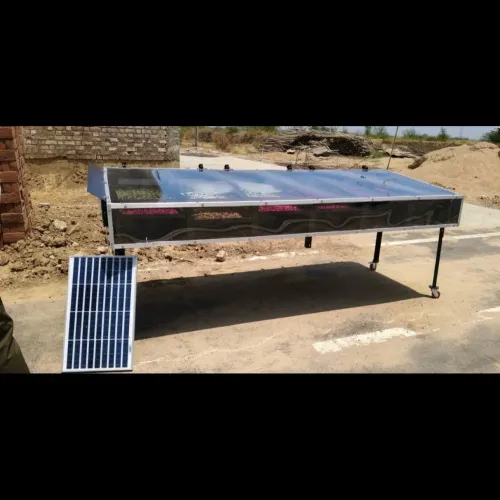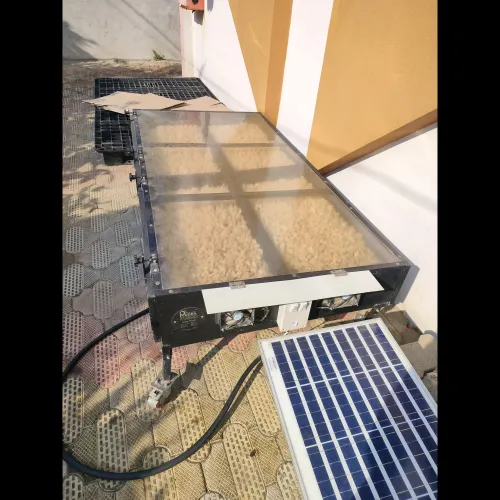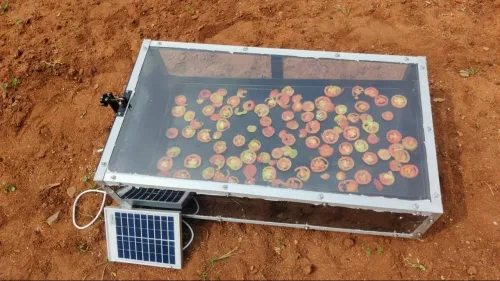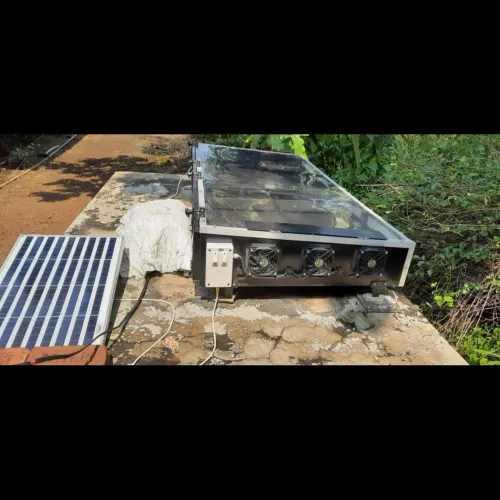
Muzaffarnagar is one of western Uttar Pradesh’s major agricultural and agro-processing districts and is widely known for its strong sugarcane and jaggery economy. The district’s large farming base, commercial markets and proximity to the NCR create opportunities not only for primary agriculture but also for post-harvest processing and value addition. For farmers, FPOs, SHGs, seed handlers, food processors, spice businesses and rural enterprises, a Rudra Solar Dryer can provide an enclosed environment for controlled moisture reduction in suitable grains, seeds, vegetables, herbs, spices and other agricultural materials. Solar drying performance is commodity-specific and depends on initial and target moisture, preparation, layer depth, tray loading, airflow, temperature, relative humidity, solar radiation and prevailing weather.
1. Why is solar drying relevant for Muzaffarnagar’s agricultural and food-processing economy?
Muzaffarnagar has a strong agricultural base supported by a major processing and trading ecosystem. Although the district is especially associated with sugarcane and jaggery, farmers and processors can also require moisture management for other agricultural materials before storage, seed handling, grinding, packaging or value-added processing.
A solar dryer can be relevant for suitable:
- Grains and cereals
- Seeds
- Pulses and oilseeds
- Vegetables
- Herbs
- Spices
- Medicinal plant materials
- Selected fruits
- Other agricultural produce requiring controlled moisture reduction
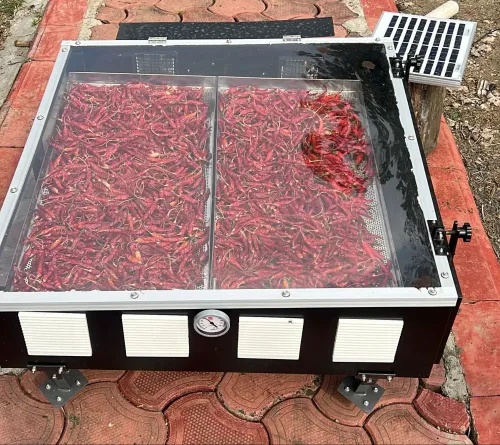
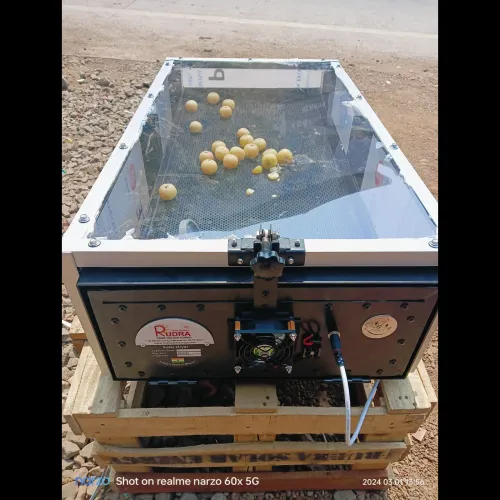
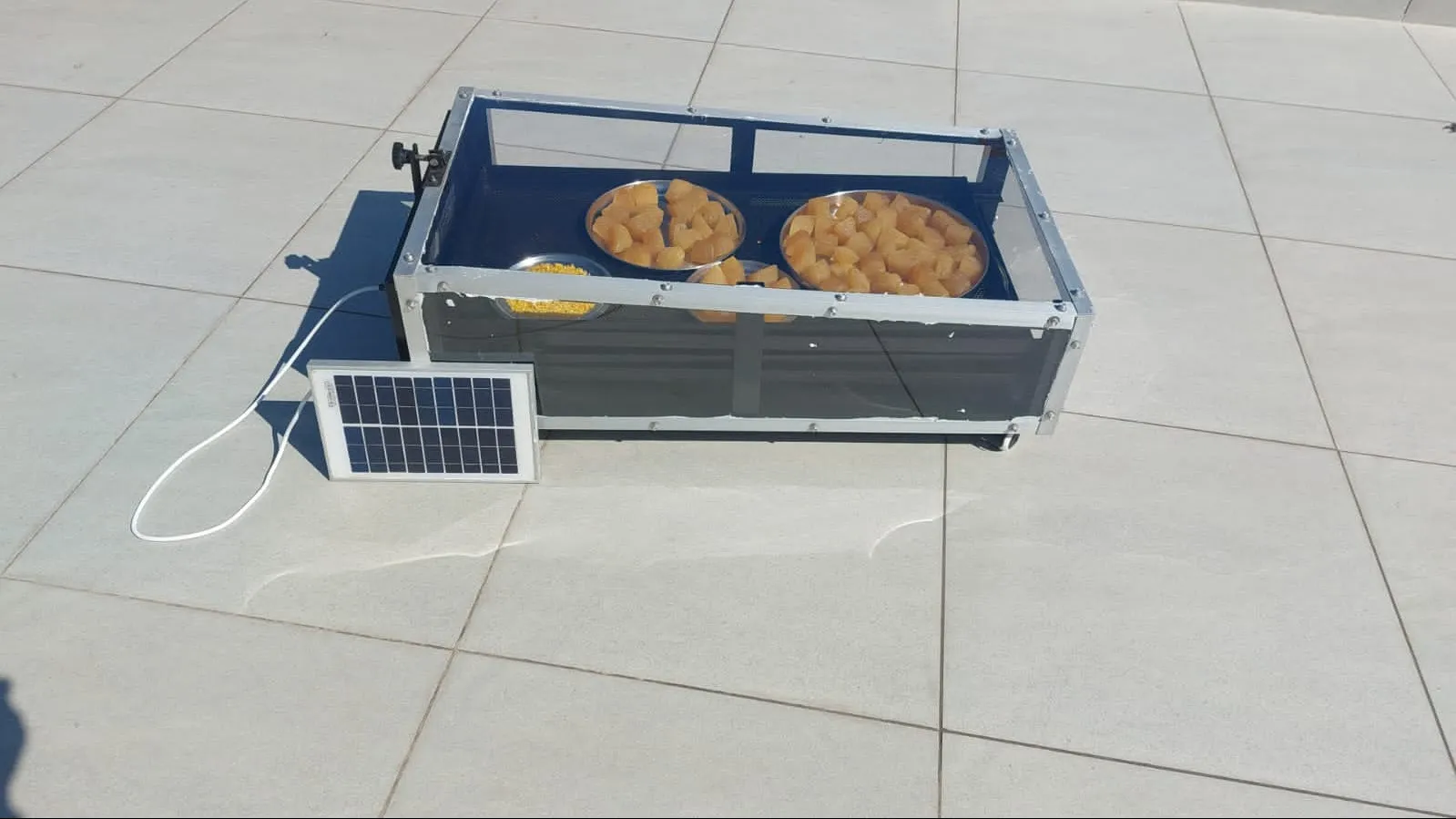
An enclosed solar drying system uses solar thermal energy together with managed airflow. Depending on system design, solar-powered DC fans may support forced air circulation through the drying chamber.
The enclosed environment also helps reduce direct exposure of the loaded material to dust, insects, birds and uncontrolled outdoor contact compared with conventional open-sun drying.
2. Is sugarcane itself suitable for solar drying in Muzaffarnagar?
Fresh sugarcane is generally processed primarily through crushing and juice extraction rather than being treated as a conventional solar-drying commodity.
Therefore, a solar dryer in Muzaffarnagar should not be promoted simply as a system for drying fresh sugarcane.
The stronger solar-drying opportunities lie in other suitable agricultural and food materials handled by farmers and processors in the region.
Muzaffarnagar’s sugar and jaggery ecosystem is still relevant because it demonstrates the district’s strong agricultural-processing infrastructure and commercial orientation. Official district information identifies agriculture, sugarcane and jaggery as important parts of the local economy.
For processors operating within this broader ecosystem, solar drying can support complementary value-added activities involving grains, spices, seeds, vegetables, herbs or other suitable produce.
This commodity-specific distinction is important because the correct drying technology should always be matched to the actual raw material and processing objective.
3. Which agricultural products can be dried using a solar dryer in Muzaffarnagar?
Solar drying can be considered for multiple suitable agricultural materials depending on their moisture characteristics and intended final use.
Grains and cereals:
Wheat, paddy and other suitable grains may require moisture reduction before storage, milling, seed handling or further processing.
Seeds:
Agricultural, vegetable, spice and other suitable seeds can require controlled moisture reduction before storage or processing. Where seeds are intended for sowing, temperature and moisture conditions should also protect germination and seed viability.
Oilseeds and pulses:
Mustard, sesame, groundnut, pulses and other suitable materials can have crop-specific moisture and storage requirements.
Vegetables:
Onion, garlic, tomato, potato, okra and other suitable vegetables may be processed into dried pieces, flakes, powders or ingredients.
Spices and herbs:
Chilli, turmeric, ginger, coriander, mint and other suitable materials can require drying before storage, grinding or further value addition.
Different commodities should never be treated as identical drying loads.
A wheat grain, mustard seed, mint leaf and sliced tomato differ significantly in density, surface area, moisture movement and temperature sensitivity.
4. Why can enclosed solar drying be better than open-sun drying in Muzaffarnagar?
Open-sun drying generally exposes produce directly to the outdoor environment.
Depending on where and how the material is spread, it may face:
- Dust and soil exposure
- Insects
- Birds
- Wind-blown particles
- Changing weather
- Irregular drying surfaces
- Uncontrolled handling
An enclosed solar dryer places the material inside a defined drying chamber.
Solar radiation supplies thermal energy and airflow carries moisture away from the product.
Potential operational benefits can include:
- More protected product handling
- Reduced direct exposure to dust and insects
- Organized tray or chamber loading
- Better management of airflow
- Easier separation of individual batches
- Improved monitoring of the drying process
- Reduced dependence on roadsides, roofs or open ground
However, an enclosed solar dryer should not be described as completely weather-independent.
Solar-only drying still depends on solar radiation, ambient temperature, humidity and cloud conditions.
The main advantage is therefore better process protection and management rather than a guarantee of identical drying every day.
5. How do Muzaffarnagar’s humidity, monsoon and seasonal conditions affect solar drying?
Solar drying performance changes with environmental conditions throughout the year.
The most important factors include:
Solar radiation:
Available sunlight determines the thermal energy that a solar-only drying system can capture.
Relative humidity:
Higher humidity reduces the moisture-absorbing capacity of the surrounding air and can slow drying.
Ambient temperature:
Seasonal temperature affects conditions inside the dryer.
Cloud cover:
Reduced sunlight decreases useful solar thermal input.
Airflow:
Moisture evaporated from the commodity must be removed from the drying chamber. Heat alone is not sufficient if moisture-laden air is not carried away effectively.
Product loading:
Excessive tray loading or overly deep layers can restrict airflow and increase drying time.
Commercial processors requiring a more predictable production schedule should therefore evaluate whether solar-only operation is sufficient or whether an appropriately designed hybrid configuration is needed.
6. How long does solar drying take for grains, vegetables, seeds or spices in Muzaffarnagar?
There is no scientifically correct single drying time that applies to every agricultural product.
Drying duration depends on:
- Commodity type
- Initial moisture
- Required final moisture
- Whole, sliced, leafy or granular form
- Slice thickness
- Layer depth
- Tray loading
- Bulk density
- Airflow
- Temperature
- Relative humidity
- Solar radiation
- Weather
- Dryer configuration
For example, thin leafy herbs generally behave differently from grain.
A whole chilli dries differently from a sliced vegetable.
Mustard or sesame seeds have different loading characteristics from paddy or wheat.
Therefore, a buyer should not select a solar dryer only on the basis of a claim such as “all products dry within a fixed number of hours.”
A technically appropriate process focuses on reaching the required moisture or product condition for the specific commodity.
7. How should farmers, FPOs or processors choose the right solar dryer capacity in Muzaffarnagar?
The right solar dryer should be selected according to the actual drying load rather than only a kilogram-capacity label.
Before selecting a system, users should identify:
- Commodity to be dried
- Fresh quantity per batch
- Initial moisture condition
- Target moisture or required final product
- Whole, sliced, leafy or granular form
- Required tray area
- Acceptable layer depth
- Number of batches required
- Seasonal or year-round utilisation
- Available installation space
- Solar exposure at the site
- Solar-only or hybrid requirement
Tray area is particularly important.
Twenty kilograms of leafy herbs can require much more drying surface than twenty kilograms of a dense grain or seed commodity.
Similarly, sliced vegetables may require thinner loading to allow effective airflow around the exposed product surfaces.
Therefore, technically appropriate capacity selection should consider:
Batch Weight + Tray Area + Commodity Characteristics + Airflow Requirement + Moisture Target + Production Schedule
rather than only nominal kilograms.
8. Why consider a Rudra Solar Dryer in Muzaffarnagar?
A Rudra Solar Dryer can be considered by farmers, FPOs, SHGs, seed handlers, food processors, spice businesses and agro-processing enterprises in Muzaffarnagar seeking an enclosed solar drying solution for suitable agricultural materials.
Depending on the selected design and application, system considerations can include:
- Enclosed drying chamber
- Managed airflow
- Solar-powered DC air circulation where applicable
- Organized tray-based loading
- Multiple capacity options
- Commodity-specific system selection
- Solar thermal operation
- Hybrid configuration where required
- Application-specific loading and airflow
For someone searching for a solar dryer in Muzaffarnagar, solar drying machine in Muzaffarnagar, commercial solar dryer in Muzaffarnagar, solar dryer for grains, solar dryer for seeds, solar dryer for vegetables, solar dryer for spices, solar food dryer in Muzaffarnagar or an agricultural drying system in western Uttar Pradesh, the strongest approach is to begin with the actual processing requirement.
A useful system-selection enquiry should answer:
- What commodity needs drying?
- What quantity is processed per batch?
- What is its initial moisture condition?
- What final moisture or product is required?
- How will the material be prepared?
- What tray area and layer depth are appropriate?
- How frequently will the dryer operate?
- Is solar-only operation sufficient?
- Is backup or hybrid heating required?
- What installation space and solar exposure are available?
Final Answer for Solar Drying in Muzaffarnagar
Muzaffarnagar’s strong agricultural and agro-processing economy creates opportunities for controlled solar drying beyond the district’s well-known sugarcane and jaggery sectors. Solar drying can be particularly relevant for suitable grains, seeds, oilseeds, pulses, vegetables, spices, herbs and other agricultural materials where controlled moisture reduction is required before storage or further processing.
A solar dryer should not be selected only on price, nominal capacity or a promised fixed drying time.
Commodity characteristics, initial and target moisture, layer depth, tray area, airflow, temperature, humidity, solar radiation, weather and final product requirements all influence actual drying performance.
For farmers, FPOs, SHGs and processors in Muzaffarnagar, a properly selected Rudra Solar Dryer can form part of a broader post-harvest and value-addition workflow involving cleaning, preparation, drying, moisture management, storage, packaging and further processing.
Keywords