
Solar Fruit Dryer - Best Solar Dryer in India
Description
Solar Fruit Dryer – High Quality Fruit Drying Machine for Commercial Processing
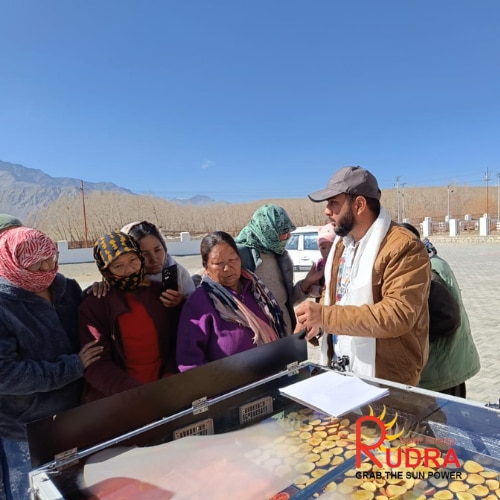
The RUDRA Solar Fruit Dryer is an enclosed, cabinet-type solar dryer machine designed for fruit growers, farmers, FPOs, SHGs, rural entrepreneurs, food-processing businesses, MSMEs and commercial fruit-processing units. It provides an organised tray-based system for processing suitable fresh fruits using solar thermal energy and managed airflow.
The dryer combines an enclosed drying chamber, solar thermal heating, tray-based loading and forced convection airflow. Depending on the selected model, solar-powered DC fans circulate air through the chamber and help remove moisture-bearing air from the loaded fruit.
The Solar Fruit Dryer Machine can be used for suitable fruits such as mango, banana, apple, pineapple, papaya, amla, guava, orange, grapes, figs, dates, peaches, apricots, plums, sapota, berries and other compatible fruit products.
If fruit powder is required, the fruit is first properly processed in the solar dryer and then ground separately using suitable grinding or pulverising equipment.
Solar Dryer for Fruit Processing
Fresh fruits differ in moisture content, size, structure and processing requirements. Depending on the fruit and intended final product, preparation before loading may include:
Sorting
Washing
Peeling
Deseeding
Cutting
Slicing
Segmenting
Suitable pretreatment where required
The Solar Dryer for Fruits keeps prepared fruit inside an enclosed chamber instead of leaving it directly exposed to open outdoor conditions. This helps reduce direct exposure to dust, insects, birds and other external contaminants during processing.
Fruit should be arranged on trays according to its form, size, slice thickness and available drying area.
High Quality Solar Fruit Dryer
The High Quality Solar Fruit Dryer is designed around practical machine features such as enclosed construction, organised tray loading, managed airflow and solar-powered air circulation on applicable models.
Depending on the selected RUDRA model, the dryer may include:
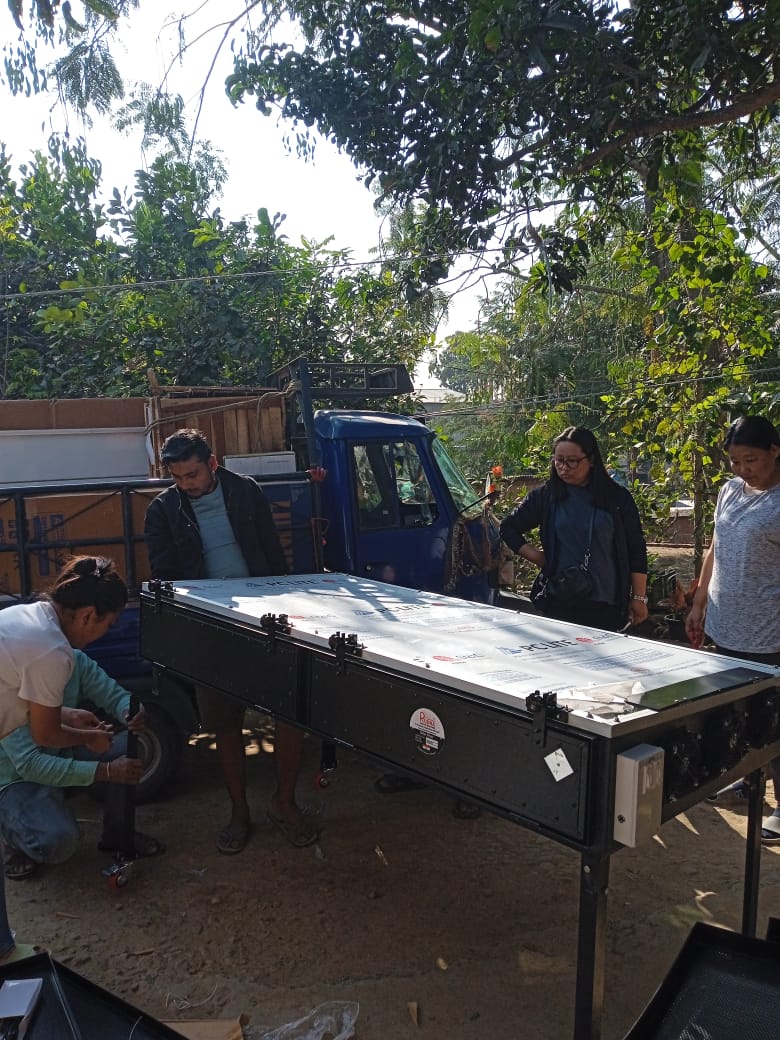
Enclosed cabinet-type drying chamber
Solar thermal heating
Managed or forced convection airflow
Solar-powered DC fans on applicable models
Food-grade aluminium construction on applicable standard models
Food-grade aluminium trays
SS / SS304 tray options depending on model and requirement
UV-stabilized polycarbonate or toughened glass depending on selected model
Solar operation
Suitable hybrid or backup configuration on applicable models
The correct dryer configuration should be selected according to the fruit type, fresh-input quantity, processing frequency and intended final product.
Solar Fruit Dryer for Different Fruits
A properly selected RUDRA Solar Fruit Dehydrator can process different compatible fruits in separate batches.
Suitable applications may include:
Mango slices
Banana slices
Apple slices
Pineapple pieces
Papaya pieces
Amla
Guava slices
Orange and citrus products
Grapes
Figs
Dates
Peaches
Apricots
Plums
Sapota / Chikoo
Berries
Other suitable prepared fruits
Different fruits should not automatically be processed using identical loading or operating conditions. Their initial moisture, physical structure, preparation, tray-area requirement and intended final product can vary considerably.
Solar Fruit Dryer Machine with Forced Airflow
Air circulation is an important part of the Solar Fruit Dryer Machine.
As moisture leaves the fruit, moisture-bearing air needs to move away from the loaded product. Applicable RUDRA models use solar-powered DC fans to support managed or forced convection airflow through the drying chamber.
Effective machine operation depends on factors such as:
Fruit type
Fruit preparation
Slice thickness
Tray loading
Layer depth
Usable tray area
Airflow
Initial moisture
Required final moisture
The dryer should therefore be selected and operated according to the actual fruit-processing requirement rather than only its nominal kilogram capacity.
Food-Processing Tray System
RUDRA Solar Fruit Dryers use food-contact trays for organised batch loading.
Standard configurations can use food-grade aluminium trays, while SS / SS304 trays may be provided depending on the selected model and requirement.
The fruit should be arranged according to the available tray area and product form. Excessive overlapping or heavy loading can restrict airflow around the product and affect moisture removal.
Solar Fruit Dryer Capacity
RUDRA offers different solar dryer configurations for household, farm, entrepreneurial, institutional and commercial processing requirements.
Depending on the selected model and actual product, cabinet dryer configurations are available across approximately 5 kg to 500 kg fresh input per batch.
Actual fruit loading can vary according to:
Fruit variety
Whole, sliced or prepared form
Product size
Initial moisture
Layer thickness
Tray loading
Available drying area
Airflow
Selected dryer model
A nominal 50 kg or 100 kg machine should therefore not automatically be assumed to handle exactly the same practical quantity of every fruit.
Commercial Solar Fruit Dryer
The Commercial Solar Fruit Dryer is suitable for businesses processing fruits in regular or repeated batches.
It can be considered for:
Fruit farmers and growers
FPOs and FPCs
SHGs
Agricultural cooperatives
Rural entrepreneurs
Dried-fruit businesses
Food-processing MSMEs
Fruit-processing companies
Ingredient manufacturers
Agro-processing units
Institutional projects
Commercial food processors
Commercial users should select the machine according to fresh-input quantity, required number of batches, usable tray area, product preparation and intended final product.
Hybrid Solar Fruit Dryer
RUDRA offers solar-based dryer configurations, while suitable Hybrid Solar Fruit Dryer options may be available on applicable models.
Hybrid or backup operation can provide additional flexibility when solar radiation is insufficient, weather conditions are variable or a commercial processor requires greater operating continuity.
The exact backup configuration depends on the selected dryer model and processing requirement.
Multipurpose Solar Fruit Dryer
A suitably selected RUDRA dryer can work as a Multipurpose Solar Fruit Dryer for several compatible fruits in separate batches.
Depending on the model and application, the same machine may also be used for suitable:
Vegetables
Herbs
Spices
Medicinal plant materials
Other food and agricultural products
Each commodity may require different preparation, tray loading, airflow and operating conditions. A multipurpose machine does not mean that one identical setting is suitable for every product.
Premium Quality Solar Fruit Dryer
A Premium Quality Solar Fruit Dryer should combine suitable machine construction, organised tray loading, effective airflow, appropriate capacity and practical maintenance.
RUDRA Solar Dryers are designed for agricultural and food-processing applications with serviceable components and straightforward routine maintenance.
Maintenance may include:
Cleaning trays
Cleaning the chamber
Checking filters
Inspecting fans
Checking solar-panel connections
Inspecting applicable electrical or control components
Monitoring the condition of the dryer cover
Regular cleaning and inspection help support reliable machine operation over repeated processing cycles.
Reliable and Durable Solar Fruit Dryer Machine
The Reliable Solar Fruit Dryer is designed for repeated batch processing when used and maintained according to the selected model.
Applicable fan, electrical and control components can be serviced or replaced when required depending on the dryer configuration.
This makes RUDRA suitable for users looking for a Durable Solar Fruit Dryer Machine for farm, entrepreneurial, institutional or commercial fruit-processing applications.
Advanced Solar Fruit Dehydrator
The RUDRA Solar Fruit Dehydrator combines solar thermal energy with organised air circulation inside an enclosed chamber.
The machine supports:
Solar thermal heat utilisation
Organised tray-based fruit loading
Managed air circulation
Removal of moisture-bearing air
Protected product handling inside the chamber
The dryer performs the moisture-reduction stage. Washing, peeling, cutting, grinding, packaging and storage remain separate processing operations where required.
Fruit Processing Applications
The machine can support the preparation of products such as:
Dried fruit slices
Dried fruit pieces
Dried fruit ingredients
Tea and infusion ingredients
Bakery ingredients
Snack products
Culinary ingredients
Material for further grinding
Other value-added fruit products
Where fruit powder is required, grinding is carried out separately after suitable drying.
Fruit Processing Conditions
There is no single fixed drying time or operating temperature suitable for every fruit.
Actual processing performance depends on:
Fruit variety
Initial moisture
Ripeness
Product preparation
Slice thickness
Tray loading
Airflow
Solar radiation
Ambient temperature
Relative humidity
Weather conditions
Required final moisture
Intended final product
The dryer should therefore be operated according to the specific fruit and required processing outcome.
Solar Powered Fruit Dryer
In applicable solar configurations, the DC fans are powered using electricity generated by a solar photovoltaic panel, while the primary drying heat is obtained from solar thermal energy.
This supports solar-based machine operation while maintaining airflow through the drying chamber.
Where additional operating flexibility is required, suitable solar + backup configurations may be considered depending on the selected model.
Solar Fruit Dryer for Farmers, FPOs and Food Processors
RUDRA Solar Fruit Dryers can be selected for both small and larger processing requirements.
A farmer processing seasonal mango or banana may require a different machine from an FPO handling collected produce or a commercial fruit processor operating multiple batches.
The machine should therefore be selected according to:
Fruit type
Fresh quantity per batch
Product form
Required batches per day
Available tray area
Installation location
Intended final product
Solar-only or hybrid requirement
Best Quality Solar Fruit Dryer in India
RUDRA Solar Energy provides best quality, high quality and top quality Solar Fruit Dryer machines for suitable agricultural, entrepreneurial and commercial fruit-processing applications.
The dryer is available in different capacities and configurations to suit varying fresh-input quantities and processing requirements. Buyers can choose a suitable Solar Fruit Dryer Machine, Solar Fruit Dehydrator, Commercial Solar Fruit Dryer or Hybrid Solar Fruit Dryer according to the selected model and application.
For model selection, share the fruit name, fresh quantity per batch, location and intended final product with Rudra Solar Energy.
Specifications
| Dryer Type | Direct Cabinet Type |
|---|---|
| Heating Mode | 3 Modes Of Heat Transfer Radiation, Conduction and Forced Convection |
| Drying Rate | 3 to 12 kg /day/ square meter |
| Body Material | High Quality Food Grade High Conductivity Aluminium |
| Thermal Efficiency | 68.4 % As per ICAR Test Report |
| Temperature Range | High Precision CNC Laser Cut and CNC Bending machine |
| Support Legs | High Quality SS 304 fabricated and Coated |
| Protective and Selective Coating | Food Grade Long Life And High Absorptivity Low Emissivity Powder Coating |
| Hybrid Heating( Optional) | With 230V AC Single Phase 50 Hz Electric Heater Industrial grade with Thermostat Control |
| Tray Material | Food Grade Aluminium / SS 304 Optional As per need |
| Structure Life | 20 years. |
| Air Flow | Cross Forced Circulation and Internal Hot Air Circulation Optional |
| Environment Protection | Dust - Insect - Rain - Bird -Rodent - Rust - Resistant / enclosed design |
| Top Cover | Double UV Poly Carbonate Solid Sheet |
| Application | Dehydration Of Fruits Vegetables Herbs, Spices , Sea Food etc |