Varanasi is known globally for its cultural and craft heritage, but its rural belt also has a distinctive horticultural identity. Banaras Langda Aam (Mango) is a registered Geographical Indication, while Banaras Lal Bharwa Mirch, Chiraigaon Karonda, Ramnagar Bhanta and Banaras Pan are also among the region’s registered agricultural GI products.
For farmers, FPOs, SHGs, micro food processors and agricultural entrepreneurs searching for a solar dryer in Varanasi, this creates opportunities that are very different from standard grain-only drying. Suitable mango, chilli, karonda, vegetables, herbs and other horticultural produce can be evaluated for dried products or ingredients when the process is matched to the commodity and intended market.
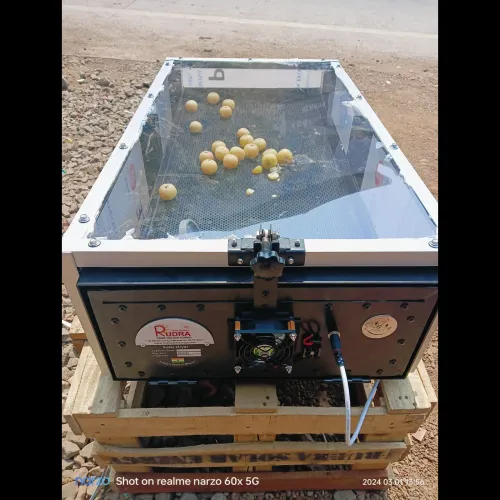
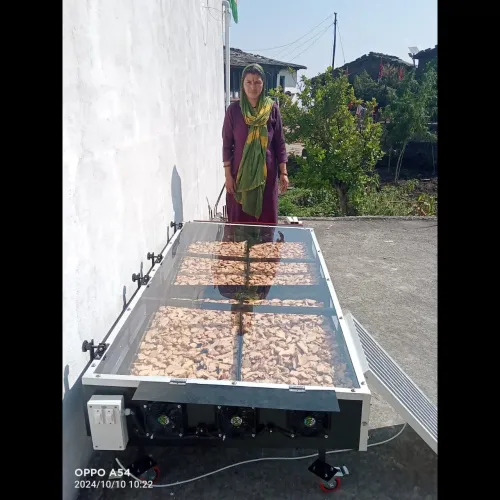
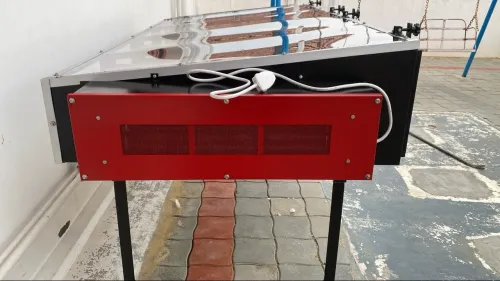
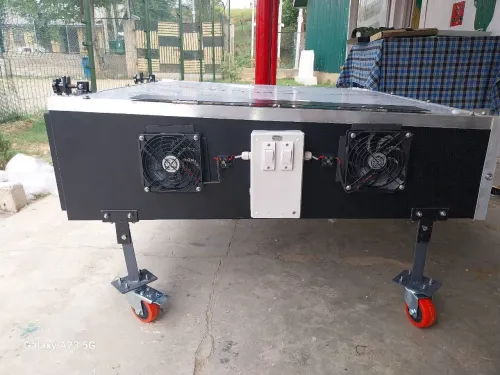
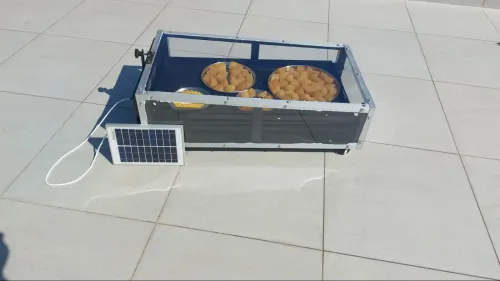
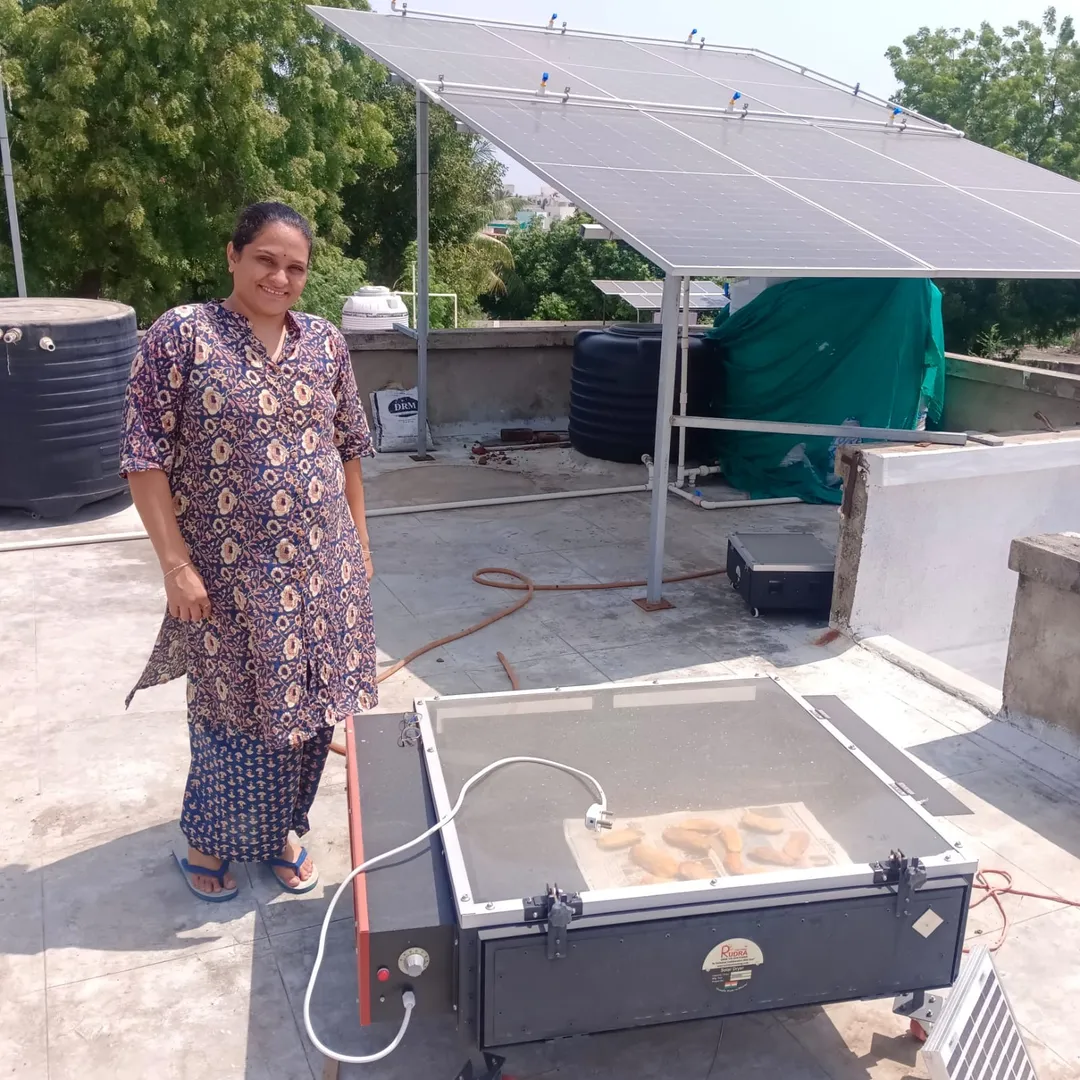
A Rudra Solar Dryer can provide an enclosed, more organized drying environment with managed airflow, but every locally important crop should not automatically be treated as a drying commodity. Product suitability, preparation method, moisture target and commercial end use should come first.
1. Why is solar drying relevant for value-added food processing in Varanasi?
Varanasi has locally differentiated agricultural products with value beyond bulk raw-commodity selling.
During seasonal availability, suitable horticultural produce can potentially be processed into products such as:
- dried mango slices or pieces
- dried chilli
- dried karonda products or ingredients
- selected dried vegetables
- herbs and leafy ingredients
- ingredients for subsequent grinding or food processing
This gives FPOs, SHGs and micro-enterprises an opportunity to evaluate small-batch value addition, provided the final product and buyer requirement are identified before processing begins.
Solar drying should therefore be viewed as one stage within a processing workflow—not simply as a way of placing produce in heat.
2. Can Banaras Langda mango be dried in a Rudra Solar Dryer?
Yes. Suitable Banaras Langda mangoes can be evaluated for dried mango slices, pieces or other value-added ingredients after appropriate preparation.
Banaras Langda Aam is officially registered as a GI agricultural product.
For mango drying, important variables include:
- stage of ripeness
- fruit condition
- peeling requirements
- slice thickness
- initial moisture
- tray loading density
- airflow
- ambient humidity
- solar radiation
- desired texture and final moisture
Uniform preparation is particularly important. A tray containing widely different slice thicknesses can produce uneven drying even when the same dryer is used.
There should therefore be no universal claim such as “Langda mango dries in X hours.”
3. Can Banaras Lal Bharwa Mirch be solar dried?
Yes, chilli is a strong potential application where drying is required as part of the intended product workflow.
Banaras Lal Bharwa Mirch is listed among Uttar Pradesh’s registered agricultural GI products associated with the Varanasi region.
For chilli processing, an enclosed solar dryer can provide a more protected environment than direct open exposure.
Operators should consider:
- chilli maturity
- whole versus cut material
- initial moisture
- loading depth
- airflow around the produce
- ambient humidity
- final moisture required for storage or further processing
Colour alone should not be used to judge drying completion. Moisture condition and intended storage or processing use are more reliable decision factors.
4. Is Chiraigaon Karonda suitable for dried or value-added processing?
Potentially yes, depending on the intended final product.
Chiraigaon Karonda of Varanasi is also registered as an agricultural GI.
Karonda can be used in several food-processing applications, and selected drying applications may be evaluated where dried pieces or further-processed ingredients are commercially required.
However, processors should first determine:
- whether whole or cut fruit is required
- maturity stage
- intended dried texture
- whether additional processing will follow
- packaging and storage requirement
- buyer specification
A commercially useful process begins with the final product specification rather than simply deciding to dry the fruit because it is locally available.
5. Should Banaras Pan also be put into a solar dryer because it is a famous local crop?
Not automatically.
This is an important distinction.
Banaras Pan (betel leaf) is a registered agricultural GI, but fresh betel leaf is normally valued as a fresh, delicate product.
If a processor has a legitimate dried-leaf, herbal or ingredient application, a drying process could be evaluated specifically for that end use. But it would be technically incorrect to recommend solar drying simply because the crop is locally famous.
The same rule applies to every Varanasi crop:
local importance does not automatically mean drying suitability.
The intended product must justify the drying process.
6. Why can enclosed solar drying be preferable to spreading sliced produce directly in the open?
Freshly cut mango, chilli, karonda or vegetables can remain exposed throughout the moisture-removal period when dried directly in an open environment.
An enclosed solar drying system can help reduce direct exposure to:
- dust
- insects
- birds
- wind-borne debris
- unnecessary external handling
It also allows the processor to arrange produce in controlled batches and manage tray loading and airflow more systematically.
However, enclosed solar drying does not make every batch identical. Weather, product moisture, loading, airflow and preparation still influence drying behaviour.
7. How can Varanasi FPOs, SHGs and food businesses use a solar dryer commercially?
The strongest opportunity is not necessarily drying every available crop. It is choosing one or more products with a clear market and building the drying process around them.
A Varanasi enterprise could evaluate applications such as:
- premium dried mango
- dried chilli
- karonda-based dried ingredients
- selected vegetable ingredients
- herbs
- other suitable horticultural products
A business should define:
raw material → processing method → dried product → packaging → buyer
before choosing machine capacity.
For example, if mango is to be converted into dried slices, the processor needs to estimate fresh mango input per day, edible yield after preparation, tray requirement and expected dried output. Dryer capacity should then be selected around the fresh processing load, not simply the final pack weight.
8. How should I select a Rudra Solar Dryer for Varanasi?
For a Varanasi project, the right dryer should be selected from the actual application rather than only from a capacity number.
Before selecting a system, identify:
- commodity
- fresh quantity per batch/day
- seasonal availability
- initial moisture condition
- preparation method
- slice thickness or loading depth
- required final moisture
- intended dried product
- further processing requirement
- installation space
- expected commercial scale
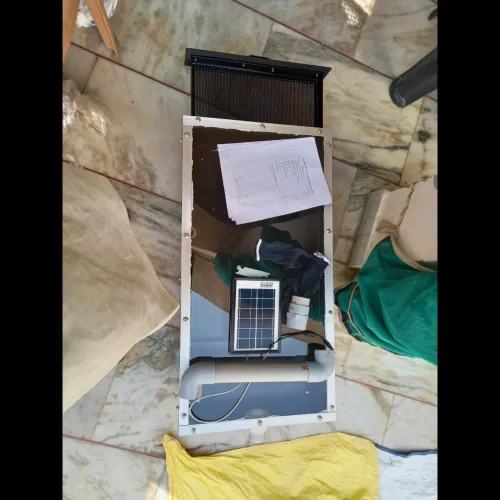
Rudra Solar Energy provides solar drying systems in different capacities and configurations for agricultural and food-processing applications. Depending on the selected model and commodity, enclosed drying and managed airflow can support a more protected and organized processing workflow.
For Varanasi, a processor working with Langda mango, chilli, karonda or another horticultural commodity should therefore select the dryer around the raw material and final product requirement—not use one standard drying condition for every local crop.
From Varanasi’s distinctive crops to planned value addition
Varanasi’s agricultural identity gives this district an unusually strong opportunity for commodity-specific processing. The registered status of products such as Banaras Langda Mango, Lal Bharwa Mirch and Chiraigaon Karonda also reinforces the importance of handling locally differentiated raw materials carefully rather than treating them as generic produce.
For farmers, FPOs, SHGs and micro food enterprises, the practical approach is to combine local crop strength + buyer requirement + correct preparation + suitable dryer capacity + controlled moisture reduction. A Rudra Solar Dryer can then become part of a structured value-addition process rather than simply another drying surface.
Keywords