Solar Dryer in Tiruchirappalli for Banana, Small Onion and Agricultural Processing
Tiruchirappalli, commonly known as Trichy, has a varied agricultural and horticultural base. Banana, small onion, tapioca, coconut, mango and chillies are among the horticultural crops grown in the district. Paddy, millets, pulses, cotton and sugarcane are also part of its agricultural profile. The district's official horticulture information identifies Andhanallur and Lalgudi as important fruit-growing areas, while Marungapuri, Thuraiyur, Uppiliyapuram and Manachanallur are noted for vegetable cultivation.
For farmers, FPOs and food-processing businesses, these crops offer different possibilities for processing and value addition. Where a product is suitable for dehydration, a properly selected solar dryer can help reduce moisture in prepared produce and support the production of dried ingredients for further use.
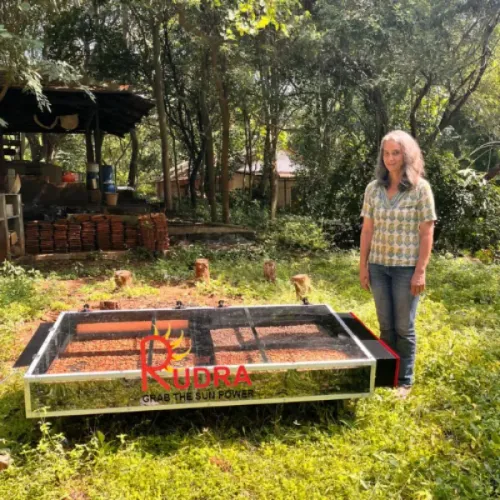
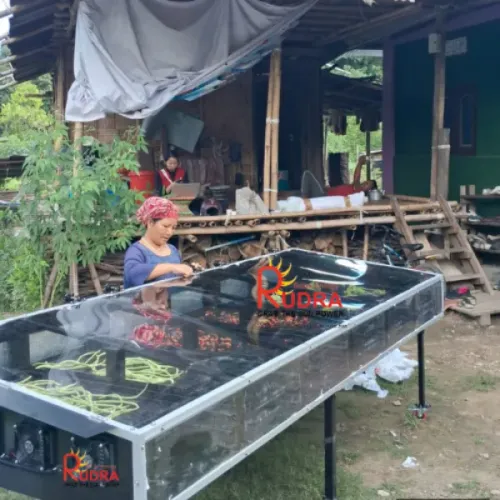
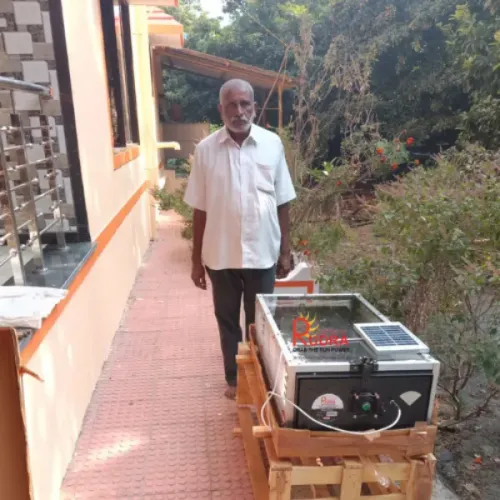
Rudra Solar Energy manufactures solar drying equipment for agricultural and food-processing applications. Businesses searching for a solar dryer in Tiruchirappalli can explore models based on their product, fresh input quantity, processing requirements and available installation space.
Why Consider a Solar Dryer in Tiruchirappalli?
The district's mix of fruit, vegetable and field crops means that drying requirements can vary considerably. Banana slices, small onion, chillies and selected vegetables need different preparation methods and loading arrangements. A dryer suitable for one product may require different operating conditions for another.
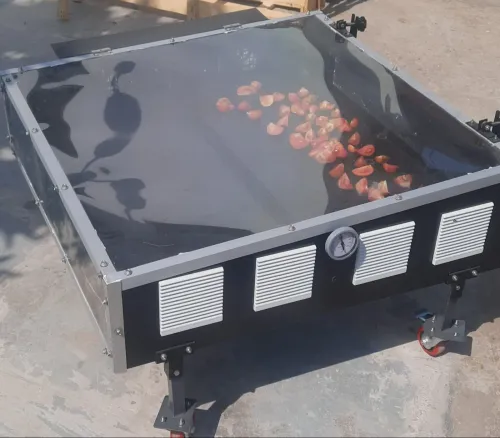
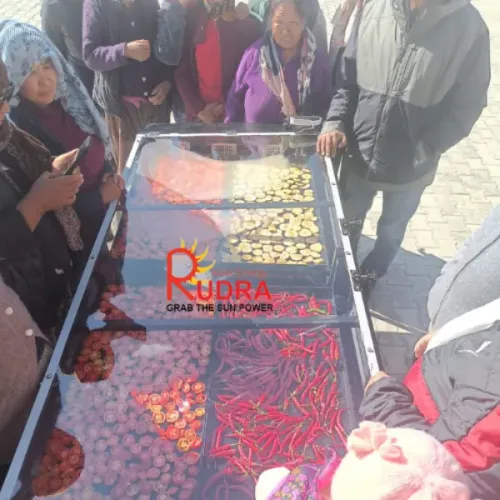
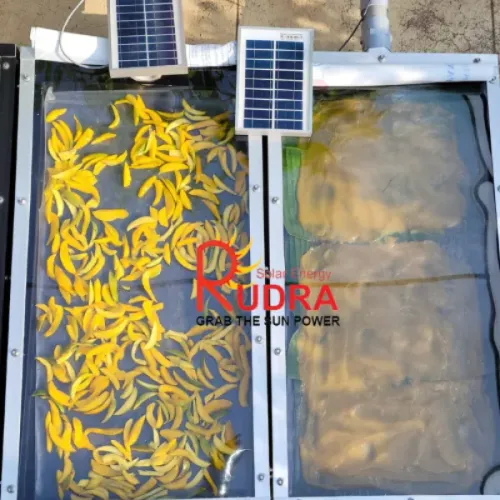
An enclosed solar drying system uses trays and managed airflow to support moisture removal. Compared with open-air drying, an enclosed system can help limit direct exposure to dust, insects and changing outdoor conditions. Actual results depend on the dryer design, solar radiation, ambient humidity, airflow, product thickness and tray loading.
Solar drying is not suitable for every crop or every processing objective. Before investing in a commercial solar drying machine, buyers should identify the product they intend to process and the final moisture condition required for its intended use.
Solar Drying Applications for Tiruchirappalli's Crops
1. Banana Drying
Banana is one of Tiruchirappalli's important horticultural crops. Depending on the variety and intended product, bananas can be prepared as slices or other suitable forms for drying. Consistent cutting, appropriate tray loading and suitable airflow help support more uniform moisture removal.
Dried banana may be used in snacks or as an ingredient in further food processing, subject to product quality, hygiene and the requirements of the intended market.
2. Small Onion Drying
Small onion is an important crop in the district. For processing applications, onions may be peeled, sliced and prepared for dehydration. Slice thickness, initial moisture, loading depth and airflow affect the drying process.
A suitably configured solar dryer can support the moisture-reduction stage for dried onion products. Producing onion powder requires additional grinding or pulverising equipment after drying.
3. Tapioca Processing
Tapioca is another major horticultural crop grown in Tiruchirappalli. Where tapioca is intended for a dried product, the preparation method, cut size and final product specification should guide equipment selection.
A solar dryer may be considered for suitable prepared tapioca products, but the required drying conditions depend on whether the material is being prepared as slices, chips or another form.
4. Chilli Drying
Chillies can be dried using a system configured for their size, variety and intended use. An enclosed drying environment can help organise the process, while suitable tray loading and airflow are important for consistent moisture removal.
The required final moisture condition should be determined according to the intended storage and processing requirements.
5. Mango and Other Fruit Processing
Mango and other suitable fruits can be considered for dehydration after checking the variety, ripeness, preparation method and intended dried product. Fruit slices should be loaded consistently to support even airflow across the trays.
The same machine may be used for compatible products in separate batches, provided the configuration and operating conditions suit each product.
6. Vegetable and Agricultural Processing
Tomato, brinjal, greens and other suitable vegetables may also be considered for drying, depending on their preparation and final application. Drying requirements for vegetables differ from those for grain, pulses and other field crops, so each application should be assessed individually.
How to Select the Right Commercial Solar Dryer
Before choosing a solar dryer in Tiruchirappalli, consider these practical factors:
- Fresh input capacity: Determine how much produce needs to be loaded in each batch.
- Crop and preparation: Whole products, slices and chips occupy different amounts of tray space.
- Tray area and loading depth: Suitable loading supports airflow and helps reduce uneven drying.
- Local operating conditions: Solar availability, humidity and seasonal weather influence drying performance.
- Final product requirements: Define the desired moisture condition and how the dried product will be stored or processed.
- Production frequency: Estimate how often batches will be processed and the quantity required.
- Installation requirements: Check available space and any electrical or other utility needs for the selected model.
Rudra Solar Energy offers solar dryer configurations ranging approximately from 5 kg to 500 kg of fresh input per batch, depending on the model. This refers to fresh input capacity, not the weight of the finished dried product. The final output varies with the crop's initial moisture and the required final moisture condition.
Solar Dryers for FPOs, SHGs and Food-Processing Businesses
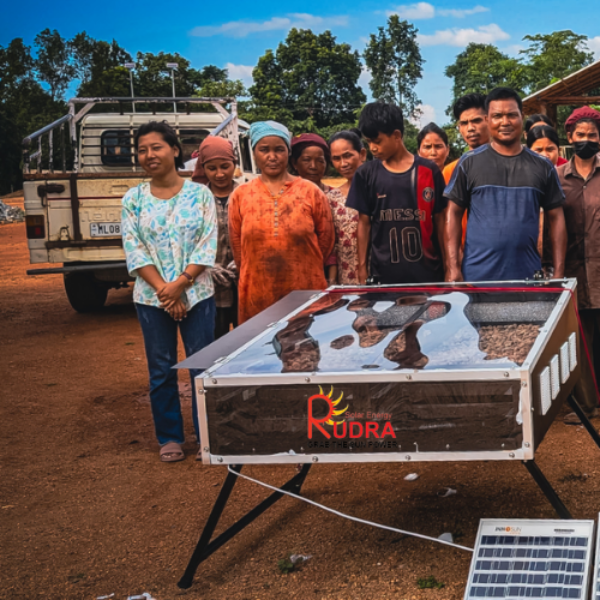
A suitable solar drying system may be considered by farmers, Farmer Producer Organisations (FPOs), Self-Help Groups (SHGs), agricultural entrepreneurs and food-processing MSMEs. Groups that aggregate produce or process it in batches may evaluate whether drying fits their product plans and available supply.
For example, a banana processor may require a different tray arrangement and capacity from a business processing small onion or tapioca. Buyers should estimate their actual batch requirements and discuss the product with the manufacturer before selecting a model.
A commercial solar dryer should be selected on the basis of the application, capacity and required output quality rather than price or capacity alone.
Why Explore Rudra Solar Energy?
Rudra Solar Energy manufactures solar drying equipment for agricultural and food-processing applications. Buyers can discuss their crop, preparation method, fresh input quantity and intended final product to identify a suitable configuration.
Businesses looking for a solar dryer manufacturer serving Tiruchirappalli can request model details and confirm the applicable specifications, materials, features and installation requirements before placing an order.
Frequently Asked Questions
1. Where can I find a solar dryer for my business in Tiruchirappalli?
You can contact Rudra Solar Energy to discuss a suitable solar dryer configuration based on your crop, fresh input capacity and processing requirements.
2. Which local crops can be considered for solar drying?
Depending on the preparation method and dryer configuration, suitable applications may include banana, small onion, chillies, mango, tapioca and selected vegetables.
3. What solar dryer capacity is available?
Rudra Solar Energy offers configurations ranging approximately from 5 kg to 500 kg of fresh input per batch, depending on the model. Confirm the suitable capacity for your product and production requirements.
4. Can banana slices be dried in a solar dryer?
Yes, a suitably configured dryer can be considered for banana slices. Slice thickness, tray loading, airflow and final moisture requirements influence the drying process.
5. Can small onion be processed into dried onion using a solar dryer?
A suitable dryer may be used for the dehydration stage after the onions are prepared appropriately. Producing onion powder requires separate grinding equipment.
6. How long does solar drying take?
Drying time varies according to the crop, initial moisture, preparation, slice thickness, tray loading, solar radiation, humidity and target final moisture. A single fixed duration does not apply to every product.
7. Can one solar dryer process different agricultural products?
A suitably configured dryer may process compatible products in separate batches. Preparation, loading and operating conditions should be adjusted for each commodity.
8. How do I choose a commercial solar drying machine?
Share your product type, fresh input quantity per batch, intended final product, location and available installation space with Rudra Solar Energy. These details help determine a suitable configuration.
Request a Solar Dryer for Your Application
Are you looking for a solar dryer for banana, small onion, tapioca, chillies or other suitable agricultural products in Tiruchirappalli, Tamil Nadu?
Contact Rudra Solar Energy to discuss your product, batch capacity and processing requirements.
Phone: 9429446671 / 7041262332
Email: rudrasolar@gmail.com
Website: https://rudrasolar.in/
Request product details and a quotation for a solar drying solution suited to your application.
Keywords