Sonbhadra is a large district in southeastern Uttar Pradesh with a distinctly rural and agricultural landscape spread across areas such as Robertsganj, Ghorawal, Chopan, Myorpur and Duddhi. The district lies in the Vindhyan region and shares boundaries with Madhya Pradesh, Chhattisgarh, Jharkhand and Bihar.
For farmers, FPOs, SHGs and small food-processing enterprises in Sonbhadra, solar drying can support suitable tomatoes, vegetables, chillies, pulses, grains, herbs and other agricultural materials where controlled moisture reduction is required. Sonbhadra is also identified among Uttar Pradesh’s tomato-producing districts, creating potential for local processing and dried tomato applications during suitable harvest periods.
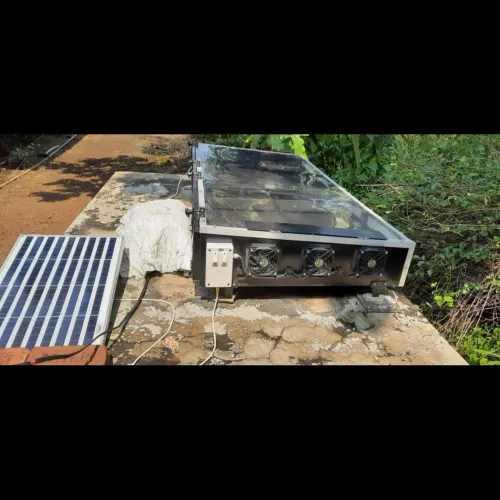
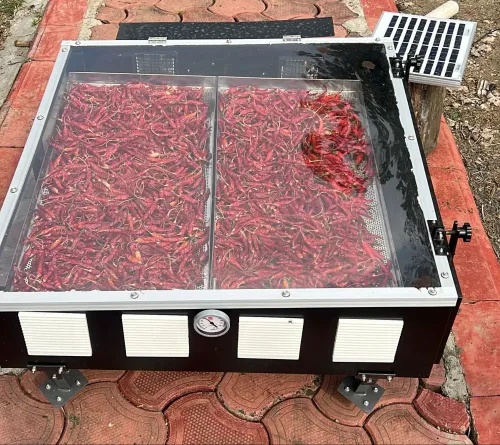
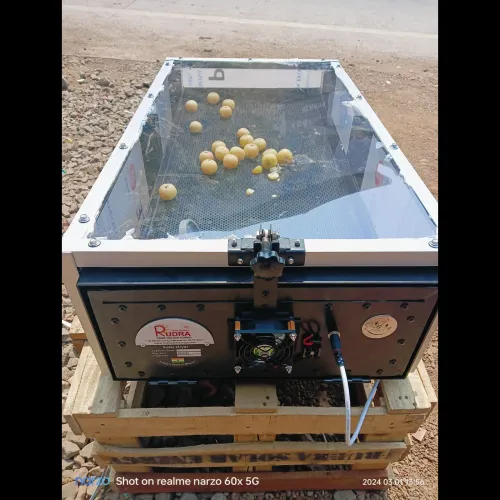
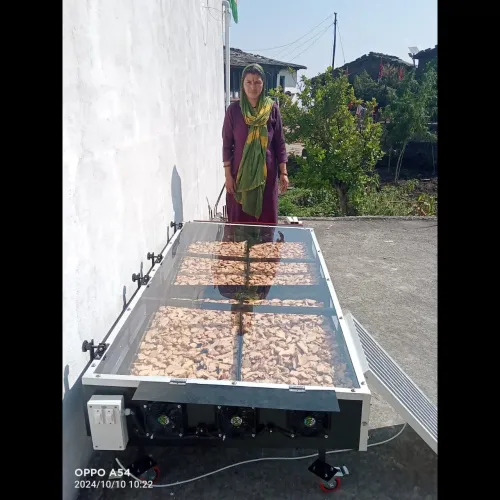
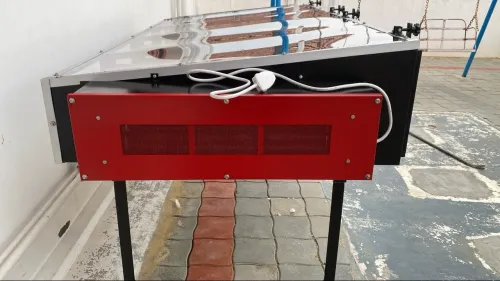
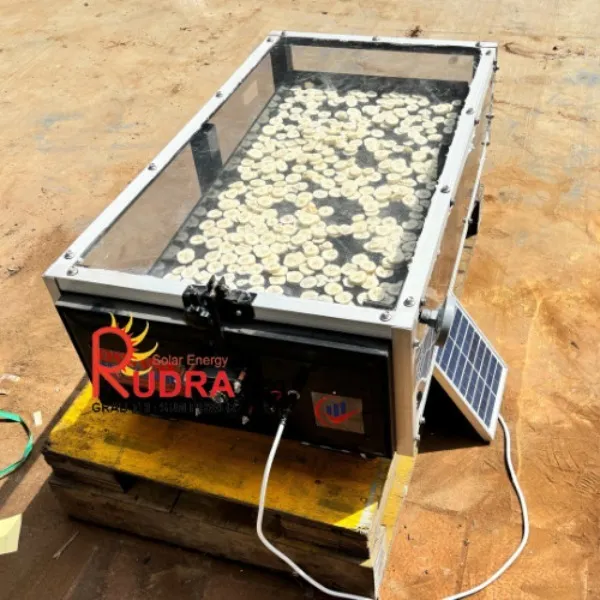
An enclosed solar dryer can provide a more protected drying environment than direct open-sun exposure, but the correct process should always be selected according to the commodity, initial moisture, preparation, loading depth, airflow, ambient conditions and desired final product.
1. Why is solar drying relevant for tomato growers and processors in Sonbhadra?
Fresh tomato contains high moisture and has a limited handling window after harvest. When suitable tomatoes are available for processing, part of the crop can be converted into dried tomato slices, pieces or ingredients for further value-added processing.
Solar drying should begin with proper sorting, washing and preparation. Slice thickness, tray loading and airflow need to be kept reasonably consistent because tomato dries differently from grains, pulses or leafy herbs.
For commercial processing, the final moisture requirement should be defined according to the intended product and packaging rather than relying only on appearance.
2. Can tomatoes be dried directly in a Rudra Solar Dryer?
Yes, suitable tomatoes can be solar dried after appropriate preparation.
A typical process can include:
- selection of sound tomatoes
- proper cleaning
- removal of unsuitable or damaged portions
- slicing to a reasonably uniform thickness
- even tray loading
- enclosed solar drying with managed airflow
- moisture assessment before packing
Drying time should not be stated as one fixed number because it changes with tomato variety, slice thickness, initial moisture, loading, sunlight, ambient humidity and airflow.
3. Which other vegetables in Sonbhadra can be considered for solar drying?
Depending on local availability and the desired final product, applications can include suitable:
- chilli
- okra
- bitter gourd
- bottle gourd
- pumpkin
- leafy materials
- onion
- garlic
- selected seasonal vegetables
Local crop observations from Sonbhadra have historically included wheat, paddy, tomato, mustard, gram, arhar and vegetables, showing that the district has a mixed agricultural base rather than a single-crop processing opportunity.
Each vegetable should be evaluated individually because preparation, cut size, loading pattern and final moisture requirements differ substantially.
4. Why can enclosed solar drying be useful compared with spreading vegetables in the open?
Open drying exposes produce directly to the surrounding environment during the drying period.
An enclosed solar drying chamber can help reduce direct exposure to:
- dust
- insects
- birds
- debris
- repeated external handling
It also allows trays and airflow to be organized more systematically.
This does not mean every batch will dry in the same number of hours. Weather, moisture content, loading and product characteristics still determine actual drying performance.
5. Can pulses and grains also be dried using a solar dryer in Sonbhadra?
Yes, suitable grain, pulse and seed applications can also be considered when the system is configured appropriately.
For commodities such as gram, arhar, paddy or other grains, drying should focus on controlled moisture reduction rather than excessive heat.
Important variables include:
- initial moisture
- grain or pulse layer depth
- airflow through the batch
- ambient humidity
- target storage moisture
- intended food or seed use
Grain drying and sliced-vegetable drying should not be treated as the same process.
6. Can solar drying help FPOs, SHGs and small rural enterprises in Sonbhadra create value-added products?
Yes. Solar drying can be incorporated into small-batch processing models where locally available produce is converted into a more stable dried ingredient or product.
Depending on raw-material availability, possible applications can include:
- dried tomato slices or ingredients
- dried chilli
- dried vegetable pieces
- herbs
- selected pulse or seed batches
- other suitable agricultural ingredients
The commercial product should be selected according to local raw-material supply, buyer requirement, packaging needs and realistic processing capacity.
7. What solar dryer capacity is suitable for a Sonbhadra farmer or processor?
Capacity should be selected according to the fresh material actually available for each batch or processing day.
Before deciding capacity, consider:
- commodity
- fresh quantity per batch
- seasonal availability
- initial moisture
- preparation or slice thickness
- tray loading
- required final moisture
- available sunlight
- number of batches
- future production plan
For example, a tomato processor should calculate capacity from fresh tomato input rather than only from the final dried-product quantity because significant moisture is removed during drying.
8. Where can a solar dryer be sourced for agricultural processing in Sonbhadra?
Rudra Solar Energy provides solar drying systems in multiple capacities and configurations for agricultural, food-processing and value-addition applications.
For a Sonbhadra requirement, the most useful details to share before selecting a system are:
- commodity to be dried
- fresh quantity per batch/day
- current moisture condition
- preparation method
- expected final product
- intended commercial or storage use
This allows the solar drying system to be matched more closely to the actual application instead of applying one standard drying setup to every commodity.
Keywords