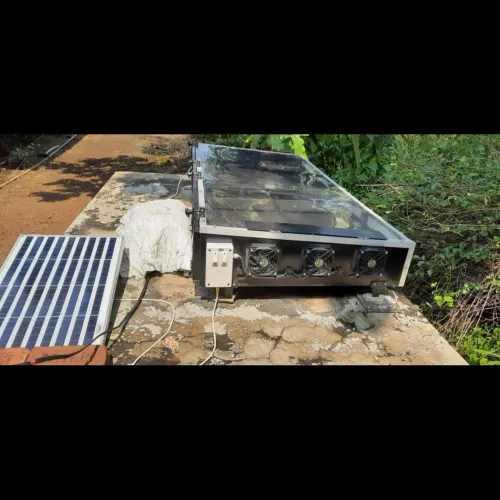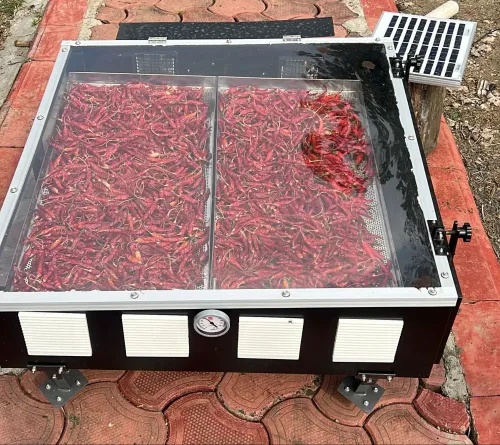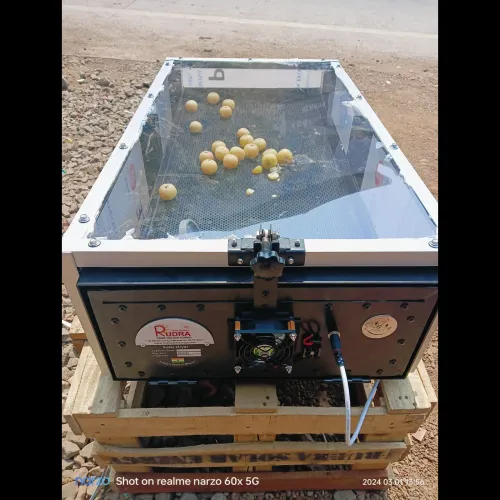
Shravasti is an agriculture-dependent district of northeastern Uttar Pradesh, with paddy, wheat, pulses and sugarcane officially identified among its main crops. The district also falls within Uttar Pradesh’s Tarai agro-climatic zone, where paddy, wheat, mustard, urd, moong and arhar are important crop groups.
For farmers, FPOs, SHGs, grain handlers, seed processors and rural agro-enterprises in Shravasti, an enclosed solar dryer can support protected moisture reduction for technically suitable grains, pulses, oilseeds, seeds, herbs, vegetables and other agricultural materials. The drying process should be selected according to the actual commodity, incoming moisture, required final moisture, loading depth, airflow and end use rather than following one universal drying time.
1. Which agricultural products can be dried using a solar dryer in Shravasti?
Relevant solar-drying applications can include:
- Paddy and selected rice-related applications
- Wheat
- Urd
- Moong
- Arhar and other suitable pulses
- Mustard and selected oilseeds
- Seeds
- Selected vegetables
- Herbs and leafy materials
- Other suitable agricultural raw materials
Shravasti’s location in the Tarai zone makes paddy, wheat, mustard and pulses particularly relevant when discussing post-harvest moisture management.
Each product should be evaluated separately because grain, pulses, oilseeds, seeds and vegetables do not require identical drying conditions.
2. Can paddy be dried using a solar dryer in Shravasti?
Yes. Paddy is one of Shravasti’s main crops and is also a major crop of the wider Tarai agro-climatic zone.
Where harvested paddy contains excess moisture, controlled solar drying can support moisture reduction before suitable storage or further processing.
Important factors include:
- Initial grain moisture
- Required final moisture
- Batch quantity
- Grain layer depth
- Airflow
- Relative humidity
- Solar radiation
- Intended storage or milling requirement
A fixed number of drying hours should not be applied to every batch because harvested moisture and weather conditions can vary.
3. Is solar drying useful for wheat farmers and grain handlers in Shravasti?
Yes. Wheat is officially listed among the district’s main crops.
An enclosed solar dryer can be relevant when harvested wheat requires additional moisture reduction before:
- Storage
- Cleaning
- Grading
- Milling
- Seed handling
- Packaging
For grain drying, uniform layer depth and adequate airflow are important. Overloading the drying area can restrict air movement and lead to uneven moisture reduction.
4. Can urd, moong, arhar and other pulses be solar dried?
Yes. Uttar Pradesh’s Tarai crop profile for Shravasti includes urd, moong and arhar, while pulses are also identified among Shravasti’s main crops.
Solar drying can be considered where these pulse crops require moisture reduction before storage, milling, grading or packaging.
For pulse applications, attention should be given to:
- Initial moisture
- Desired final moisture
- Layer thickness
- Air distribution
- Batch size
- Product temperature
If the crop is intended for seed use, the process should also avoid unnecessary heat exposure that could affect germination quality.
5. Is a solar dryer suitable for mustard and other oilseeds in Shravasti?
Yes, where harvested oilseeds require additional moisture reduction. Mustard is identified among the major crops of the Tarai zone that includes Shravasti.
For mustard and similar oilseed applications, drying should be managed according to the product rather than simply applying maximum available heat.
Important considerations include:
- Seed moisture
- Airflow
- Layer depth
- Batch quantity
- Product temperature
- Storage requirement
- Whether the material is for processing or sowing
This is especially important for oil-bearing and seed materials where excessive temperature may reduce product quality.
6. Can fresh sugarcane be dried directly in a solar dryer?
Generally, fresh sugarcane is not a typical direct solar-drying commodity, even though sugarcane is officially listed among Shravasti’s main crops.
A crop being economically important in a district does not automatically make it suitable for direct drying.
Solar drying is more relevant for products where deliberate moisture reduction is genuinely part of the post-harvest or processing chain, including:
- Grains
- Pulses
- Oilseeds
- Seeds
- Herbs
- Selected fruits and vegetables
- Suitable processed agricultural ingredients
This keeps the recommendation technically accurate and application-specific.
7. Why can enclosed solar drying be useful in Shravasti’s Tarai environment?
Shravasti lies within Uttar Pradesh’s Tarai agro-climatic belt. Moisture conditions and seasonal humidity can influence post-harvest drying performance, particularly when agricultural produce is dried directly in open surroundings.
An enclosed solar drying system can help provide:
- Protected tray-based handling
- Reduced direct exposure to dust
- Reduced exposure to insects and birds
- Managed movement of moisture-laden air
- More organized batch processing
- Less dependence on uncontrolled natural wind
However, actual drying performance still depends on solar radiation, ambient humidity, initial product moisture, loading density and system configuration.
8. Who can use a commercial solar dryer in Shravasti?
Potential users include:
- Farmers
- FPOs
- SHGs
- Farmer cooperatives
- Grain handlers
- Pulse processors
- Mustard and oilseed handlers
- Seed processors
- Rural food-processing businesses
- Agro-processing MSMEs
- Women entrepreneurs
- Village-level value-addition enterprises
Shravasti’s official ODOP products are Tribal Craft and Furniture, rather than a food-processing commodity. Therefore, solar drying should be positioned around the district’s actual agricultural and post-harvest opportunities, rather than incorrectly connecting it with the ODOP identity.
For selecting a solar dryer in Shravasti, the key inputs are the commodity, fresh batch quantity, initial moisture, target moisture, tray-loading requirement and installation location.
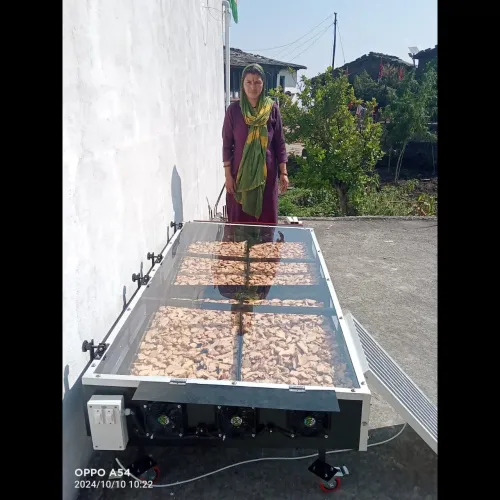
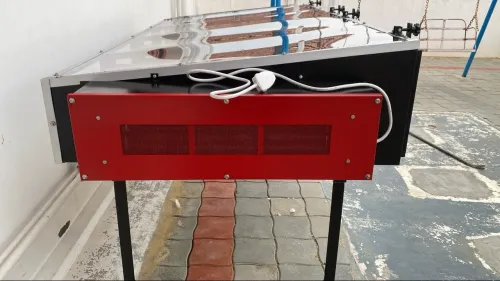
Rudra Solar Energy provides enclosed solar drying solutions with controlled airflow and multiple capacity options for suitable grain, pulse, oilseed, seed and food-processing applications.
For an application-based Rudra Solar Dryer recommendation in Shravasti, share the commodity to be dried, fresh batch quantity and installation location.
Keywords