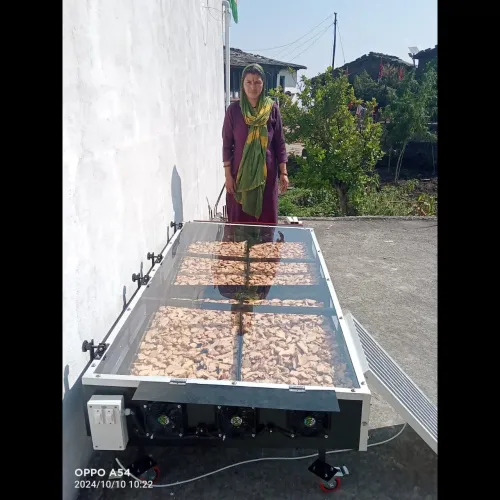
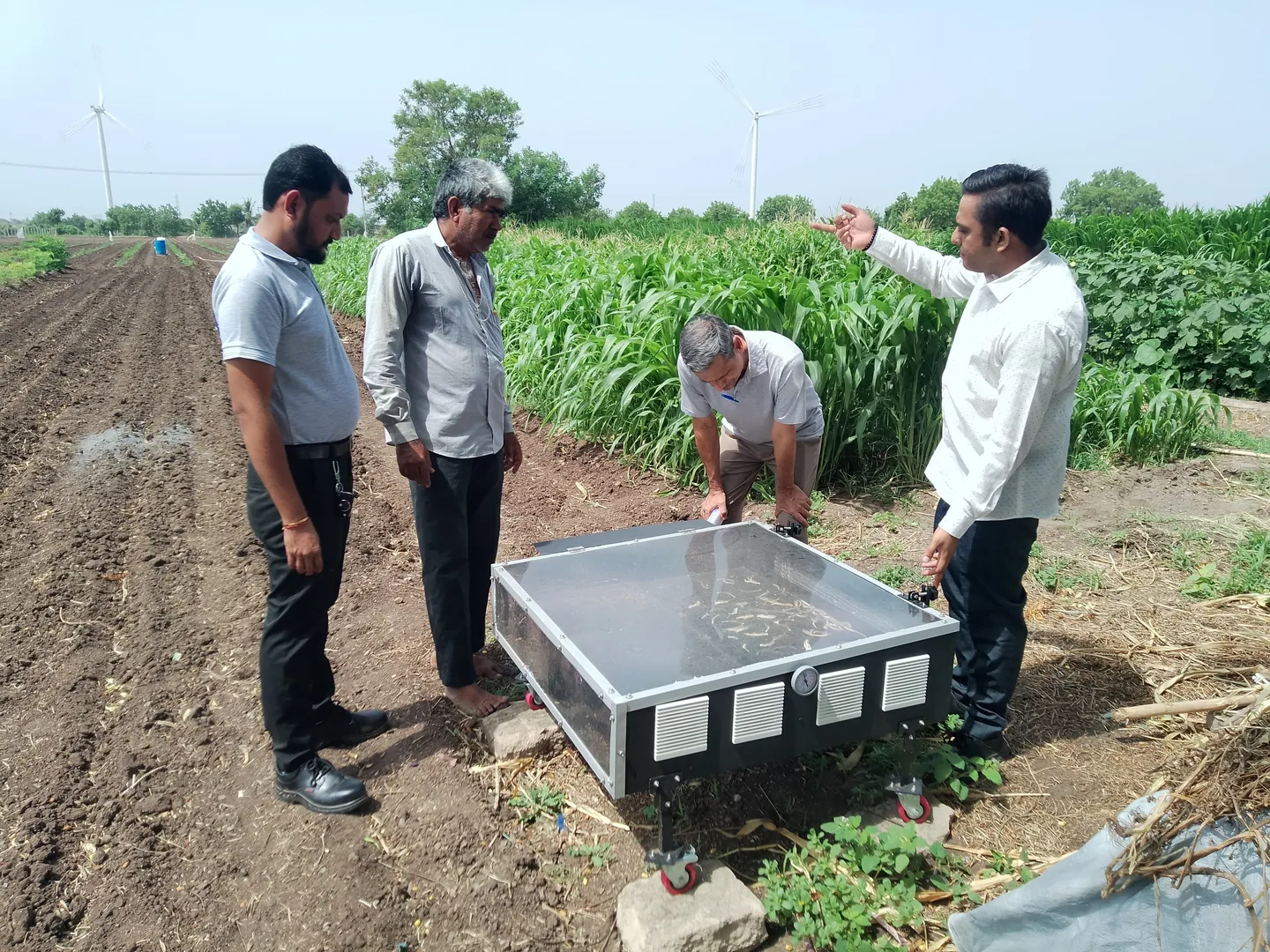
Shamli is one of western Uttar Pradesh’s strongly agriculture-linked districts, with a particularly important sugarcane and jaggery economy alongside cereals, pulses, oilseeds, spices and vegetables. The district’s export planning documents describe Shamli as a major sugarcane-producing area with an established gur (jaggery) manufacturing cluster and wholesale market. At the same time, Shamli mandi listings include wheat, paddy, rice, maize, bajra, mustard, groundnut, lentil, urad, chilli, watermelon, brinjal, carrot, bottle gourd and other vegetables.
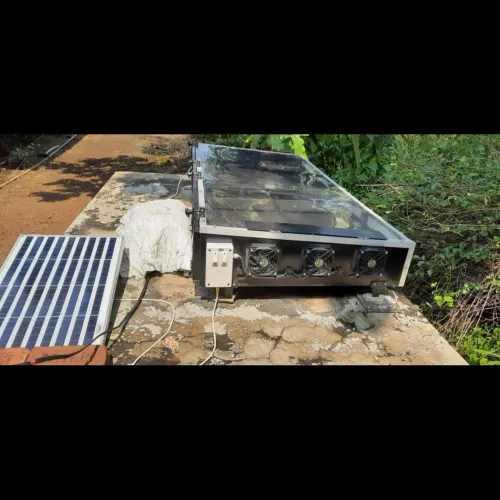
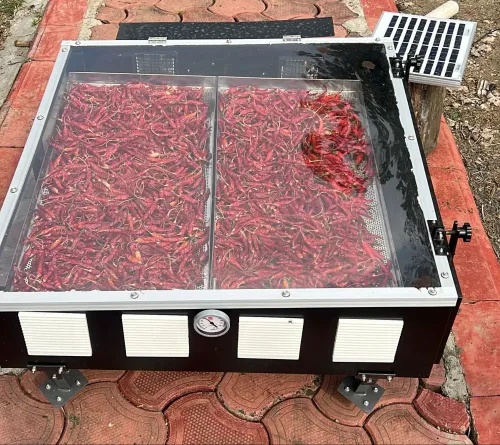
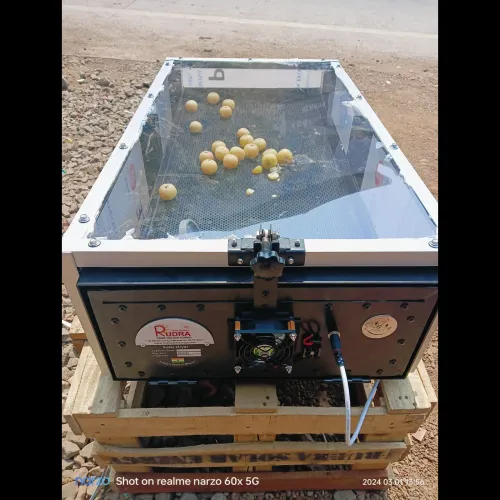
For farmers, FPOs, SHGs, seed processors, grain handlers and food-processing enterprises in Shamli, an enclosed solar dryer can support protected moisture reduction for technically suitable grains, pulses, oilseeds, chilli, vegetables, fruits, seeds and other agricultural products using organized tray loading and controlled airflow.
1. Which products can be dried using a solar dryer in Shamli?
Relevant solar-drying applications in Shamli can include:
- Wheat
- Paddy and selected rice applications
- Maize and bajra
- Mustard seed
- Groundnut
- Lentil and urad
- Chilli
- Selected vegetables
- Watermelon and other suitable fruit applications
- Seeds
- Herbs and other suitable farm produce
Shamli’s e-NAM mandi profile itself reflects this diversified commodity mix across cereals, oilseeds, pulses, spices, fruits and vegetables.
The drying process must still be selected separately for each commodity according to initial moisture, target moisture, product preparation, tray loading, airflow and intended end use.
2. Can wheat, paddy, maize and bajra be dried using a solar dryer in Shamli?
Yes. Wheat, paddy, rice, maize and bajra are among the cereals associated with Shamli’s agricultural market.
Where grain contains excess moisture after harvest or before storage, controlled solar drying can support gradual moisture reduction in an enclosed system.
Important considerations include:
- Initial grain moisture
- Required final moisture
- Grain layer depth
- Batch quantity
- Airflow through the loaded material
- Ambient humidity
- Solar radiation
- Storage or milling requirement
The correct drying endpoint is more important than applying one fixed drying duration to every batch.
3. Is solar drying suitable for mustard and groundnut in Shamli?
Yes, where additional moisture reduction is required before storage, handling or processing. Shamli mandi records include both mustard seed and groundnut.
For oilseeds, the process should be carefully managed because unnecessary heating can affect product quality.
Important variables include:
- Incoming moisture
- Seed cleanliness
- Tray or layer depth
- Air velocity
- Product temperature
- Required final moisture
- Intended storage or processing use
Where the material is intended for sowing, seed viability should also be considered while selecting drying conditions.
4. Can lentil and urad be processed using solar drying in Shamli?
Yes. Lentil and urad are also traded through Shamli’s agricultural market system.
An enclosed solar dryer can be relevant where pulses require moisture reduction before:
- Storage
- Cleaning
- Grading
- Milling
- Packaging
- Seed handling
Uniform loading is important because thick or uneven layers can restrict airflow and create differences in moisture removal across the batch.
5. Can chilli and vegetables be converted into value-added dried products?
Yes. Shamli mandi listings include chilli, brinjal, carrot, bottle gourd, bitter gourd and other vegetables.
Depending on the commodity and market requirement, suitable vegetables may be processed into:
- Dried slices
- Flakes
- Powder ingredients
- Dried chilli
- Other value-added food ingredients
Preparation may involve washing, sorting, slicing and appropriate pre-treatment before tray loading.
For vegetables and chilli, product thickness, loading density and airflow are especially important for achieving more uniform drying.
6. Is fresh sugarcane suitable for direct solar drying in Shamli?
Generally, fresh sugarcane itself is not a normal direct solar-drying commodity, even though sugarcane is one of Shamli’s most economically important crops.
Shamli has a significant sugarcane base and an established jaggery-processing cluster and wholesale market.
However, a solar dryer should not be promoted simply because sugarcane is locally important. It is more appropriate for products where deliberate moisture reduction is genuinely part of the post-harvest or value-addition process, such as grains, pulses, oilseeds, chilli, vegetables, fruits and selected processed ingredients.
This keeps the application technically accurate rather than forcing every local crop into a solar-drying use case.
7. Why can enclosed solar drying be useful for farmers and processors in Shamli?
Traditional open drying leaves products directly exposed to the surrounding environment.
An enclosed solar drying system can provide a more organized processing environment by helping reduce direct exposure to:
- Dust
- Insects
- Birds
- Uncontrolled outdoor contact
- Sudden handling disturbances
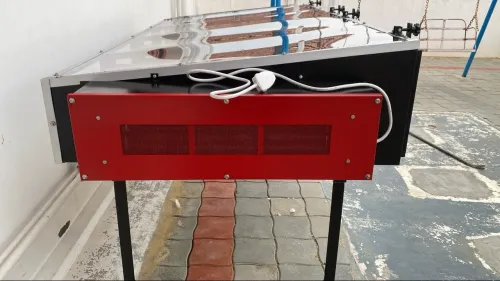
Controlled or forced airflow can also help move moisture-laden air away from the loaded product and improve air distribution between trays.
Actual drying performance still depends on the commodity, initial moisture, loading, weather and system configuration.
8. Who should consider a commercial solar dryer in Shamli?
Potential users include:
- Farmers
- FPOs
- SHGs
- Cooperatives
- Grain handlers
- Pulse processors
- Oilseed processors
- Seed businesses
- Chilli processors
- Vegetable-processing units
- Food-processing MSMEs
- Rural entrepreneurs
Shamli’s official Uttar Pradesh ODOP products are linked to Iron Fabrication and Rim & Axle, not food processing. Therefore, the solar-drying opportunity in Shamli should be built around the district’s actual agricultural and post-harvest economy rather than incorrectly linking the dryer with its ODOP identity.
For selecting a solar dryer in Shamli, the most important inputs are the commodity, fresh batch quantity, initial moisture, target moisture, tray-loading requirement and installation location.
Rudra Solar Energy provides enclosed solar drying solutions with controlled airflow and multiple capacity options for suitable grain, pulse, oilseed, spice, vegetable, seed and food-processing applications.
For an application-based Rudra Solar Dryer recommendation in Shamli, share the commodity to be dried, fresh batch quantity and installation location.
Keywords