Shahjahanpur is a predominantly agricultural district in Uttar Pradesh’s upper Gangetic–Tarai belt. District administration data identifies wheat, paddy, pulses, sugarcane and groundnut among its major crops, with mango and guava as important horticultural crops. Shahjahanpur is also one of Uttar Pradesh’s major paddy-producing districts and has been associated with an Agri Export Zone for basmati rice, giving grain quality, moisture management and post-harvest handling particular relevance.
For farmers, FPOs, SHGs, grain handlers, seed processors and agro-processing enterprises in Shahjahanpur, an enclosed solar dryer can support protected and controlled moisture reduction for suitable grains, pulses, oilseeds, fruits, vegetables, seeds and other agricultural materials according to the actual commodity and processing requirement.
1. Which products can be dried using a solar dryer in Shahjahanpur?
Relevant solar-drying applications in Shahjahanpur can include:
- Paddy and selected rice-processing applications
- Wheat
- Gram, pea and arhar
- Mustard and lahi
- Groundnut
- Bajra, jowar and maize
- Seeds
- Selected vegetables
- Mango and guava for suitable value-added processing
- Herbs and other suitable agricultural raw materials
The district officially records wheat, paddy, pulses, sugarcane, groundnut, mango, guava, bajra, jowar, maize and oilseeds among its agricultural and horticultural base.
Drying conditions should be selected according to initial moisture, target moisture, batch quantity, product preparation, tray loading, airflow and intended use.
2. Can a solar dryer be used for paddy and basmati rice applications in Shahjahanpur?
Yes. Paddy is particularly relevant because Shahjahanpur is identified by the district administration as one of Uttar Pradesh’s major paddy-producing districts, with historical development emphasis on basmati rice exports.
For suitable paddy applications, solar drying can help reduce excess moisture before storage or further processing.
Important factors include:
- Initial grain moisture
- Required final moisture
- Grain layer depth
- Batch quantity
- Airflow
- Ambient humidity
- Solar radiation
- Intended storage or milling requirement
A universal drying time should not be prescribed because incoming grain moisture and local weather can vary considerably between batches.
3. Is solar drying suitable for wheat in Shahjahanpur?
Yes. Wheat is one of Shahjahanpur’s principal crops; district data reports a substantial cultivated area under wheat.
Where harvested wheat contains excess moisture, an enclosed solar dryer can provide organized moisture reduction before storage, cleaning or processing.
For grain drying, the focus should be on reaching a moisture condition appropriate for the intended use rather than simply drying for a fixed number of hours.
4. Can gram, pea, arhar and other pulses be dried using solar energy?
Yes. Gram, pea and arhar are specifically identified among important pulse crops of Shahjahanpur.
Controlled drying can be useful where pulses require further moisture reduction before:
- Storage
- Cleaning and grading
- Milling
- Packaging
- Seed handling
The drying process should avoid excessive heat, especially where the material is intended for seed use, because viability and germination quality can be temperature-sensitive.
5. Can mustard, lahi and groundnut be processed in a solar dryer?
Yes, where additional moisture reduction is actually required. Shahjahanpur’s official agricultural profile records mustard and lahi as oilseeds and also identifies groundnut among the district’s major crops.
For oilseeds and groundnut, important considerations include:
- Initial moisture
- Product cleanliness
- Layer thickness
- Airflow
- Batch quantity
- Required final moisture
- Storage or processing purpose
Oil-bearing materials should be dried under application-appropriate conditions rather than exposed to unnecessarily high temperatures.
6. Can mango, guava and vegetables be used for value-added solar drying?
Yes. Mango and guava are identified as horticultural crops of Shahjahanpur, while potato is also documented among important crops in the district.
Depending on the commodity and final product, suitable fruits and vegetables may be processed into:
- Dried slices
- Flakes
- Powder ingredients
- Other value-added dried products
Preparation may involve washing, peeling, slicing and suitable pre-treatment where required.
Slice thickness, tray loading, initial moisture and airflow are important because they directly affect drying uniformity.
7. Can fresh sugarcane be dried directly in a solar dryer?
Fresh sugarcane is not normally a direct solar-drying commodity, even though sugarcane is an important crop in Shahjahanpur.
Solar drying is more relevant to products where moisture reduction is genuinely part of the post-harvest or processing chain, such as grains, pulses, oilseeds, seeds, fruits, vegetables and selected processed agricultural materials.
This distinction helps businesses choose technically appropriate applications rather than treating every locally grown crop as a drying commodity.
8. How should a commercial solar dryer be selected in Shahjahanpur?
Selection should begin with the actual product and processing requirement.
Important details include:
- Commodity to be dried
- Fresh or incoming batch quantity
- Initial moisture
- Target final moisture
- Product size or preparation
- Tray loading and layer depth
- Required airflow
- Local humidity and weather
- Available installation space
- Intended storage, processing or value-added use
Shahjahanpur’s official ODOP product is Zari-Zardozi, not a food or agricultural product, so solar drying should be positioned around the district’s genuine agricultural and post-harvest opportunities rather than incorrectly linking it with the ODOP identity.
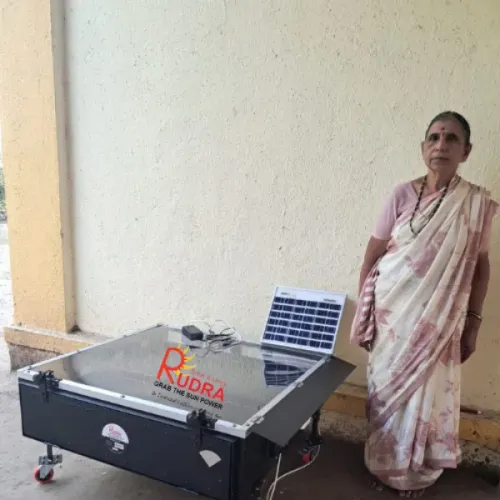
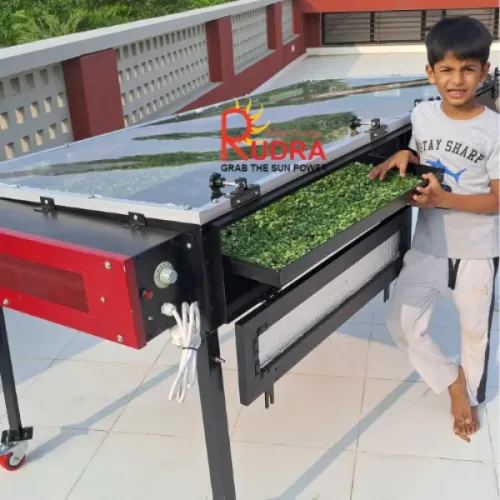
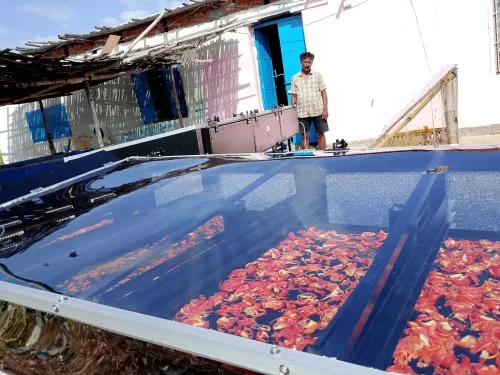
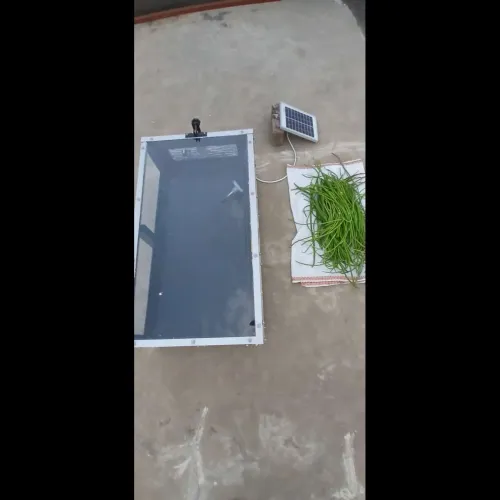
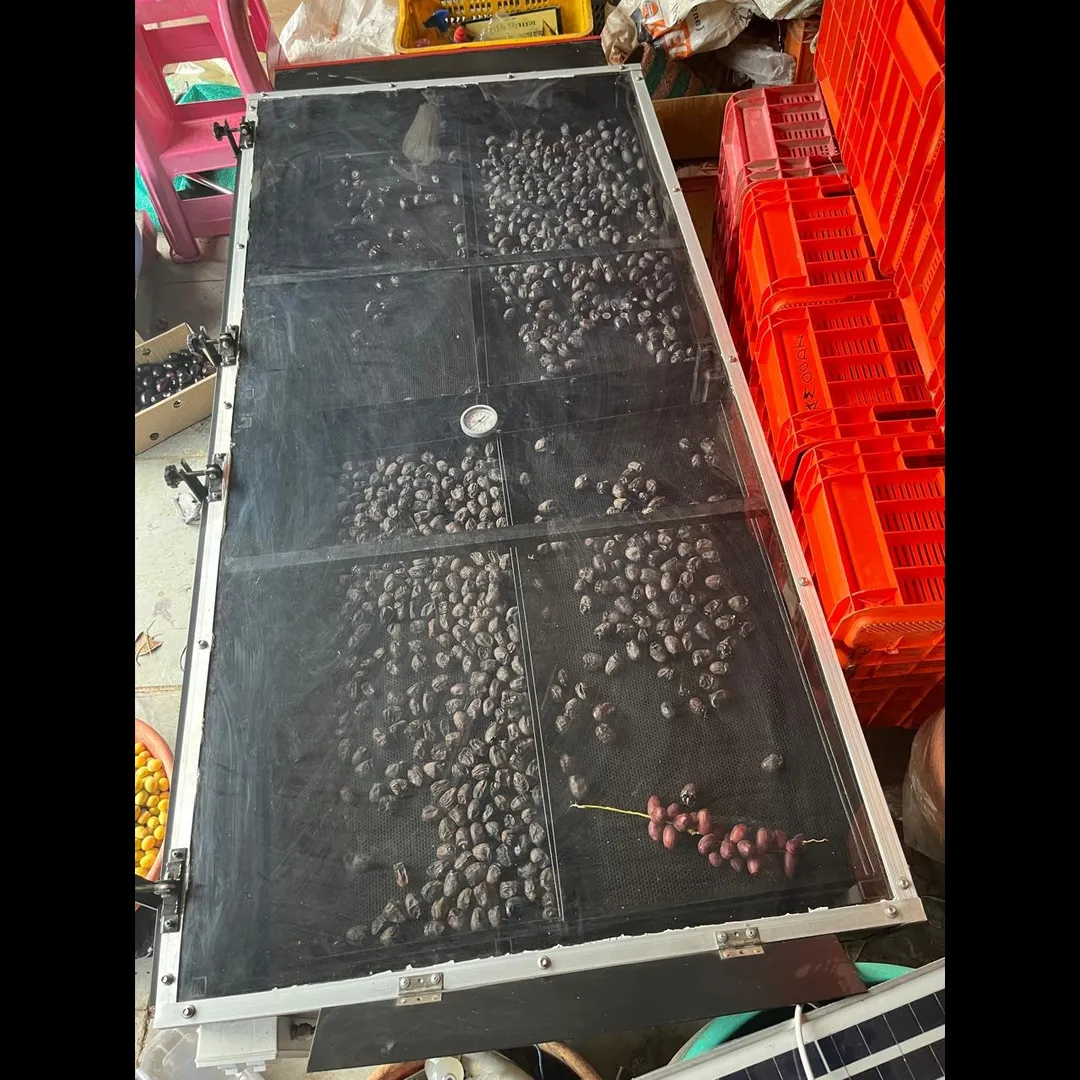
Rudra Solar Energy provides enclosed solar drying solutions with controlled airflow and multiple capacity options for suitable grain, pulse, oilseed, horticultural, seed and food-processing applications.
For an application-based solar dryer recommendation in Shahjahanpur, share the commodity to be dried, fresh batch quantity and installation location.
Keywords