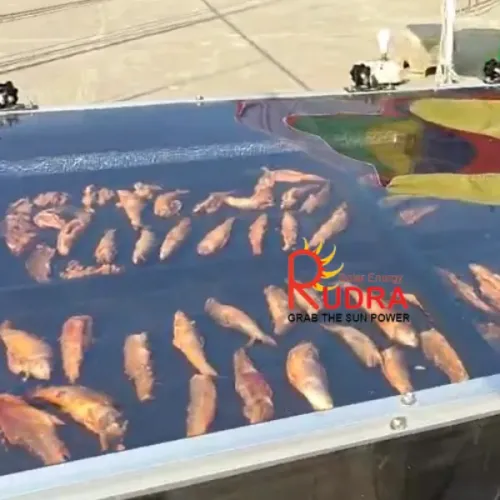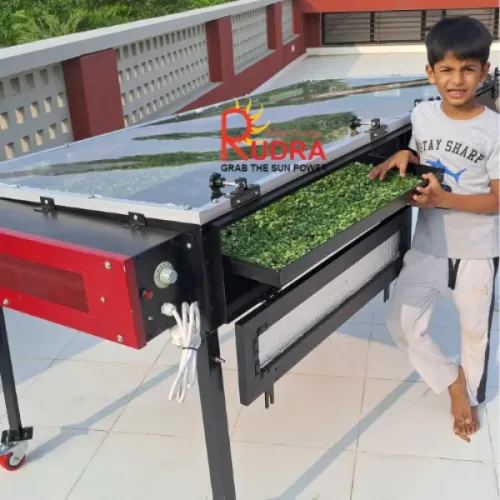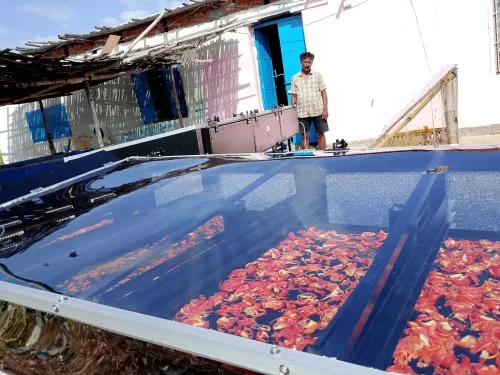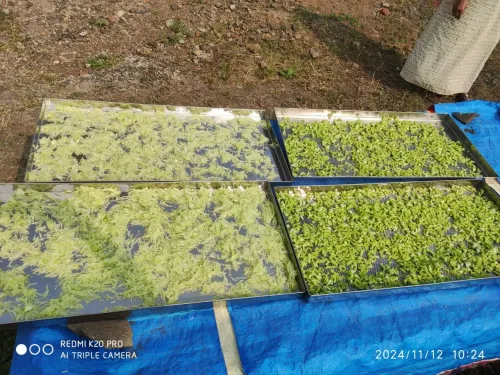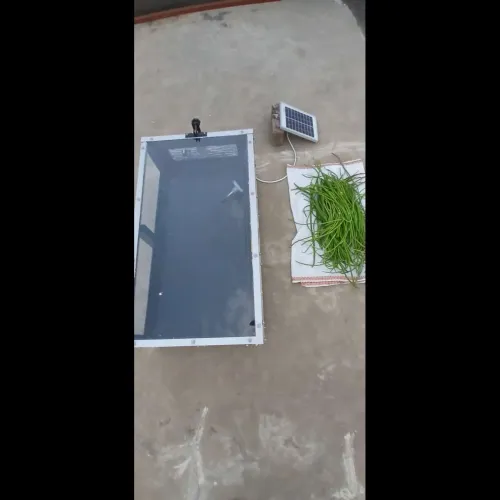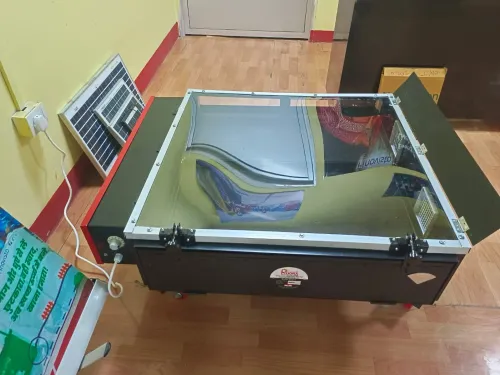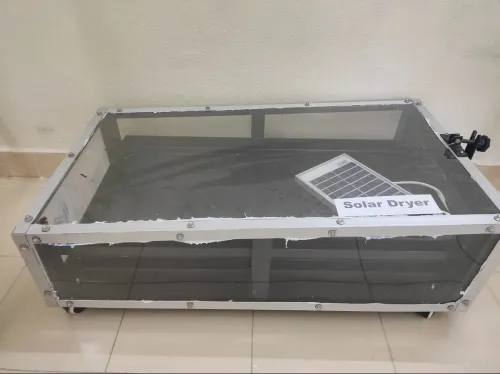
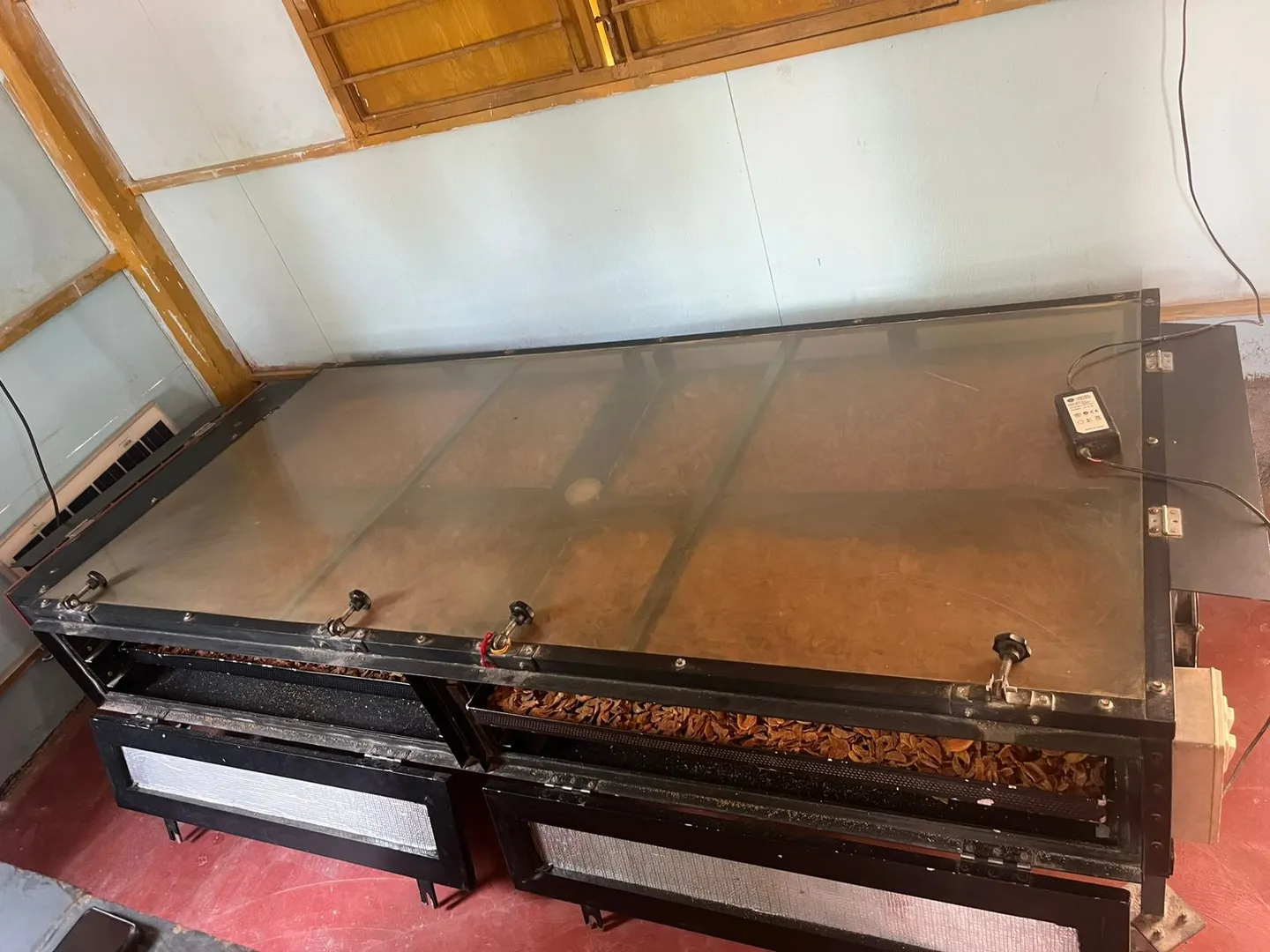
Sant Kabir Nagar has a strongly agriculture-linked economy, with district planning data identifying paddy as the main Kharif crop and wheat as the main Rabi crop. The district has about 1.13 lakh hectares under Kharif and 1.19 lakh hectares under Rabi cultivation, while sugarcane is also an important crop because of the local sugar-industry presence. Fisheries are another notable rural activity, with hundreds of ponds supporting fish production and livelihoods. For farmers, FPOs, SHGs, grain handlers, seed processors, fisheries-related enterprises and agro-processing businesses, an enclosed solar dryer can support protected moisture reduction for suitable grains, seeds, vegetables, herbs, fish and other agricultural materials using organized tray loading and controlled airflow.
1. Which products can be dried using a solar dryer in Sant Kabir Nagar?
A solar dryer can be considered for products that genuinely require controlled moisture reduction before storage, processing, packaging or value addition.
Suitable applications may include:
- Paddy and selected grain applications
- Wheat and other cereals
- Seeds
- Pulses and suitable oilseeds
- Selected vegetables
- Herbs and leafy materials
- Suitable fish products
- Other agricultural raw materials requiring moisture reduction
The drying process should always be selected according to the commodity, initial moisture, target final moisture, preparation method, loading depth, airflow and intended end use.
2. Can a solar dryer be used for paddy in Sant Kabir Nagar?
Yes. Paddy is identified as the district’s main Kharif crop.
For suitable paddy and grain applications, solar drying can support controlled reduction of excess moisture before storage or subsequent handling.
Important factors include:
- Initial grain moisture
- Required final moisture
- Batch quantity
- Grain layer depth
- Airflow
- Relative humidity
- Solar radiation
- Intended storage or processing use
A fixed drying time should not be applied to every batch because initial moisture and weather conditions can vary.
3. Is solar drying suitable for wheat and other Rabi produce?
Yes. Wheat is documented as the principal Rabi crop of Sant Kabir Nagar.
Where harvested wheat or other suitable grain material requires additional moisture reduction, an enclosed solar dryer can provide organized tray-based drying with managed airflow.
For grain applications, the objective should be achieving an appropriate moisture condition for the intended storage or processing requirement, rather than drying for an arbitrary number of hours.
4. Can solar drying support fisheries and fish-processing activities in Sant Kabir Nagar?
Potentially, yes. Sant Kabir Nagar has a significant inland fisheries base. District planning data records 857 ponds covering about 901 hectares, with fish production of roughly 3,784 metric tonnes in 2019–20.
For suitable fish-processing applications, an enclosed solar dryer can provide a more protected environment than direct open drying.
Important considerations include:
- Fish species
- Product size
- Whole or cut form
- Pre-processing method
- Initial moisture
- Tray loading
- Airflow
- Target final moisture
- Hygiene and handling practices
Fish drying should always follow appropriate food-safety practices.
5. Can fresh sugarcane be dried directly in a solar dryer?
Fresh sugarcane is not normally a direct solar-drying commodity, even though sugarcane is important in Sant Kabir Nagar and the district has sugar-industry activity.
Solar drying is more appropriate for agricultural materials where deliberate moisture reduction is actually part of the processing chain, such as grains, seeds, vegetables, herbs and selected food products.
This distinction is important so that the dryer is recommended only for technically suitable applications.
6. Why is controlled airflow important for grain and food drying?
During drying, moisture leaves the product and enters the surrounding air.
If this moisture-laden air remains around the loaded material, drying can slow down and become uneven.
Controlled or forced airflow can help:
- Remove humid air from the product surface
- Improve air distribution between trays
- Support more consistent moisture removal
- Reduce dependence on natural wind
- Improve batch-to-batch process control
The required airflow still depends on the commodity, batch size and tray loading.
7. Who can use a commercial solar dryer in Sant Kabir Nagar?
Potential users include:
- Farmers
- FPOs
- SHGs
- Cooperatives
- Grain handlers
- Seed processors
- Fish-processing groups
- Vegetable processors
- Food-processing MSMEs
- Rural entrepreneurs
- Agro-enterprises
Agriculture and fisheries together support a substantial part of the district’s rural economy, making decentralized post-harvest processing relevant for multiple types of local enterprises.
Sant Kabir Nagar’s official ODOP identity is linked to Brass Utensils and Hosiery Products, not agriculture or food processing. Therefore, solar drying should be positioned around the district’s genuine agricultural, fisheries and food-processing opportunities rather than incorrectly connecting it with the ODOP product.
8. How should a solar dryer be selected for a business in Sant Kabir Nagar?
The system should be selected according to the actual product and production requirement.
Important details include:
- Commodity to be dried
- Fresh batch quantity
- Initial moisture
- Required final moisture
- Product size or preparation
- Tray loading and layer depth
- Required airflow
- Available installation area
- Local humidity and weather
- Intended use after drying
Rudra Solar Energy provides enclosed solar drying solutions with controlled airflow and multiple capacity options for suitable agricultural, food and fisheries-related applications.
For an application-based solar dryer recommendation in Sant Kabir Nagar, share the commodity to be dried, fresh batch quantity and installation location.
Keywords