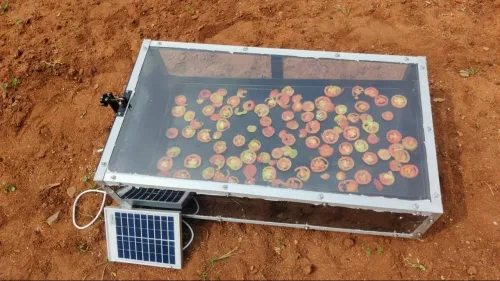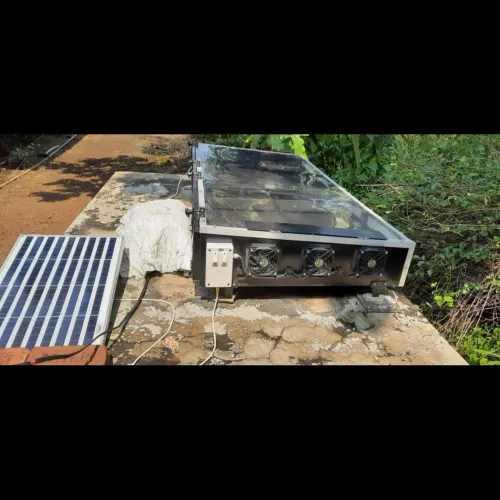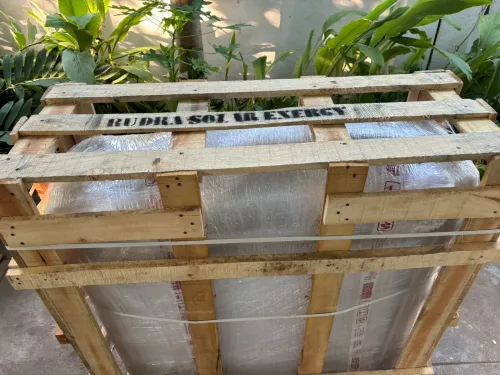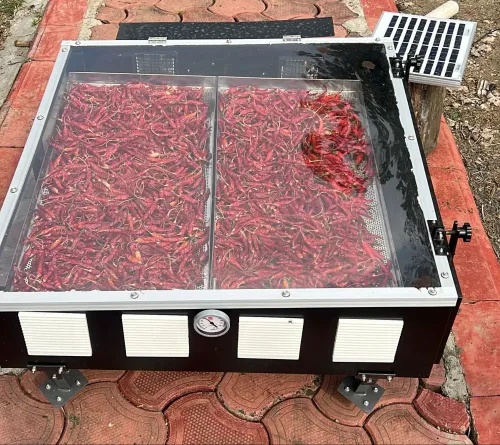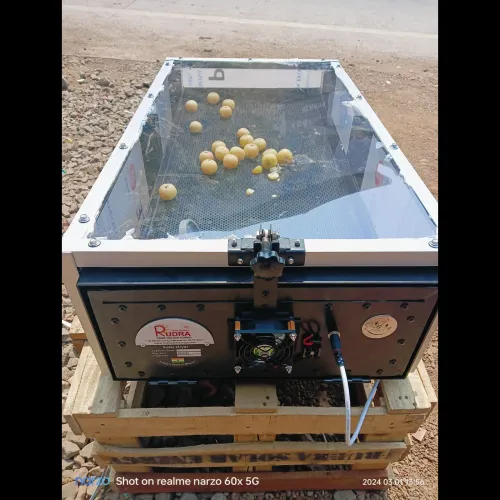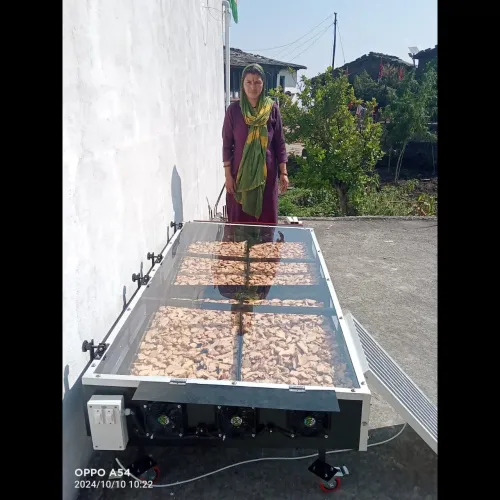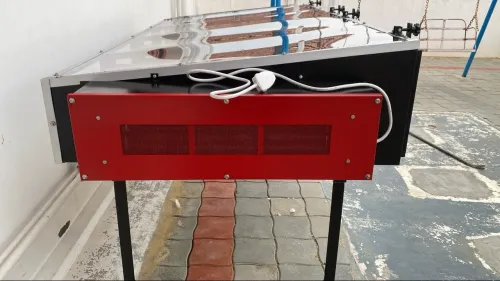
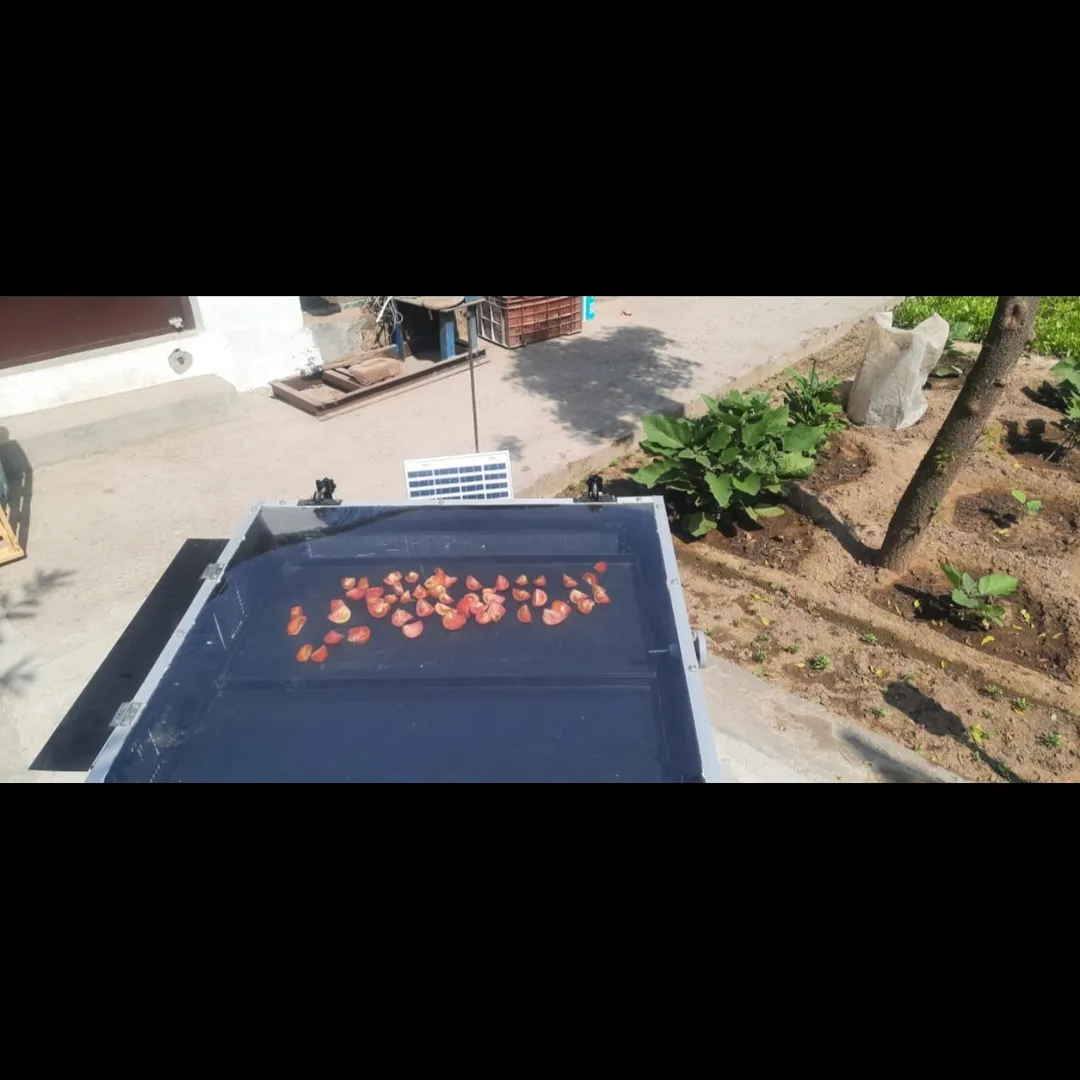
Sambhal has a diversified agricultural base that includes wheat, paddy, sugarcane, mentha, mustard, urd, lentil, potato, bajra and several vegetable and horticultural crops. Krishi Vigyan Kendra records for the district also identify mentha, chilli, tomato, cauliflower, cabbage, cucumber, potato and mango among important commodities across different blocks. For farmers, FPOs, SHGs, seed handlers, herbal processors and agro-enterprises in Sambhal, an enclosed solar dryer can support protected moisture reduction for suitable herbs, grains, pulses, oilseeds, vegetables, seeds and other agricultural materials while providing organized tray loading and controlled airflow.
1. Which products can be dried using a solar dryer in Sambhal?
Solar drying can be considered for commodities that genuinely require controlled moisture reduction before storage, processing, grinding, packaging or value addition.
Relevant applications in Sambhal can include:
- Mentha leaves for suitable dried-herb applications
- Wheat and selected grain applications
- Paddy and rice-related processing
- Mustard and other suitable oilseeds
- Urd, lentil and other pulses
- Potato and selected vegetables
- Chilli
- Seeds
- Selected fruits and horticultural produce
- Other suitable agricultural raw materials
Drying conditions should always be selected according to the product, initial moisture, desired final moisture, preparation, tray loading, airflow and intended end use.
2. Can mentha be dried using a solar dryer in Sambhal?
Yes, but the intended use of the mentha is important.
Mentha is one of the important crops documented in Sambhal’s agricultural systems. If mentha leaves are being processed as a dried herbal ingredient, controlled solar drying can support moisture reduction in a protected environment.
However, mentha grown specifically for essential-oil distillation may follow a different post-harvest process, and drying should not automatically be inserted into every mentha-processing chain.
For dried-leaf applications, important factors include:
- Leaf condition
- Initial moisture
- Layer depth
- Airflow
- Temperature sensitivity
- Required final moisture
This application-specific distinction helps avoid unnecessary processing.
3. Can wheat, paddy and bajra be dried in a solar dryer in Sambhal?
Yes. Wheat, paddy and bajra are all documented within Sambhal’s farming systems.
For suitable grain applications, solar drying can support controlled moisture reduction before storage or further processing.
Important variables include:
- Initial grain moisture
- Required final moisture
- Grain layer depth
- Batch quantity
- Airflow
- Ambient humidity
- Solar radiation
- Intended storage period
A fixed universal drying time should not be used because grain moisture and weather conditions can change from one batch to another.
4. Is solar drying suitable for mustard, urd and lentil in Sambhal?
Yes. Mustard, urd and lentil are also present in Sambhal’s documented crop pattern.
An enclosed solar dryer can be useful where these materials require additional moisture reduction before storage, cleaning, processing or packaging.
For pulses and oilseeds, drying should be managed carefully because excessive temperature can affect product quality. If the material is intended for seed use, temperature control becomes even more important because seed viability may be sensitive to excessive heat.
5. Can chilli, potato and vegetables be processed using solar drying?
Yes. Sambhal’s agricultural profile includes chilli, potato, tomato, cauliflower, cabbage, cucumber and other vegetable crops in different parts of the district.
Selected vegetables can be processed into dried slices, flakes, ingredients or powders depending on the commodity and final market.
Preparation may involve:
- Washing
- Peeling
- Cutting or slicing
- Blanching where appropriate
- Controlled tray loading
For vegetables, slice thickness, layer depth and airflow are especially important because they strongly influence the rate and uniformity of moisture removal.
6. Why is controlled airflow important for solar drying in Sambhal?
Airflow carries moisture away from the surface of the product during drying.
If humid air remains trapped around loaded trays, moisture removal can slow and drying may become uneven.
Controlled or forced airflow can help:
- Move moist air away from the product
- Improve air distribution between trays
- Support more uniform drying
- Reduce dependence on natural wind
- Improve consistency between batches
The required airflow should still be selected according to the commodity and loading density rather than using one airflow setting for every material.
7. Who can use a commercial solar dryer in Sambhal?
Potential users include:
- Farmers
- Mentha and herb growers
- FPOs
- SHGs
- Cooperatives
- Grain handlers
- Pulse and oilseed processors
- Seed processors
- Vegetable processors
- Herbal-processing businesses
- Agro-processing MSMEs
- Rural entrepreneurs
Sambhal’s official ODOP product is Horn & Bone Products, not a food-processing commodity. Therefore, solar drying in Sambhal should be positioned around the district’s genuine agricultural and processing opportunities rather than incorrectly linking it with the ODOP identity.
8. How should a solar dryer be selected for a business in Sambhal?
A solar dryer should be selected according to the actual application rather than choosing only by a generic capacity figure.
Before selecting the system, consider:
- Commodity to be dried
- Fresh batch quantity
- Initial moisture
- Target final moisture
- Product size or preparation
- Tray loading and layer depth
- Required airflow
- Available installation space
- Local weather and humidity
- Whether the product is for food, seed, herbal or further processing use
Rudra Solar Energy provides enclosed solar drying solutions with controlled airflow and multiple capacity options for suitable agricultural, herbal and food-processing applications.
For an application-based solar dryer recommendation in Sambhal, share the commodity to be dried, fresh batch quantity and installation location.
Keywords