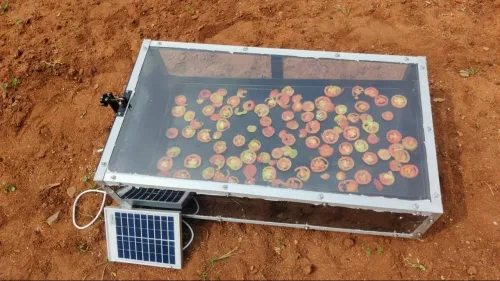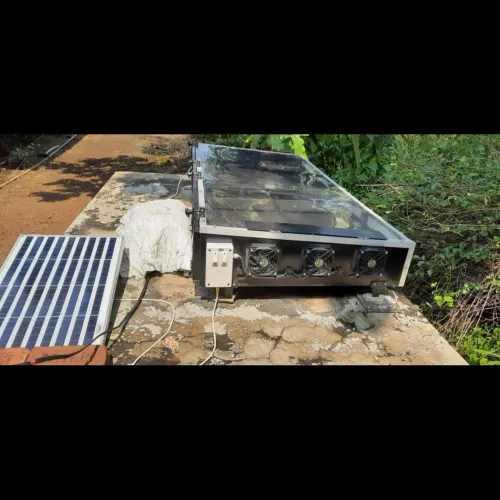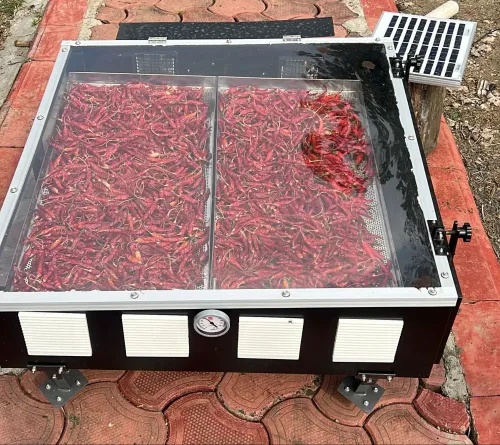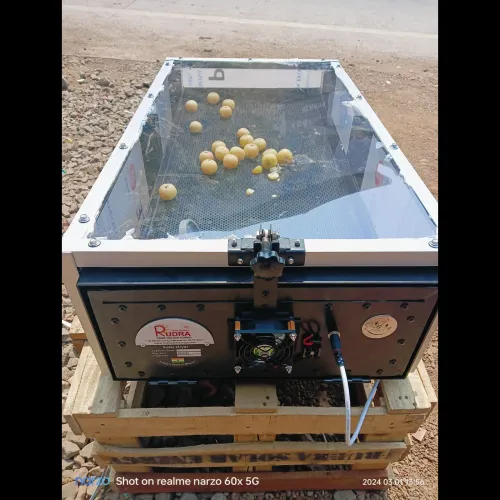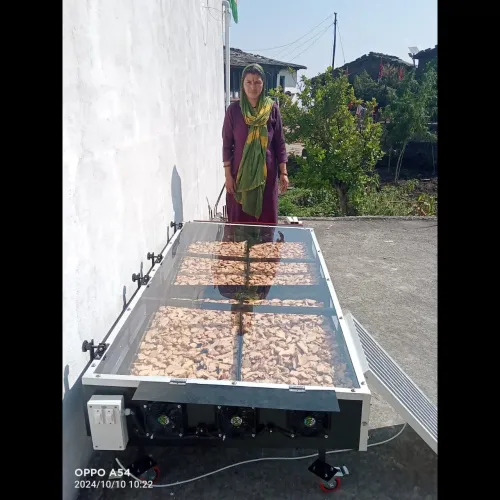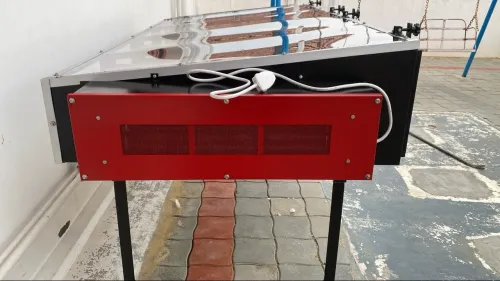
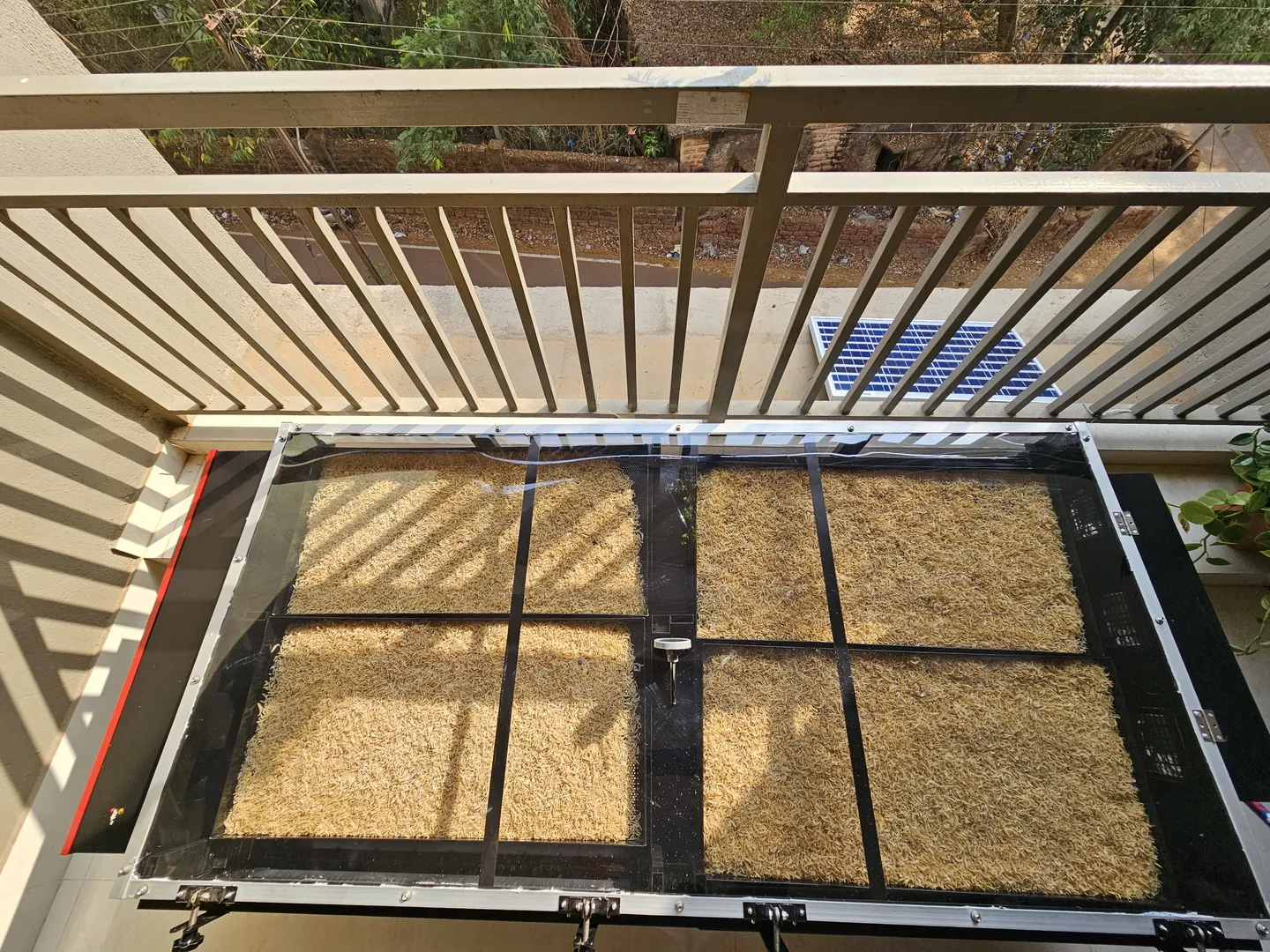
Rampur has a strong agricultural base with paddy, wheat, sugarcane, urd, bajra and other crops grown across the district, while Mentha is also officially listed among Rampur’s ODOP products. The district agriculture department highlights paddy and wheat as major crops, alongside urd and other farm produce, making Rampur relevant for both primary agriculture and value-added processing. For farmers, FPOs, SHGs, mentha growers, seed handlers and agro-processors, an enclosed solar dryer can support controlled moisture reduction for suitable herbs, grains, pulses, vegetables, seeds and other agricultural materials while reducing direct exposure to dust, insects, birds and uncontrolled outdoor conditions.
1. Which products can be dried using a solar dryer in Rampur?
A solar dryer in Rampur can be used for suitable agricultural and processing applications where controlled moisture reduction is required.
Relevant applications can include:
- Mentha leaves and other suitable herbs
- Paddy and selected grain applications
- Wheat and cereals
- Urd and other pulses
- Mustard and suitable oilseeds
- Selected vegetables
- Seeds
- Other suitable agricultural produce
The drying process should always be selected according to the commodity, initial moisture, target moisture, preparation, tray loading, airflow and intended end use.
2. Why is mentha an important solar drying application for Rampur?
Mentha is especially relevant because it is officially identified as one of Rampur’s ODOP products.
For suitable mentha and aromatic-leaf applications, controlled drying can help reduce moisture before storage or further processing. Leafy and aromatic materials can be temperature-sensitive, so airflow, loading depth and operating temperature should be selected carefully rather than using aggressive heating.
An enclosed chamber also helps protect the material from direct outdoor contamination during drying.
3. Can a solar dryer be used for paddy and wheat in Rampur?
Yes. Rampur’s agriculture department identifies both paddy and wheat as major district crops, with paddy concentrated especially in areas such as Bilaspur, Swar, Milak and Shahabad, while wheat is cultivated widely across the district.
For grain applications, solar drying can support controlled moisture reduction before storage or further handling.
Important factors include:
- Initial grain moisture
- Required final moisture
- Layer depth
- Batch quantity
- Airflow
- Relative humidity
- Solar radiation
- Intended storage or processing use
There should not be one universal drying time for all grain batches.
4. Is solar drying suitable for urd and other pulses in Rampur?
Yes. Urd is one of the pulse crops specifically documented by Rampur’s agriculture department.
A solar dryer can support suitable pulse-drying applications when additional moisture reduction is required after harvesting or processing. Controlled airflow and proper tray loading can help improve consistency across the batch.
If pulses are intended for seed use, drying conditions should be more conservative because excessive heat can affect seed viability.
5. Can a solar dryer be used for sugarcane-related applications in Rampur?
Rampur has a significant sugarcane-growing context, and the district administration provides dedicated guidance on sugarcane cultivation.
However, fresh sugarcane itself is not a typical direct solar-drying commodity.
Solar drying is more relevant for suitable agricultural materials associated with farm and food-processing activities, such as herbs, seeds, grains, pulses, vegetables and selected processed products where controlled moisture reduction is actually required.
This distinction is important to keep the application technically accurate.
6. How can vegetable growers and small processors in Rampur use solar drying?
Selected vegetables can be dried for further processing into flakes, slices, powders or ingredients depending on the commodity and intended market.
Preparation may include:
- Washing
- Peeling
- Cutting or slicing
- Blanching where appropriate
- Controlled tray loading
Slice thickness, layer depth, initial moisture and airflow all influence drying performance.
An enclosed dryer can be useful for SHGs, FPOs and small processors looking for a more protected drying environment than direct open sun exposure.
7. Why is controlled airflow important in Rampur solar drying applications?
Controlled airflow helps move moisture-laden air away from the product and distribute drying air through the loaded chamber.
This can help:
- Improve moisture removal
- Reduce uneven drying between trays
- Support more consistent batch handling
- Reduce dependence on natural wind conditions
The required airflow depends on the product, tray loading, moisture level, chamber design and local weather.
For leafy materials such as mentha, airflow and temperature should be managed carefully because product quality may be sensitive to excessive heat.
8. Who can use a commercial solar dryer in Rampur?
Potential users include:
- Farmers
- Mentha growers
- FPOs
- SHGs
- Cooperatives
- Grain and pulse handlers
- Seed processors
- Herbal processors
- Vegetable processors
- Agro-processing MSMEs
- Rural entrepreneurs
Rudra Solar Energy provides enclosed solar drying solutions with controlled airflow and multiple capacity options for suitable agricultural, herbal and food-processing applications.
Keywords