Mainpuri’s agricultural economy includes potato, garlic, onion, tomato, peas and other seasonal crops with strong potential for local food processing and value addition. Farmers and processors around Mainpuri Sadar, Bhogaon, Kurawali, Karhal, Bewar and nearby production areas may need practical ways to manage suitable surplus produce during concentrated harvesting periods. A properly selected Solar Dryer in Mainpuri can help farmers, FPOs, SHGs and food-processing businesses dry prepared agricultural produce inside a more protected chamber. Reliable results, however, require sound raw material, commodity-specific preparation, correct tray loading, adequate airflow, moisture monitoring and suitable packaging.
Q1. Why is a Solar Dryer in Mainpuri useful for farmers and food processors?
Mainpuri produces commodities with different post-harvest requirements. Potato, garlic, onion, tomato and peas cannot all be stored or processed using one common method, but suitable portions of these crops can be developed into value-added dried products when the process is planned correctly.
During peak harvesting periods, larger quantities of fresh produce may reach the market within a short time. Fresh-market sale should remain the first option for produce that meets buyer requirements. However, sound surplus, small-sized or cosmetically imperfect produce may be evaluated for processing instead of being immediately rejected.
Traditional open-air drying can expose prepared food to dust, insects, birds, animals and uncontrolled handling. Uneven sunlight and airflow may also cause some pieces to dry faster than others.
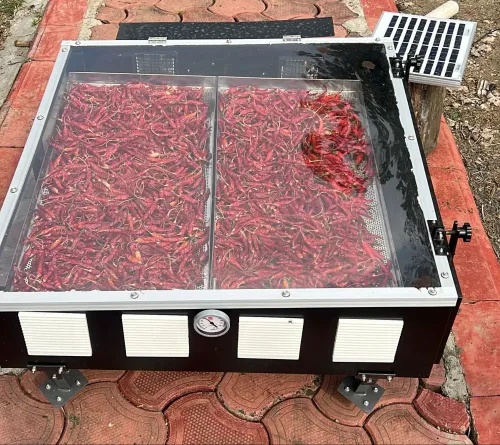
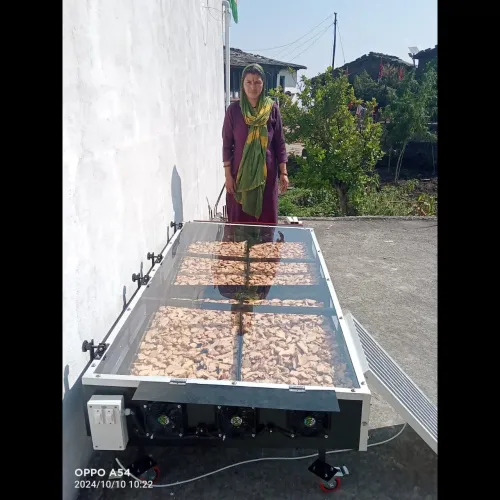
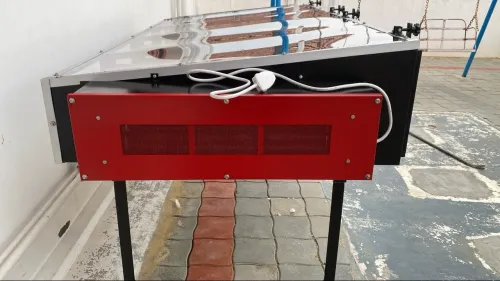
A Solar Dryer in Mainpuri provides a more organised processing environment. The prepared product remains on food-contact trays inside an enclosed chamber while heated air and designed airflow remove moisture. This can support improved hygiene control and better batch consistency when the dryer is operated correctly.
A solar dryer cannot make spoiled produce safe. Rotten, mouldy, fermented, diseased or contaminated raw material must always be rejected before processing.
Q2. Which crops can be processed using a solar dryer in Mainpuri?
Mainpuri’s relevant solar-drying opportunities include selected products made from garlic, potato, onion, tomato, peas and suitable leafy or culinary ingredients.
Possible applications include:
- Dehydrated garlic slices
- Garlic flakes
- Dried garlic for further milling
- Prepared and blanched potato slices or cubes
- Dried onion slices and flakes
- Tomato slices
- Dried tomato material for further grinding
- Green peas after suitable preparation
- Selected leafy vegetables
- Culinary herbs
- Vegetable mixtures for soups and ready-to-cook products
The intended finished product should be decided before processing begins. Garlic intended for flakes may require a different slice thickness from garlic intended for powder. Similarly, dried tomato pieces and tomato powder involve different finishing and milling steps.
Not every locally available crop should automatically be dried. The processor should first evaluate raw-material cost, preparation labour, drying behaviour, required quality, packaging and realistic buyer demand.
Small trial batches should be completed before regular production. Colour, aroma, texture, final moisture, rehydration behaviour and storage stability should be evaluated for every product.
Q3. How should garlic be prepared for drying in a Solar Dryer?
Garlic is an important processing opportunity for Mainpuri, but garlic curing and garlic dehydration are two different processes.
Freshly harvested garlic normally requires suitable curing and handling before storage or further processing. A solar dryer should not automatically be treated as a replacement for every traditional curing step.
For dehydrated garlic products, the general processing sequence may include:
- Selection of mature and sound garlic bulbs
- Removal of damaged, mouldy or diseased cloves
- Cleaning and peeling
- Cutting into reasonably uniform slices
- Even loading on clean food-contact trays
- Drying with adequate airflow
- Cooling under hygienic conditions
- Moisture-resistant packaging or further milling
Garlic slices should not be piled deeply on the tray. Excessive overlap can block airflow and leave moist areas within the batch. Pieces of widely different thicknesses may also dry unevenly.
Garlic aroma and colour can be affected by excessive product temperature or prolonged exposure. Operators should monitor the product instead of depending on one universal drying time or temperature.
When garlic powder is the intended product, drying is only one stage. The dried garlic must be properly cooled and evaluated before milling. Grinding, particle size, hygiene and moisture-resistant packaging require separate attention.
Q4. How can potato, onion, tomato and peas be processed in a solar dryer?
Potato has useful processing potential, but raw potato pieces should not simply be cut and placed inside a dryer without a defined preparation method. Depending on the intended product, potatoes may require washing, peeling, uniform cutting, blanching and a suitable food-safe anti-browning process.
Prepared pieces should be drained before tray loading. Excess surface water increases the moisture that must be removed. Solar-dried potato slices or cubes should not be confused with industrial potato flakes, which require a different manufacturing system.
Onions can be processed into dried slices or flakes after sorting, peeling and uniform cutting. Strong-smelling commodities such as onion and garlic should normally be processed separately from mild-flavoured products. Trays and the chamber should be cleaned properly between batches.
Tomatoes contain substantial moisture and should be cut into moderately uniform slices. Very thick pieces may dry slowly, while excessively thin slices may stick to trays or become more brittle than required. Heavy overlap should be avoided.
Green peas generally require suitable blanching or another validated preparation step before drying. The exact process should match the desired final product.
Garlic, potato, onion, tomato and peas release moisture differently. Therefore, they cannot be assigned one identical preparation method, tray loading or drying duration.
Q5. How does an enclosed solar dryer work?
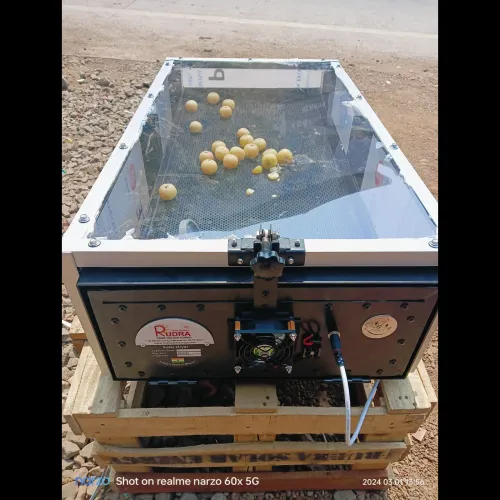
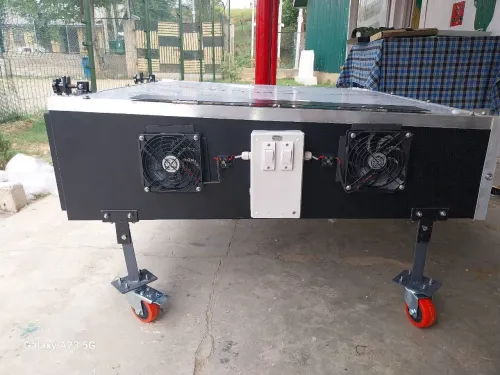
A solar dryer uses solar energy to heat the air required for moisture removal. Depending on the design, solar-powered DC fans support airflow through the drying chamber.
The general process includes:
- Solar energy raises the temperature of the drying air.
- Heated air moves through the loaded chamber.
- Moisture evaporates from the prepared product.
- Moist air exits through the designed outlet.
- Continued airflow progressively reduces product moisture.
In open-air drying, prepared food remains directly exposed to the surrounding environment. Inside an enclosed solar dryer, the product stays on trays within a protected chamber. This reduces direct exposure to windblown dust, insects, birds and animals.
The chamber does not eliminate the need for hygienic processing. Raw material must still be sorted and cleaned, workers must follow safe handling practices, trays must be washed, and the dried product must be cooled and packed correctly.
A Solar Dryer in Mainpuri should not be treated as an instant oven. Its performance depends on solar radiation, ambient temperature, humidity, initial product moisture, slice thickness, tray loading and airflow.
Q6. What operating practices are important when using a Solar Dryer in Mainpuri?
Mainpuri experiences hot periods as well as seasonal rainfall and humidity changes. High daytime temperatures do not mean every product will dry correctly without monitoring. Excessive product temperature may affect garlic aroma, vegetable colour or final texture, while humid conditions may slow moisture removal.
The dryer should be installed where it receives useful solar exposure without unnecessary shading during important operating hours. Air inlets, outlets and fan areas must remain clear.
Important operating practices include:
- Select only sound raw material
- Follow a product-specific preparation method
- Maintain reasonably uniform slice thickness
- Arrange food in a thin and even layer
- Avoid blocking the airflow path
- Do not exceed usable tray capacity
- Record batch and weather observations
- Check pieces from different tray positions
- Clean food-contact surfaces between batches
- Cool dried products before packaging
- Use suitable moisture-resistant packaging
Batch records should cover the commodity, fresh input weight, preparation method, slice thickness, tray loading, weather conditions, process observations and packed output.
The endpoint should be based on the product’s required final condition and validated moisture level, not only on the number of hours spent inside the dryer.
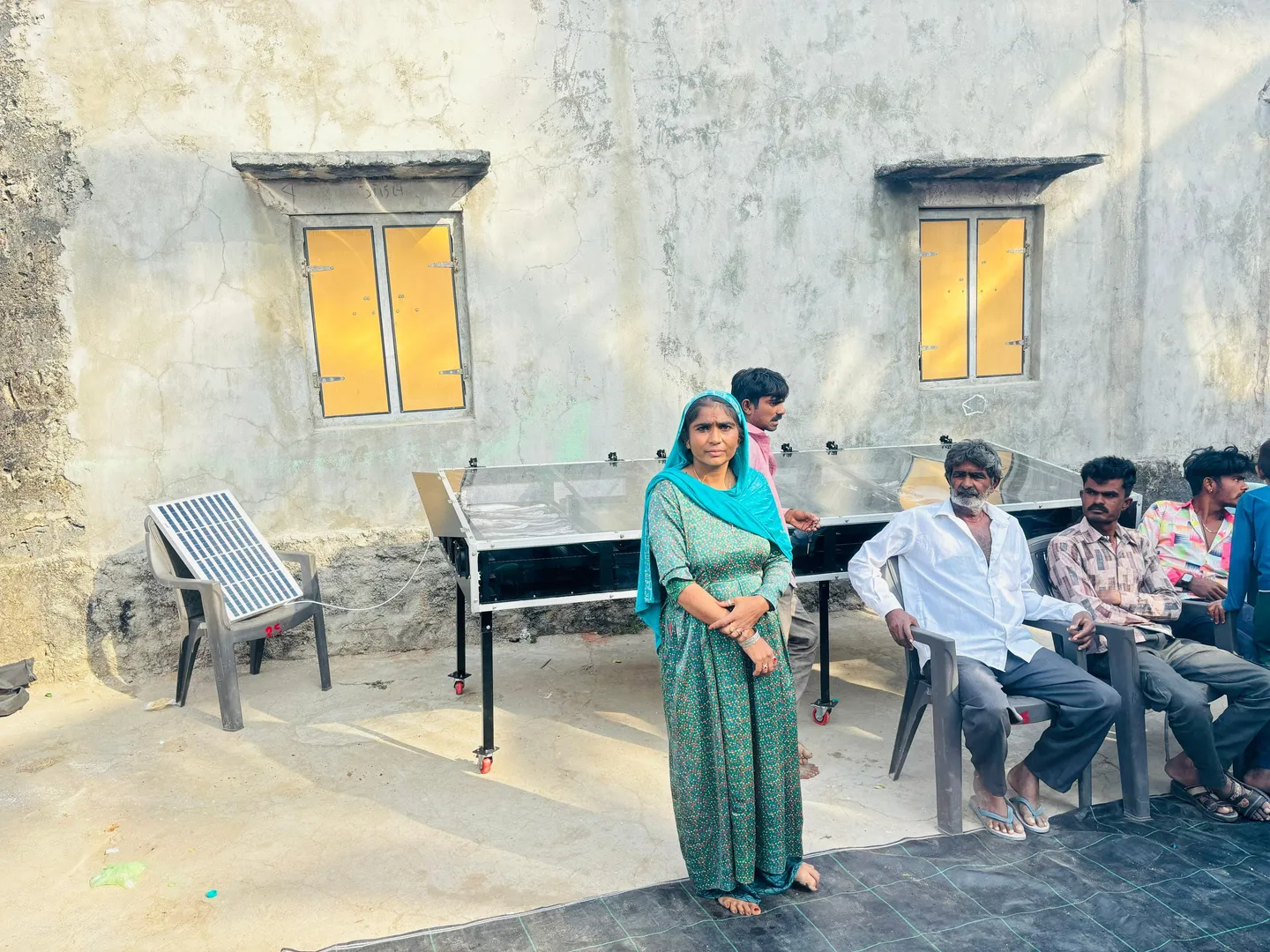
Q7. Who can use a solar dryer in Mainpuri, and how should capacity be selected?
A solar dryer may be considered by:
- Individual farmers
- Farmer Producer Organisations
- Cooperatives
- Self-help groups
- Women-led processing enterprises
- Rural entrepreneurs
- MSME food-processing units
- Garlic processors
- Spice-processing businesses
- Vegetable-processing businesses
Capacity should be selected according to the weight and volume of fresh input that must be processed per batch. It should not be selected according to the expected dried output because part of the fresh-product weight is removed as moisture.
Before choosing a system, the buyer should evaluate:
- Peak fresh produce available per day
- Main commodity and intended final product
- Whole, peeled, sliced or blanched input
- Required tray area
- Available preparation labour
- Number of processing days
- Packaging and storage capacity
- Available installation space
- Local weather conditions
- Current buyer demand
- Future expansion plans
A garlic processor may need a different tray-loading plan from a processor handling high-moisture tomato or blanched potato. Usable tray area and product thickness matter alongside the stated kilogram capacity.
The enterprise should also confirm raw-material supply, preparation expenses, packaging, food compliance and realistic market demand. A solar dryer supports processing but cannot guarantee sales, profit or a fixed selling price.
Q8. Why can a Rudra Solar Dryer be considered for Mainpuri?
Rudra Solar Energy provides solar drying solutions for fruits, vegetables, spices, herbs and other suitable agricultural commodities. Depending on the selected model and configuration, a Rudra Solar Dryer may include:
- An enclosed drying chamber
- Solar-powered DC airflow
- Food-contact drying trays
- UV-protected construction material
- Different capacity options
- Customised configurations
- Optional hybrid support where technically required
For Mainpuri, the system can be evaluated for garlic slices and flakes, prepared potato products, onion slices, tomato, peas and other suitable vegetables. Every new product should first undergo a controlled trial to establish its preparation, loading, drying and packaging requirements.
Rudra Solar Energy can assist farmers, FPOs, SHGs and food-processing enterprises in selecting a Solar Dryer in Mainpuri according to actual fresh-input quantity, commodity, available labour and intended finished product.
To identify a suitable Rudra Solar Dryer, share your main commodity, fresh batch size, preparation method, installation location and required final product with Rudra Solar Energy.
Keywords