Commercial Solar Dryer in Lalitpur for Agricultural Value Addition
A solar dryer in Lalitpur can support farmers, pulse and oilseed growers, FPOs, self-help groups, seed producers and food-processing enterprises seeking protected moisture removal for suitable agricultural commodities.
Lalitpur is situated in the Bundelkhand region of Uttar Pradesh and has both rainfed and irrigated farming areas. The district’s agricultural profile includes black gram or urad, field pea, chickpea, lentil, mung bean, wheat, maize, sesame, soybean, groundnut, mustard and sorghum. Local agricultural institutions have also identified tomato, onion, vegetables, guava, aonla, turmeric and post-harvest value addition as relevant district activities.
This diverse crop base creates potential applications for solar drying in pulses, oilseeds, seeds, onion, tomato, turmeric, fruits, vegetables and other suitable produce. However, every commodity requires a separate process because bulk pulses, high-oil seeds and sliced vegetables do not share the same temperature, airflow or loading requirements.
Why Is Protected Solar Drying Relevant to Lalitpur?
Open drying leaves harvested material exposed to dust, insects, birds, animals, sudden rain and uncontrolled handling. Pulses or seeds spread in thick layers may also dry unevenly, while sliced vegetables can become contaminated or discoloured when left unprotected.
A commercial solar dryer captures useful solar heat and moves air through an enclosed drying chamber. This offers better protection and process control than drying material directly on roads, rooftops, open courtyards or tarpaulins.
The purpose is not simply to make a product feel dry. Drying should reduce moisture to a level suitable for the intended storage, milling, packaging, seed or food-processing application.
A solar dryer cannot restore mouldy, fermented or severely damaged produce. Proper harvesting, sorting, cleaning and timely loading remain essential.
Solar Drying of Black Gram and Other Pulses
Lalitpur has significant cultivation of black gram, along with field pea, chickpea, lentil and mung bean. These pulses may require moisture reduction after harvest before storage, grading, seed use or milling.
Rain or high humidity around harvesting can delay field drying and increase the risk of uneven moisture. A properly designed solar drying system can support protected drying, but airflow must move consistently through the loaded material.
Important pulse-drying factors include:
- Initial moisture after harvesting
- Intended food, seed or milling use
- Depth of material on the tray
- Quantity loaded per batch
- Airflow resistance
- Required final moisture
- Expected storage duration
- Risk of mould or insect activity
- Need to preserve seed germination
Pulses should not be loaded in excessively deep layers inside a standard tray dryer. The upper surface may appear dry while material deeper in the layer retains moisture.
For bulk quantities, a specialised solar-assisted grain or pulse drying configuration may be more appropriate than a small cabinet dryer. System selection should depend on usable tray area, grain depth and airflow—not only the stated kilogram capacity.
Can Rain-Affected Pulses Be Dried?
Pulses exposed to unexpected rain may be considered for prompt moisture reduction if the material remains sound and suitable for processing. It should first be inspected for germination, fungal growth, off-odour, discolouration or other damage.
Drying can remove excess moisture, but it cannot reverse microbial deterioration or restore damaged grain. Material intended for seed should also be assessed for germination and vigour after drying.
The processor should establish a safe final-moisture target based on the pulse, intended use, packaging and storage period.
Solar Drying Applications for Sesame, Soybean and Groundnut
Sesame, soybean, groundnut and mustard are important oilseed applications relevant to Lalitpur. Moisture management before storage or oil extraction can help protect the harvested material, but oilseeds require careful temperature control.
Excessive heat may affect:
- Seed germination
- Oil quality
- Flavour and aroma
- Kernel condition
- Processing performance
- Storage stability
Oilseeds should therefore not be exposed to uncontrolled maximum chamber temperature. The drying process should use adequate airflow and a temperature suitable for the intended use.
Material kept for sowing may require different conditions from material intended for oil extraction or food processing. Groundnut pods, shelled kernels and crushed material also have different drying behaviour and should not be treated as one product.
Before storage, oilseeds should be cooled and checked for residual moisture. Warm material packed immediately may create condensation and quality problems.
Onion Drying and Value Addition in Lalitpur
Lalitpur’s local agricultural work includes kharif onion cultivation, creating an opportunity to explore onion dehydration where suitable raw material and market demand are available.
Fresh onions can be processed into:
- Dried onion slices
- Onion flakes
- Dried onion granules
- Onion powder after drying and milling
- Ingredients for seasoning and processed-food products
Onion dehydration is different from normal bulb curing. Curing dries the outer neck and skin to prepare whole bulbs for storage. Dehydration involves peeling, preparing and drying onion pieces for a low-moisture processed product.
For dehydration, onions should be sound, graded, peeled and cut uniformly. Slice thickness directly affects drying time and final texture. Thick and thin slices should not be mixed within the same batch.
Onion has a strong aroma, so trays and the chamber require appropriate cleaning before another sensitive commodity is processed. Onion should not be dried simultaneously with fruits, herbs or products that may absorb its odour.
Tomato Drying and Food Processing
Tomato is another locally demonstrated value-addition opportunity in Lalitpur. Because fresh tomato contains high moisture and can deteriorate quickly, processing should begin with sound raw material and hygienic preparation.
Possible products include:
- Dried tomato slices
- Tomato flakes
- Dried material for powder
- Ingredients for soup or seasoning mixes
- Prepared tomato pieces for further processing
Tomatoes should be washed, graded and cut uniformly. Excessively ripe, leaking, mouldy or fermented tomatoes should be rejected.
Tomato pieces can stick to unsuitable surfaces, so tray material or food-grade liners should match the process. Puree-based sheets require controlled depth and a separately validated procedure; they should not be dried using the assumptions applied to slices.
After drying, the tomato should be cooled before milling or packaging. Grinding material containing residual moisture may lead to poor powder flow, clumping and reduced storage stability.
Can Turmeric, Guava and Aonla Be Solar Dried?
KVK Lalitpur identifies turmeric in the Talbehat area and includes guava and aonla within its local horticultural thrust activities. These commodities can create additional solar drying opportunities where adequate raw material and buyer demand exist.
Turmeric generally requires suitable curing and preparation before drying. Whole fingers and sliced turmeric may require different drying conditions.
Guava and aonla may be processed as slices, pieces or powder ingredients after appropriate preparation. Their acidity, texture, slice thickness and pretreatment requirements should be considered separately.
Fruit with internal spoilage or fungal damage should not be accepted merely because the material will be dried.
How Does Bundelkhand’s Weather Affect Solar Drying?
Lalitpur experiences hot summer conditions followed by a more humid monsoon period. Strong summer heat may accelerate surface drying, but excessive product temperature can damage vegetables, fruits, seeds and herbs.
During monsoon conditions, higher humidity reduces the air’s ability to carry moisture away from the product. A chamber may become warm while final-stage drying remains slow.
Processors should manage these seasonal differences by:
- Adjusting fresh load according to the weather
- Using uniform product thickness
- Avoiding thick or compact tray layers
- Maintaining clear air inlets and outlets
- Monitoring upper and lower trays
- Preventing excessive product temperature
- Checking for internal moisture before unloading
- Protecting partly dried material from overnight humidity
- Considering hybrid assistance where production continuity is required
Solar-only drying may suit flexible seasonal processing. A solar-hybrid configuration may be considered for monsoon batches, cloudy weather or enterprises requiring more predictable completion.
How Long Does Solar Drying Take in Lalitpur?
There is no fixed drying time for pulses, oilseeds, onion, tomato or turmeric. Drying duration changes with:
- Commodity and variety
- Initial and target moisture
- Food or seed use
- Product thickness
- Preparation or pretreatment
- Tray-loading density
- Airflow through the chamber
- Temperature and humidity
- Available solar radiation
- Solar-only or hybrid operation
A process that works for onion slices cannot be transferred directly to black gram or sesame. Commercial users should conduct product trials and maintain batch records for each commodity.
Useful records include fresh input weight, preparation, tray loading, operating temperature, weather, drying duration, final weight and product condition.
What Temperature Should Be Used?
The correct drying temperature depends on the product and its intended use. High temperature is not automatically better.
Excessive temperature can:
- Affect germination in seed material
- Reduce oilseed quality
- Darken onion or tomato
- Damage fruit colour and texture
- Reduce aroma in herbs
- Cause uneven surface hardening
Drying should balance suitable heat with effective airflow. Temperature readings should be evaluated together with product condition, humidity and actual moisture reduction.
How Should Solar Dryer Capacity Be Selected?
Capacity should be selected according to the fresh or harvested material available per batch and the tray area required by that commodity.
Onion and tomato slices require a comparatively thin, spread-out layer. Pulses and oilseeds can carry more weight on the same tray but create greater resistance to airflow when loaded deeply.
Before selecting capacity, determine:
- Main commodity
- Fresh kilograms per batch
- Food, seed or milling application
- Loading depth and required tray area
- Seasonal availability
- Expected number of batches
- Required final moisture
- Solar-only or hybrid operation
- Space for cleaning, cutting, cooling and packaging
- Market demand for the final product
A single capacity figure does not describe how much onion, tomato, pulses and oilseeds the dryer can process. Practical capacity changes with density, layer thickness, airflow and drying duration.
What Is the Price of a Solar Dryer in Lalitpur?
Solar dryer price depends on the required capacity, usable tray area, chamber construction, tray material, forced-air system, solar-only or hybrid configuration, monitoring features, transportation and installation requirements.
Buyers should compare:
- Recommended fresh load for their commodity
- Total usable tray area
- Tray size and material
- Airflow distribution
- Solar and hybrid operating modes
- Cleaning requirements
- Suitability for food or seed applications
- Technical guidance and after-sales support
For an accurate quotation, the buyer should share the commodity, fresh batch quantity, loading method, processing season and required final product.
Cooling, Packaging and Storage
Drying is not complete until the product has been cooled and packed correctly.
Warm dried material should not be sealed immediately because trapped heat may cause condensation. The product should be cooled under clean and protected conditions without allowing it to remain exposed to humid air for an extended period.
Pulses, oilseeds and seeds require storage appropriate to their final moisture and intended use. Dried onion and tomato need packaging that limits moisture entry and protects product quality.
Any commercial food product must also meet applicable hygiene, labelling, packaging and food-safety requirements.
Who Can Use a Commercial Solar Dryer in Lalitpur?
Potential users include:
- Black gram and pulse growers
- Sesame, soybean and groundnut producers
- Onion and tomato farmers
- Seed-production groups
- Farmer Producer Organisations
- Women’s Self-Help Groups
- Grain and pulse processors
- Food-processing MSMEs
- Rural entrepreneurs
- Horticulture growers
- Training and livelihood institutions
- Organisations working on post-harvest management
The correct product and configuration will differ for every user. A seed producer must prioritise germination, while a food processor may focus on colour, flavour, milling and packaging quality.
Rudra Solar Dryer Solutions for Lalitpur
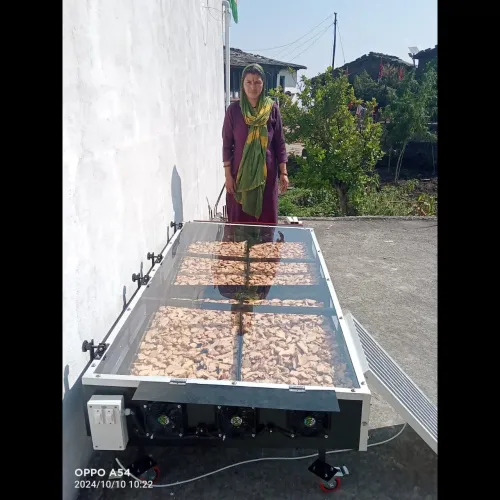
Rudra Solar Energy Pvt. Ltd. manufactures commercial solar dryers in multiple and custom capacities for fruits, vegetables, spices, herbs, grains, pulses, seeds, oilseeds and other suitable agricultural applications.
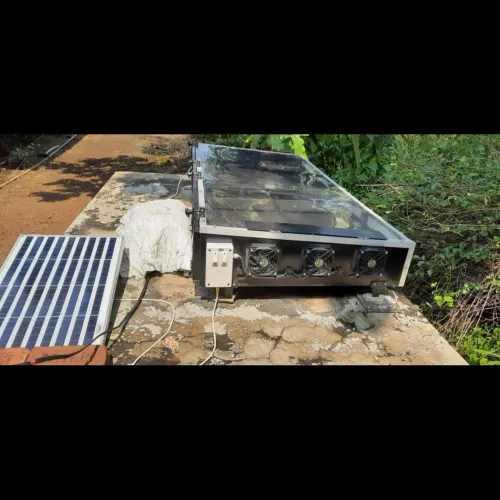
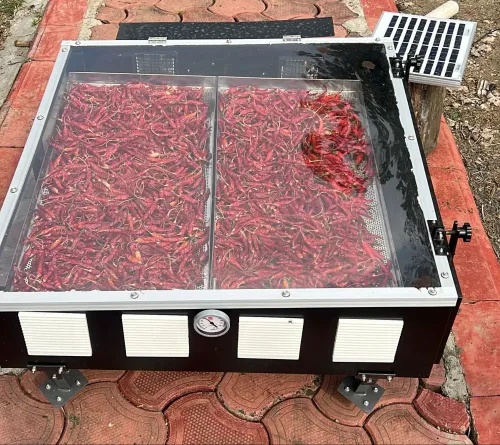
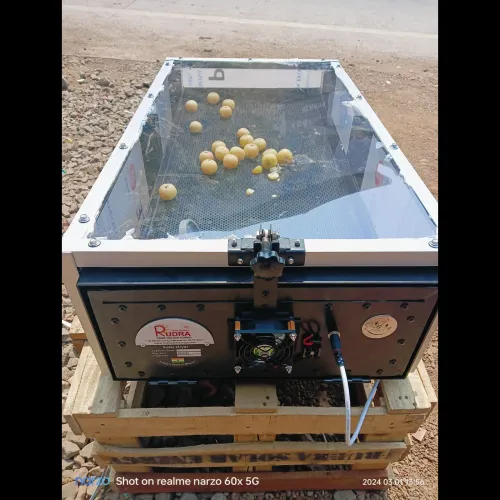
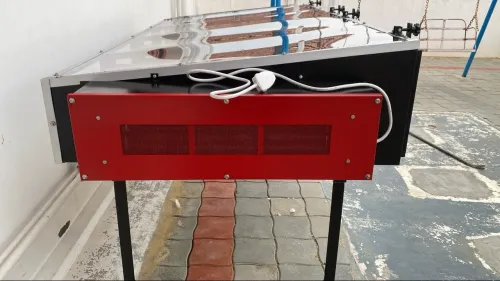
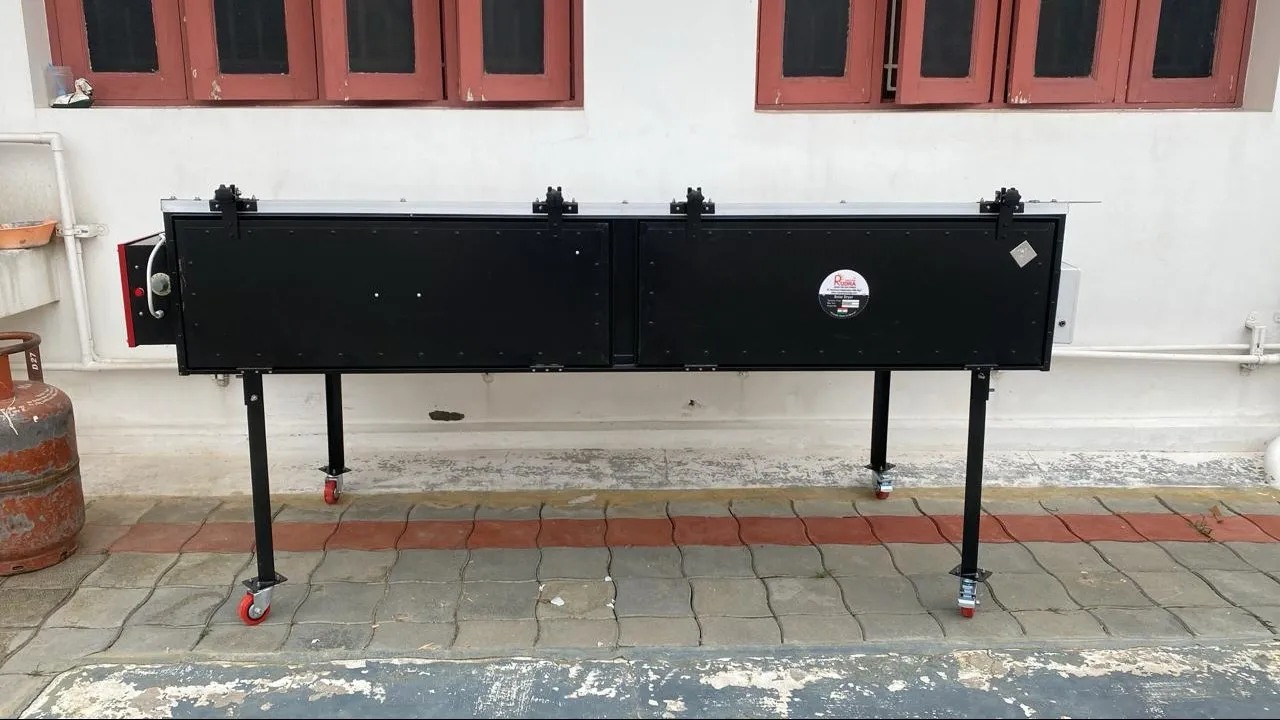
Depending on the selected configuration, a Rudra Solar Dryer can include an enclosed chamber, solar-powered forced airflow, UV-protected polycarbonate covering, suitable food-contact trays and solar-only or optional hybrid operation.
For a Lalitpur project, capacity and configuration should be selected after evaluating the commodity, prepared load, tray area, loading depth, airflow, operating season and intended final product.
Farmers, FPOs, SHGs, seed producers and food-processing enterprises can share their commodity, fresh batch quantity, expected processing frequency and final product with Rudra Solar Energy for a suitable technical discussion.
Keywords