Commercial Solar Dryer in Lakhimpur Kheri for Agro-Processing
A solar dryer in Lakhimpur Kheri can support farmers, jaggery processors, FPOs, self-help groups, rural entrepreneurs and food-processing MSMEs seeking protected moisture removal for suitable agricultural products.
Lakhimpur Kheri is Uttar Pradesh’s largest district by area and has a strong agriculture-based economy. Sugarcane cultivation and processing form an important part of the district’s economic base, while wheat, rice, maize, barley, pulses, oilseeds and menthol mint are also associated with local agriculture. Jaggery is officially recognised as one of the district’s One District One Product categories.
This combination creates opportunities for controlled drying and moisture management in jaggery powder, mint leaves, grains, pulses, oilseeds, spices and suitable seasonal farm produce. Each application requires a separate operating procedure because high-sugar jaggery, aromatic mint and bulk grains behave very differently during drying.
Why Is Protected Solar Drying Relevant to Lakhimpur Kheri?
Traditional open drying exposes agricultural material directly to dust, insects, birds, uncontrolled handling, sudden rainfall and changing atmospheric humidity. Products can also dry unevenly when they are spread in thick layers or when air cannot move properly through the material.
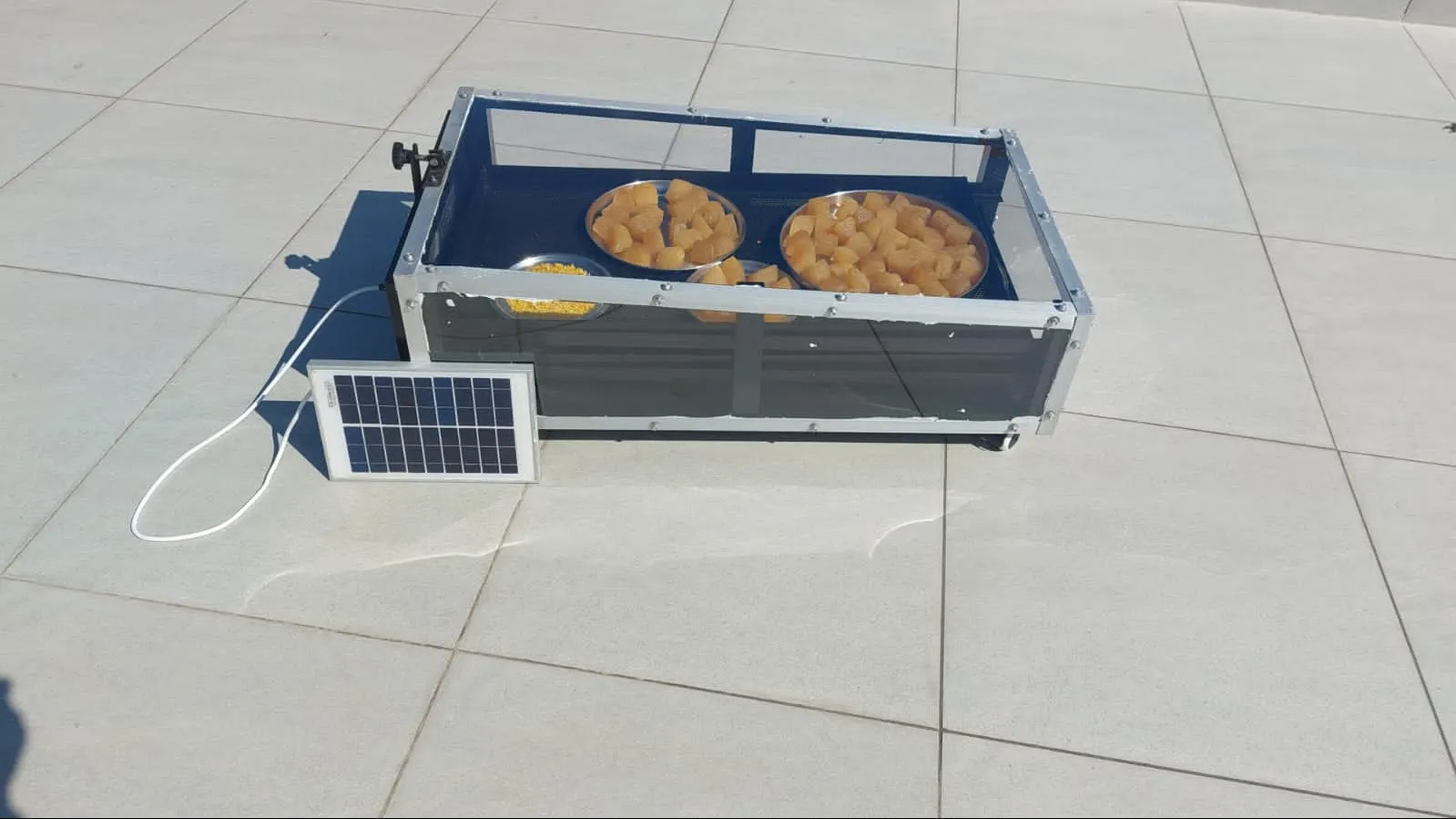
A commercial solar dryer uses solar thermal energy and managed airflow inside an enclosed chamber. This offers better physical protection and process organisation than drying produce on roadsides, rooftops, open yards or tarpaulins.
Solar drying does not automatically make a product safe or marketable. Raw-material quality, preparation, tray hygiene, loading, temperature, airflow, final moisture, cooling and packaging must all be controlled according to the commodity and its intended use.
How Can Solar Drying Support Lakhimpur Kheri’s Jaggery Sector?
Jaggery production begins with sugarcane crushing, juice clarification, boiling and concentration. A solar dryer does not replace these principal jaggery-manufacturing stages.
However, carefully controlled drying may support selected post-processing applications such as moisture conditioning of suitable jaggery granules, jaggery powder or specially prepared value-added jaggery products. The exact process must be developed according to the product’s composition, initial moisture, particle size and packaging requirement.
Jaggery is sensitive to humidity and can absorb moisture from the surrounding air. Excess moisture may contribute to softening, stickiness, lump formation or reduced storage stability. At the same time, excessive product temperature can cause jaggery to soften, melt, stick to trays, darken or develop undesirable changes.
Therefore, jaggery requires:
- Controlled and moderate product temperature
- Consistent airflow rather than extreme heat
- Shallow and uniform product loading
- Food-contact surfaces suitable for sticky products
- Hygienic handling before and after drying
- Verification of final moisture
- Complete cooling before packaging
- Moisture-resistant packaging and dry storage
A standard fruit- or vegetable-drying schedule should not be copied for jaggery. Initial trials and product-quality checks are necessary before routine commercial processing.
Can Jaggery Powder Be Processed in a Solar Dryer?
Prepared jaggery powder or granules may be considered for controlled moisture conditioning where the process and equipment are suitable. Powder should be loaded uniformly without creating thick, compacted layers that prevent airflow.
Because jaggery can soften when heated, the operator should monitor product behaviour rather than focusing only on chamber temperature. Drying should stop at the validated endpoint, and the product should be cooled under clean, low-humidity conditions.
Grinding or packing warm jaggery can create operational problems. The final powder should be assessed for moisture, flow, lump formation and packaging compatibility before commercial sale.
Solar Drying Applications for Mint in Lakhimpur Kheri
The Terai environment of Lakhimpur Kheri supports menthol mint cultivation. Where mint is intended for dried culinary, herbal or ingredient use, protected solar drying can help manage colour, aroma and cleanliness.
Mint leaves are delicate and should generally be:
- Harvested and handled carefully
- Separated from damaged or decaying material
- Cleaned using an appropriate procedure
- Drained before loading
- Spread in a thin and uniform layer
- Dried with controlled airflow
- Protected from excessive product temperature
- Cooled before packaging
High temperature may reduce colour and volatile aroma compounds. Mint drying should therefore prioritise rapid moisture removal at a suitable product temperature rather than maximum heat.
Mint grown for menthol oil extraction follows a distillation process. A solar dryer does not replace the distillation unit. Drying should be considered only when the intended product is dried mint or another validated low-moisture ingredient.
Can Paddy, Wheat, Maize and Pulses Be Solar Dried?
Paddy, wheat, maize, barley and pulses may require moisture reduction before safe storage or further processing. However, grain drying is different from drying sliced fruits, vegetables or herbs.
The required system depends on:
- Quantity of grain per batch
- Initial harvest moisture
- Required storage moisture
- Grain depth
- Airflow resistance
- Intended storage period
- Seed or food use
- Risk of fungal growth or insect activity
- Required processing speed
A small cabinet or tray dryer may be suitable for limited or higher-value batches, but it may not be economical for large volumes of commodity grain. Bulk quantities may require a dedicated solar-assisted grain-drying configuration with appropriate airflow distribution.
The safe final moisture target must be determined for the specific grain and storage conditions. Surface dryness alone cannot confirm that the entire batch is ready for storage.
Solar Drying of Oilseeds and Other Farm Produce
Oilseeds are among the important non-food crops associated with Lakhimpur Kheri. Where harvested oilseeds require further moisture reduction, drying must be carried out at an appropriate temperature.
Excessive heat can affect seed quality, germination where seed use is intended, or the quality of oil obtained during processing. Oilseeds should therefore not be dried using an uncontrolled high-temperature schedule.
The district may also have opportunities for suitable vegetables, fruits, chilli, herbs and other seasonal produce. Each commodity requires separate preparation, tray loading and final-moisture criteria.
Products with strong aromas, different hygiene risks or conflicting temperature requirements should not be mixed in the same batch.
How Does the Terai Climate Affect Solar Drying?
Lakhimpur Kheri lies in the Terai region near the Nepal border. The district receives most of its rainfall during the monsoon months, while fog is common during winter.
High humidity reduces the surrounding air’s ability to accept additional moisture from the product. During cloudy, rainy or foggy conditions, the drying chamber may still become warm, but final-stage moisture removal can remain slow.
Processors may need to:
- Reduce tray loading during humid conditions
- Use thinner and more uniform product layers
- Maintain adequate space for airflow
- Keep air inlets and exhaust outlets clear
- Avoid loading material that is dripping wet
- Monitor products on upper and lower trays
- Prevent partly dried material from remaining exposed overnight
- Check for moisture reabsorption before packaging
- Consider hybrid assistance for regular production
Solar-only operation may be suitable for processors with flexible schedules. A solar-hybrid dryer may be evaluated for monsoon processing, cloudy periods or businesses that require more consistent batch completion.
What Determines Drying Time?
There is no single drying time for jaggery, mint, grains, pulses or oilseeds. Drying duration changes according to:
- Commodity and variety
- Initial moisture
- Required final moisture
- Product thickness or particle size
- Pretreatment or preparation
- Quantity loaded on each tray
- Airflow through the chamber
- Temperature and relative humidity
- Available solar radiation
- Solar-only or hybrid operation
A processor should conduct product trials and maintain batch records. These records can include fresh input weight, preparation, loading, temperature, weather, drying duration and final product condition.
Such records help develop a repeatable process instead of relying only on visual judgement.
How Should Solar Dryer Capacity Be Selected?
Capacity should be calculated from the actual fresh or prepared material available per batch. The stated kilogram capacity alone is not enough because jaggery powder, mint leaves and grains have very different tray-area and airflow requirements.
Before selecting a solar dryer, determine:
- Primary commodity
- Fresh or prepared kilograms per batch
- Number of batches required each week
- Seasonal availability
- Required tray area
- Loading depth
- Expected drying duration
- Final product and packaging format
- Solar-only or hybrid requirement
- Available processing space
- Expected buyer demand
Mint leaves may occupy a large tray area despite their low weight, while compact grains may carry substantially more weight on the same tray. Jaggery may require shallow loading and surfaces that can be cleaned effectively.
For this reason, capacity must be assessed using the commodity, tray area and airflow—not fresh weight alone.
What Is the Price of a Solar Dryer in Lakhimpur Kheri?
Solar dryer price depends on fresh-load capacity, usable tray area, chamber size, construction materials, tray specifications, airflow configuration, solar-only or hybrid operation, monitoring requirements, transportation and installation conditions.
Buyers should compare systems using:
- Usable tray area
- Recommended loading per tray
- Airflow arrangement
- Chamber and tray materials
- Suitability for the intended commodity
- Solar and hybrid operating options
- Cleaning and maintenance requirements
- Technical guidance and support
The lowest initial price may not represent the most suitable system if the dryer cannot handle the intended commodity, tray load or seasonal operating conditions.
Cooling, Packaging and Storage After Drying
Dried products should not be packaged immediately while they are still warm. Trapped heat can create condensation inside the package, particularly when the product enters a cooler storage environment.
After drying:
- Verify the required final condition.
- Cool the product in a clean and protected area.
- Avoid prolonged exposure to humid air.
- Use packaging appropriate for moisture and oxygen protection.
- Seal and label the batch.
- Store it in suitable dry conditions.
- Monitor packaged products for moisture migration, caking or quality change.
Jaggery powder requires particular attention because it can absorb moisture and form lumps. Dried mint should be protected from humidity, light and aroma loss. Grains and pulses should be stored only after the moisture condition is suitable for their intended storage period.
Who Can Use a Commercial Solar Dryer in Lakhimpur Kheri?
Potential users include:
- Sugarcane growers and jaggery processors
- Farmers and producer groups
- Mint growers developing dried products
- Farmer Producer Organisations
- Women’s Self-Help Groups
- ODOP-linked food enterprises
- Grain and pulse processors
- Rural entrepreneurs
- Food-processing MSMEs
- Training and livelihood institutions
- Organisations working on post-harvest management
Every buyer should begin with a clearly defined product and market. Solar drying can support value addition, but product demand, food safety, packaging, licences and buyer specifications must be addressed separately.
Rudra Solar Dryer Solutions for Lakhimpur Kheri
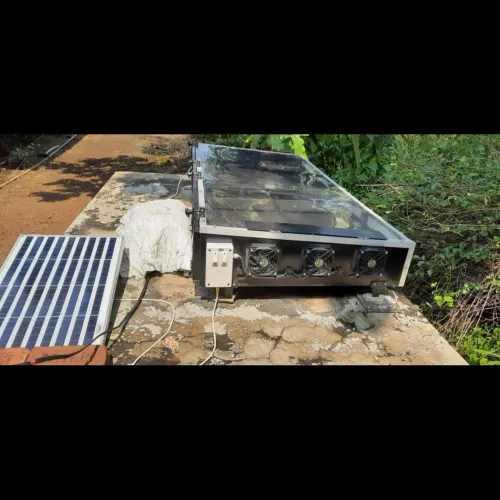
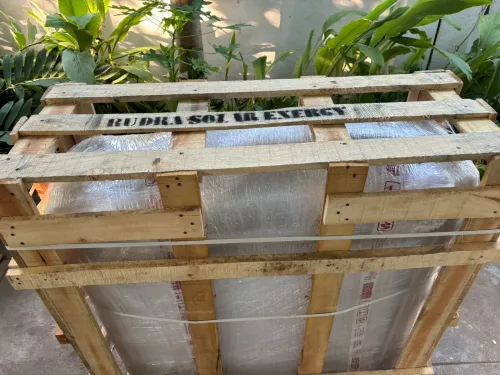
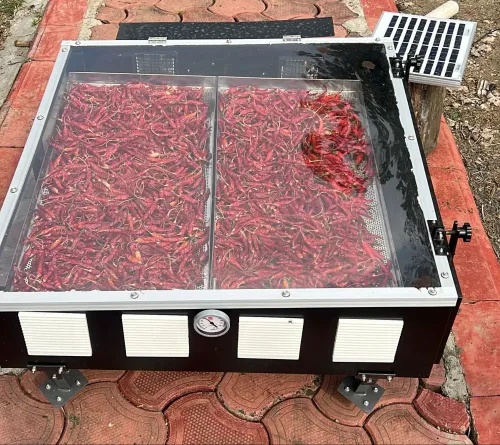
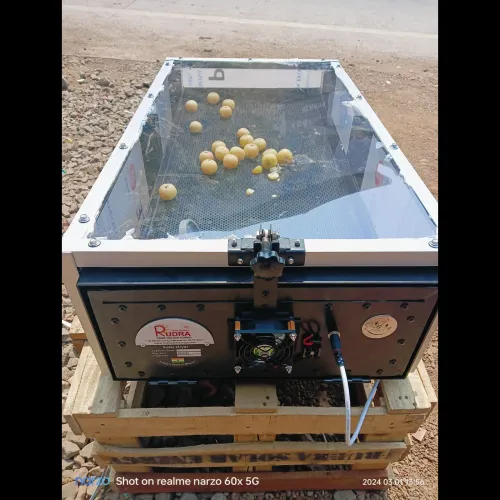
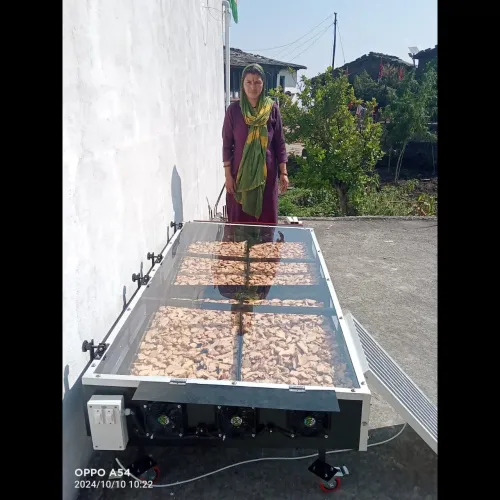
Rudra Solar Energy Pvt. Ltd. manufactures commercial solar dryers in multiple and custom capacities for fruits, vegetables, spices, herbs, grains, seeds and other suitable agricultural applications.
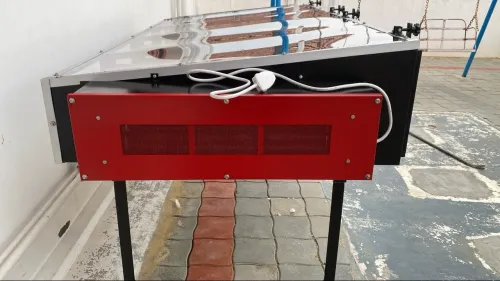
Depending on the selected configuration, a Rudra Solar Dryer can include an enclosed drying chamber, solar-powered forced airflow, UV-protected polycarbonate covering, suitable food-contact trays and solar-only or optional hybrid operation.
For a project in Lakhimpur Kheri, the dryer should be selected only after evaluating the commodity, prepared batch weight, loading depth, tray area, airflow requirement, operating season and intended final product.
Jaggery processors, farmers, FPOs, SHGs and food-processing enterprises can share the commodity name, fresh or prepared load, required batch frequency and final product with Rudra Solar Energy for a suitable technical discussion.
Keywords