Solar Dryer Solutions for Kodagu (Coorg), Karnataka
Kodagu, widely known as Coorg, has one of Karnataka’s most distinctive plantation-based agricultural economies. Coffee is the district’s dominant commercial crop, while black pepper, cardamom, ginger, coconut and other plantation or spice crops are also important. Paddy remains an important food crop, particularly in valley areas.
Official Coffee Board information reports approximately 1,06,921 hectares under coffee cultivation in Kodagu, accounting for about 44% of Karnataka’s coffee area. It also identifies Kodagu as a major contributor to both state and national coffee production.
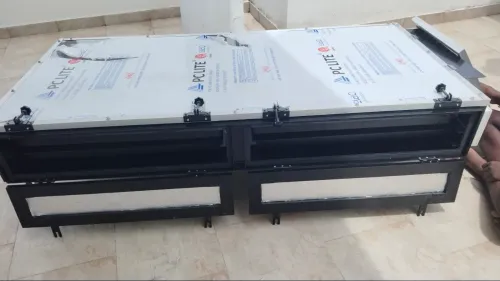
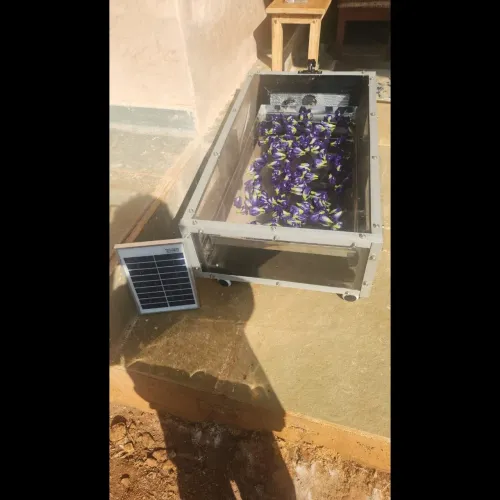
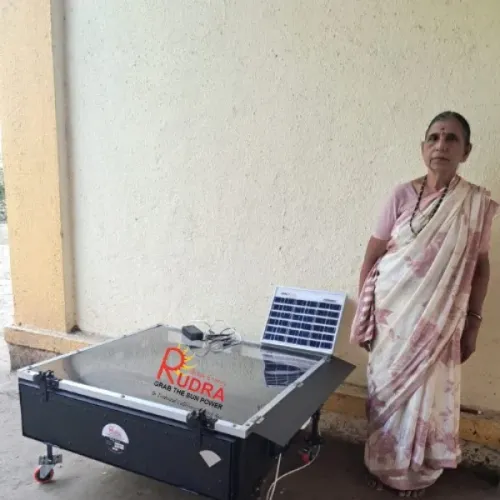
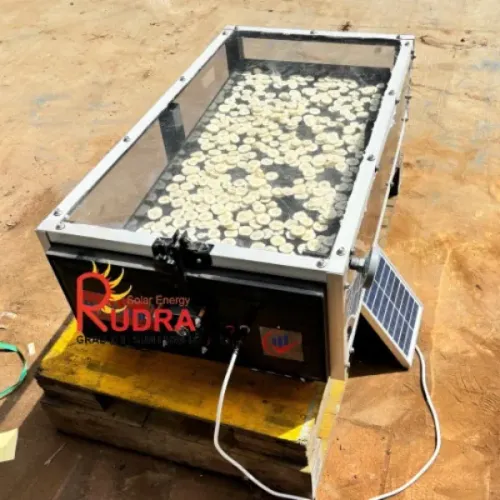
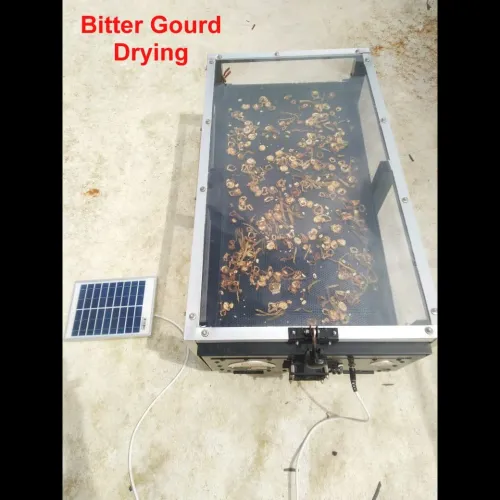
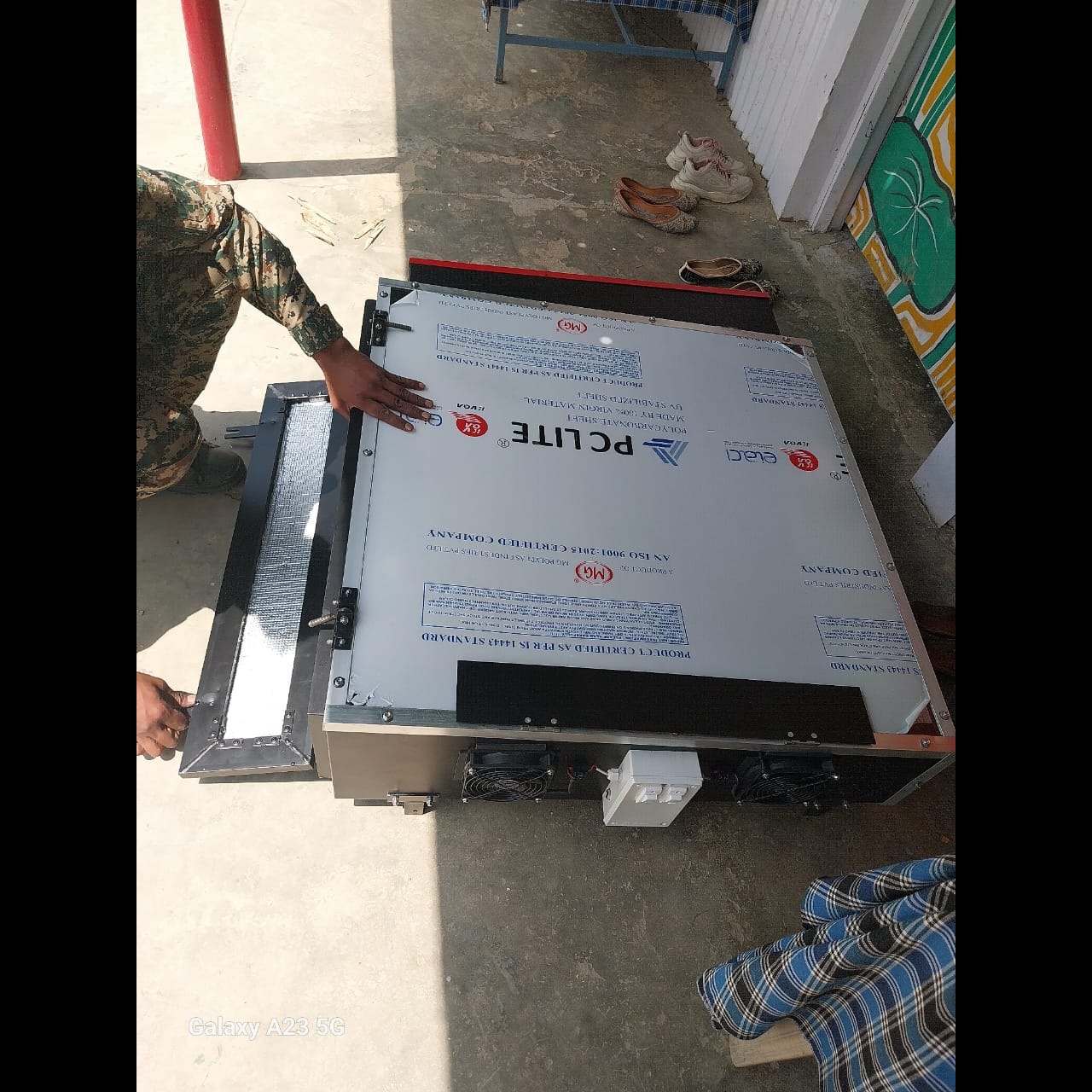
Rudra Solar Energy provides enclosed, tray-based solar dryer solutions for suitable agricultural, plantation and food-processing requirements in Kodagu. The right dryer and operating approach should be selected according to the product, fresh-input quantity, processing stage, initial moisture, airflow, local weather, required final moisture and intended end use.
Why Solar Drying Is Particularly Relevant in Kodagu
Kodagu’s climate makes moisture management very different from that of many dry districts of Karnataka.
The district lies in the Western Ghats and experiences intense rainfall during July and August, with showers often continuing into November. Official district information notes that annual rainfall can exceed 4,000 mm in some areas.
High rainfall and humidity can create challenges for outdoor drying because:
- Solar availability can fluctuate
- Ambient humidity can slow moisture removal
- Sudden rain can interrupt open drying
- Product handling requires greater protection
- Airflow becomes especially important
- Drying time can vary significantly by season
An enclosed solar dryer can help create a more protected drying environment compared with open-ground drying, but solar drying should never be described as having the same performance under every weather condition.
Selected Rudra Solar Dryer configurations may include backup options where applicable to the actual processing requirement.
Coffee Drying – Kodagu’s Most Important Local Application
Coffee is central to Kodagu’s agricultural economy. Official Coffee Board information states that most coffee holdings in the district belong to small growers with holdings below 10 hectares. Robusta is dominant in several parts of Kodagu, while Arabica has a particularly important presence around Somwarpet.
Solar drying may support suitable stages of coffee processing where controlled moisture reduction is required.
Depending on the coffee-processing method, the material may include:
- Coffee cherries
- Parchment coffee
- Prepared coffee material requiring further drying
- Selected small-batch specialty coffee applications
The appropriate drying process differs according to the coffee-processing route. A fixed temperature or one universal drying time should therefore not be applied to every coffee batch.
NABARD also identifies coffee processing as a significant agro-processing activity in Kodagu, with local estates and cooperative organisations using wet and dry processing methods for domestic and export markets.
Potential solar dryer users include:
- Small coffee growers
- Coffee estates
- Farmer groups
- FPOs
- Specialty coffee entrepreneurs
- Cooperative organisations
- Coffee-processing MSMEs
- Commercial processors
Black Pepper Drying and Processing
Black pepper is one of Kodagu’s most important plantation spices and is commonly grown as an intercrop in coffee plantations. NABARD identifies black pepper as a major plantation crop, alongside coffee, cardamom, coconut and ginger.
Protected solar drying can support suitable black pepper processing where controlled moisture reduction is required before:
- Grading
- Storage
- Packaging
- Trading
- Further value addition
Important drying variables include:
- Harvest maturity
- Initial moisture
- Preparation
- Loading depth
- Airflow
- Relative humidity
- Required final moisture
- Storage conditions
Colour, aroma, final quality and storage life should not be guaranteed universally because they depend on the raw material and operating conditions.
Cardamom and Other Spice Applications
Cardamom is another recognised crop of Kodagu, while NABARD also documents cultivation or processing opportunities involving ginger, chilli, cloves and vanilla.
Solar drying may support selected spice applications such as:
- Cardamom
- Ginger
- Black pepper
- Chilli
- Selected herbal or spice materials
Each product requires its own drying approach.
For example, drying a root or rhizome such as ginger is different from drying pepper berries or cardamom. Preparation, particle size, initial moisture and intended final product should therefore guide the process.
If the final product is a powder, the Rudra Solar Dryer performs the drying stage only. Grinding remains a separate downstream operation.
Ginger Drying and Value Addition
Ginger has meaningful cultivation potential in Kodagu, and NABARD includes both irrigated and rainfed ginger in its latest district plantation and horticulture assessment.
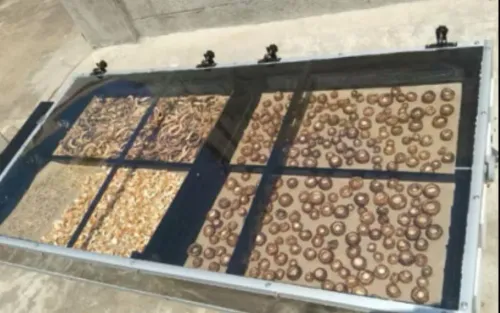
Properly prepared ginger can be solar dried for suitable applications such as:
- Dried ginger pieces
- Ginger slices
- Raw material for further processing
- Ingredients for later grinding or extraction
The drying process should consider:
- Washing and preparation
- Slice or piece size
- Initial moisture
- Tray loading
- Airflow
- Ambient humidity
- Desired final use
One fixed drying recommendation should not be used for all ginger products.
Coorg Mandarin and Fruit Processing Opportunities
Kodagu is also associated with Coorg Mandarin, while other fruit crops in the district include mango, banana and sapota. NABARD notes that Coorg Arabica Coffee and Coorg Mandarin have GI recognition linked to their regional characteristics.
Properly prepared fruits may be considered for protected solar drying for products such as:
- Citrus slices or ingredients
- Banana slices
- Mango pieces
- Selected fruit ingredients
- Value-added processed products
Fruit drying depends strongly on variety, ripeness, preparation, slice thickness, loading and required final moisture.
The aim should be controlled moisture reduction rather than applying one generic setting to every fruit.
Paddy and Maize Drying
Plantation crops dominate Kodagu, but paddy remains important in the valley areas. NABARD reports approximately 19,152 hectares under paddy and 2,936 hectares under maize in 2024–25.
Controlled solar drying may support selected grain-moisture requirements before:
- Storage
- Milling
- Processing
- Packaging
- Seed use
For grain intended for planting seed, drying conditions must also consider germination and viability.
The appropriate process depends on harvest moisture, airflow, batch quantity, storage requirement and intended final use.
Plantation Growers Need Application-Specific Solar Dryer Selection
Kodagu should not be treated as though every farmer requires the same solar dryer.
A coffee grower handling coffee cherries may have a very different requirement from:
- A black pepper grower
- A ginger processor
- A fruit-processing entrepreneur
- An FPO handling multiple commodities
- A paddy farmer
- A spice-processing MSME
Model selection should therefore consider both commodity and fresh-input quantity per batch.
Depending on the selected Rudra Solar Dryer model or configuration, features may include:
- Enclosed/protected drying chamber
- Tray-based product loading
- Managed or forced airflow
- Solar thermal heat
- Solar-powered DC fans where applicable
- Different available capacities
- Food-grade material options where required and available
- Electric or biomass backup on selected configurations
High Rainfall and Monsoon Drying in Kodagu
This is one of the most important considerations for buyers in Kodagu.
During periods of high rainfall, cloud cover or humidity:
- Solar heat availability may decrease
- Moisture removal can take longer
- Airflow becomes more important
- Tray overloading should be avoided
- Product preparation becomes critical
- Backup heat may be useful where an appropriate configuration is available
A solar dryer can still be part of a Kodagu processing system, but actual output should be evaluated according to the season and application.
Claims such as “same drying time throughout the year” or “uninterrupted drying in every weather condition” should not be assumed.
Kodagu’s Strong Coffee and Spice Processing Ecosystem
NABARD identifies coffee processing and spice processing as important agro-processing activities in Kodagu. Coffee curing and processing facilities operate particularly around Kushalnagar, while pepper, cardamom and vanilla are also cleaned, dried and graded within the district’s processing ecosystem.
NABARD also reports 10 FPOs in the district, including opportunities for coffee and pepper processing.
This creates solar-drying opportunities for:
- Individual plantation growers
- Farmer groups
- FPOs
- SHGs
- Women entrepreneurs
- Rural businesses
- Specialty coffee enterprises
- Spice processors
- Food-processing MSMEs
- Cooperative organisations
- Commercial processors
Solar Dryer Coverage Across Kodagu District
Current official Kodagu district administration information lists five taluks:
Madikeri, Somwarpet, Virajpet, Kushalnagar and Ponnampet.
Rudra Solar Energy can therefore support enquiries associated with searches such as:
- Solar dryer in Madikeri
- Solar dryer in Somwarpet
- Solar dryer in Virajpet
- Solar dryer in Kushalnagar
- Solar dryer in Ponnampet
- Solar dryer in Gonikoppal
- Coffee solar dryer in Kodagu
- Solar dryer manufacturer in Kodagu
- Solar dryer manufacturer in Coorg
For geographic accuracy, the current five-taluk structure is used here rather than older district pages that still refer only to the earlier three-taluk structure.
Why Consider Rudra Solar Energy for Kodagu?
Rudra Solar Energy has been working in solar-thermal solutions since 2006 and offers solar dryer models for requirements ranging from individual and farm-scale processing to FPO, entrepreneurial, MSME and commercial applications.
For buyers comparing the best solar dryer company in Kodagu or Coorg, useful factors include:
- Suitability for coffee, spices or the actual commodity
- Protected drying design
- Managed airflow
- Available capacity
- Ease of loading and operation
- Material and tray options
- Backup availability where required
- Technical guidance
- After-sales support
- Suitability for local weather conditions
The correct system should be selected around the product and operating requirement rather than assuming that one model or one drying schedule is suitable for every Kodagu plantation.
Frequently Asked Questions
1. Which is the best solar dryer for coffee growers in Kodagu?
The best-fit solar dryer depends on the type of coffee material being processed, fresh-input quantity per batch, initial moisture, processing method, local weather and required final moisture. Coffee cherry, parchment and other coffee-processing stages can require different handling, so model selection should begin with the actual application.
2. Can coffee be dried using a Rudra Solar Dryer in Coorg?
Yes, a suitable solar dryer can be considered for coffee-processing stages where controlled moisture reduction is required. The exact method depends on whether the material is coffee cherry, parchment or another processed coffee product and on the required final quality.
3. Can black pepper and cardamom be dried in a solar dryer?
Yes. Properly harvested and prepared black pepper, cardamom and other suitable spices can be considered for protected solar drying. Initial moisture, loading, airflow, ambient humidity and required final moisture should guide the process.
4. Can ginger be processed using a Rudra Solar Dryer?
Yes. Properly prepared ginger may be dried as pieces or slices for suitable value-added applications. If ginger powder is required, grinding is carried out separately after the material has been dried appropriately.
5. Can Coorg Mandarin and other fruits be solar dried?
Yes. Properly prepared citrus, banana, mango and other suitable fruits may be dried for selected value-added applications. The process varies according to fruit variety, ripeness, preparation, thickness and intended final product.
6. Can a solar dryer work during Kodagu’s rainy or humid weather?
Solar dryers can operate under different weather conditions, but performance varies with solar radiation and ambient humidity. During heavy cloud cover, monsoon or high-humidity periods, drying may take longer. Selected Rudra configurations may include electric or biomass backup where applicable to the requirement.
7. Are Rudra Solar Dryers suitable only for large coffee estates?
No. Requirements can range from individual growers and small plantation owners to SHGs, FPOs, rural entrepreneurs, specialty processors, MSMEs and commercial businesses. A suitable available model should be selected according to the actual batch quantity and application.
8. How do I choose the right solar dryer capacity in Kodagu?
Share these four primary details with Rudra Solar Energy:
1. Crop or product
2. Fresh-input quantity per batch
3. Location in Kodagu district
4. Intended final product or processing stage
For coffee, it is also useful to specify whether the requirement involves coffee cherry, parchment or another processing stage. Based on these details, a suitable available dryer model and capacity can be discussed.
Looking for a Solar Dryer Manufacturer in Kodagu or Coorg?
Whether your requirement involves coffee, black pepper, cardamom, ginger, Coorg Mandarin, fruits, paddy, maize or another suitable agricultural or plantation product, the right solar dryer should be selected according to the actual commodity, batch quantity, local weather and processing objective.
Contact Rudra Solar Energy with your product, fresh-input quantity per batch, Kodagu location and intended final use to discuss a suitable solar dryer model.
Rudra Solar Energy Pvt. Ltd.
Ahmedabad, Gujarat, India
Phone: 9429446671 | 7041262332
Website: www.rudrasolar.in
Keywords