Solar Dryer in Kanpur Dehat for Farm-Level Processing and Value Addition
Kanpur Dehat has a predominantly rural agricultural economy supported by cereals, pulses, oilseeds, potato and other seasonal farm produce. The district’s proximity to Kanpur Nagar also provides a practical context for processing, packaging and supplying suitable value-added products to larger markets.
The official Kanpur Dehat district economy profile identifies agriculture as a major source of livelihood and notes the importance of small farm holdings within the district. An APEDA Farmer Connect profile for an FPO located at Pukhrayan in Kanpur Dehat lists gram and pea among its major crops. District crop records also document the cultivation of wheat, paddy, maize, potato, pulses and oilseeds across different parts of Kanpur Dehat.
A properly selected solar dryer in Kanpur Dehat can support farmers, FPOs, Self-Help Groups, rural entrepreneurs and food-processing units that want to convert suitable fresh produce into dried ingredients or reduce moisture before storage and further processing.
Solar drying should be planned according to the actual commodity. Potato, chilli, leafy vegetables, gram, maize and mustard cannot use one common preparation method, tray loading or drying schedule.
What Post-Harvest Problems Can Solar Drying Address?
Fresh vegetables, spices and selected fruits may deteriorate when processing or market access is delayed. Grains, pulses and seeds can also develop storage problems when incoming moisture remains above the level required for their intended use.
Solar drying can become part of a post-harvest process by supporting controlled moisture reduction inside an enclosed system.
Depending on the commodity and intended product, it may help with:
- Processing seasonal farm produce
- Preparing dried ingredients
- Reducing dependence on direct ground drying
- Organising batches on trays
- Managing moisture before packaging
- Supporting farm-level value addition
- Developing small food-processing enterprises
- Preparing material for grinding or further processing
Drying is only one stage. Cleaning, preparation, final-moisture assessment, packaging and storage must be planned separately.
Which Products Can Be Solar Dried in Kanpur Dehat?
Solar drying may be evaluated for suitable:
- Potato
- Chilli
- Ginger
- Turmeric
- Garlic
- Onion
- Tomato
- Green leafy vegetables
- Culinary herbs
- Medicinal plants
- Selected fruits
- Gram
- Pea
- Maize
- Mustard
- Sesame
- Other grains, pulses and seeds requiring moisture conditioning
Not every material requires the same dryer configuration. High-moisture vegetables generally need more moisture removal than grains or pulses. Lightweight leaves may occupy substantial tray area despite having a low fresh weight.
The system should therefore be selected according to material volume, usable tray surface, loading depth and daily throughput.
How Can Potato Be Processed Using a Solar Dryer?
Potato can be evaluated for drying where a dehydrated ingredient or product is intended.
Preparation may involve:
- Sorting
- Washing
- Peeling
- Trimming damaged portions
- Slicing
- Standardising slice thickness
- Applying an appropriate pretreatment where required
- Draining excess surface water
- Loading prepared slices uniformly
The preparation process depends on whether the intended output is a dried slice, flake, powder raw material or another processed format.
Potato slices should not be loaded in thick, overlapping layers. Overlapping can reduce the exposed surface area and restrict air movement around the material.
Important processing variables include:
- Potato variety
- Tuber maturity
- Initial solids and moisture
- Slice thickness
- Pretreatment
- Loading depth
- Available tray area
- Airflow
- Required final condition
A fixed drying time should not be copied from another batch without checking differences in preparation, loading and weather.
Can Chilli, Ginger, Turmeric, Garlic and Onion Be Solar Dried?
Yes, suitable spices and vegetables can be solar dried when drying forms part of the intended processing method.
Chilli
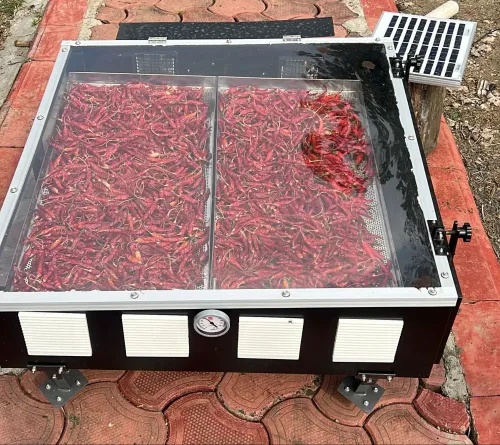
Chilli may be processed whole or in a prepared form. Variety, maturity, fruit size, initial moisture and loading depth influence the process. Workers should follow suitable protective practices during cutting, unloading and grinding of pungent chilli.
Ginger
Ginger may require sorting, washing, cleaning, peeling where necessary and slicing. Whole rhizomes and thin slices have very different moisture-transfer paths and should not follow the same schedule.
Turmeric
Turmeric may require cleaning, curing or another commodity-specific preparation before drying. Prepared fingers and slices should be loaded according to their thickness and required final product.
Garlic and Onion
Garlic and onion generally require cleaning, peeling and suitable size reduction. Strong aroma can remain on trays and inside the chamber, so cleaning between different food batches is important.
Each commodity should have its own preparation, loading, inspection and drying procedure.
Can Gram, Pea and Other Pulses Be Processed in a Solar Dryer?
Gram, pea and other pulses may require moisture conditioning before storage, milling, seed use or further processing.
This application differs from drying fresh fruits or vegetables because pulses usually begin with a lower moisture level and require careful endpoint control.
The operator should consider:
- Incoming moisture
- Required storage moisture
- Grain-bed depth
- Batch quantity
- Air temperature
- Airflow
- Intended storage period
- Milling requirement
- Seed viability where germination is important
Excessive heating or unnecessary over-drying can affect product quality and processing behaviour. Material intended for seed should be handled according to its germination and storage requirements.
Can Maize, Mustard and Sesame Be Solar Dried?
Maize and suitable oilseeds may also require post-harvest moisture reduction before storage or further processing.
Maize should be evaluated according to:
- Kernel moisture
- Layer depth
- Air movement
- Required storage condition
- Intended use
- Risk of uneven loading
Mustard and sesame are comparatively small oilseeds. They require trays or suitable containment that prevents material loss while allowing effective air movement.
Oilseeds should not be treated like sliced vegetables because their physical structure, initial moisture and storage behaviour are different.
The required endpoint should be established for the actual crop and intended use.
Why Is Enclosed Solar Drying Different from Ground Drying?
Direct outdoor drying may expose agricultural material to:
- Dust
- Soil contact
- Insects
- Birds
- Animals
- Sudden rain
- Uncontrolled handling
- Mixing of separate batches
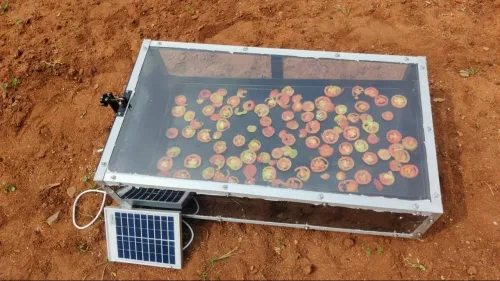
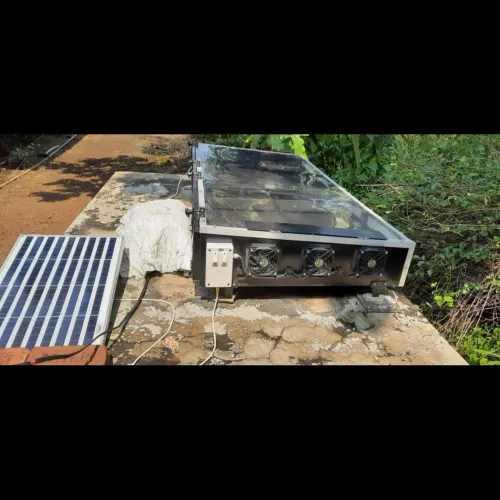
An enclosed solar drying system provides a defined space where suitable prepared material can be arranged on trays.
Depending on its configuration, the system may use solar-powered fans to support airflow through the chamber. Moisture-bearing air is moved away from the material so that further moisture can continue leaving the product.
An enclosed chamber can support:
- Organised tray loading
- Reduced direct ground contact
- Reduced exposure to outdoor contaminants
- Easier batch identification
- Improved inspection access
- Better separation between commodities
- More systematic cleaning
Enclosed drying does not make a product sterile or remove the need for food-safety controls.
Why Is Airflow Important in Solar Drying?
Solar heat provides energy for moisture removal, but moisture also needs a path to leave the chamber.
As water moves from the product into the surrounding air, that moisture-bearing air must be removed. If airflow is inadequate or the trays are overloaded, parts of the batch may progress differently.
Drying performance depends on:
- Available solar heat
- Airflow
- Product thickness
- Initial moisture
- Tray spacing
- Loading depth
- Ambient humidity
- Required final moisture
Increasing temperature alone does not correct blocked airflow or excessive tray loading.
How Does Kanpur Dehat’s Weather Affect Drying?
Available sunlight, ambient temperature and relative humidity change with the season and daily weather.
During humid, cloudy or rainy conditions, moisture removal may progress more slowly. During hotter and drier conditions, the operator must still prevent unnecessary overheating of sensitive products.
Actual drying conditions should be monitored instead of assuming identical performance every day.
Weather-related factors include:
- Solar radiation
- Cloud cover
- Ambient temperature
- Relative humidity
- Time of loading
- Product temperature sensitivity
- Required production schedule
The operating method should respond to the product and actual weather conditions.
Is There a Universal Solar Drying Time?
No. There is no single drying time for potato, chilli, ginger, tomato, leafy vegetables, gram, maize and mustard.
Processing duration changes according to:
- Commodity
- Initial moisture
- Required final moisture
- Whole or prepared form
- Slice thickness
- Material volume
- Loading depth
- Airflow
- Solar availability
- Ambient humidity
- Dryer configuration
Even two batches of potato slices may require different processing periods if their slice thickness, variety, initial moisture or weather conditions differ.
Drying progress should be assessed using the required endpoint instead of relying only on a fixed number of hours.
How Should a Buyer Select the Right Capacity?
The fresh kilogram rating does not provide complete information about dryer capacity.
For example:
- 50 kg of potato slices
- 50 kg of chilli
- 50 kg of leafy vegetables
- 50 kg of gram
will not occupy the same tray area or behave in the same way during drying.
Capacity should be selected using:
Fresh Batch Weight + Product Volume + Usable Tray Area + Loading Depth + Required Daily Output
Before selecting a solar drying system, buyers should identify:
- Main commodity
- Fresh batch quantity
- Whole, sliced or prepared form
- Approximate product dimensions
- Number of batches required
- Operating months
- Available space
- Required final product
- Local electricity availability
- Solar-only or hybrid preference
This information helps prevent underestimating tray-area and airflow requirements.
When Should a Hybrid Drying Option Be Evaluated?
A hybrid system may be evaluated when additional energy support is required during insufficient solar conditions or when the enterprise needs greater production-schedule flexibility.
Its suitability depends on:
- Commodity
- Processing season
- Daily batch target
- Available sunlight
- Ambient humidity
- Required turnaround
- Backup-energy source
- Operating cost
Hybrid support should not be treated as compulsory for every user. The decision should be based on the actual processing schedule and product requirement.
Who Can Use Solar Drying Systems in Kanpur Dehat?
Solar drying may be relevant for:
- Individual farmers
- FPOs and FPCs
- Self-Help Groups
- Women-led enterprises
- Rural entrepreneurs
- Food-processing units
- Spice processors
- Potato-processing enterprises
- Seed and grain handlers
- Cooperatives
- Agricultural institutions
- Skill-development projects
Applications can be evaluated for users around Akbarpur, Mati, Pukhrayan, Bhognipur, Rura, Jhinjhak, Derapur, Rasulabad, Sikandara, Amraudha and other parts of Kanpur Dehat.
The same system specification should not be assumed for every user because their commodities, batch quantities and production targets may differ.
What Determines Solar Dryer Price in Kanpur Dehat?
Solar dryer price depends on the actual system configuration and project requirement.
Important factors include:
- Batch capacity
- Usable tray area
- Number and material of trays
- Chamber size
- Airflow arrangement
- Fan configuration
- Solar-heating design
- Solar-only or hybrid operation
- Monitoring requirements
- Automation
- Transportation
- Installation
- Site preparation
- Customisation
- Training and after-sales support
Buyers should compare usable drying area, material compatibility, airflow and system construction along with price.
A larger kilogram rating does not automatically make a system more suitable if the available tray area or airflow does not match the intended commodity.
What Should Happen After Drying?
After drying, suitable material may require:
- Cooling
- Final-moisture assessment
- Sorting
- Grading
- Packaging
- Batch identification
- Storage
- Protection from re-wetting
Dried products can absorb moisture again when exposed to humid air. Packaging should therefore suit the product, required storage period and intended market.
Seeds, food ingredients and finished retail products may require different packaging and storage procedures.
Rudra Solar Drying Systems for Kanpur Dehat
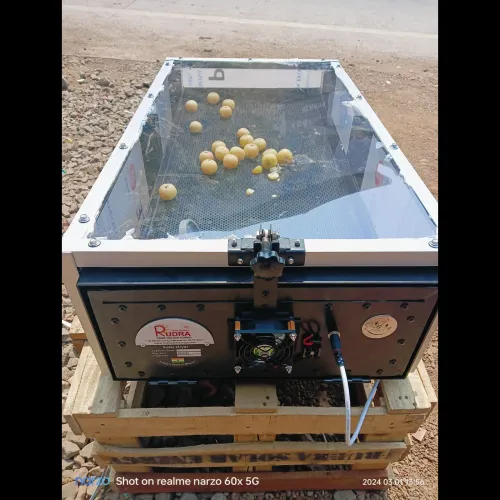
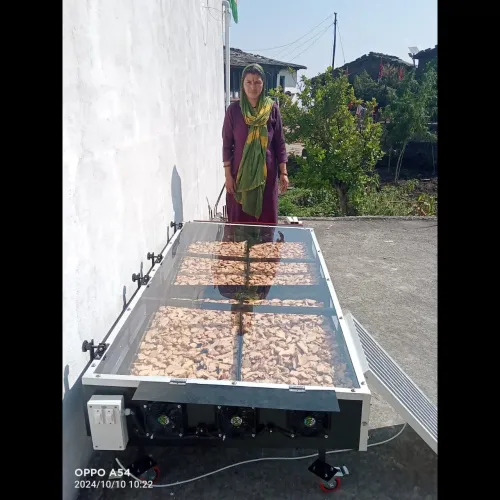
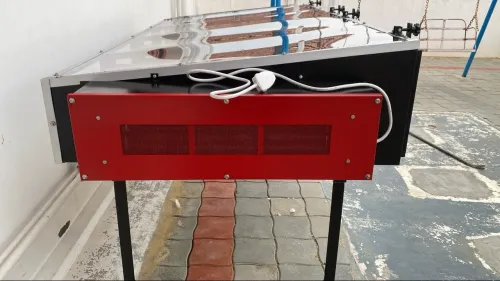
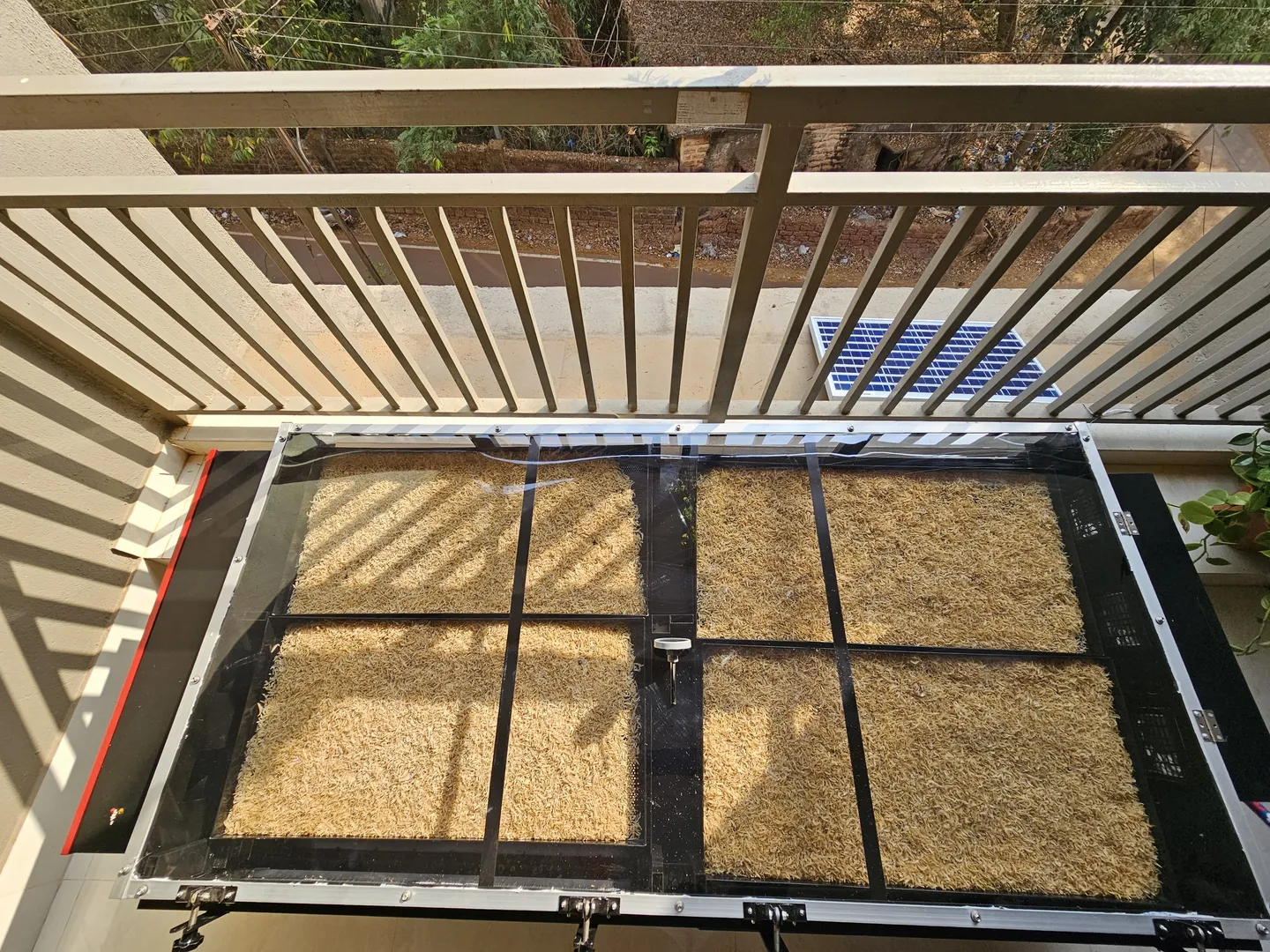
Rudra Solar Energy manufactures solar drying systems for suitable agricultural and food-processing applications. Different capacities and configurations can be evaluated according to the commodity, batch size, usable tray area and required daily throughput.
Systems may be considered for vegetables, spices, herbs, selected fruits, grains, pulses, seeds and other appropriate materials. Solar-only and hybrid options can be evaluated according to the processing requirement.
For an application-specific recommendation, buyers should share:
- Commodity name
- Fresh batch capacity
- Preparation method
- Product dimensions
- Number of batches per day
- Required dried output
- Operating location
- Available power
- Solar-only or hybrid preference
This information allows the system to be evaluated using real processing requirements rather than a generic capacity assumption.
Conclusion
A solar dryer in Kanpur Dehat can support farm-level processing, moisture management and value-addition activities for farmers, FPOs, SHGs and food-processing enterprises.
The district’s agricultural base and access to nearby markets create a useful context for processing potato, vegetables, spices, pulses, grains, oilseeds and other suitable commodities. However, every material requires a separate preparation, loading and drying procedure.
The system should be selected according to actual fresh weight, material volume, usable tray area, airflow, weather conditions and required final moisture. Appropriate post-drying assessment, packaging and storage are equally important for developing a dependable processing workflow.
Keywords