Solar Dryer in Kannauj: Practical Applications for Potato, Herbs and Flowers
Kannauj has a distinctive identity shaped by agriculture and its traditional fragrance industry. The district is associated with potato and other field crops, while flowers, herbs, spices and aromatic botanical materials form part of its attar, essential-oil, incense and fragrance ecosystem.
The Government of Uttar Pradesh’s One District One Product programme identifies Itra or perfume products as Kannauj’s signature industry. Its traditional deg-bhapka process uses suitable natural fragrance sources such as flowers, herbs, spices and aromatic materials. An APEDA Farmer Connect profile for a Kannauj-based FPO also records potato, maize and paddy among its major crops.
A properly selected solar dryer in Kannauj may therefore support two different requirements:
- Moisture reduction for suitable food and agricultural commodities
- Controlled drying of selected petals, herbs and botanical materials when a dried ingredient is specifically required
These applications should not be combined under one universal drying procedure. Potato slices, flower petals, herbs, maize and spices differ in initial moisture, physical structure, temperature sensitivity, tray requirement and intended final use.
Why Does Kannauj Need a Different Solar Drying Approach?
Kannauj’s post-harvest requirements are not limited to conventional fruits and vegetables. Its fragrance ecosystem creates potential demand for dried herbs, petals, roots and other botanical ingredients.
However, the requirement must be identified correctly before drying begins.
Fresh flowers intended for traditional attar distillation should not automatically be dried. Moisture reduction can change the physical and aromatic characteristics of botanical material. Solar drying is relevant only where the intended process or final product requires a dried ingredient.
Potential users of solar drying systems in Kannauj may include:
- Potato farmers
- FPOs and FPCs
- Self-Help Groups
- Food-processing MSMEs
- Rural entrepreneurs
- Herb processors
- Flower and petal processors
- Botanical-ingredient businesses
- Incense and dhoop manufacturers
- Agricultural institutions
- Skill-development centres
- Livelihood projects
Every user should define the required output before selecting a dryer or preparing an operating procedure.
Can a Solar Dryer Be Used for Making Kannauj Attar?
A solar dryer does not manufacture attar, perfume or essential oil.
Traditional Kannauj attar is produced using specialised distillation. The district’s Fragrance and Flavour Development Centre explains that natural fragrance materials can come from flowers, leaves, stems, roots and other parts of aromatic plants. Attar production uses the traditional deg-bhapka process to transfer natural fragrance into a suitable base oil.
Fresh flowers or botanical materials required for distillation should remain subject to the established attar-making procedure.
Solar drying may be evaluated separately when a processor specifically needs:
- Dried petals
- Dried leaves
- Dried herbs
- Dried roots
- Botanical powder raw material
- Dried ingredients for incense
- Dried ingredients for dhoop products
- Selected non-distillation fragrance applications
The processor should first confirm whether the required raw material must be fresh, partially dried or fully dried.
Can Flowers and Aromatic Herbs Be Solar Dried?
Selected flowers, petals and aromatic herbs can be evaluated for solar drying where drying is part of the intended process.
These materials can be sensitive to:
- Excessive temperature
- Prolonged drying
- Strong airflow
- Dense tray loading
- Direct light exposure
- Rough handling
- Moisture reabsorption
- Unsuitable packaging
The correct operating conditions depend on:
- Plant species
- Part of the plant being dried
- Initial moisture
- Petal or leaf thickness
- Material volume
- Temperature sensitivity
- Volatile-component sensitivity
- Required aroma
- Required colour
- Final moisture
- Intended downstream use
A higher chamber temperature does not automatically produce a better result. Excessive heat may affect the appearance, aroma or volatile characteristics of sensitive botanical materials.
Small validation batches should be conducted before establishing a full-scale drying procedure. The process should be judged against the required final condition rather than only a fixed temperature or number of hours.
How Can Potato Be Solar Dried in Kannauj?
Potato can be evaluated for solar drying when dried slices, flakes, powder raw material or another dehydrated product is intended.
Depending on the product, preparation may include:
- Sorting
- Washing
- Peeling
- Removing damaged portions
- Slicing
- Standardising piece thickness
- Blanching or another suitable pretreatment where required
- Draining prepared material before loading
Preparation operations remain separate from the drying stage.
The solar dryer then performs moisture reduction from the suitably prepared potato material. Pieces should be loaded in an organised layer without excessive overlapping.
Important potato-drying variables include:
- Variety
- Maturity
- Initial solids and moisture
- Slice thickness
- Pretreatment method
- Loading depth
- Usable tray area
- Airflow
- Required final moisture
A tray containing thin slices and thick pieces may progress unevenly. Consistent preparation is therefore important for batch management.
What Other Products Can Be Solar Dried in Kannauj?
Depending on local availability and the intended product, solar drying may be evaluated for suitable:
- Onion
- Garlic
- Chilli
- Ginger
- Turmeric
- Tomato
- Culinary herbs
- Medicinal plants
- Leafy material
- Selected fruits
- Selected vegetables
- Maize
- Seeds and grains requiring moisture conditioning
Each commodity needs an individual process.
Onion and garlic may require peeling and slicing. Ginger and turmeric may require cleaning, cutting or commodity-specific preparation. Chilli can be dried in whole or suitably prepared form.
Strong-flavoured products should not be processed immediately before delicate fruits, petals or mild herbs without appropriate cleaning. Separate trays may be useful where aroma transfer or cross-contact is a concern.
Can Maize, Paddy and Seeds Be Processed in a Solar Dryer?
Maize, paddy and seeds may require moisture reduction before storage or further processing. This application differs from dehydrating high-moisture fruits and vegetables.
The operator should consider:
- Incoming grain moisture
- Required storage moisture
- Grain-bed depth
- Loading quantity
- Air temperature
- Airflow
- Intended storage period
- End use
- Germination requirement where material is intended for seed
Seed material should not be exposed to uncontrolled excessive heat because germination and quality may be affected.
The system should be evaluated according to the grain’s actual moisture-conditioning requirement rather than using a fruit or vegetable drying process without modification.
How Does an Enclosed Solar Dryer Work?
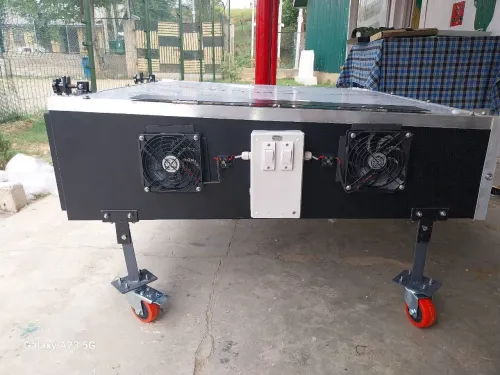
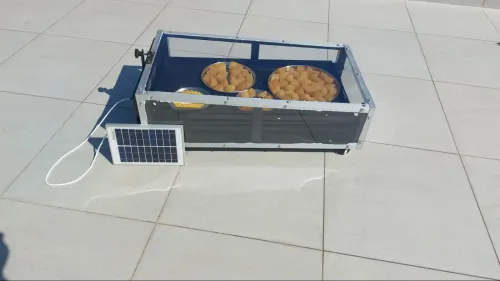
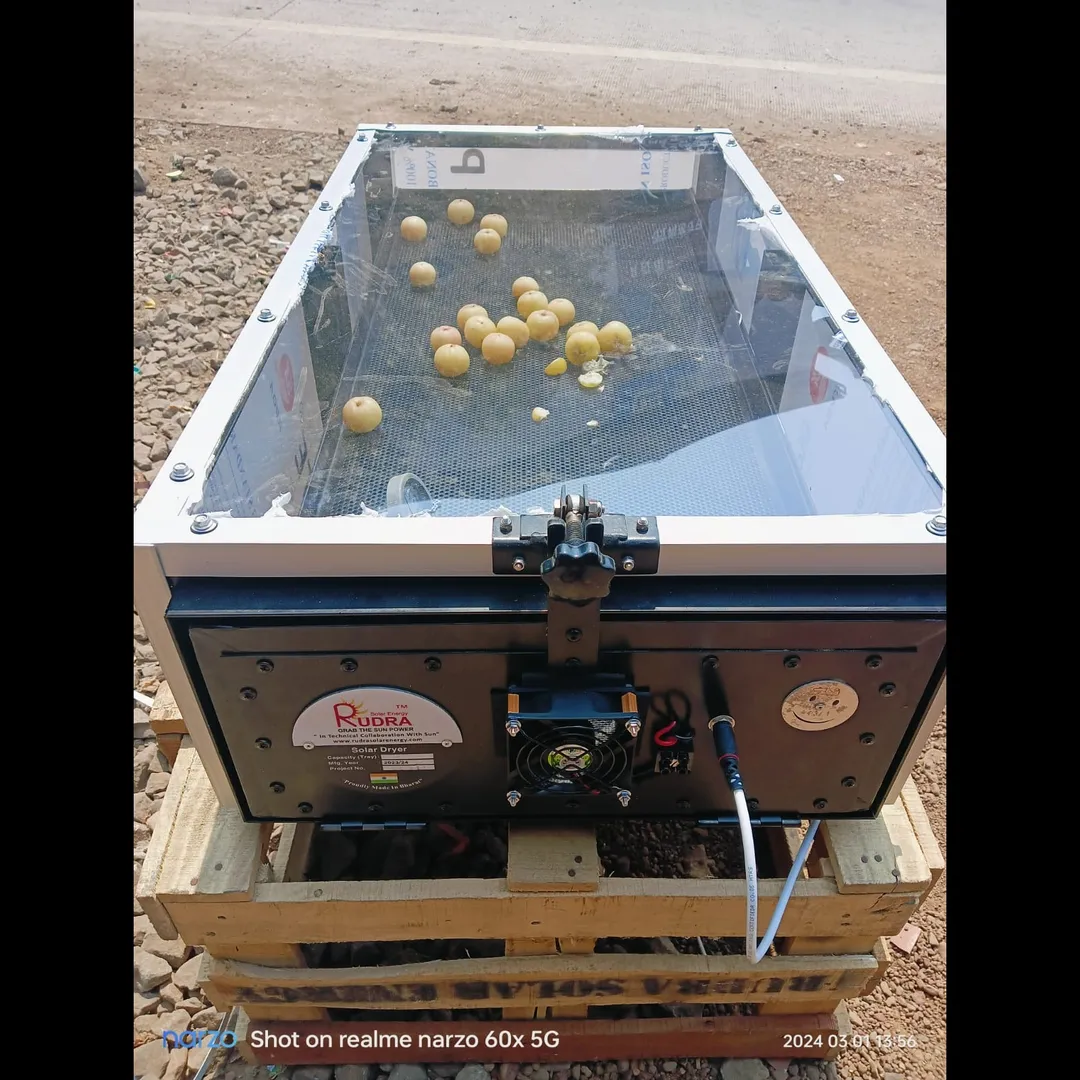
An enclosed solar dryer uses solar energy to heat the drying air or chamber. Air moves across the loaded product, absorbs released moisture and carries the moisture-bearing air away.
Depending on the system configuration, solar-powered DC fans may support air circulation. Additional energy support may also be evaluated where the operating schedule requires it.
An enclosed system can provide:
- A defined drying chamber
- Organised tray loading
- Reduced direct ground contact
- Reduced direct exposure to dust
- Reduced access for insects, birds and animals
- Easier batch identification
- Better inspection during processing
- More systematic cleaning between batches
An enclosed chamber does not make the process sterile. Washing, hygienic preparation, food-safety practices, moisture assessment and suitable packaging remain necessary.
Why Are Airflow and Loading Important for Herbs and Flowers?
Fresh flower petals and lightweight herbs may occupy considerable tray area even when their weight is relatively low.
If the material is loaded in a thick layer, air may not move effectively through the batch. If airflow is unnecessarily strong, lightweight leaves or petals may shift inside the chamber. Both the loading method and airflow arrangement should therefore suit the material.
Drying performance depends on the interaction between:
- Solar heat
- Air movement
- Material structure
- Layer thickness
- Tray spacing
- Initial moisture
- Ambient humidity
- Required final condition
Temperature should be managed together with airflow and loading. It should not be treated as the only measure of drying performance.
Is There One Drying Time for All Kannauj Products?
No single drying time applies to potato, flowers, herbs, chilli, garlic, maize and botanical materials.
Drying duration may change according to:
- Commodity
- Variety
- Initial moisture
- Required final moisture
- Whole or prepared form
- Slice or material thickness
- Loading density
- Available tray area
- Airflow
- Solar radiation
- Ambient temperature
- Relative humidity
- Dryer configuration
Two batches of the same herb may also behave differently when incoming moisture, weather or tray loading changes.
Drying progress should therefore be evaluated using the required final condition instead of relying only on a predetermined number of hours.
How Should Solar Dryer Capacity Be Selected?
Fresh kilogram capacity alone does not provide enough information for system selection.
For example, 50 kg of potato slices, 50 kg of flower petals and 50 kg of maize will not occupy the same drying surface or require the same loading depth.
Capacity should be considered using:
Fresh Weight + Material Volume + Usable Tray Area + Loading Depth + Required Throughput
Before selecting a system, the buyer should share:
- Commodity or botanical material
- Fresh batch quantity
- Whole, sliced or prepared form
- Approximate product dimensions
- Material volume
- Number of batches required
- Intended final product
- Operating season
- Available processing space
- Power availability
- Solar-only or hybrid preference
For flowers, herbs and lightweight botanical material, usable tray area can be more important than the stated fresh-weight capacity.
When Is a Hybrid Solar Drying System Useful?
Hybrid drying can be evaluated where additional energy support is needed during insufficient solar conditions or when the processing unit requires greater scheduling flexibility.
The requirement depends on:
- Product sensitivity
- Processing season
- Daily production target
- Available solar radiation
- Ambient humidity
- Required turnaround
- Backup-energy availability
- Operating cost
Hybrid support is not compulsory for every application. It should be selected only when the actual processing requirement justifies it.
What Determines Solar Dryer Price in Kannauj?
The price of a solar dryer in Kannauj can vary because different commodities require different tray areas, airflow arrangements and chamber configurations.
Important quotation factors include:
- Fresh batch capacity
- Usable tray area
- Number and material of trays
- Chamber size and construction
- Airflow arrangement
- Fan capacity
- Solar heating configuration
- Solar-only or hybrid operation
- Temperature monitoring
- Automation requirements
- Transportation
- Installation
- Site preparation
- Customisation
- Training and after-sales requirements
A flower processor may require larger tray surface and gentler operating conditions, while a potato processor may prioritise batch throughput and consistent slice loading.
The buyer should compare the complete technical configuration rather than only the kilogram rating or quoted price.
Why Is Cleaning Between Food and Botanical Batches Important?
Kannauj processors may want to handle food products, herbs and strongly aromatic botanical materials using the same facility.
This requires careful batch planning because aromas or residues may transfer from one product to another. Food-grade material should also remain separated from any botanical ingredient intended only for non-food incense or fragrance applications.
A practical operating plan should define:
- Product categories
- Food and non-food separation
- Batch sequence
- Cleaning method
- Tray allocation
- Cross-contact controls
- Batch identification
- Storage arrangement
Dedicated trays or separate drying systems may be more appropriate where aroma transfer or product-category separation creates a significant concern.
What Should Be Done After Drying?
Drying is not the final stage of moisture management.
Depending on the product, post-drying operations may include:
- Cooling
- Final-moisture assessment
- Sorting
- Grading
- Packaging
- Batch coding
- Dry storage
- Protection from re-wetting
- Aroma-protective packaging
Dried material can absorb moisture again when exposed to humid air. Aromatic products can also lose desirable characteristics if packaging and storage are unsuitable.
Post-drying handling should therefore be planned together with the drying procedure.
Rudra Solar Drying Systems for Kannauj
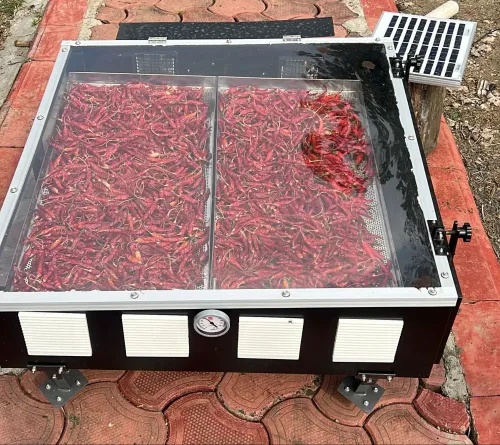
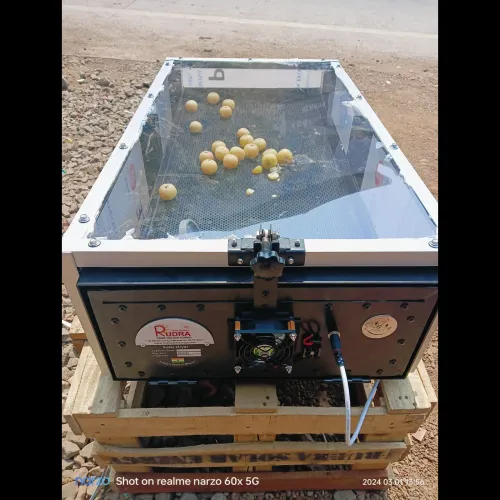
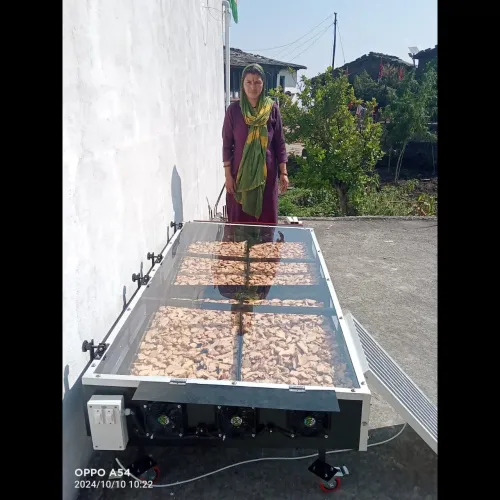
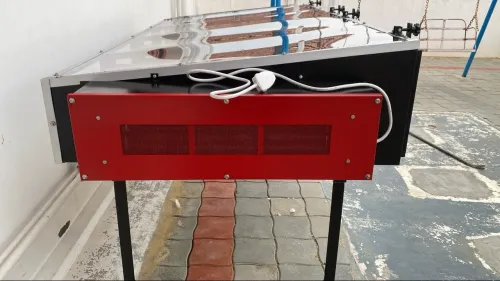
Rudra Solar Energy manufactures solar drying systems for suitable food, agricultural, herbal and botanical applications. Different capacities and configurations can be evaluated according to the material, usable tray area, temperature sensitivity and expected throughput.
Solar-only and hybrid systems may be considered depending on the application and production schedule. Flowers, aromatic herbs and perfume-related botanical materials should be evaluated separately from conventional fruit and vegetable processing.
For an application-specific recommendation, buyers should share:
- Commodity or botanical material
- Fresh batch capacity
- Required dried product
- Preparation method
- Approximate material volume
- Temperature sensitivity
- Daily processing requirement
- Operating location
- Solar-only or hybrid preference
This information helps determine an appropriate chamber, tray surface and airflow configuration.
Conclusion
A solar dryer in Kannauj can support farmers, FPOs, SHGs, food processors and selected botanical-material enterprises involved in post-harvest value addition.
Kannauj’s combination of potato farming, agricultural activity and traditional fragrance expertise creates a distinctive solar drying opportunity. However, solar drying should not be presented as a substitute for attar distillation or as a universal method for every flower and herb.
The correct approach is to determine whether the required input must be fresh or dried, understand its temperature and aroma sensitivity, and select the system according to actual tray area, airflow, batch size and final-moisture requirements.
Keywords