Solar Dryer Solutions for Kalaburagi District, Karnataka
Kalaburagi is one of North Karnataka’s major agricultural districts and is particularly known for toor dal/pigeon pea. The district’s official profile also lists jowar, bajra, sugarcane, groundnut, sunflower, sesame, castor, black gram, wheat, cotton, ragi, Bengal gram and other crops among locally grown agricultural products.
Latest NABARD 2026–27 district data identifies tur, jowar, black gram, green gram, Bengal gram and cotton among the major crops. Importantly, about 71% of the district’s net sown area was covered under pulses, making pulse production and post-harvest handling one of Kalaburagi’s strongest agricultural opportunities.
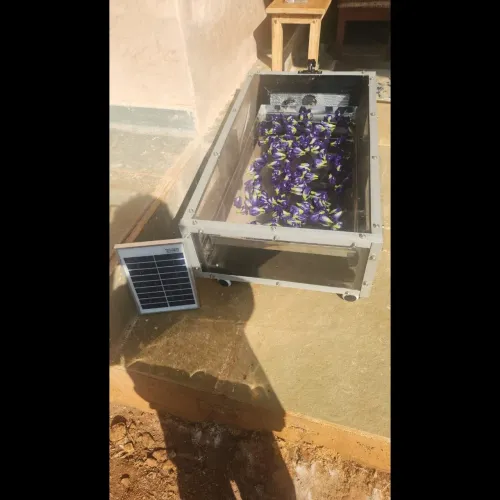
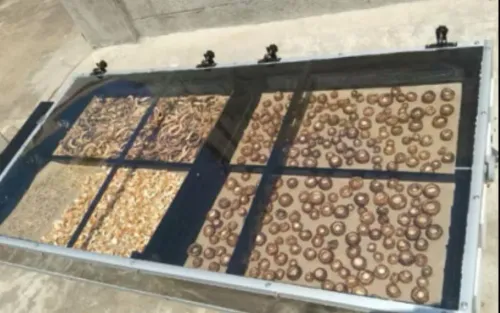
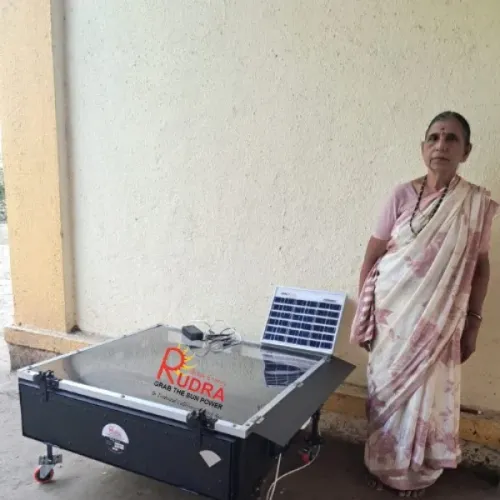
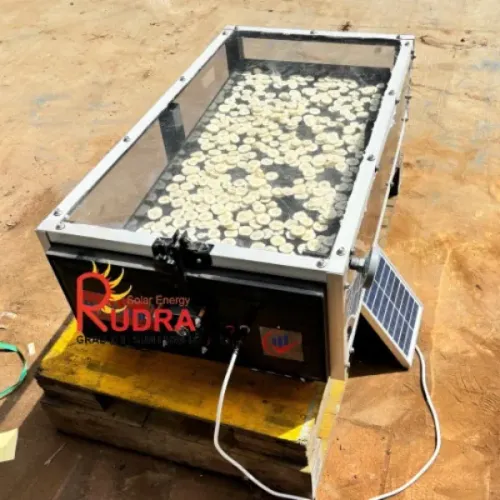
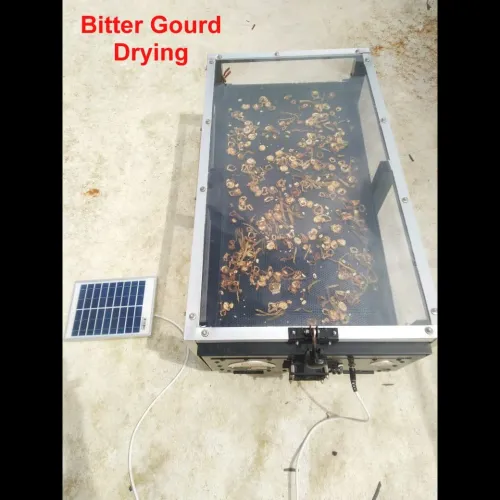
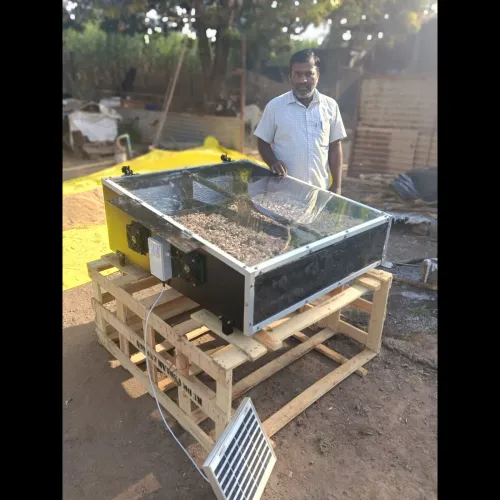
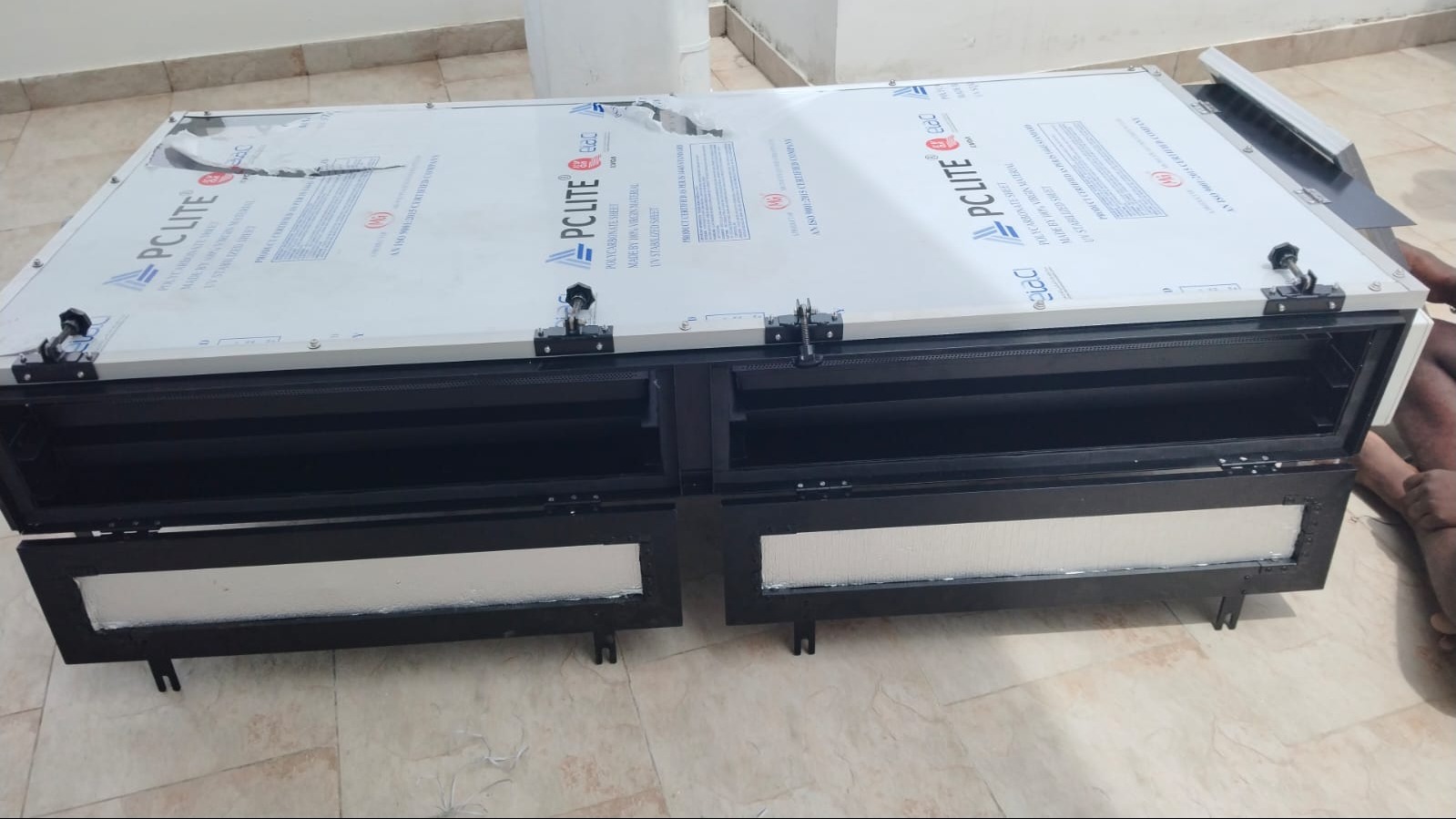
Rudra Solar Energy provides enclosed, tray-based solar dryer solutions for suitable agricultural and food-processing applications. The correct drying process should be selected according to the commodity, initial moisture, preparation, batch quantity, airflow, weather, required final moisture and intended use.
Why Solar Drying Is Relevant in Kalaburagi
Kalaburagi is predominantly an agrarian and rainfed district. NABARD records an annual normal rainfall of around 770 mm across about 47 rainy days, while the district has extensive black-soil agricultural areas.
For farmers and processors, controlled moisture management may be important after harvest, particularly for pulses, grains, oilseeds, spices and horticultural products.
Compared with traditional open drying, a suitable enclosed Rudra Solar Dryer can help provide:
- Protected drying environment
- Tray-based product loading
- Managed or forced airflow
- Solar thermal heat
- Reduced direct exposure to dust and insects
- More organised batch handling
- Multiple available capacity options
- Solar-powered DC fans on applicable models
- Electric or biomass backup on selected configurations
Actual drying performance still varies according to solar radiation, humidity, crop moisture, preparation, loading and final moisture requirement.
Tur / Pigeon Pea Drying – Kalaburagi’s Key Local Opportunity
Kalaburagi is officially recognised for toor dal/pigeon pea, making tur one of the most locally relevant crops for this district page.
Controlled moisture reduction may support suitable stages of tur handling before:
- Storage
- Cleaning and grading
- Milling
- Packaging
- Processing
- Seed handling
Potential users may include:
- Individual farmers
- FPOs
- SHGs
- Pulse processors
- Dal mills
- Seed producers
- Rural entrepreneurs
- Agricultural MSMEs
The solar dryer performs the drying or moisture-reduction stage. Dal milling, polishing and other downstream operations are separate processing stages.
If pigeon pea is intended for planting seed, drying conditions should also protect seed viability and germination.
Bengal Gram, Green Gram and Black Gram Applications
Kalaburagi’s pulse economy goes beyond tur. NABARD identifies Bengal gram, green gram and black gram among the district’s major crops, reinforcing the district’s strong pulse-processing potential.
A suitable solar dryer can support controlled moisture reduction where pulse material requires additional drying before suitable storage or processing.
Important factors include:
- Initial crop moisture
- Harvest conditions
- Batch depth
- Airflow
- Intended storage duration
- Processing purpose
- Whether the material is food grain or planting seed
One fixed drying temperature or time should not be applied to every pulse.
Jowar and Other Grain Drying
Jowar is another major crop in Kalaburagi and also forms an important part of the district’s food culture. The official district website identifies jowar among the principal crops of the region.
Solar drying may support suitable moisture reduction for:
- Jowar grain
- Wheat
- Bajra
- Ragi
- Other suitable grains
Drying requirements should be matched to the grain’s initial moisture, intended storage, milling requirement and final use.
For planting seed, drying conditions must be selected carefully to avoid unnecessary loss of germination potential.
Groundnut, Sunflower, Sesame and Other Oilseeds
Kalaburagi also grows groundnut, sunflower, sesame, castor and linseed, according to the official district agricultural profile.
Controlled solar drying may support selected oilseed applications before storage or downstream processing.
For oilseeds, operators should consider:
- Initial moisture
- Seed type
- Oil-quality requirement
- Storage conditions
- Intended processing method
- Whether the seed will be planted
The dryer performs moisture reduction; oil extraction remains a separate downstream operation.
Chilli, Onion and Vegetable Processing
NABARD’s latest district profile lists tomato, onion, brinjal, chilli and leafy vegetables among important vegetable crops grown in Kalaburagi.
Solar drying can support suitable value-added applications such as:
- Dried chilli
- Onion slices
- Onion flakes
- Tomato ingredients
- Selected vegetable slices
- Leafy vegetable products for appropriate processing
Where chilli, onion or another dried product is intended to become powder, grinding is carried out separately after drying.
Preparation, thickness, loading and final moisture should be matched to the specific product.
Fruit Drying Opportunities in Kalaburagi
Kalaburagi also has a horticultural base. NABARD identifies banana, grape, lemon, mango, pomegranate and papaya among important fruit crops in the district.
Properly prepared fruits may be considered for solar drying to produce suitable value-added products such as:
- Mango slices
- Banana slices
- Papaya pieces
- Pomegranate-related ingredients
- Selected grape products
- Dried fruit ingredients
Fruit drying requirements vary significantly with variety, ripeness, preparation, slice thickness, initial moisture and intended final product.
Kalaburagi’s Dry Climate Does Not Mean One Fixed Drying Time
Kalaburagi experiences hot summers, a southwest monsoon period and a comparatively dry winter. The official district profile reports summer temperatures commonly around 38°C to 44°C, but local conditions still vary by season.
Even in a relatively dry district, solar drying performance depends on:
- Solar radiation
- Ambient temperature
- Relative humidity
- Product moisture
- Preparation
- Tray loading
- Airflow
- Batch quantity
- Final moisture requirement
A hot day does not automatically mean every crop should be dried at the same temperature or for the same amount of time.
During cloudy or rainy periods, moisture removal may take longer. Selected Rudra configurations may include electric or biomass backup where applicable.
Post-Harvest and Value-Addition Potential
Kalaburagi has a substantial agricultural marketing and storage ecosystem. NABARD’s 2026–27 profile reports 19 regulated markets, multiple warehouse facilities and extension support through KVKs and Raitha Samparka Kendras.
Solar drying can therefore fit into a wider value-addition chain involving:
Harvest → preparation → controlled drying → grading → storage → further processing → packaging
depending on the commodity.
Potential users include farmers who want better post-harvest handling as well as organised FPOs, SHGs, processors and agricultural businesses.
Who Can Use a Solar Dryer in Kalaburagi?
Rudra Solar Dryer solutions can support requirements from individual and household-scale applications to farm, entrepreneurial and commercial processing.
Potential users include:
- Individual farmers
- Pulse growers
- Grain farmers
- Oilseed farmers
- Households
- Women entrepreneurs
- SHGs
- FPOs
- Seed producers
- Rural entrepreneurs
- Dal and pulse processors
- Spice processors
- Fruit and vegetable processors
- MSMEs
- Institutions
- Commercial agro-processing units
The appropriate system should be selected according to the crop, fresh-input quantity per batch and actual processing objective.
Solar Dryer Coverage Across Kalaburagi District
The current Kalaburagi district portal lists 11 taluks across the district’s administrative structure:
Afzalpur, Aland, Kalaburagi, Kamalapur, Kalagi, Chincholi, Chittapur, Jewargi, Sedam, Shahabad and Yadrami.
Rudra Solar Energy can therefore support enquiries associated with searches such as:
- Solar dryer in Kalaburagi
- Solar dryer in Afzalpur
- Solar dryer in Aland
- Solar dryer in Kamalapur
- Solar dryer in Kalagi
- Solar dryer in Chincholi
- Solar dryer in Chittapur
- Solar dryer in Jewargi
- Solar dryer in Sedam
- Solar dryer in Shahabad
- Solar dryer in Yadrami
- Solar dryer manufacturer in Kalaburagi district
Why Consider Rudra Solar Energy for Kalaburagi?
Rudra Solar Energy has been working in solar-thermal solutions since 2006 and offers solar dryers for individual, farmer, entrepreneurial, FPO, MSME and commercial processing requirements.
Rather than recommending one universal system, model selection should consider:
- Crop or product
- Fresh-input quantity per batch
- Initial moisture
- Location
- Weather conditions
- Processing frequency
- Required final moisture
- Intended final product
- Need for backup operation
Depending on the selected model or configuration, Rudra Solar Dryer systems may include enclosed drying chambers, tray-based loading, managed airflow, solar-powered DC fans where applicable and optional backup configurations.
For a pulse-dominated district such as Kalaburagi, the actual drying requirement for tur, Bengal gram, green gram, jowar, oilseeds or horticultural produce should be evaluated separately rather than using a single operating recommendation.
Frequently Asked Questions
1. Which is the best solar dryer for farmers in Kalaburagi?
The best-fit solar dryer depends on the crop, fresh-input quantity per batch, initial moisture, location and intended end use. A tur processor may require a different model or configuration from a fruit processor, oilseed farmer or seed producer. Rudra Solar Energy can recommend a suitable available model after understanding the requirement.
2. Can tur or pigeon pea be dried in a Rudra Solar Dryer?
Yes. Controlled solar drying can be considered where tur requires additional moisture reduction before suitable storage, processing, milling or seed handling. The correct drying conditions depend on the initial moisture and intended final use.
3. Can Bengal gram, green gram and black gram be solar dried?
Yes. A suitable solar dryer can support selected pulse moisture-reduction applications. Drying conditions should be matched to the pulse type, harvest moisture, batch quantity and whether the crop will be used for food processing or planting seed.
4. Can jowar and other grains be dried using a solar dryer?
A solar dryer can support suitable grain-drying requirements when additional moisture reduction is needed before storage or processing. Initial moisture, airflow, loading and required final moisture should guide the process.
5. Is a solar dryer suitable for groundnut, sunflower and sesame?
Yes, selected oilseed applications can use controlled solar drying. The process should consider seed moisture, intended storage or processing purpose, oil-quality requirements and seed viability where planting is intended.
6. Can chilli, onion and fruits be processed using a Rudra Solar Dryer?
Yes. Properly prepared chilli, onion, mango, banana, papaya and other suitable horticultural products can be solar dried for value-added applications. Each commodity needs its own preparation and drying conditions.
7. Are Rudra Solar Dryers only for large processing businesses?
No. Requirements can range from individual farmers, households and home-based entrepreneurs to SHGs, FPOs, rural businesses, MSMEs and commercial processors. The suitable model depends on the actual batch quantity and application.
8. How do I choose the right solar dryer capacity in Kalaburagi?
Share these four main details with Rudra Solar Energy:
1. Crop or product
2. Fresh-input quantity per batch
3. Location in Kalaburagi district
4. Intended final product or application
Based on these details, a suitable available solar dryer model and capacity can be discussed.
Looking for a Solar Dryer Manufacturer in Kalaburagi?
Whether your requirement involves tur, Bengal gram, green gram, black gram, jowar, groundnut, sunflower, chilli, onion, fruits, vegetables, seeds or another suitable agricultural product, the right solar dryer should be selected around the actual crop, batch quantity and intended processing objective.
Contact Rudra Solar Energy with your crop or product, fresh-input quantity per batch, Kalaburagi location and intended final use to discuss a suitable solar dryer model.
Rudra Solar Energy Pvt. Ltd.
Ahmedabad, Gujarat, India
Phone: 9429446671 | 7041262332
Website: www.rudrasolar.in
Keywords