Solar Dryer Solutions for Haveri District, Karnataka
Haveri is an important agricultural district in central Karnataka and a gateway to the northern districts of the state. Agriculture remains a major livelihood activity, while the district has a strong identity in Byadgi red chilli marketing, maize, paddy, jowar, cotton, oilseeds, seed development and horticulture. NABARD’s 2026–27 district profile also identifies Haveri as an important hub for Byadgi chilli, seed companies, oil mills and cotton markets.
The district supports a wide range of crops including maize, paddy, jowar, ragi, groundnut, soybean, sunflower, cotton, sugarcane and chilli, along with horticultural crops such as mango, banana, sapota, guava and vegetables.
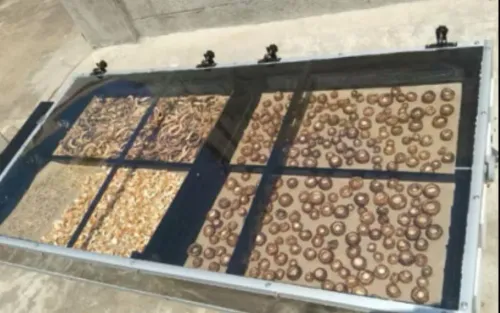
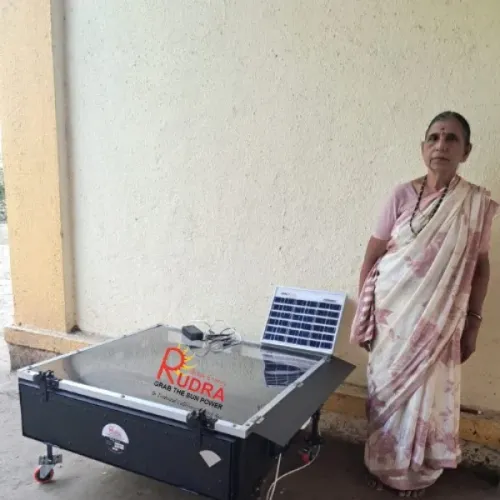
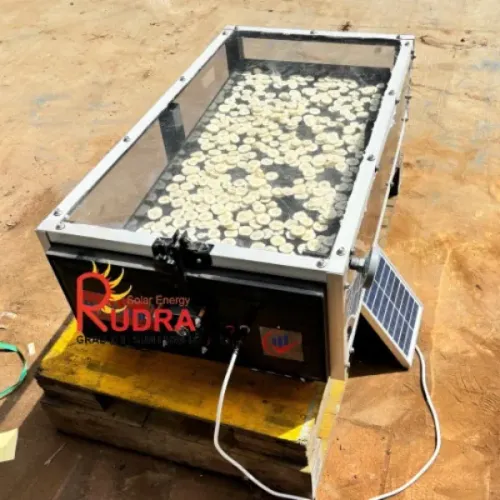
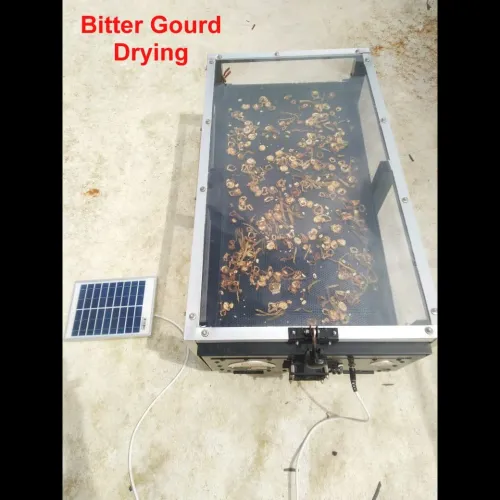
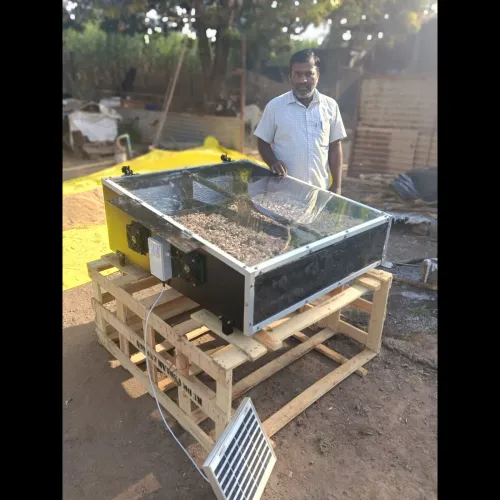
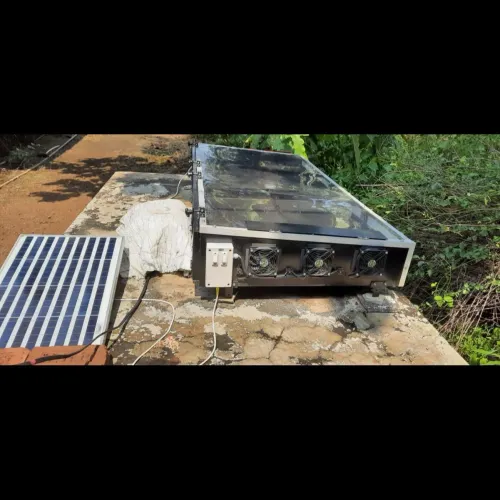
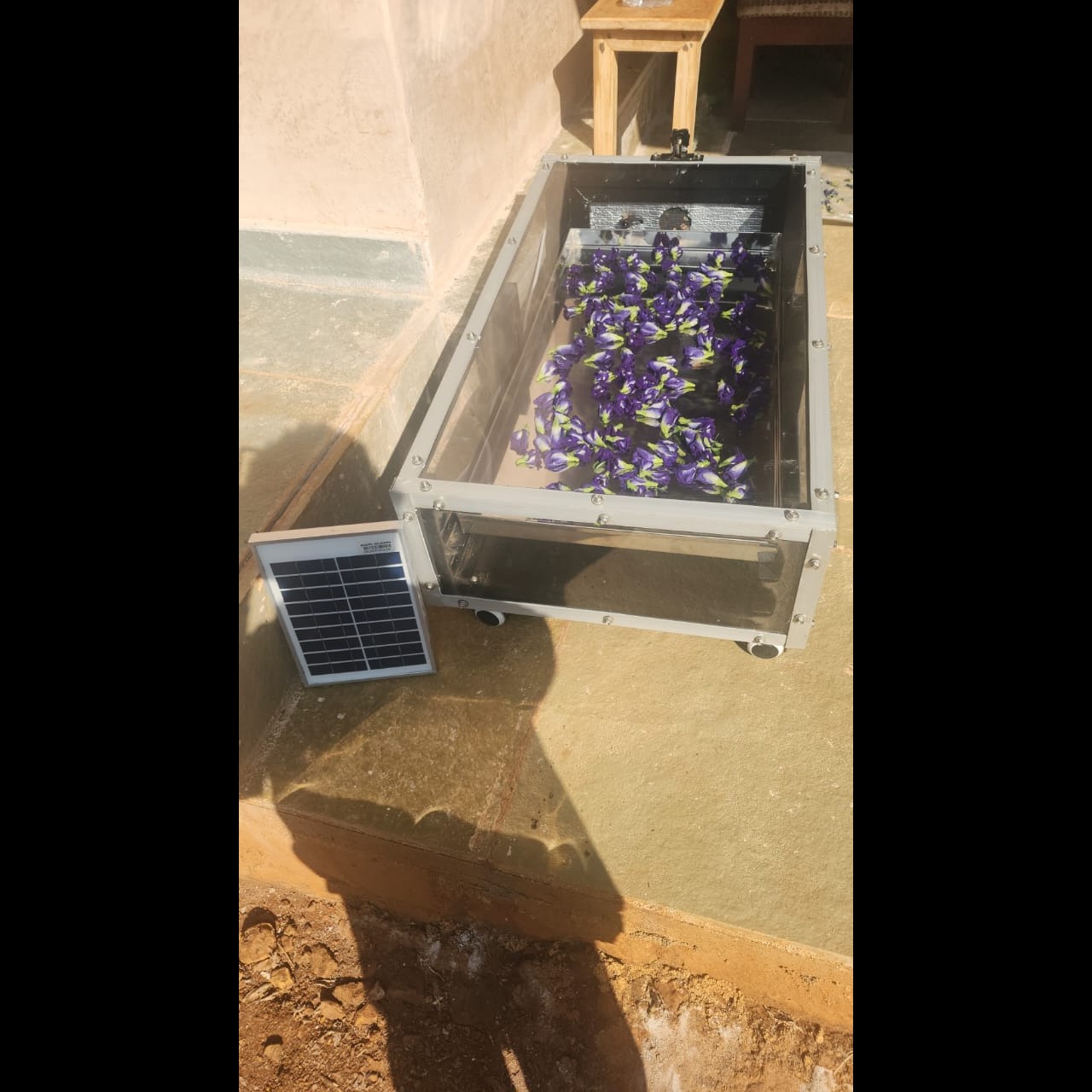
Rudra Solar Energy provides enclosed, tray-based solar dryer solutions for suitable agricultural and food-processing applications in Haveri. The correct drying approach should always be selected according to the commodity, initial moisture, preparation, batch quantity, airflow, solar radiation, ambient humidity, required final moisture and intended end use.
Why Solar Drying Is Relevant for Haveri
Haveri’s diverse crop base creates different post-harvest drying requirements. Chilli growers in Byadgi, maize farmers, oilseed processors, seed producers and fruit or vegetable entrepreneurs may all require different drying conditions and capacities.
Compared with traditional open drying, a suitable enclosed solar dryer can help provide:
- Protected drying space
- Tray-based product loading
- Managed or forced airflow
- Solar thermal heat
- Reduced direct exposure to dust and insects
- More organised batch handling
- Multiple available capacity options
- Solar-powered DC fans on applicable models
- Electric or biomass backup on selected configurations
A solar dryer does not guarantee the same drying time in every season. Actual performance varies with product moisture, weather, tray loading, airflow and final moisture requirement.
Byadgi Red Chilli Drying – Haveri’s Strongest Local Opportunity
One of Haveri district’s most distinctive agricultural identities is Byadgi red chilli. The official Haveri district website highlights the district for the marketing of Byadgi red chillies, while NABARD describes Haveri as a major export hub for Byadgi chilli.
Protected solar drying can support suitable chilli-processing requirements where controlled moisture reduction is needed before grading, storage, trading or further processing.
Important factors for chilli drying include:
- Harvest maturity
- Initial moisture
- Product cleanliness
- Layer depth
- Airflow
- Solar conditions
- Required final moisture
- Storage and packaging method
If chilli powder is the intended final product, the Rudra Solar Dryer performs the drying stage. Grinding is a separate downstream process after suitable drying.
Potential users include:
- Chilli farmers
- Chilli traders
- Farmer groups
- SHGs
- FPOs
- Spice processors
- Rural entrepreneurs
- Food-processing MSMEs
Maize, Paddy, Jowar and Ragi Drying
Cereals form an important part of Haveri agriculture. Government and agricultural sources identify maize, paddy, jowar and ragi among the district’s major field crops.
Controlled solar drying may be useful when grain requires additional moisture reduction before appropriate storage, processing or value addition.
The process should consider:
- Harvest moisture
- Grain condition
- Batch depth
- Airflow
- Intended storage duration
- Milling or processing requirement
- Final moisture target
For grain intended for planting, drying conditions should also consider germination and seed viability.
Groundnut, Soybean and Sunflower Applications
Oilseeds are also important in Haveri. District agriculture profiles identify groundnut, soybean and sunflower among locally relevant crops, and the district is also known for oil-milling activity.
A suitable solar dryer can support selected moisture-reduction requirements before storage or downstream processing.
For oilseeds, drying should be selected according to:
- Initial moisture
- Storage objective
- Oil-quality requirement
- Processing method
- Whether the seed is intended for planting
Solar drying is the moisture-reduction stage; oil extraction remains a separate process.
Cotton and Commercial Crop Handling
Cotton is another important commercial crop in Haveri, and NABARD identifies cotton markets as part of the district’s agricultural economy.
Solar drying may be relevant for selected agricultural materials or processing stages where technically appropriate moisture reduction is required.
However, cotton, sugarcane, grains and food crops should not be treated as though they all use the same drying process. The actual material and final application should be evaluated first.
Mango, Banana, Sapota and Guava Value Addition
Haveri also has a diverse horticultural base. NABARD’s latest profile reports approximately 49,311 hectares under plantation and horticultural crops, including fruit crops, vegetables, spices and plantation crops. It identifies mango, banana, sapota and guava among suitable crops in several Haveri taluks.
Properly prepared fruit can be considered for solar drying for applications such as:
- Mango slices
- Banana slices
- Sapota pieces
- Guava slices
- Dried fruit ingredients
- Further food-processing applications
Preparation, ripeness, slice thickness, loading and required final moisture should be decided according to the intended end product.
Vegetable and Spice Processing Opportunities
Haveri’s agriculture also includes vegetables and spice crops. Current horticultural information highlights vegetable production across the district, while the presence of the Byadgi chilli market creates a particularly strong spice-processing identity.
Solar drying can support suitable applications involving:
- Chilli
- Onion
- Tomato
- Selected leafy or vegetable products
- Prepared spice materials
For any product intended to become powder, the solar dryer handles drying only; milling or grinding follows as a separate step.
Seed Drying and Seed-Processing Potential in Haveri
Seed handling is another useful Haveri-specific angle. NABARD notes that Haveri is known for seed development and seed companies, while KVK Haveri also documents seed-production infrastructure in the district.
A solar dryer may support selected seed moisture-reduction applications where controlled drying is technically suitable.
For planting seed, particular care should be taken with:
- Temperature exposure
- Drying rate
- Initial moisture
- Final moisture
- Germination
- Seed viability
The system should therefore be matched to the actual seed type and intended use rather than using food-drying settings automatically.
Haveri’s Different Agro-Climatic Conditions Matter
Crop patterns in Haveri vary across the district because of differences in rainfall, soil, irrigation and local agricultural conditions. Government data describes variation from semi-Malnad to more open agricultural zones, meaning drying performance can differ between locations and seasons.
During cloudy, rainy or high-humidity periods:
- Solar heat availability may decrease
- Moisture removal may take longer
- Airflow becomes particularly important
- Loading should be controlled carefully
- Backup operation may be useful in selected systems
Selected Rudra Solar Dryer configurations may include electric or biomass backup where applicable to the actual requirement.
Who Can Use a Solar Dryer in Haveri?
Rudra Solar Dryer solutions can support requirements ranging from individual and household-scale processing to farm, entrepreneurial and commercial use.
Potential users include:
- Individual farmers
- Chilli growers
- Grain farmers
- Seed producers
- Households
- Women entrepreneurs
- SHGs
- FPOs
- Rural entrepreneurs
- Spice processors
- Oilseed processors
- Fruit and vegetable processors
- MSMEs
- Institutions
- Commercial agro-processing units
The correct model should be selected mainly according to the fresh-input quantity per batch, product and processing objective.
Solar Dryer Coverage Across Haveri District
The current official Haveri district tehsil page lists eight taluks:
Byadgi, Hangal, Haveri, Hirekerur, Ranebennur, Savanur, Shiggaon and Rattihalli.
Rudra Solar Energy can therefore support enquiries associated with searches such as:
- Solar dryer in Haveri
- Solar dryer in Byadgi
- Solar dryer in Hangal
- Solar dryer in Hirekerur
- Solar dryer in Ranebennur
- Solar dryer in Savanur
- Solar dryer in Shiggaon
- Solar dryer in Rattihalli
- Solar dryer manufacturer in Haveri district
Why Consider Rudra Solar Energy for Haveri?
Rudra Solar Energy has been working in solar-thermal solutions since 2006 and offers solar dryer options for individual, agricultural, entrepreneurial and commercial processing requirements.
For buyers searching for a top solar dryer manufacturer in Haveri, useful comparison factors include:
- Suitability for the actual crop
- Available capacity
- Protected drying chamber
- Managed airflow
- Ease of operation
- Tray options
- Backup configuration where required
- Technical guidance
- After-sales support
Depending on the selected model, Rudra Solar Dryer systems may include enclosed drying chambers, tray-based loading, managed airflow, solar-powered DC fans and optional backup configurations where applicable.
The dryer should be selected according to the actual crop, batch quantity, local conditions and intended final product rather than choosing one generic system for every requirement.
Frequently Asked Questions
1. Which is the best solar dryer for farmers in Haveri?
The best-fit solar dryer depends on the crop or product, fresh-input quantity per batch, initial moisture, location, weather and intended final use. A Byadgi chilli processor may require a different configuration from a maize farmer, fruit processor or seed business.
2. Can Byadgi chilli be dried using a Rudra Solar Dryer?
Yes. Properly harvested and prepared chilli can be considered for protected solar drying where controlled moisture reduction is required before storage, grading or further processing. The correct drying conditions depend on initial moisture, loading, airflow and final quality requirements.
3. Can maize, paddy, jowar and ragi be dried in a solar dryer?
A suitable solar dryer can support selected grain moisture-reduction applications. The correct process depends on harvest moisture, grain condition, batch quantity, airflow, storage requirement and intended final use.
4. Can groundnut, soybean and sunflower be dried using solar energy?
Yes, selected oilseed applications can use controlled solar drying. Drying conditions should be matched to the seed type, initial moisture, intended storage or processing use and whether the material is intended for planting.
5. Can mango, banana, sapota and guava be processed in a solar dryer?
Yes. Properly prepared fruit can be dried for suitable value-added products such as slices, pieces or ingredients for further processing. Ripeness, preparation, slice thickness and final moisture should be selected according to the intended product.
6. Can a Rudra Solar Dryer be used for seed processing in Haveri?
A suitable solar dryer can support selected seed moisture-reduction requirements. If the seed is intended for planting, drying conditions should be chosen carefully to protect germination and viability.
7. Are Rudra Solar Dryers only for large commercial businesses?
No. Requirements can range from individual users, households and small farmers to SHGs, FPOs, rural entrepreneurs, MSMEs and commercial processors. The suitable available model depends on the actual fresh-input quantity and application.
8. How do I choose the right solar dryer capacity in Haveri?
Share four main details with Rudra Solar Energy:
1. Crop or product
2. Fresh-input quantity per batch
3. Location in Haveri district
4. Intended final product or application
Based on these details, a suitable available solar dryer model and capacity can be discussed.
Looking for a Solar Dryer Manufacturer in Haveri?
Whether your requirement involves Byadgi chilli, maize, paddy, jowar, ragi, groundnut, soybean, sunflower, cotton, fruits, vegetables, seeds or another suitable agricultural product, the correct solar dryer should be selected around your actual crop, batch quantity and processing objective.
Contact Rudra Solar Energy with your crop or product, fresh-input quantity per batch, Haveri location and intended final use to discuss a suitable solar dryer model.
Rudra Solar Energy Pvt. Ltd.
Ahmedabad, Gujarat, India
Phone: 9429446671 | 7041262332
Website: www.rudrasolar.in
Keywords