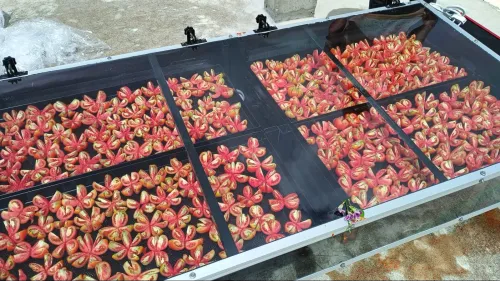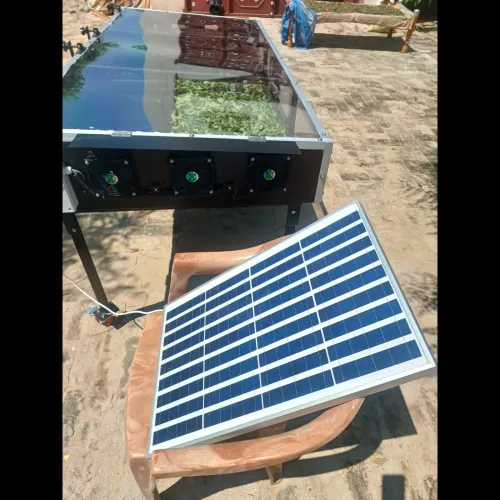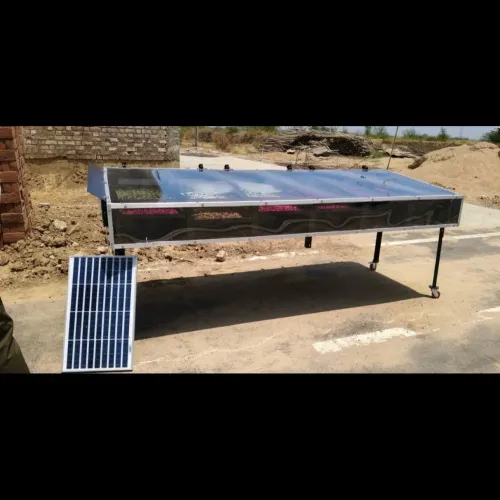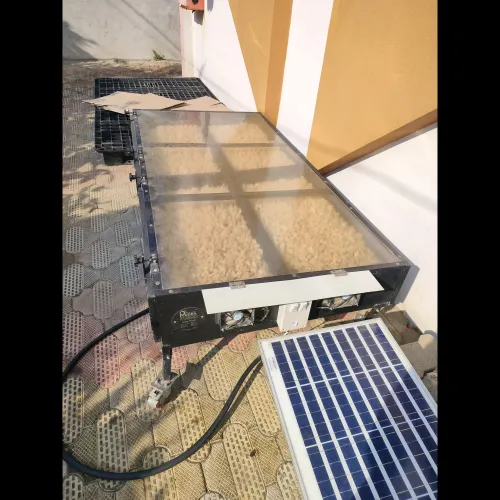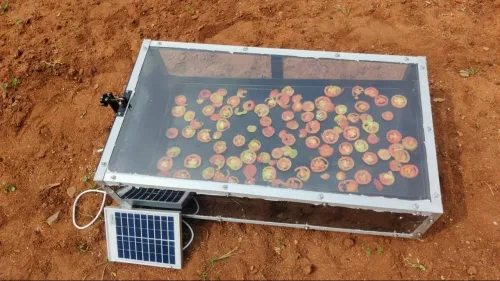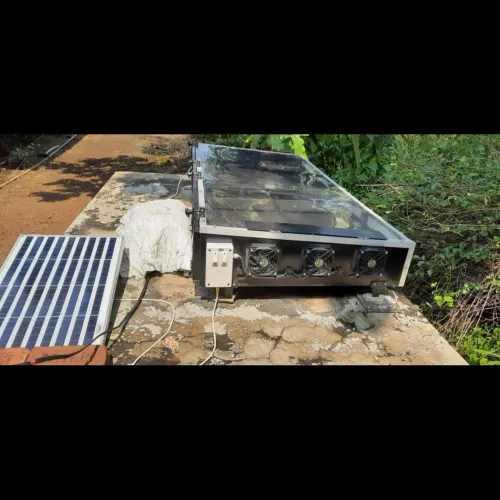
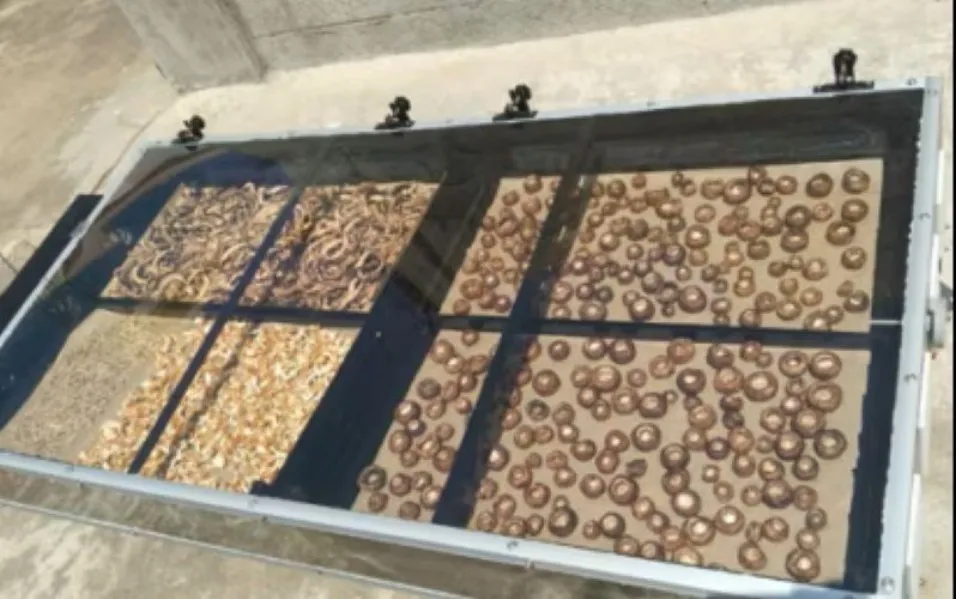
Hapur’s location within the Delhi-NCR region, its agricultural base and its established food-processing activity create a strong setting for protected solar drying. The district’s major crops include wheat, sugarcane, paddy, maize, potato, pulses and oilseeds. Hapur is also recognised for papad production, making hygienic batch drying relevant for local enterprises and women-led processing groups.
A Solar Dryer in Hapur can help suitable businesses shift selected products from open sun exposure to an enclosed hot-air drying process with controlled loading and model-specific airflow.
Can Papads Be Dried in a Solar Dryer?
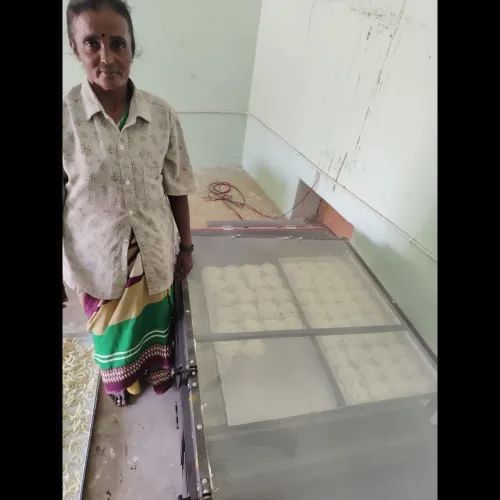
Papad producers generally require sufficient drying area, clean handling and consistent moisture removal before packaging. A Rudra Solar Dryer can be evaluated for drying prepared papads on suitable trays, mesh or food-grade liners.
Papads should be arranged without overlap, with enough space for air movement. Product thickness, formulation, tray material, batch density, ambient humidity and final moisture all influence drying.
The dryer does not perform dough preparation, shaping or packaging. Producers must also check that the finished papads have reached an appropriate moisture level before sealing them in moisture-resistant packaging.
For a papad enterprise, dryer selection should consider usable tray area and the number of pieces loaded per batch—not only the total weight in kilograms.
Solar Drying Applications for Potato in Hapur
Prepared potato slices may be dried for products such as dehydrated slices, flakes, powders or other value-added formulations. However, potatoes normally require washing, peeling, uniform cutting and an application-specific pre-treatment before drying.
A solar dryer removes moisture; it does not replace blanching, anti-browning treatment, grinding or final food-safety testing.
Processors should first conduct product trials to confirm the desired colour, texture, rehydration behaviour and market acceptance before moving to commercial production.
Can Grains, Pulses and Oilseeds Be Solar Dried?
Small or medium batches of maize, pulses and selected oilseeds may be dried or moisture-conditioned after cleaning. An enclosed dryer can reduce direct exposure to roadside dust, birds, insects and unexpected rewetting compared with unprotected open-area drying.
Grains should be loaded at a suitable depth and mixed or turned where required. Final moisture should be verified using an appropriate moisture meter before storage.
Bulk wheat, paddy or sugarcane processing should not be assigned to a tray dryer without first evaluating daily tonnage, moisture load, available solar energy and required throughput.
Who Can Use a Commercial Solar Dryer in Hapur?
A commercial solar dryer in Hapur may be suitable for:
- Papad manufacturers and women-led SHGs
- Potato and vegetable processors
- Farmers, FPOs and FPCs
- Pulse, maize and oilseed enterprises
- MSMEs and packaged-food businesses
- Institutional kitchens and training centres
- NGOs and livelihood-development projects
Hapur’s access to Delhi-NCR markets may support packaged-product distribution, but every enterprise should validate its buyers, pricing, packaging requirements and food compliance before scaling production.
Selecting the Correct Solar Dryer Capacity
Rudra Solar Energy offers solar dryers from 5 kg to 500 kg, including solar-only, hybrid and application-specific systems.
Correct selection depends on the product, prepared quantity per day, moisture to be removed, pieces or kilograms per batch, required tray area, target output, operating season, installation space and electricity availability.
Drying time varies with product thickness, initial moisture, tray loading, airflow, temperature, humidity, solar radiation and weather. Optional hybrid support may be considered where planned production continuity is important.
Rudra Solar Dryer Solutions for Hapur
Rudra Solar Energy combines more than 20 years of solar-thermal experience with in-house R&D, application engineering, a Centre for Excellence and multiple capacity options.
For an application-specific recommendation, share the product, current form, quantity per day, existing drying method, desired output, operating months, installation location, available space, electricity status and site photographs or videos.
Contact Rudra Solar Energy for a technically evaluated solar drying solution in Hapur, Uttar Pradesh.
Keywords