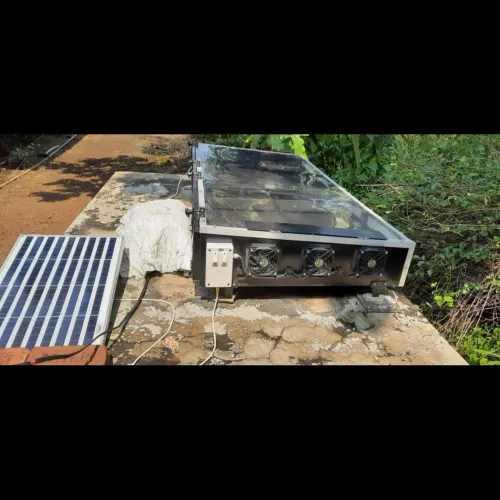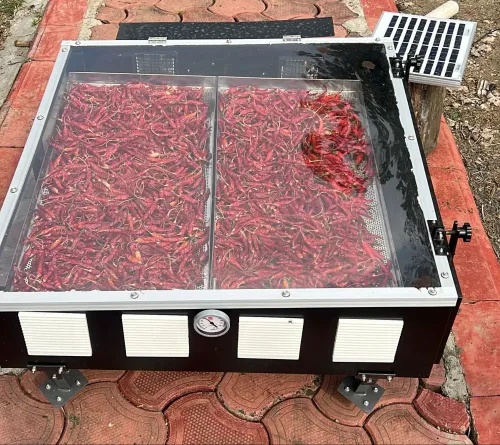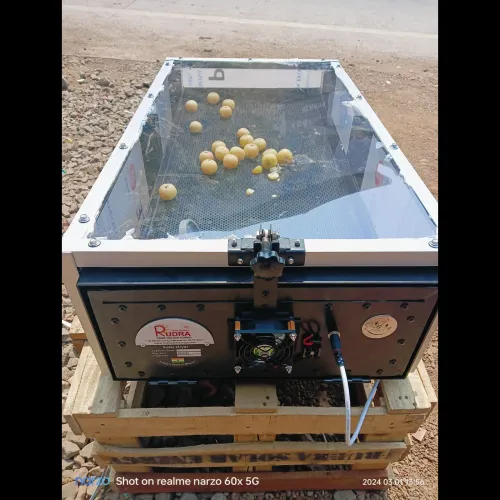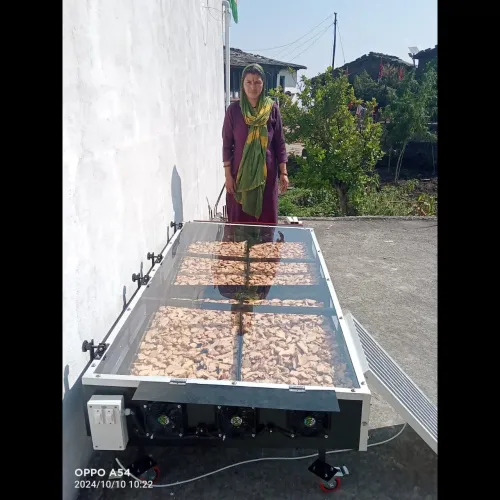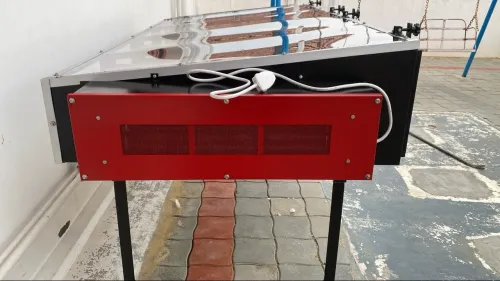
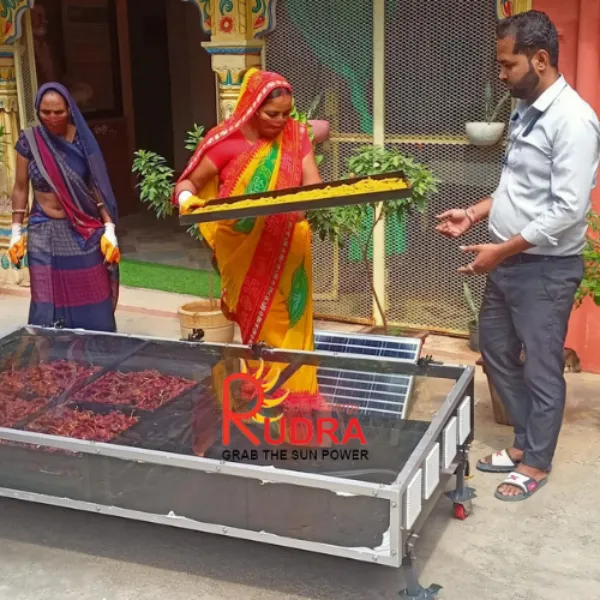
Gorakhpur has a strong agricultural base built around paddy, wheat, pulses, sugarcane and horticultural crops, while its food-processing identity is particularly connected with Kala Namak Rice, which the Ministry of Food Processing Industries identifies as Gorakhpur’s One District One Product under the PMFME framework. The district administration also reports paddy as Gorakhpur’s principal kharif crop and maintains horticultural support for fruit and vegetable growers, including a dedicated banana package programme. For farmers, FPOs, SHGs, grain processors and agro-processing enterprises, a Solar Dryer in Gorakhpur can provide an enclosed, tray-based method for controlled moisture reduction from suitable paddy/grain batches, banana, vegetables, spices, herbs and other compatible agricultural materials.
Why is solar drying relevant for Gorakhpur?
Agriculture remains an important part of the district economy. Gorakhpur’s official district profile lists paddy, wheat, pulses and sugarcane among its main crops. The Agriculture Department further reports around 2.65 lakh hectares of cultivable land, with paddy alone occupying more than 1.52 lakh hectares as the principal kharif crop in the cited district data.
Controlled drying can become relevant when agricultural material needs moisture reduction before suitable storage, milling, further processing or value addition.
Potential users include:
Farmers
Paddy Growers
Kala Namak Rice Producer Groups
FPOs and FPCs
SHGs
Farmer Cooperatives
Rice and Grain Processors
Banana Growers
Food-Processing MSMEs
Agricultural Entrepreneurs
The correct dryer should be selected according to the actual crop and daily processing requirement, rather than only nominal kilogram capacity.
Why is Kala Namak Rice important for Gorakhpur?
Kala Namak Rice is Gorakhpur’s official food-processing ODOP under the MoFPI PMFME framework.
Kala Namak is also recognised among India’s GI-tagged rice varieties in APEDA’s GI-product documentation.
This gives Gorakhpur a much stronger rice-specific identity than using only generic terms such as “agricultural solar dryer.”
For this district, the relevant processing chain may include:
Harvesting
Threshing
Cleaning
Moisture Reduction Where Required
Storage
Milling
Grading
Packaging
The Solar Dryer performs only the appropriate drying/moisture-reduction stage.
Can Kala Namak paddy be dried using solar energy?
Yes, suitable batches of harvested paddy can undergo controlled moisture reduction where drying is required before safe storage or further processing.
Important variables include:
Incoming Grain Moisture
Target Moisture
Paddy Layer Depth
Usable Drying Area
Airflow
Temperature
Ambient Humidity
Batch Quantity
Solar Radiation
Drying should be managed according to the required grain condition rather than simply exposing paddy to the maximum available temperature.
Is drying Kala Namak paddy the same as drying milled rice?
No.
Paddy drying and processing finished milled rice are different stages.
Paddy generally passes through further operations such as:
Cleaning
Dehusking
Milling
Grading
Packaging
A Solar Dryer does not automatically perform any of these operations.
For a Kala Namak value chain, the dryer should therefore be described as equipment for controlled moisture reduction where technically required, not as a complete rice-processing plant.
Can a Solar Dryer improve the aroma of Kala Namak Rice?
A dryer should not be claimed to create or guarantee the characteristic aroma of Kala Namak Rice.
Rice quality is influenced by factors including:
Variety
Crop Production
Harvest Maturity
Initial Moisture
Drying Conditions
Storage
Milling
Post-Harvest Handling
The purpose of solar drying is moisture management.
It does not manufacture the intrinsic varietal characteristics associated with GI-recognised Kala Namak rice.
Why is moisture important before grain storage?
Excess moisture can make grain storage more difficult and increase the importance of appropriate post-harvest handling.
For a drying operation, the processor should understand:
Initial Moisture → Required Final Moisture → Drying Process → Storage Requirement
The correct final moisture should be determined according to the grain and intended storage or processing standard.
A fixed number of drying hours is not an adequate substitute for evaluating the actual moisture condition.
Can wheat, pulses and other grains also be dried in Gorakhpur?
Yes, where additional moisture reduction is technically required.
Gorakhpur’s official district profile identifies wheat and pulses alongside paddy among the main district crops.
Potential batch applications can therefore include:
Paddy
Kala Namak Paddy
Wheat
Selected Pulses
Seeds
Other Compatible Grain Materials
However, paddy, wheat and pulses can differ in:
Kernel Structure
Incoming Moisture
Layer Depth
Airflow Requirement
Target Moisture
Drying behaviour should therefore be crop-specific.
Can one Solar Dryer process Kala Namak paddy, wheat and pulses?
A suitably designed multipurpose Solar Dryer may process different compatible agricultural materials in separate batches.
But multipurpose does not mean all crops should use:
The Same Loading
The Same Temperature
The Same Airflow
The Same Drying Time
or
The Same Final Moisture
Cleaning between different materials and correct batch handling are also important.
Is a tray-based Solar Dryer suitable for very large volumes of paddy?
This depends on the required throughput.
A tray-based system can be practical for batch-scale or value-added processing requirements, but large-volume bulk grain operations may require a configuration specifically engineered for higher daily throughput.
For a Gorakhpur rice processor, the correct questions are:
How many kilograms or tonnes arrive per day?
What is the incoming moisture?
How much material must be processed per batch?
What usable drying area is available?
How quickly must the grain move to the next stage?
System sizing should answer these questions before equipment is selected.
Does a 100 kg Solar Dryer mean 100 kg of every grain or crop?
Not necessarily.
Nominal fresh-weight capacity does not fully describe practical drying capability.
Actual loading depends on:
Commodity
Bulk Density
Initial Moisture
Layer Depth
Usable Drying Area
Airflow
Target Moisture
For example, the same dryer may behave differently with:
Paddy
Wheat
Banana slices
Leafy herbs
Vegetables
Therefore, practical capacity should be evaluated for the actual material.
Why is airflow important when drying paddy and grains?
As moisture leaves the grain, it enters the surrounding drying air.
That humid air needs to move away so additional moisture can continue leaving the material.
Drying effectiveness therefore depends on:
Heat
Air Movement
Grain Layer Depth
Drying Surface
Temperature
Ambient Humidity
A very deep layer can restrict airflow and make moisture removal less uniform.
How long does Kala Namak paddy take to dry?
There is no universal fixed drying time.
Actual duration depends on:
Initial Moisture
Required Final Moisture
Grain Layer Depth
Batch Size
Airflow
Dryer Temperature
Ambient Temperature
Relative Humidity
Available Solar Radiation
Weather
Dryer Configuration
The correct endpoint should therefore be based on the required grain condition rather than a guaranteed number of hours.
What temperature should be used for rice or grain drying?
The correct operating temperature should be selected according to the grain and its intended use.
Higher temperature is not automatically better.
Excessive or unsuitable heating can affect agricultural materials, while insufficient heat and airflow may extend drying.
A technically appropriate process combines:
Suitable Temperature + Airflow + Correct Loading + Moisture Monitoring
rather than simply operating the system at maximum temperature.
Is banana also relevant for solar drying in Gorakhpur?
Yes.
Gorakhpur’s official Agriculture Department notes a dedicated banana package scheme under the district horticulture setup, confirming banana as a locally relevant horticultural crop.
Suitable banana intended for dehydration may require:
Sorting
Peeling
Slicing
Suitable Pretreatment
Tray Loading
Drying
Cooling
Packaging or Further Processing
The dryer performs only the moisture-removal stage.
Can banana powder be made in the Solar Dryer?
Not directly.
The dryer can produce appropriately dried banana material.
Banana powder subsequently requires separate stages such as:
Cooling
Grinding or Milling
Sieving
Packaging
Similarly, conventional fried banana chips require frying and cannot be described as being produced only by a Solar Dryer.
Can vegetables and fruits also be dried in Gorakhpur?
Yes. The Gorakhpur Agriculture Department specifically notes horticultural support for fruit-tree planting and vegetable growers.
Depending on availability and processing requirements, suitable applications can include:
Banana
Prepared Fruits
Onion
Garlic
Chilli
Ginger
Selected Vegetables
Leafy Materials
Herbs
Other Compatible Horticultural Produce
Preparation and drying conditions should be adjusted separately for each commodity.
Can one Solar Dryer handle rice, banana, vegetables and spices?
Potentially, if the dryer configuration is suitable and the products are processed in separate batches.
However, consider the physical differences:
Paddy: granular and dense
Banana: high-moisture sliced fruit
Leafy Herbs: light and bulky
Chilli: spice with different moisture and quality requirements
These differences change tray area, loading depth, airflow and drying duration.
A multipurpose dryer should therefore be selected from the actual commodity mix.
Is enclosed solar drying different from open-sun drying?
Yes.
Open-sun drying exposes material directly to the surrounding environment.
An enclosed Solar Dryer can provide:
Organised Drying Surface
Defined Chamber
Controlled or Forced Air Movement Depending on Model
Reduced Direct Dust Exposure
Reduced Direct Access by Birds and Animals
More Controlled Handling
However, enclosed drying does not automatically guarantee product safety or quality.
Proper preparation, moisture monitoring, cleaning, storage and packaging remain necessary.
Is a Hybrid Solar Dryer useful in Gorakhpur?
Yes, particularly where commercial processing requires greater operating flexibility.
A Solar + Electric Hybrid Dryer can be considered during:
Cloudy Periods
Monsoon Conditions
Reduced Solar Radiation
Peak Harvest
Fixed Processing Schedules
High Daily Throughput
Hybrid backup supplements solar heating where required.
It does not eliminate the importance of airflow, moisture measurement or correct loading.
Can a solar-only dryer operate at night?
Normal solar thermal heating depends on incoming solar radiation.
Therefore, a solar-only system does not provide the same heating at night.
If a rice processor, FPO or food-processing unit needs processing continuity outside useful solar hours, a suitable hybrid configuration should be considered.
Is a Solar Dryer suitable for Gorakhpur FPOs and farmer groups?
Yes, particularly where members aggregate enough agricultural material to justify a shared drying facility.
A group should first evaluate:
Number of Farmers
Main Commodity
Harvest Quantity
Peak Daily Collection
Incoming Moisture
Required Drying Capacity
Storage
Further Processing
Packaging
Buyer Requirement
A Kala Namak Rice producer group will have very different requirements from a banana or vegetable-processing SHG.
Can solar drying make Kala Namak Rice “export quality”?
Not automatically.
A dryer performs moisture reduction.
Market or export suitability can additionally depend on:
GI Authenticity Where Applicable
Varietal Purity
Grain Quality
Final Moisture
Milling Quality
Food Safety
Residues
Contamination
Packaging
Traceability
Buyer Specifications
Applicable Regulations
APEDA recognises Kalanamak among GI-tagged Indian rice varieties, but the use of a dryer does not itself establish GI authenticity or export compliance.
Does a Solar Dryer guarantee higher income for rice farmers?
No equipment can guarantee higher farmer income.
A drying system may support better-organised post-harvest handling or value addition, but commercial returns depend on:
Yield
Product Quality
Processing Cost
Fresh-to-Dried or Paddy-to-Finished Yield
Market Price
Buyer Demand
Packaging
Storage
Logistics
Sales Channel
The economic case should therefore be evaluated separately from the technical drying process.
What is the price of a Solar Dryer in Gorakhpur?
Solar Dryer price in Gorakhpur depends on capacity and technical configuration.
Cost can vary according to:
Processing Capacity
Usable Drying Area
Number of Trays
Construction
Tray Material
Airflow System
Solar Fan Arrangement
Temperature Controls
Solar-Only or Hybrid Operation
Backup Heating
Monitoring
Customisation
For a Kala Namak rice or grain application, the buyer should ideally provide:
Commodity + kg/day + initial moisture + target moisture + processing schedule
before comparing quotations.
How should I choose a Solar Dryer manufacturer in Gorakhpur?
Before selecting a Solar Dryer Manufacturer for Gorakhpur, ask:
Can the system handle my actual commodity?
What practical loading applies to paddy or grain?
How much usable drying area is available?
How is airflow distributed?
How is moisture-bearing air exhausted?
How is temperature managed?
Can moisture be monitored?
Is hybrid operation available?
Can other crops be processed separately?
What maintenance is required?
What installation support is available?
What after-sales support is provided?
Has the underlying Solar Dryer technology been tested or validated?
The manufacturer should first understand the crop + moisture + daily throughput, then recommend the dryer.
Why consider Rudra Solar Energy for solar drying in Gorakhpur?
Rudra Solar Energy develops enclosed solar drying systems for agricultural, horticultural and food-processing applications in different capacities and configurations.
For Gorakhpur, relevant applications can include Kala Namak paddy and suitable grain batches, banana, vegetables, spices, herbs and other compatible agricultural materials.
Dryer selection can be evaluated according to:
Commodity
Fresh or Incoming Quantity
Initial Moisture
Required Final Moisture
Drying Area
Layer Depth
Airflow
Production Schedule
Solar Availability
Solar-Only or Hybrid Requirement
For buyers searching for a Solar Dryer in Gorakhpur, Solar Dryer Manufacturer in Gorakhpur, Solar Dryer Price in Gorakhpur, Commercial Solar Dryer in Gorakhpur, Solar Dryer for Kala Namak Rice, Paddy Solar Dryer, Grain Solar Dryer, Banana Solar Dryer or Hybrid Solar Dryer in Gorakhpur, share the commodity and processing requirement with Rudra Solar Energy to discuss an appropriate configuration.
Keywords