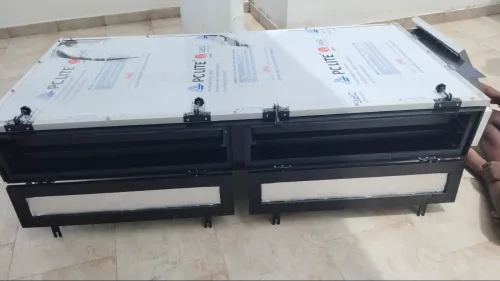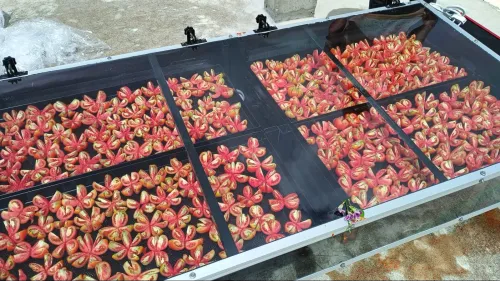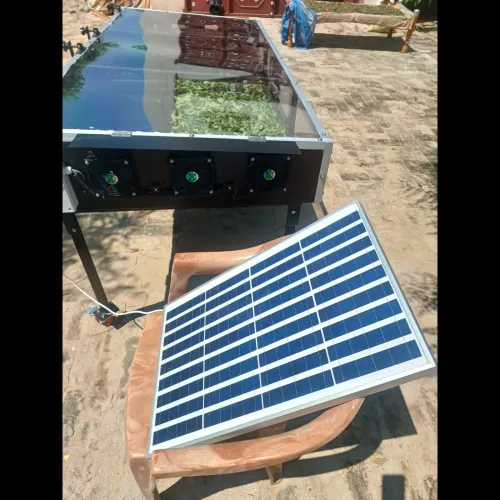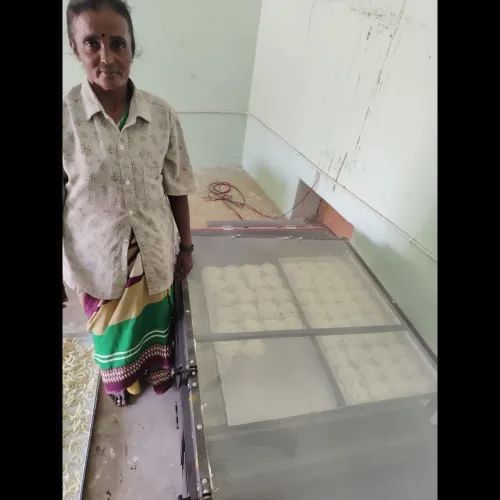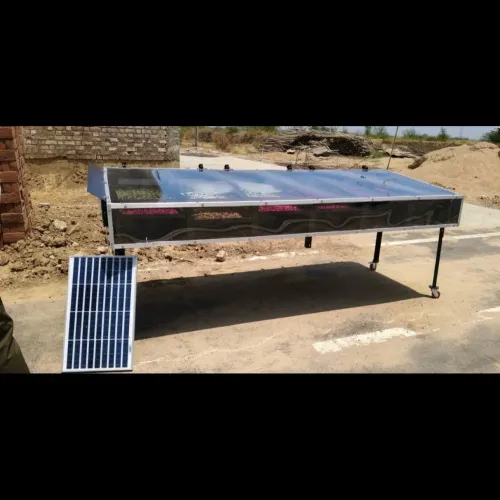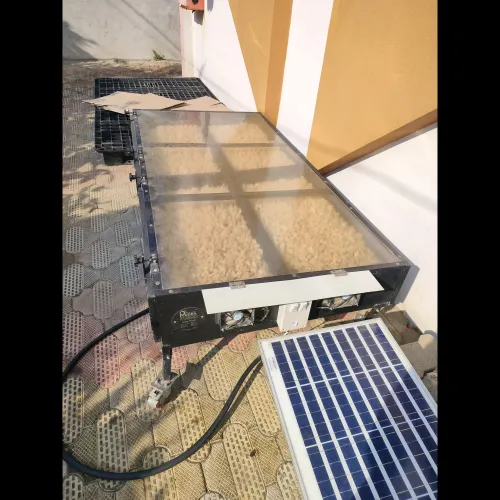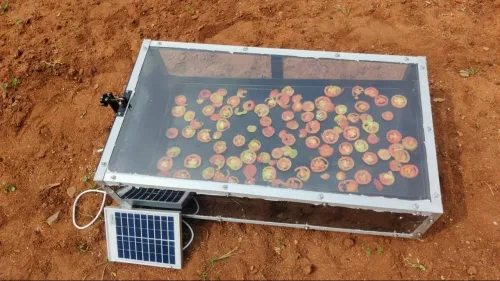
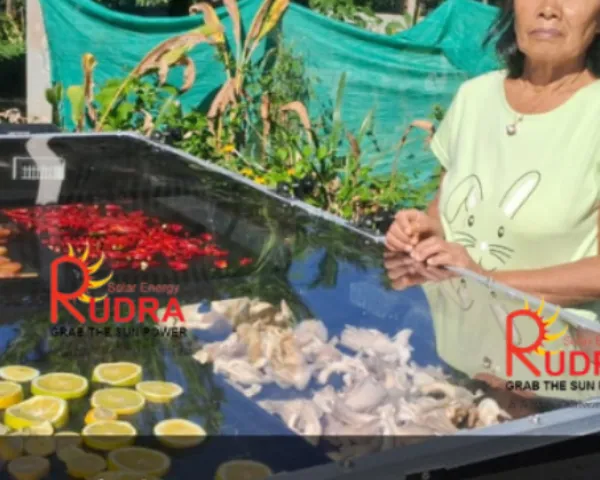
Gonda is an agriculture-dominated district of eastern Uttar Pradesh with wheat, rice, maize, sugarcane and other farm crops forming an important part of its rural economy. For food processing, banana is especially significant because the Government of India’s PMFME One District One Product framework identifies Banana-Based Products as Gonda’s ODOP. This creates a strong local opportunity for farmers, FPOs, SHGs and food-processing enterprises interested in adding a controlled moisture-reduction stage for suitable banana products and other compatible agricultural materials. A Solar Dryer in Gonda can provide an enclosed tray-based environment using solar thermal energy and organised airflow, while actual drying conditions and dryer capacity should be selected according to the commodity, preparation, moisture content, tray area, airflow and required final product.
Why is solar drying relevant for Gonda?
Gonda has a predominantly rural population and a large agricultural base. The official district profile identifies wheat, rice, maize, sugarcane and tobacco among its major crops, while sugar is listed as an important district industry.
For suitable agricultural materials, solar drying can become one stage within a post-harvest or value-addition process.
Potential users include:
Banana Growers
Farmers
FPOs and FPCs
SHGs
Farmer Cooperatives
Food-Processing MSMEs
Rural Entrepreneurs
Grain and Seed Processors
Fruit-Processing Businesses
Common Processing Facilities
MoFPI’s Uttar Pradesh food-processing profile also lists multiple farmer-producer companies operating in Gonda, including groups around Tarabganj, Jhanjhari, Itiathok and Haldharmau.
Why is banana important for food processing in Gonda?
Banana-Based Products are Gonda’s officially identified ODOP.
This makes banana one of the most relevant commodities for a district-specific value-addition strategy.
Depending on the intended product, banana processing may involve:
Sorting
Washing
Peeling
Cutting or Slicing
Suitable Pretreatment
Drying
Cooling
Further Processing
Packaging
The Solar Dryer performs the moisture-removal stage.
Can banana be dried using a Solar Dryer in Gonda?
Yes. Properly prepared banana can be dried where dehydration is part of the intended processing workflow.
Suitable banana slices can be arranged on trays inside an enclosed dryer where solar heat and airflow support moisture removal.
Drying behaviour depends on:
Banana Variety
Ripeness
Initial Moisture
Slice Thickness
Preparation
Tray Loading
Airflow
Temperature
Humidity
Solar Radiation
Required Final Moisture
For this reason, one fixed drying time should not be promised for every banana batch.
Can a Solar Dryer make banana chips?
This depends on what is meant by banana chips.
A Solar Dryer can produce a dried or dehydrated banana product from suitably prepared material.
However, conventional fried banana chips involve separate operations such as:
Slicing
Frying
Seasoning
Oil Removal
Packaging
A Solar Dryer does not perform frying.
This distinction is important because Gonda’s ODOP is broad “Banana-Based Products,” and not every banana product is manufactured by drying alone.
Can banana powder be produced using a Solar Dryer?
A Solar Dryer can perform the drying stage for appropriately prepared banana material intended for further processing.
Producing banana powder requires additional stages such as:
Drying
Cooling
Grinding or Milling
Sieving
Packaging
Therefore:
Solar Dryer = Moisture Reduction
Grinder/Mill = Powder Production
The dryer itself should not be described as directly producing finished banana powder.
Can banana slices, powder material and other banana products use the same drying conditions?
Not necessarily.
Drying requirements can change according to:
Banana Ripeness
Slice Thickness
Product Form
Initial Moisture
Required Final Moisture
Desired Texture
Further Processing Requirement
For example, banana intended for a dried snack product may have a different final-product requirement from banana material intended for later grinding.
Which other crops can be dried using a Solar Dryer in Gonda?
Depending on the actual processing requirement, suitable applications may include:
Banana
Maize
Suitable Grain Applications
Seeds
Vegetables
Chilli
Ginger
Turmeric
Prepared Fruits
Herbs
Leafy Materials
Other Compatible Farm Produce
Gonda’s official district profile identifies wheat, rice and maize among the major crops, making grain-related moisture management another relevant local application.
Not all of these products should be processed using identical temperature, tray loading or drying duration.
Can maize and grains be dried using solar energy?
Yes, where additional controlled moisture reduction is technically required.
For grain or maize drying, important factors include:
Incoming Moisture
Target Moisture
Grain Depth
Tray Area
Airflow
Temperature
Humidity
Required Daily Throughput
Grains should be loaded in a manner that allows useful air movement.
The Solar Dryer does not perform later operations such as:
Dehusking
Milling
Grinding
Flour Production
Packaging
These remain separate.
Is a Solar Dryer useful for rice or wheat processing?
It may be used where a suitable batch requires controlled moisture reduction, but the process should be evaluated according to incoming grain condition and downstream requirements.
Rice and wheat drying should not be treated in the same way as fruit drying.
A banana slice contains and releases moisture differently from:
Rice
Wheat
Maize
Seeds
Therefore, the same nominal dryer capacity can produce different practical loading results across commodities.
Can one Solar Dryer process banana, grains, vegetables and spices?
A suitably configured multipurpose solar dryer may handle different compatible products in separate batches.
However, multipurpose does not mean one universal setting.
For example:
Banana slices have relatively high moisture.
Maize is a dense granular material.
Leafy herbs are light and bulky.
Spices may require attention to aroma and temperature.
Vegetables can differ greatly in moisture and thickness.
Each product should therefore have its own:
Preparation
Tray Loading
Airflow
Temperature
Drying Duration
Target Final Moisture
Does a 50 kg Solar Dryer hold 50 kg of every Gonda crop?
Not necessarily.
This is important when comparing dryer capacities.
Fifty kilograms of banana slices can occupy a very different amount of tray area from:
Maize
Wheat
Herbs
Vegetables
Spices
Practical loading depends on:
Product + Fresh Weight + Moisture + Bulk Density + Tray Area + Layer Depth + Airflow
The nominal capacity should therefore be treated as a reference rather than assuming identical loading for every commodity.
What Solar Dryer capacity is suitable for banana processing?
Capacity should be calculated from the actual business requirement.
A banana processor should determine:
Fresh Banana Quantity per Day
Quantity per Batch
Banana Preparation
Slice Thickness
Peak Seasonal Volume
Usable Tray Area Required
Number of Batches
Required Final Product
Operating Hours
Available Installation Space
Solar-Only or Hybrid Requirement
A small SHG processing banana slices requires a very different system from an FPO aggregating produce from many growers.
Why is tray area important for banana drying?
Kilograms alone do not describe the complete drying requirement.
Banana slices need to be distributed over a sufficient surface area rather than stacked too deeply.
Excessive loading can:
Reduce Airflow Around the Product
Increase Moisture-Removal Time
Create Uneven Drying Conditions
Make Process Control More Difficult
For banana processing, fresh weight + slice thickness + usable tray area should be considered together.
Does banana slice thickness affect drying time?
Yes.
Thicker pieces generally provide a longer path for internal moisture to move toward the surface.
Thinner and more uniform slices can expose more surface area, but the correct thickness depends on the required final product.
The goal should not simply be to make slices as thin as possible.
Product texture, handling and final-use requirements also matter.
How long does banana take to dry in a Solar Dryer?
There is no universal fixed drying time.
Actual drying duration depends on:
Banana Variety
Ripeness
Initial Moisture
Slice Thickness
Pretreatment
Tray Loading
Temperature
Airflow
Relative Humidity
Solar Radiation
Season
Required Final Moisture
Even two banana batches processed in Gonda may behave differently depending on ripeness and weather.
A technically responsible supplier should therefore avoid guaranteeing one fixed number of hours without understanding the product.
What temperature should be used for banana drying?
The operating temperature should be selected according to the product and desired final quality.
The highest temperature a Solar Dryer can produce is not automatically the best temperature for banana.
Temperature affects:
Moisture Removal
Colour
Texture
Drying Duration
Product Quality
It should therefore be managed together with airflow and loading.
Why is airflow important in banana drying?
As moisture leaves banana slices, that moisture enters the drying air.
If humid air remains around the product, moisture removal can slow.
Effective airflow helps replace moisture-laden air with air capable of accepting additional moisture.
Air movement is influenced by:
Slice Arrangement
Layer Depth
Tray Spacing
Product Quantity
Temperature
Ambient Humidity
This is why trays should not simply be overloaded to reach the highest possible fresh weight.
Is enclosed solar drying different from open-sun drying?
Yes.
Traditional open-sun drying places products directly in the surrounding environment.
An enclosed Solar Dryer provides:
Organised Tray Loading
A Defined Drying Chamber
Controlled or Forced Air Movement Depending on Configuration
Reduced Direct Exposure to Dust
Reduced Direct Access by Insects, Birds and Animals
Better Separation from the Ground
However, enclosed drying does not by itself guarantee food safety.
Raw-material handling, tray cleaning, final moisture, packaging and storage remain important.
Can a Hybrid Solar Dryer be useful in Gonda?
Yes, particularly where a commercial processor requires additional operating flexibility.
A Solar + Electric Hybrid Dryer can supplement solar energy during:
Cloudy Weather
Reduced Solar Radiation
Peak Banana Arrival
Defined Processing Schedules
Periods of Higher Humidity
High Daily Production Requirements
The backup system does not eliminate the need for correct temperature, tray loading or airflow.
Can a Solar Dryer work at night?
A normal solar-only system relies on available solar radiation for thermal heating.
Therefore, solar-only heating is not available at night in the same way.
If the processing plan requires night operation or additional continuity, a suitable hybrid system should be considered.
When comparing quotations, buyers should clearly ask whether the offered system is:
Solar Only
or
Solar + Electric / Hybrid
Is solar drying suitable for Gonda FPOs?
Yes, particularly where a group is aggregating enough produce to justify shared processing infrastructure.
MoFPI’s Uttar Pradesh profile lists multiple FPOs in Gonda, showing an existing organised producer ecosystem in the district.
An FPO considering solar drying should evaluate:
Number of Member Farmers
Main Commodity
Peak Daily Collection
Fresh-to-Dried Yield
Processing Capacity
Packaging
Market Demand
Working Capital
Storage
Buyer Linkage
The correct dryer should be sized around the group’s real production plan rather than only member count.
Can SHGs use a Solar Dryer for banana value addition?
Yes, where the group has:
Regular Raw Material
A Defined Processing Method
Adequate Hygiene Practices
Packaging Facilities
A Market for the Final Product
A small SHG may use a smaller tray configuration, while a larger producer group may need a modular or commercial system.
The dryer can support value addition, but it does not guarantee business profitability.
Does solar drying guarantee a higher selling price?
No.
A dried product may create new market opportunities, but actual price depends on:
Raw Material Quality
Final Product Quality
Moisture
Packaging
Branding
Food Safety
Buyer Demand
Market Competition
Distribution
Fresh-to-Dried Yield
Solar drying should therefore be treated as a processing tool, not a guarantee of higher income.
Can banana dried in a Solar Dryer automatically be called export quality?
No.
Export or premium-market suitability may additionally depend on:
Raw Material Quality
Final Moisture
Contaminant Limits
Microbiological Safety
Residue Requirements
Processing Hygiene
Packaging
Traceability
Buyer Specifications
Applicable Standards
Using a Solar Dryer alone does not create export certification.
What is the price of a Solar Dryer in Gonda?
Solar Dryer price in Gonda depends on the actual capacity and system configuration.
Important cost factors include:
Number of Trays
Usable Drying Area
Batch Capacity
Construction
Tray Material
Airflow System
Solar Fan Configuration
Temperature Management
Solar-Only or Hybrid Operation
Backup Heating
Controls
Installation
Customisation
For banana processing, the better enquiry is:
“I process ___ kg fresh banana per day in Gonda and require ___ final product.”
rather than simply asking for a 25 kg, 50 kg or 100 kg dryer.
How should I choose a Solar Dryer manufacturer in Gonda?
Before selecting a Solar Dryer Manufacturer in Gonda, ask:
What practical banana capacity does the system provide?
How much usable tray area is available?
What tray material is used?
How is moisture-bearing air exhausted?
How is airflow controlled?
How is temperature managed?
Can different products be processed in separate batches?
Is a hybrid option available?
How is the product protected from dust and insects?
What maintenance is required?
What installation support is provided?
What after-sales service is available?
Has the technology been tested or field-used?
A manufacturer should understand the commodity + quantity + final product before recommending capacity.
Why consider Rudra Solar Energy for solar drying in Gonda?
Rudra Solar Energy develops enclosed solar drying systems for agricultural, horticultural and food-processing applications in different capacities and configurations.
For Gonda, particularly relevant opportunities include banana-based processing, grains, maize, vegetables, spices and other compatible farm produce.
The appropriate configuration should be selected according to:
Commodity
Fresh Quantity
Product Preparation
Initial Moisture
Required Final Moisture
Tray Area
Airflow
Production Schedule
Solar Availability
Solar-Only or Hybrid Requirement
For farmers, FPOs, SHGs and food processors searching for a Solar Dryer in Gonda, Solar Dryer Manufacturer in Gonda, Solar Dryer Price in Gonda, Commercial Solar Dryer in Gonda, Banana Solar Dryer, Solar Dryer for Banana, Banana Drying Machine or Hybrid Solar Dryer in Gonda, share the commodity and daily processing requirement with Rudra Solar Energy to discuss an appropriate system.
Keywords