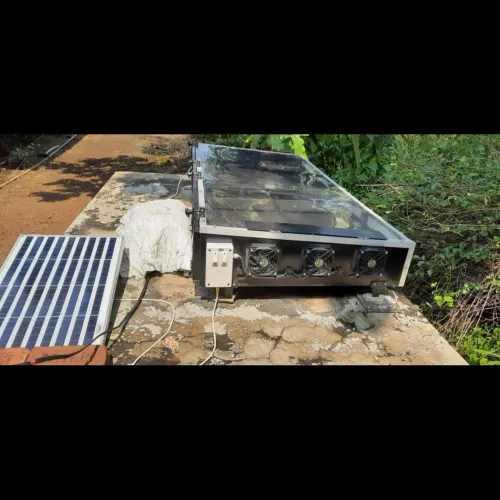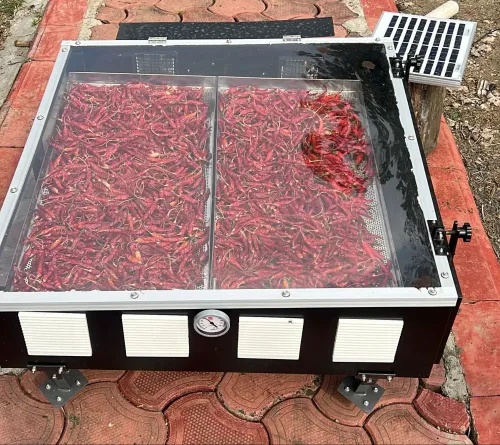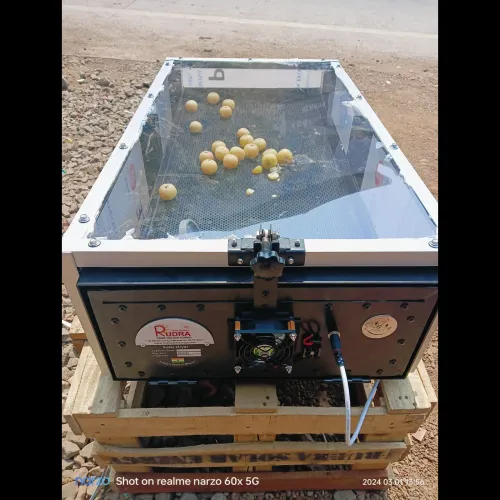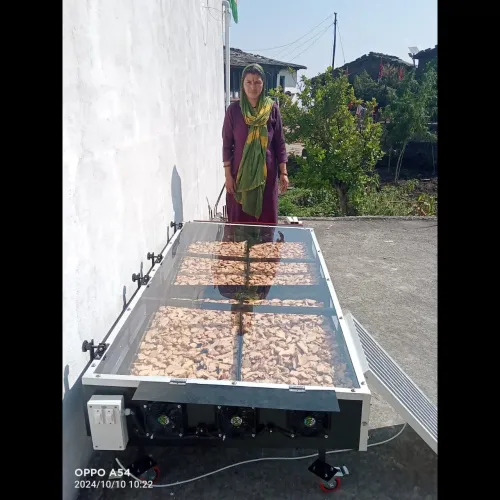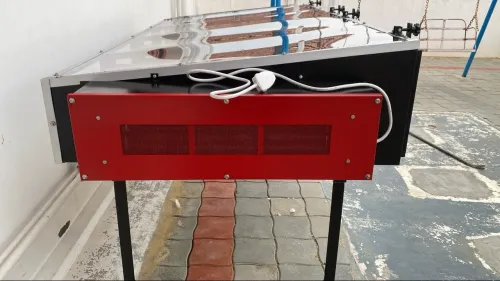
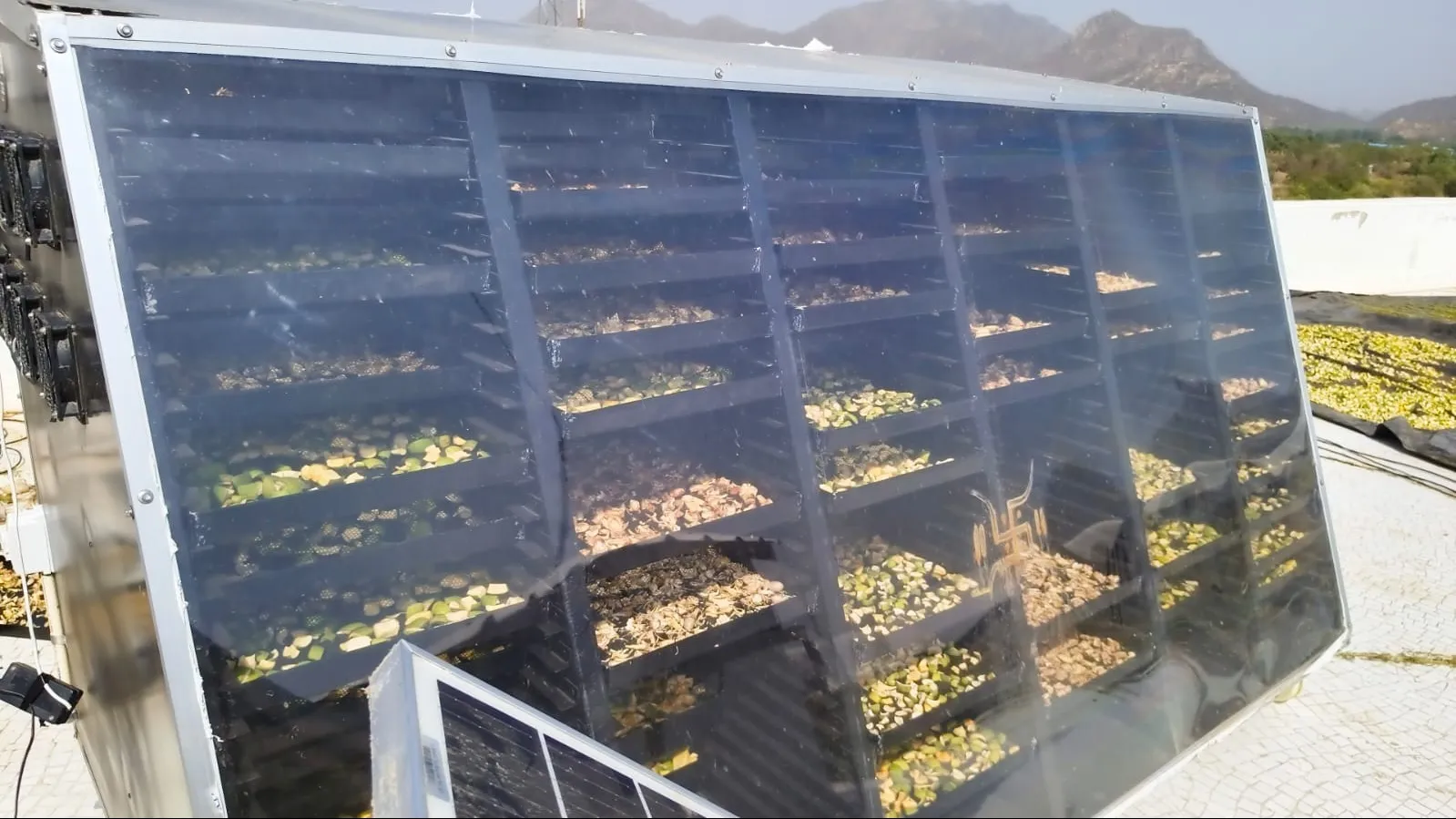
Ghaziabad combines a substantial agricultural base with a large urban and industrial market close to Delhi-NCR. Official district data reports production of food grains, sugarcane, oilseeds and potato, while the district’s horticulture programme promotes crops including mango, guava, banana, turmeric, onion, garlic, marigold and rose. For farmers, FPOs, SHGs, food processors and agro-processing businesses, a Solar Dryer in Ghaziabad can provide an enclosed tray-based system for controlled moisture reduction from suitable vegetables, spices, fruits, herbs, flowers, grains and food ingredients. Dryer capacity and operating conditions should be selected according to the actual commodity, incoming moisture, preparation, tray area, airflow, solar conditions and required final moisture.
Why is solar drying relevant for agriculture and food processing in Ghaziabad?
Ghaziabad’s official district statistics report around 23.68 thousand metric tonnes of potato production, along with substantial food-grain production and a large agricultural area. The district also has 13 cold-storage facilities in the cited district statistics.
Cold storage and solar drying solve different problems.
Cold storage helps maintain suitable fresh produce under controlled storage conditions.
Solar drying removes moisture to create a dried material or ingredient for further processing.
For suitable crops, both can therefore form different parts of a post-harvest value chain rather than competing technologies.
Which products can be dried using a Solar Dryer in Ghaziabad?
Depending on preparation and intended use, potential applications include:
Potato
Garlic
Onion
Turmeric
Ginger
Chilli
Mango
Guava
Banana
Herbs
Leafy Vegetables
Marigold and Suitable Flowers
Selected Grains
Seeds
Other Compatible Agricultural and Food Materials
The district horticulture programme directly promotes mango/guava, banana, turmeric, onion, garlic and floriculture involving marigold and rose, making these locally relevant application categories rather than generic crop examples.
Can potato be dried using a Solar Dryer in Ghaziabad?
Yes. Properly prepared potato can be dried when dehydration is part of the intended processing workflow.
Depending on the desired product, preparation can include:
Sorting
Washing
Peeling
Cutting or Slicing
Blanching Where Required
Draining
Drying
The Solar Dryer performs the moisture-removal stage only.
Grinding, seasoning, frying, extrusion, packaging or manufacturing a finished snack remain separate processing operations.
Can garlic and onion be dried in a Solar Dryer?
Yes. Suitable prepared garlic and onion can be processed using an appropriately configured solar dryer.
Potential forms can include:
Garlic Cloves
Garlic Slices
Onion Slices
Other Prepared Material Suitable for Drying
Garlic and onion are especially relevant locally because Ghaziabad’s horticultural development programme specifically includes promotion of both crops.
For commercial processing, layer thickness and airflow should be controlled because excessive tray loading can slow moisture removal.
Can dried garlic or onion powder be produced directly in the Solar Dryer?
No. Drying and powder manufacturing are separate stages.
A Solar Dryer reduces moisture from appropriately prepared garlic or onion.
Producing powder subsequently requires operations such as:
Cooling
Grinding or Milling
Sieving
Quality Checking
Packaging
The dryer itself should therefore not be presented as a complete garlic-powder or onion-powder manufacturing machine.
Can turmeric be dried using a Solar Dryer in Ghaziabad?
Yes, suitable prepared turmeric can undergo solar drying.
However, turmeric processing may involve separate operations such as:
Cleaning
Curing or Boiling Where Required
Draining
Drying
Polishing
Grinding
Packaging
The Solar Dryer handles the drying stage.
This is a locally relevant application because turmeric cultivation is included in Ghaziabad’s horticultural development programme.
Can mango, guava and banana be dried in Ghaziabad?
Yes. Prepared fruits such as mango, guava and banana may be considered for solar drying where dried fruit or a dried ingredient is required.
These fruits are particularly relevant because Ghaziabad’s horticulture programme promotes mango/guava orchards and banana cultivation.
Fruit drying should consider:
Ripeness
Initial Moisture
Peeling
Slice Thickness
Tray Loading
Temperature
Airflow
Target Final Moisture
Different fruits should not be given one universal drying time or temperature.
Can flowers such as marigold be dried using solar energy?
Suitable flower materials can be dried where controlled dehydration is required for the intended downstream application.
Ghaziabad’s horticultural programme specifically promotes marigold and rose cultivation.
Flower drying can require particular attention to:
Temperature
Airflow
Handling
Tray Loading
Colour Changes
Final Moisture
The drying conditions should therefore be selected according to the flower and its intended end use rather than simply applying maximum available heat.
How does an enclosed Solar Dryer work?
Prepared material is arranged across trays inside an enclosed drying chamber.
Solar radiation provides thermal energy. As the material warms, moisture moves from the product into the surrounding air, while controlled or forced air movement helps remove moisture-bearing air from the chamber.
The basic process can be understood as:
Solar Heat + Airflow + Tray Area + Correct Loading + Moisture Removal
Temperature alone does not determine drying performance.
Why does tray loading matter?
A dryer may have enough heat but still perform poorly if material is loaded too deeply.
Excessive layer depth can:
Restrict Airflow
Increase Resistance to Moisture Movement
Create Uneven Drying Conditions
Increase Required Drying Time
The correct loading varies between dense potato slices, garlic, leafy material, turmeric and flowers.
This is why practical capacity should be based on actual commodity + usable tray area, not kilograms alone.
Does a 50 kg Solar Dryer hold 50 kg of every Ghaziabad crop?
Not necessarily.
Fifty kilograms of potato slices occupies a different amount of tray area from:
Garlic
Leafy Herbs
Marigold Flowers
Fruit Slices
Turmeric
Actual capacity depends on:
Fresh Weight
Bulk Density
Product Form
Initial Moisture
Layer Thickness
Tray Area
Airflow
Required Final Moisture
For this reason, Rudra Solar Energy should evaluate the buyer’s actual crop before recommending a nominal capacity.
How long does solar drying take in Ghaziabad?
There is no fixed number of hours applicable to every product.
Drying time depends on:
Commodity
Initial Moisture
Target Final Moisture
Product Preparation
Slice or Particle Thickness
Tray Loading
Airflow
Operating Temperature
Relative Humidity
Solar Radiation
Weather
Dryer Configuration
Even two batches of the same vegetable can behave differently if their moisture, thickness or weather conditions change.
What temperature should be used in a Solar Dryer?
The appropriate drying temperature depends on the product.
A dryer capable of reaching a high chamber temperature should not automatically be operated at its maximum temperature for every crop.
For example:
Leafy herbs and flowers may require gentler drying conditions.
Fruit and vegetable slices have their own quality requirements.
Spices such as turmeric require process-specific conditions.
Grains have different moisture-management objectives.
Correct drying therefore means selecting an appropriate combination of temperature + airflow + loading + time.
Can one Solar Dryer handle vegetables, spices, fruits and herbs?
A suitably configured multipurpose solar dryer may process different compatible products in separate batches.
However, multipurpose does not mean one setting works for everything.
Potato, garlic, turmeric, mango and herbs can require different:
Preparation
Layer Depth
Temperature
Airflow
Drying Time
Final Moisture
Cleaning between products should also be carried out according to the processing application.
Is a Hybrid Solar Dryer useful in Ghaziabad?
Yes. A Solar + Electric Hybrid Dryer can be considered when processors require more operational flexibility.
Hybrid backup can be useful during:
Cloudy Conditions
Lower Solar Radiation
Defined Commercial Production Schedules
Peak Seasonal Processing
High Daily Throughput
Extended Operating Requirements
Hybrid energy supplements solar drying when required but does not replace correct commodity preparation or process control.
Can a solar-only dryer work at night?
Normal solar thermal heating requires solar radiation, so a standard solar-only system cannot provide the same solar heating at night.
Where night-time or low-sun operation forms part of the production requirement, a suitable hybrid configuration should be evaluated.
The equipment should not simply be advertised as “all-weather” without explaining how backup heating is provided.
Is enclosed solar drying more hygienic than open-sun exposure?
An enclosed dryer provides a more protected physical drying environment compared with spreading agricultural material directly outdoors.
It can help reduce direct exposure to:
Dust
Insects
Birds
Animals
Uncontrolled External Contact
However, hygienic processing still requires proper raw-material handling, tray cleaning, operator hygiene, suitable packaging and storage after drying.
Ghaziabad’s ODOP is Bakery Products. Is a Solar Dryer useful for bakery businesses?
Under the Government of India’s PMFME food-processing ODOP list, Ghaziabad is identified for Bakery Products.
A Solar Dryer does not perform baking and should not be promoted as a bread, biscuit or cake oven.
Its relevance can instead be in preparing suitable dried ingredients used in food-processing workflows, such as:
Dried Fruit Pieces
Vegetable Ingredients
Herbs
Spices
Botanical Ingredients
Other Compatible Raw Materials
where moisture reduction is genuinely required.
This distinction keeps the page relevant to Ghaziabad’s food-processing ecosystem without making a technically incorrect bakery claim.
Can a Solar Dryer be used by MSMEs and food-processing units in Ghaziabad?
Yes, where the process includes drying a compatible raw material.
Potential users include:
Farmers
FPOs and FPCs
SHGs
Farmer Cooperatives
Food Processing MSMEs
Vegetable Processors
Spice Processors
Ingredient Manufacturers
Herbal Businesses
Agro-Processing Enterprises
Commercial Dehydration Units
The correct system should be selected according to the material and required throughput rather than whether the buyer is classified as a farmer or industry.
What capacity Solar Dryer should a farmer or food processor choose?
First determine:
Main Commodity
Incoming Quantity per Day
Batch Quantity
Initial Moisture
Required Final Moisture
Product Preparation
Usable Tray Area Needed
Number of Batches per Day
Peak Seasonal Volume
Available Installation Space
Solar-Only or Hybrid Requirement
For example, a processor handling sliced potato every day may require a different system from a small enterprise drying herbs, turmeric or seasonal fruits.
What is the price of a Solar Dryer in Ghaziabad?
Solar Dryer price in Ghaziabad depends on the actual model and processing requirement.
Cost can vary based on:
Capacity
Tray Quantity
Usable Drying Area
Construction Material
Airflow Arrangement
Fan System
Solar Panel Configuration
Temperature Management
Solar-Only or Hybrid Operation
Electric Backup
Monitoring and Controls
Customisation
Local search results for Solar Dryer in Ghaziabad are already strongly commercial and show multiple manufacturer/supplier listings, so price, capacity and manufacturer-selection intent are important keywords for this district page.
How should I choose a Solar Dryer manufacturer in Ghaziabad?
Do not compare suppliers only by quoted price.
Ask:
What usable tray area is provided?
What is practical loading for my crop?
How is airflow generated?
How is moisture-bearing air removed?
Which tray material is supplied?
How is temperature managed?
Is the system solar-only or hybrid?
What backup arrangement is available?
How are dust and insects controlled?
What maintenance is required?
What after-sales support is available?
Has the underlying dryer technology been tested or validated?
A manufacturer should understand what you want to dry before recommending a machine.
Why consider Rudra Solar Energy for solar drying requirements in Ghaziabad?
Rudra Solar Energy develops solar drying systems for agricultural, horticultural and food-processing applications in different capacities and configurations.
For Ghaziabad, relevant applications can include potato, garlic, onion, turmeric, fruits, herbs, flowers and other suitable agricultural or food materials.
The system can be evaluated according to:
Commodity
Fresh Quantity
Prepared Material Form
Incoming Moisture
Target Moisture
Usable Tray Area
Airflow Requirement
Production Schedule
Solar-Only or Hybrid Operation
For buyers searching for a Solar Dryer in Ghaziabad, Solar Dryer Manufacturer in Ghaziabad, Commercial Solar Dryer in Ghaziabad, Solar Dryer Price in Ghaziabad, Potato Solar Dryer, Garlic Dryer, Onion Dryer, Turmeric Solar Dryer or Solar Dryer for Food Processing, share the material and daily processing requirement with Rudra Solar Energy to discuss a suitable configuration.
Keywords