Solar Dryer Solutions for Gadag District, Karnataka
Gadag is an important agricultural district of North Karnataka where farming is predominantly rainfed and remains a major source of livelihood. According to NABARD’s 2026–27 district profile, major crops include Bengal gram, green gram, maize, jowar, groundnut and sunflower, while cotton and sugarcane are important commercial crops.
The official district profile also identifies a diverse horticultural base including mango, sapota, banana, grapes, pomegranate, tomato, onion, brinjal and chilli, along with medicinal and aromatic crops such as amla, ashwagandha, citronella and lemongrass.
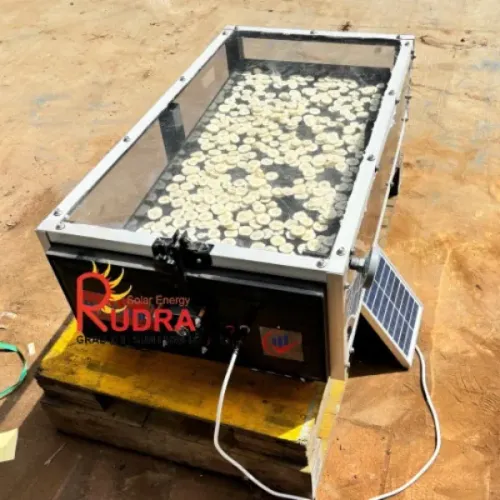
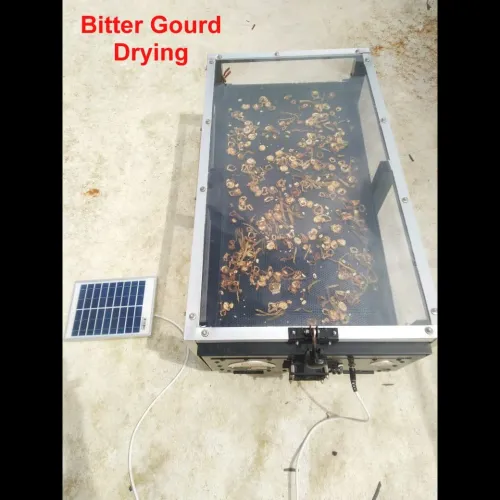
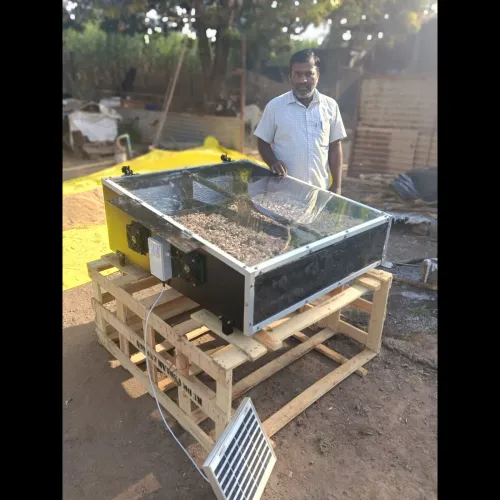
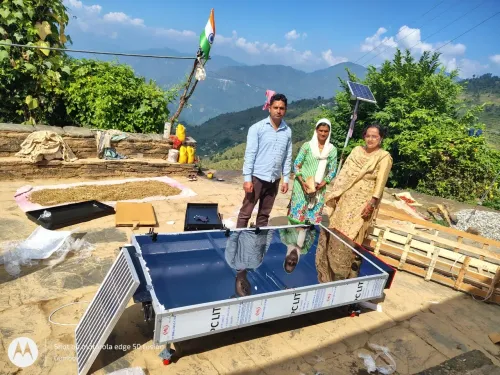
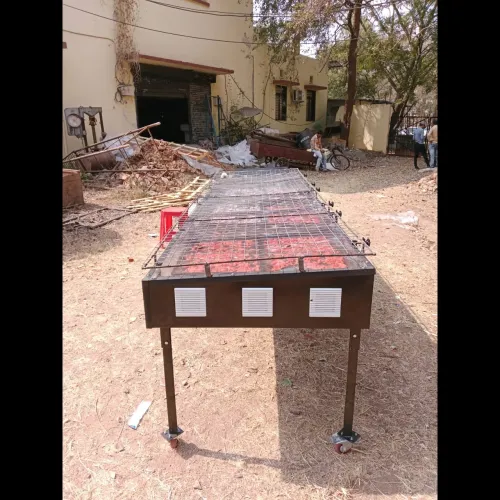
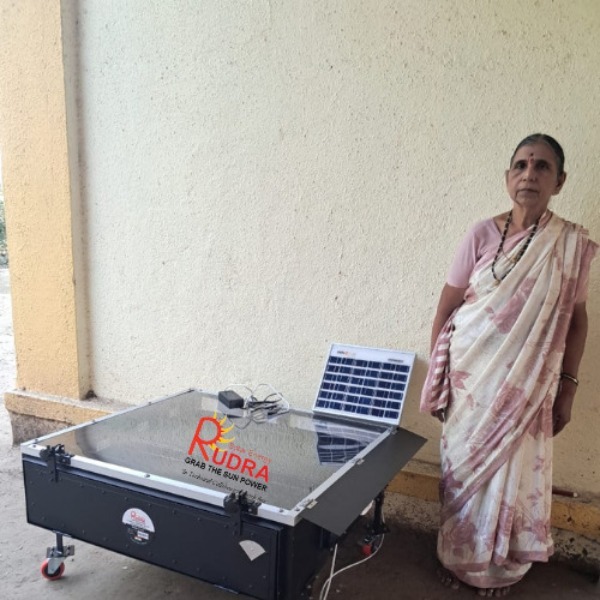
Rudra Solar Energy provides enclosed, tray-based solar dryer solutions for suitable agricultural, horticultural and food-processing applications in Gadag. The appropriate drying process depends on the commodity, initial moisture, preparation, loading, airflow, local weather, required final moisture and intended use.
Why Solar Drying Is Relevant for Gadag
Gadag has a large agricultural base. NABARD records around 81.5% of the district’s geographical area as net sown area, which underlines the importance of crop production and post-harvest management in the district.
The Gadag district administration itself identifies storage, food processing and post-harvest management facilities as thrust areas for agriculture development.
A suitable enclosed solar dryer can help provide:
- Protected drying space
- Tray-based product loading
- Managed airflow
- Solar thermal drying
- Reduced direct exposure to dust and insects
- More organised batch processing
- Multiple available capacity choices
- Backup options on selected configurations
Actual drying performance still depends on product characteristics, solar radiation, humidity, airflow, loading and required final moisture.
Bengal Gram and Green Gram Drying in Gadag
Pulses are one of Gadag’s strongest agricultural opportunities.
NABARD’s latest district profile records approximately:
- 153,989 hectares under Bengal gram
- 130,109 hectares under green gram
making both major crops in the district.
Controlled solar drying may support suitable pulse applications where moisture reduction is required before:
- Storage
- Cleaning and grading
- Processing
- Packaging
- Value addition
- Seed handling
Potential users include individual farmers, FPOs, SHGs, pulse processors, seed businesses and agricultural MSMEs.
For pulses intended for planting seed, drying conditions should also take germination and seed viability into account.
Maize and Jowar Drying Applications
Maize is another major crop in Gadag, with NABARD recording around 124,872 hectares under maize in its latest profile. Jowar is also widely cultivated.
A solar dryer can be considered where harvested grain requires controlled moisture reduction before suitable storage or further processing.
Important factors include:
- Harvest moisture
- Grain condition
- Batch depth
- Airflow
- Storage requirement
- Processing purpose
- Intended final moisture
There is no single drying time that can be applied to all maize or jowar batches.
Groundnut, Sunflower and Other Oilseeds
Gadag also has significant oilseed cultivation. NABARD records approximately 32,699 hectares of groundnut and 27,210 hectares of sunflower, with safflower also grown in the district.
Controlled solar drying may support suitable oilseed handling before storage or further processing.
For oilseed applications, care should be taken regarding:
- Initial moisture
- Storage period
- Oil quality
- Processing requirement
- Whether the material will be used as planting seed
A dryer performs the moisture-reduction stage; oil extraction is a separate downstream process.
Cotton and Sugarcane – Commercial Crop Opportunities
Cotton and sugarcane are identified as Gadag’s major commercial crops. NABARD records around 23,111 hectares under cotton and approximately 2,502 hectares under sugarcane.
Suitable moisture-reduction applications may exist for selected cash-crop materials or value-added by-products depending on the processing requirement.
The correct application should be evaluated based on the actual material being dried rather than applying one generic process to all cash crops.
Onion, Chilli and Vegetable Processing
The official Gadag district agriculture profile lists tomato, onion, brinjal and chilli among the district’s horticultural crops.
Solar drying may support value-added products such as:
- Dried onion slices
- Onion flakes
- Dried chilli
- Prepared tomato products
- Selected vegetable slices
- Ingredients for further processing
If the final product is powder, the solar dryer performs the drying stage only. Grinding is a separate operation after appropriate drying.
Mango, Pomegranate, Grapes and Other Fruits
Gadag district also grows fruits such as:
- Mango
- Sapota
- Banana
- Grapes
- Pomegranate
according to the official district agriculture profile.
Depending on the intended final product, solar drying can support suitably prepared fruit for products such as slices, pieces or ingredients for further processing.
Fruit drying requirements depend strongly on:
- Variety
- Ripeness
- Preparation
- Slice thickness
- Initial moisture
- Weather
- Required final product
Medicinal and Aromatic Crops – A Unique Gadag Opportunity
One particularly useful Gadag-specific angle is its medicinal and aromatic crop potential.
The district administration lists:
- Amla
- Ashwagandha
- Citronella
- Lemongrass
among crops with local potential.
Protected solar drying can be considered for suitable medicinal leaves, roots or aromatic plant materials where careful moisture reduction is required before storage or further processing.
Because quality requirements differ significantly between medicinal plants, drying conditions should be decided according to the exact plant part and final use.
Solar Dryer for Gadag’s Seed and Value-Addition Sector
The official Gadag district profile specifically identifies development of the seed industry and improved food processing/post-harvest management among agricultural development priorities.
This creates potential solar-drying applications for:
- Seed producers
- FPOs
- Farmer groups
- Rural entrepreneurs
- Pulse processors
- Oilseed processors
- Horticultural businesses
- Food-processing MSMEs
For seed intended for sowing, temperature and moisture reduction must be controlled carefully so that drying does not unnecessarily affect germination.
Who Can Use a Solar Dryer in Gadag?
Rudra Solar Dryer solutions can support requirements ranging from individual and household use to farm, entrepreneurial and commercial processing.
Potential users include:
- Individual farmers
- Households
- Women entrepreneurs
- SHGs
- FPOs
- Seed producers
- Rural entrepreneurs
- Pulse processors
- Oilseed processors
- Fruit and vegetable processors
- Medicinal-plant businesses
- MSMEs
- Institutions
- Commercial agro-processing units
The correct dryer model should be selected primarily according to the fresh-input quantity per batch and application.
Solar Dryer Coverage Across Gadag District
The official Gadag district administration currently lists seven taluks:
Gadag, Mundaragi, Nargund, Ron, Shirahatti, Gajendragad and Lakshmeshwar.
Rudra Solar Energy can therefore support enquiries associated with searches such as:
- Solar dryer in Gadag
- Solar dryer in Mundaragi
- Solar dryer in Nargund
- Solar dryer in Ron
- Solar dryer in Shirahatti
- Solar dryer in Gajendragad
- Solar dryer in Lakshmeshwar
- Solar dryer manufacturer in Gadag district
Why Consider Rudra Solar Energy for Gadag?
Rudra Solar Energy has been working in solar-thermal solutions since 2006 and offers solar dryers for agricultural, food-processing and entrepreneurial requirements ranging from smaller applications to larger processing needs.
For buyers searching for the best solar dryer company in Gadag, the right comparison should consider actual application suitability, available capacity, protected drying design, airflow, product support and the ability to match the system to the commodity being processed.
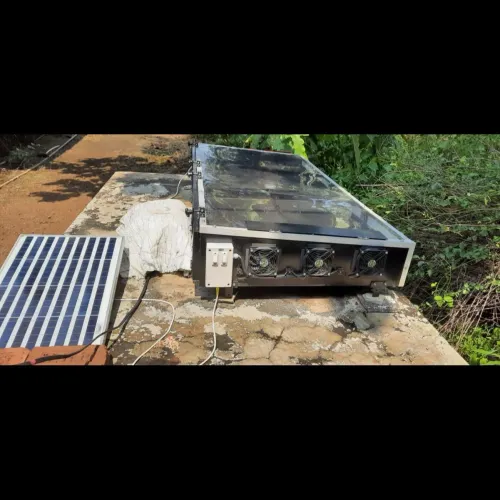
Depending on the model or configuration, Rudra Solar Dryer features may include:
- Enclosed drying chamber
- Tray-based loading
- Managed airflow
- Solar-based heat
- Solar-powered DC fans where applicable
- Multiple available capacities
- Food-grade tray options where required and available
- Electric or biomass backup on selected configurations
The selected system should be based on the crop, fresh-input quantity, location and intended end product rather than choosing one universal dryer for every requirement.
Frequently Asked Questions
1. Which is the best solar dryer for farmers in Gadag?
The best-fit solar dryer depends on the product, fresh-input quantity per batch, initial moisture, location and intended final use. A pulse farmer, groundnut processor and horticultural business may require different capacities or configurations. Rudra Solar Energy can recommend a suitable available model after understanding the requirement.
2. Can Bengal gram and green gram be dried using a solar dryer?
Yes. A suitable solar dryer can support controlled moisture reduction for selected pulse applications before storage, processing or value addition. If the pulses are intended for planting, seed viability and germination requirements should also be considered.
3. Can maize and jowar be dried in a Rudra Solar Dryer?
Yes, where controlled moisture reduction is required. The appropriate drying process depends on initial grain moisture, batch quantity, airflow, weather, storage requirement and desired final moisture.
4. Is a solar dryer suitable for groundnut and sunflower?
Selected groundnut and sunflower applications can benefit from controlled drying before storage or processing. Oilseed drying should be managed according to initial moisture, intended use and oil-quality requirements.
5. Can onion, chilli and fruits be processed using a solar dryer in Gadag?
Yes. Properly prepared onion, chilli, mango, pomegranate, grapes and other suitable horticultural products can be dried for value-added applications. Preparation and drying conditions should be selected separately for each product.
6. Can Rudra Solar Dryers be used for medicinal and aromatic crops?
Yes, suitable medicinal and aromatic plant materials can be considered for protected solar drying. The correct process depends on the specific crop, plant part, required moisture level and intended use.
7. Are Rudra Solar Dryers suitable only for large commercial processors?
No. Requirements can range from individual users, farmers and home-based entrepreneurs to SHGs, FPOs, MSMEs and commercial processors. The right model depends on actual batch quantity and application.
8. How do I choose the right solar dryer capacity in Gadag?
Share these four main details with Rudra Solar Energy:
1. Crop or product
2. Fresh-input quantity per batch
3. Location in Gadag district
4. Intended final product or application
Based on these details, a suitable available solar dryer model and capacity can be discussed.
Looking for a Solar Dryer Manufacturer in Gadag?
Whether your requirement involves Bengal gram, green gram, maize, groundnut, sunflower, cotton, onion, chilli, fruits, medicinal plants or another suitable agricultural product, the right solar dryer should be selected around the actual crop, batch quantity and processing objective.
Contact Rudra Solar Energy with your crop or product, fresh-input quantity per batch, Gadag location and intended final use to discuss a suitable solar dryer model.
Rudra Solar Energy Pvt. Ltd.
Ahmedabad, Gujarat, India
Phone: 9429446671 | 7041262332
Website: www.rudrasolar.in
Keywords