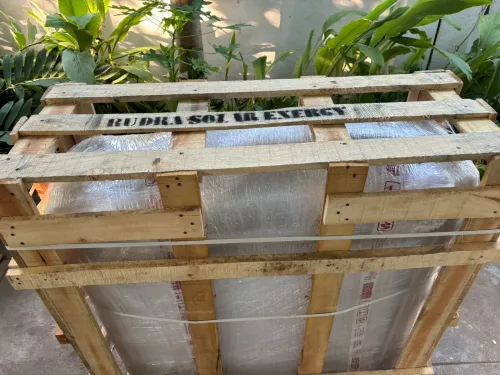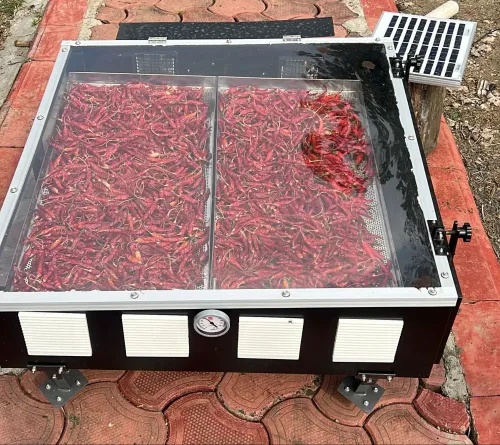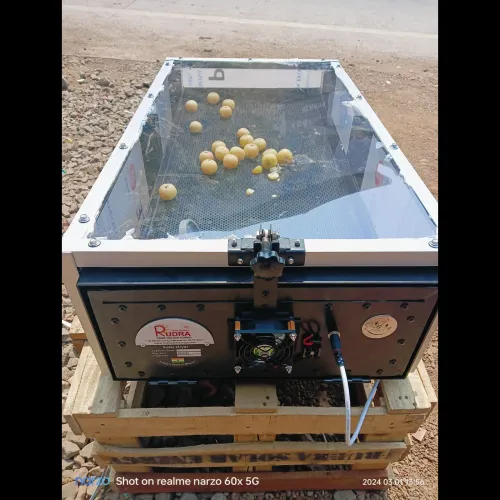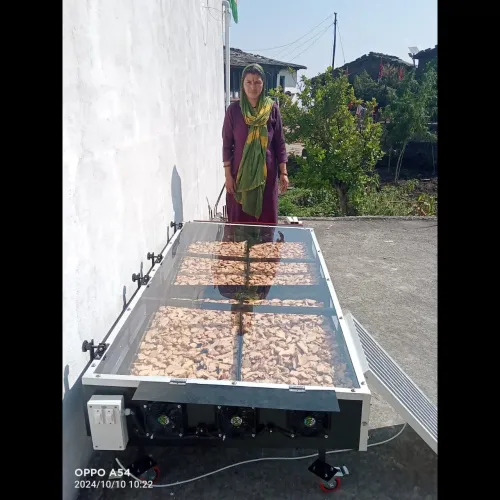
Farrukhabad has strong potential for crop-based value addition because the district supports a mix of horticulture, vegetables and field crops. Krishi Vigyan Kendra Farrukhabad specifically works with farmers on vegetables, horticulture, mushroom production and other agricultural enterprises, while its field advisories have also covered potato, banana and mango.
For farmers, FPOs, SHGs and food-processing enterprises, a solar dryer in Farrukhabad can support enclosed moisture removal from suitable fruits, vegetables, spices and other agricultural produce. Farrukhabad also has an agro-processing location at Khemsepur identified by Invest UP, while potato and mango processing are highlighted among food-processing opportunities in Uttar Pradesh.
Which crops can be dried using a solar dryer in Farrukhabad?
Depending on the required final product and preparation method, solar drying can be considered for:
- potato
- mango
- banana
- chilli
- selected vegetables
- herbs
- mushrooms
- pulses and suitable grains
- other compatible farm produce
Farrukhabad KVK has documented farmer-oriented activity around mango, potato, banana and mushroom, while its training mandate also includes vegetables and horticulture.
The drying method should still be decided separately for each commodity because moisture content, product thickness, tray loading and airflow requirements differ substantially.
Can potatoes be processed using a solar dryer?
Yes, prepared potato products can be dried, but potatoes should not simply be loaded into a dryer directly from the field.
Depending on the intended dried product, potatoes may require washing, peeling, slicing and appropriate pre-treatment before the moisture-removal stage. The solar dryer performs the drying step only; it does not replace these separate food-processing operations.
Potato is particularly relevant to Farrukhabad because KVK advisories specifically address potato cultivation in the district.
Is solar drying suitable for mango in Farrukhabad?
Yes. Properly prepared mango slices can be dried using an appropriately designed solar drying system.
Farrukhabad KVK has published specific mango-related guidance for local farmers, confirming mango as a relevant horticultural crop in the district.
For mango drying, operators need to consider:
- fruit maturity
- slice thickness
- initial moisture
- tray loading
- airflow
- drying temperature
- relative humidity
- required final moisture
Using thicker and thinner slices in the same batch can lead to different moisture-removal rates.
Can banana also be dried in the same solar dryer?
A suitably designed multi-purpose solar dryer can be used for prepared banana in a separate batch.
Banana is also among the crops mentioned in Farrukhabad KVK's local crop advisories.
However, banana and mango should not automatically be given identical drying conditions. Product thickness, sugar content, initial moisture and final product requirements should determine the actual process.
Can mushrooms be dried using solar drying in Farrukhabad?
Yes, mushrooms can be dehydrated when correctly prepared and loaded.
This is a particularly useful local search-intent topic because Farrukhabad KVK has conducted mushroom-production training and seed distribution for farmers in the district.
Mushrooms contain significant moisture and are delicate, so excessive tray depth or unsuitable temperature can affect the drying process. Controlled airflow and appropriate loading are therefore important.
Can one solar dryer handle potato, fruits, vegetables and mushrooms?
Potentially yes, if the dryer is designed as a multi-commodity system and products are processed in separate batches.
A multi-purpose machine does not mean all commodities should use the same:
- batch weight
- drying temperature
- tray depth
- airflow setting
- drying duration
For example, 30 kg of sliced potato and 30 kg of fresh mushrooms may occupy very different amounts of usable tray area.
What capacity solar dryer is suitable for a farmer or FPO in Farrukhabad?
Capacity should be calculated from the actual fresh material to be processed per batch, rather than choosing a machine only because it carries a certain kilogram rating.
Before sizing a dryer, consider:
- Commodity to be dried
- Fresh weight per batch
- Required batches per day
- Product size or slice thickness
- Usable tray area
- Seasonal harvest volume
- Available solar conditions
- Need for hybrid backup
Small growers and micro-enterprises may require a lower-capacity unit, while an FPO or processing enterprise aggregating produce from multiple farmers may require considerably greater tray area and airflow capacity.
Does a 50 kg dryer hold 50 kg of every product?
Not necessarily.
This is one of the most important questions buyers should ask before purchasing a solar dryer.
Nominal capacity alone does not describe how much of every crop can practically be loaded. Bulk density, moisture content, particle size and tray area all affect usable batch loading.
Leafy produce or mushrooms may consume considerably more tray area than a dense agricultural product of the same weight.
Therefore, solar dryer capacity should always be checked against the specific product application.
How much time does solar drying take in Farrukhabad?
There is no scientifically reliable single drying time for all crops.
Drying duration changes with:
- initial moisture
- desired final moisture
- weather
- solar radiation
- humidity
- slice thickness
- tray loading
- airflow
- operating temperature
- dryer configuration
For this reason, a claim such as “every crop dries in X hours” should not be treated as a universal technical specification.
What temperature should be used for potato, mango or mushroom drying?
There is no single temperature that should automatically be applied to all three.
Some solar drying systems may be capable of reaching approximately 50–80°C under suitable operating conditions, but actual process temperature should be selected according to the commodity and desired final product.
Mushrooms, fruit slices, vegetables and agricultural commodities can react differently to high temperatures. The highest achievable temperature is therefore not necessarily the best drying temperature.
Is a hybrid solar dryer useful in Farrukhabad?
It can be valuable for commercial users who need greater processing continuity.
Solar dryer performance naturally varies with available sunlight, ambient temperature and relative humidity. A suitable hybrid arrangement can provide supplementary heat when solar energy alone is insufficient.
However, hybrid heating does not replace good drying practice. Correct loading, adequate airflow and product-specific operating conditions remain necessary.
What is the price of a solar dryer in Farrukhabad?
The price depends on much more than the nominal kilogram capacity.
Major cost factors can include:
- dryer capacity
- usable drying area
- number and type of trays
- construction specification
- airflow system
- solar-powered fans
- monitoring or controls
- hybrid heating option
- installation requirement
- customization for the commodity
For an accurate quotation, a buyer should provide at least:
Commodity + Fresh Quantity per Batch + Location + Processing Requirement + Hybrid Requirement
This allows the dryer to be selected around the actual application rather than an arbitrary capacity number.
How should farmers and food processors choose a solar dryer manufacturer in Farrukhabad?
Compare manufacturers on the basis of actual technical suitability rather than only price.
Ask about:
- experience with your intended commodity
- usable tray area
- airflow arrangement
- construction materials
- food-contact surfaces where applicable
- expected operating conditions
- solar fan configuration
- hybrid options
- installation support
- operating guidance
- maintenance and after-sales support
A buyer processing potato, mango, banana or mushroom should preferably discuss that exact commodity before finalizing capacity.
Keywords