Solar Dryer Solutions for Davanagere, Karnataka
Davanagere is one of Central Karnataka’s important agricultural and trading centres. The district administration identifies cotton, maize, chickpea, sunflower, jowar and paddy among the major commercial crops traded in the region, while recent NABARD district data also highlights maize, paddy, jowar, ragi, tur, groundnut, sunflower, cotton and sugarcane as major crops.
Agriculture remains a major economic activity in Davanagere, creating opportunities for better post-harvest handling, controlled moisture reduction and value-added processing.
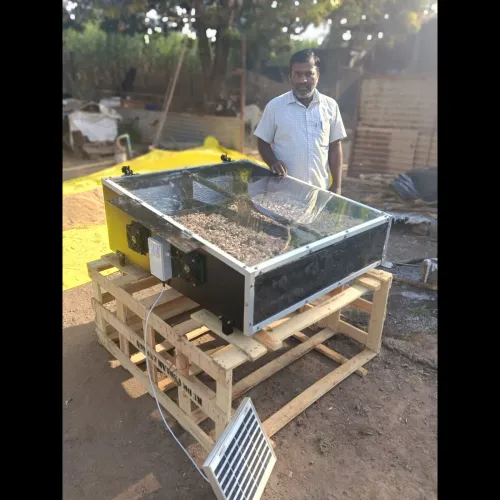
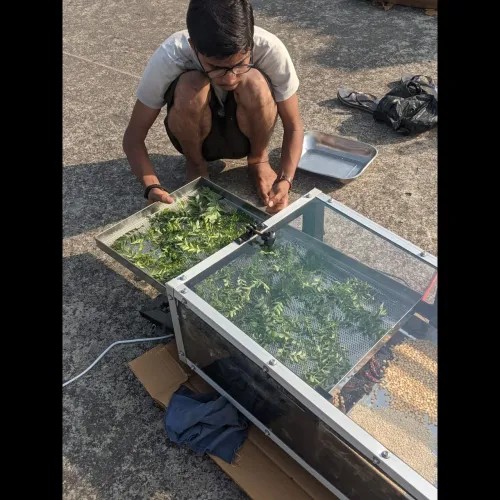
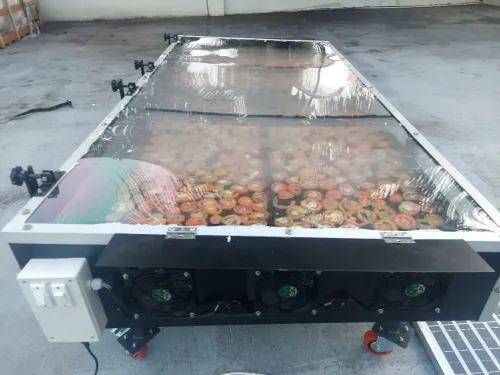
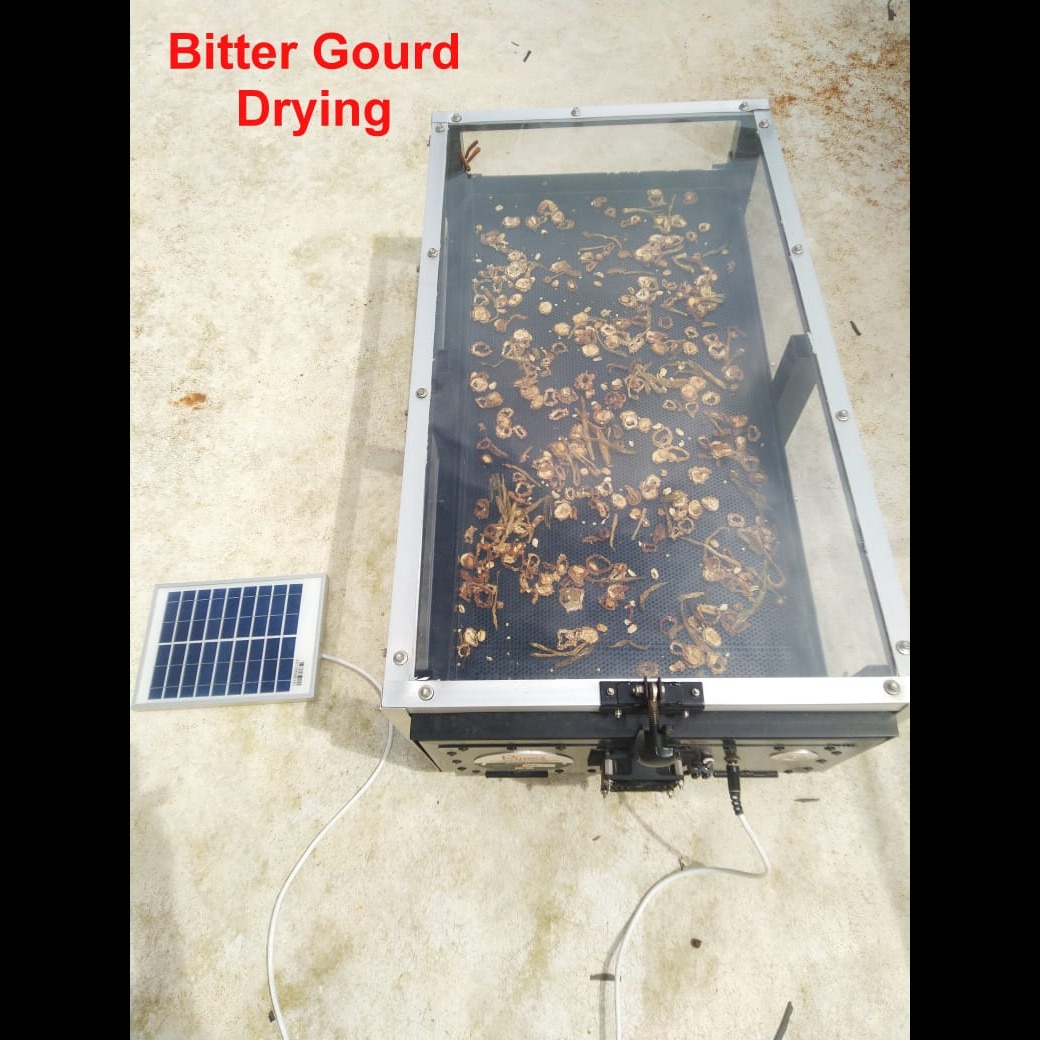
Rudra Solar Energy offers enclosed, tray-based solar dryer solutions that can be selected according to the crop, fresh-input quantity, moisture condition, location and intended final product.
Why Solar Drying Can Be Useful in Davanagere
Traditional open drying exposes produce directly to changing weather, dust, insects and outdoor handling conditions.
A suitable enclosed solar dryer can help provide:
- Protected drying environment
- Tray-based product loading
- Managed airflow
- Solar thermal heat
- Reduced direct exposure to dust and insects
- More organised batch handling
- Multiple available capacity options
- Backup configurations on selected systems
Drying performance still depends on solar radiation, ambient humidity, commodity type, preparation, layer thickness, airflow, loading and required final moisture.
Therefore, one universal drying time or temperature should not be applied to every crop.
Maize Drying and Post-Harvest Handling
Maize is one of Davanagere’s most important field crops. NABARD’s 2026–27 district profile records maize across approximately 132,408 hectares, making it one of the district’s dominant crops.
Controlled moisture reduction can be relevant where harvested maize requires additional drying before suitable storage or further processing.
Potential applications may include:
- Maize grain
- Prepared maize for processing
- Small farm batches
- FPO aggregation
- Seed-related applications where appropriate
For maize intended as planting seed, drying conditions should protect seed viability and germination potential.
Paddy and Rice-Related Drying
Paddy is another major agricultural crop in Davanagere, with NABARD recording around 116,812 hectares under paddy in its latest district profile.
A solar dryer may support appropriate moisture-management requirements for selected paddy or rice-processing applications.
The correct drying approach depends on:
- Harvest moisture
- Grain condition
- Intended storage
- Milling requirement
- Batch size
- Weather
- Required final moisture
Excessive or unsuitable drying conditions should be avoided because grain quality requirements vary by application.
Arecanut — A Growing Davanagere Opportunity
One of the strongest unique angles for Davanagere is arecanut.
Recent NABARD data states that arecanut cultivation has expanded substantially in the district and has replaced part of the area previously used for maize and paddy because of its higher market value. The latest PLP records approximately 84,784 hectares under arecanut.
This creates potential demand for better post-harvest processing and moisture management among:
- Arecanut growers
- Farmer groups
- FPOs
- Rural entrepreneurs
- Traders
- Processing units
Solar drying can be considered for suitable stages of arecanut processing where controlled moisture reduction is required.
The exact process should depend on the type of arecanut product and desired end quality.
Coconut and Plantation Produce
Coconut is also among Davanagere’s important horticultural crops, with recent NABARD data identifying it alongside arecanut in the district.
Suitable solar drying applications may support selected coconut-based processing requirements, including prepared coconut material or moisture reduction related to further value addition.
Where the end product requires oil extraction, grinding or another operation, those are separate downstream processes after drying.
Groundnut and Sunflower Drying
Groundnut and sunflower are both relevant to Davanagere’s agricultural economy. The district administration identifies sunflower among important commercial crops, while NABARD lists both groundnut and sunflower among major district crops.
Controlled drying may be suitable for selected oilseed applications before storage or processing.
For oilseeds, operating conditions should be selected carefully according to:
- Initial moisture
- Oil quality requirements
- Intended storage
- Processing purpose
- Seed viability where planting material is involved
Drying should never be treated as a one-temperature-fits-all process.
Cotton and Commercial Crop Applications
Davanagere has a strong historical association with cotton and continues to be recognised as an important trading centre for cotton and other commercial crops.
Solar drying may also support selected agricultural or processing materials associated with suitable commercial crops where moisture reduction is technically appropriate.
However, not every harvested material requires the same drying process, so the commodity and intended final use must be evaluated first.
Pulses and Millets
Davanagere agriculture also includes crops such as:
- Tur
- Chickpea
- Ragi
- Jowar
- Other pulses and millets
These crops may require moisture management before safe storage, processing or further value addition depending on harvest conditions.
A solar dryer can be considered when controlled moisture reduction is required, especially for smaller processed batches, farmer enterprises, FPOs and value-added products.
Davanagere’s Agriculture and Processing Potential
Recent NABARD information describes Davanagere as predominantly agricultural, with about 68% of its geographical area under net sowing and maize, paddy and arecanut forming a major part of the crop economy.
This creates potential opportunities for solar drying among:
- Farmers
- Plantation growers
- Women entrepreneurs
- SHGs
- FPOs
- Rural businesses
- Grain and pulse processors
- Oilseed processors
- Agro-processing MSMEs
- Food processors
- Commercial agricultural units
The correct dryer should be matched to the fresh-input quantity per batch, not chosen only by physical size.
How a Rudra Solar Dryer Works
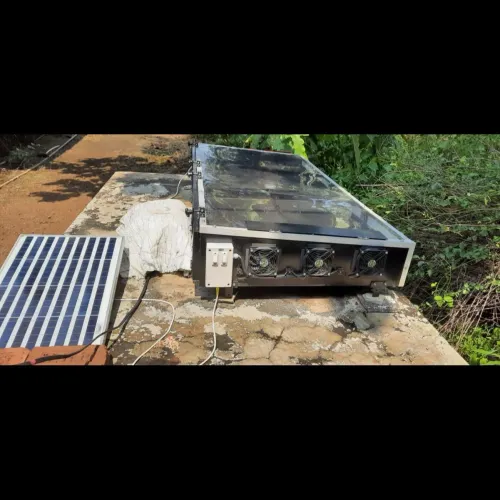
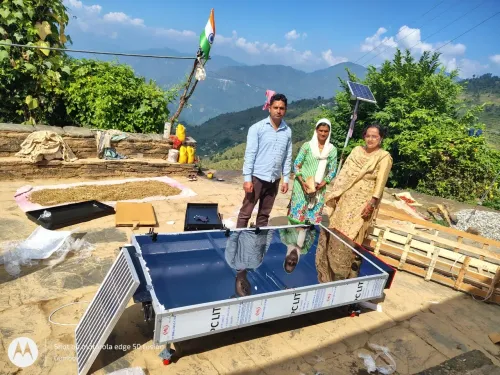
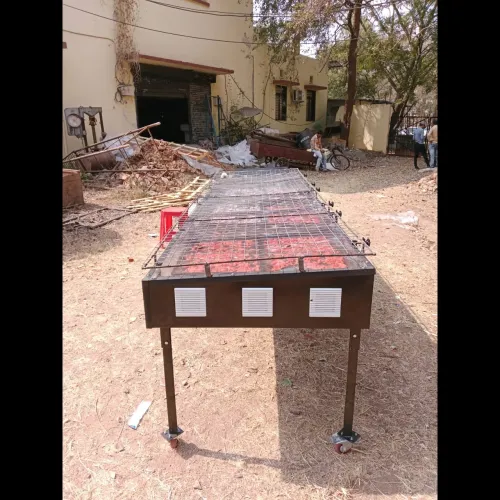
Depending on the selected Rudra model or configuration, features may include:
- Enclosed/protected drying chamber
- Tray-based loading
- Managed or forced airflow
- Solar thermal heat
- Solar-powered DC fans where applicable
- Different available capacity options
- Aluminium trays as standard on applicable models
- Food-grade or SS tray options where required and available
- Electric or biomass backup on selected configurations
Solar dryers reduce moisture; they do not automatically perform downstream operations such as milling, grinding or oil extraction.
Solar Dryer for Small Users to Commercial Processing
Rudra Solar Energy should not be viewed as serving only large industrial users.
Potential Davanagere users can include:
- Individual users
- Households
- Small farmers
- Women entrepreneurs
- Home-based businesses
- SHGs
- FPOs
- Rural entrepreneurs
- MSMEs
- Agro processors
- Food processors
- Institutions
- Commercial processing units
A small farmer processing a limited quantity of produce may require a very different model from an FPO or commercial processor.
Solar Dryer Coverage Across Davanagere District
The Davanagere district administration currently reports six taluks in the district. Current official district references include Davanagere, Harihara, Jagalur, Honnali, Channagiri and Nyamathi; the district’s current RTI records specifically include a Nyamathi Taluk Tahsildar Office.
Rudra Solar Energy can therefore support enquiries associated with local searches such as:
solar dryer in Davanagere, solar dryer in Harihara, solar dryer in Channagiri, solar dryer in Honnali, solar dryer in Jagalur, solar dryer in Nyamathi and solar dryer manufacturer in Davanagere district.
Why Consider Rudra Solar Energy?
Rudra Solar Energy has been working in solar thermal solutions since 2006 and offers solar dryers for different agricultural and food-processing requirements.
The aim is not to recommend the same dryer to everyone.
Suitable model selection should consider:
- Crop or product
- Fresh-input quantity
- Initial moisture
- Location
- Seasonal conditions
- Processing method
- Required final moisture
- Intended end use
- Need for backup drying
This application-based approach is especially important in Davanagere because the district includes very different crop categories—from maize and paddy to arecanut, oilseeds, pulses and commercial crops.
Frequently Asked Questions
1. Which is the best solar dryer for farmers in Davanagere?
The best-fit solar dryer depends on the crop, fresh-input quantity per batch, moisture level, intended final product and operating conditions. A maize farmer, arecanut grower and food-processing MSME may require different dryer models. Rudra Solar Energy can recommend a suitable available model after understanding the requirement.
2. Can a solar dryer be used for maize in Davanagere?
Yes, solar drying can be considered where harvested maize requires controlled moisture reduction before suitable storage or processing. The operating conditions should be selected according to initial grain moisture, weather, loading and final moisture requirement.
3. Can paddy be dried using a Rudra Solar Dryer?
Suitable solar drying systems may support selected paddy moisture-management applications. The drying process must consider grain quality, harvest moisture, intended storage and milling requirements.
4. Is a solar dryer useful for arecanut growers in Davanagere?
Yes. Arecanut has become increasingly important in Davanagere, and controlled drying may be suitable for specific stages of arecanut processing. The correct process should be based on the type of arecanut product and desired final quality.
5. Can groundnut and sunflower be dried in a solar dryer?
A solar dryer can support suitable moisture-reduction applications for selected oilseeds such as groundnut and sunflower. Drying conditions should be controlled carefully because final oil quality, storage requirement and seed use can affect the appropriate process.
6. Are Rudra Solar Dryers suitable for small farmers and individual users?
Yes. Rudra Solar Dryer requirements can range from individual and household use to farmers, SHGs, FPOs, entrepreneurs, MSMEs and commercial processors. The suitable available model depends on actual fresh-input quantity and application.
7. Does a Rudra Solar Dryer require grid electricity?
Solar energy is the primary heat source. Selected models may use solar-powered DC fans for managed airflow. Some configurations may also include electric or biomass backup where applicable. Grid electricity is required when an electric backup system is being used.
8. How do I choose the right solar dryer capacity in Davanagere?
Share these four main details with Rudra Solar Energy:
Crop or product
Fresh-input quantity per batch
Location in Davanagere district
Intended final product or use
Based on these details, a suitable available dryer model and capacity can be discussed.
Looking for a Solar Dryer Manufacturer in Davanagere?
Whether your requirement involves maize, paddy, arecanut, coconut, groundnut, sunflower, pulses, cotton or another suitable agricultural product, solar dryer selection should begin with the actual crop, batch quantity and processing objective.
Contact Rudra Solar Energy with your crop/product, fresh-input quantity per batch, Davanagere location and intended final use to discuss a suitable solar dryer model.
Rudra Solar Energy Pvt. Ltd.
Ahmedabad, Gujarat, India
Phone: 9429446671 | 7041262332
Website: www.rudrasolar.in
Keywords